Erwan Heussaff Calls for the Protection of Asin Tibuok From Imitations
Asin Tibuok, one of the rarest salts in the world, is the only Philippine product on UNESCO’s list of Intangible Cultural Heritage in Need of Urgent Safeguarding for 2025.

by Kyla Villena
Published on Dec 30, 2025
Imitations are often seen in the sartorial scene, but they are also becoming more present in the food industry. Erwan Heussaff took to Instagram to celebrate the increasing popularity of Asin Tibuok, Bohol’s artisanal sea salt and one of the rarest salts in the world, but with this growth comes an abundance of fake reproductions as well.
“When we featured the last Asin Tibuok makers in 2021, only one producing family was left. Since then a few more Asinans were set up. Recently we've been seeing some salts in the markets that feel different and that lack depth,” he wrote in the caption.
Included in his post were videos of himself showing the difference between authentic Asin Tibuok and an imitation. The former, as explained by Erwan, is characterized by “A faint smoky aroma. An ashy color with inner layers, resembling grey and white marble. A taste that’s distinct from regular table salt. The dome itself should be rock hard and solid.” The latter showed to be very brittle, lighter in color, and less savory—just like ordinary salt. Behind Asin Tibuok is a special and distinct process, with quality and community that need protection.

What Is Asin Tibuok and UNESCO’s List of Intangible Cultural Heritage?
On December 9, 2025, United Nations Educational, Scientific and Cultural Organization (UNESCO) released this year’s list of Intangible Cultural Heritage in Need of Urgent Safeguarding, and Asin Tibuok was the only Philippine product on it. As explained by Erwan, it is “a recognition given to traditions that matter deeply and need continued care to survive.” It includes practices that have been passed down over time, proving to be a significant part of identity, cultural pride, and diversity. This highlights the need to protect them for future generations.
The creation of Asin Tibuok is deliberate, “shaped by season, place, and skill.” It can only be made from March to December when the sea's salinity is just right. Asinans soak coconut husks in seawater for about three months, then proceed to chop and sun-dry them for five days. After which, they will take four to five days to burn them into ash, plus three to four days to filter the brine. They are then cooked for six to eight hours and poured into clay jars nonstop, where the salt forms and hardens as it evaporates. Layers of salted water are added until the jar is full. They are left to cool for harvesting the following day.
“It can only be made when conditions are right, and only by people who know the craft,” Erwan emphasized.
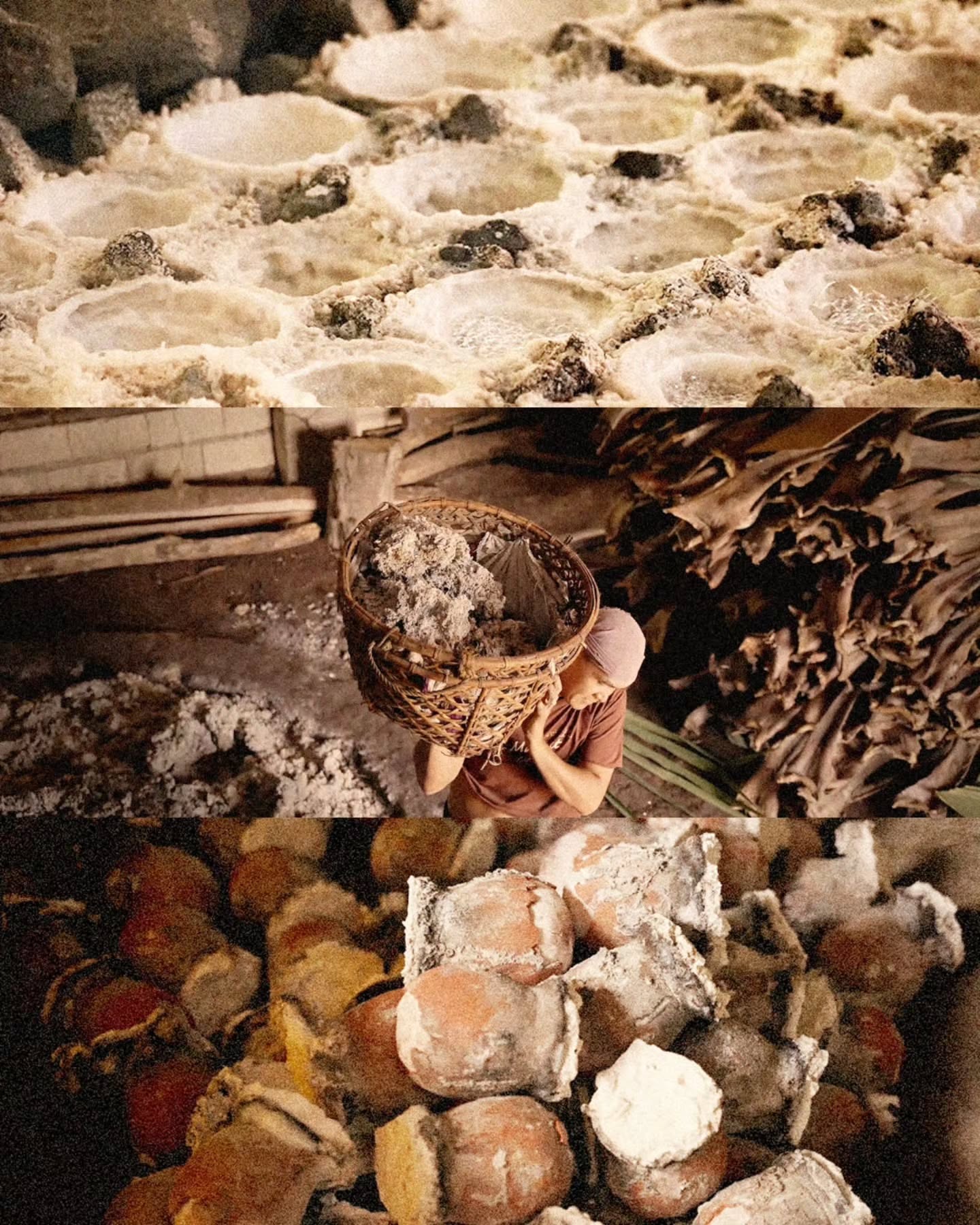
Asin Tibuok is also registered as a Geographical Indication, which is “a label that certifies that a product—like food, crafts, or farm goods—comes from a specific place and gets its unique qualities from that location and its people,” as illustrated on Erwan’s post as well. “It helps protect authentic local products, prevent misleading copies, and boost the value and livelihood of the communities that create them.”
More than an ingredient, Asin Tibuok is a significant part of Philippine culture. Tolerating imitations puts us steps backward in safeguarding not just the practice, but the varied aspects in which our identity is formed.

Kyla Villena loves a good lip gloss and a trip to the art gallery. She is Preview's beauty girl, who doubles as a self-proclaimed motivational speaker.
Read more stories about
filipino food ,food ,food news ,culture feature ,erwan heussaff ,preview explainer