Why Are We Allowing Knockoffs to Exploit Our Filipino Designers?
Rampant copying has become a threat to Filipino fashion, and it's alarming how we’ve learned to tolerate what harms our own.
Published on Nov 27, 2025
Imitation, they say, is the best form of flattery.
There's no shortage of it across the world. One loop around the Greenhills tiangge and you’ll spot near-perfect counterfeits displayed like souvenirs. It's almost like an open secret: designer replicas being sold for a fraction of the original price, born out of economic disparity and the sheer cultural footprint of global luxury brands.
In Philippine fashion, this imitation has taken on a different life—and for Filipino designers getting the short end of the stick, there is nothing about it that’s flattering.
Beyond monogrammed Louis Vuitton bags and Balenciaga hoodies, it has become increasingly common to see Filipino designers’ creations getting ripped off without due credit. Often, these local designs are plagiarized faster than the original can gain momentum. Hours spent painstakingly creating something out of nothing, only for a mass-produced knockoff to appear in a Divisoria stall weeks later.
The Plight of Filipino Designers Against Plagiarism in Fashion
The most recent case in point happened earlier this month, when Filipino fashion designer Daryl Maat called out DepEd Secretary Sonny Angara for wearing a barong almost identical to his iconic pad-paper design. “We are grateful that our pad-paper barong has received so much attention and admiration from many people, especially from our civil servants. However, we would appreciate it even more if public officials recognized the hours of effort and thought we put into our garments by patronizing our ORIGINAL work,” Daryl wrote in his now-expired Instagram story, referencing the strikingly similar piece the secretary wore to the department’s 50th anniversary event.
Upon being flagged, Sec. Angara’s office promptly reached out to the designer to apologize. And in a separate letter sent to Preview, the Department of Education confirmed the private conversation that took place, clarifying that the secretary’s attire was a matter of “personal prerogative” and emphasizing the agency’s commitment to respecting Filipino creativity and ownership.
For the uninitiated, each of Daryl’s pad-paper barongs would take around 120 hours of meticulous hand embroidery to recreate the nostalgic blue and red ruling lines of pad paper on cocoon fabric. More than a nod to childhood, it's a playful yet culturally rooted concept executed with skill, precision, and time. This level of craftsmanship is something one simply cannot replicate for a few hundred pesos.
And yet, this wasn’t the first time his signature design had been copied. Long before this particular incident with Sec. Angara, the designer had previously been made aware of fake pad-paper barongs surfacing in mass-market stalls.
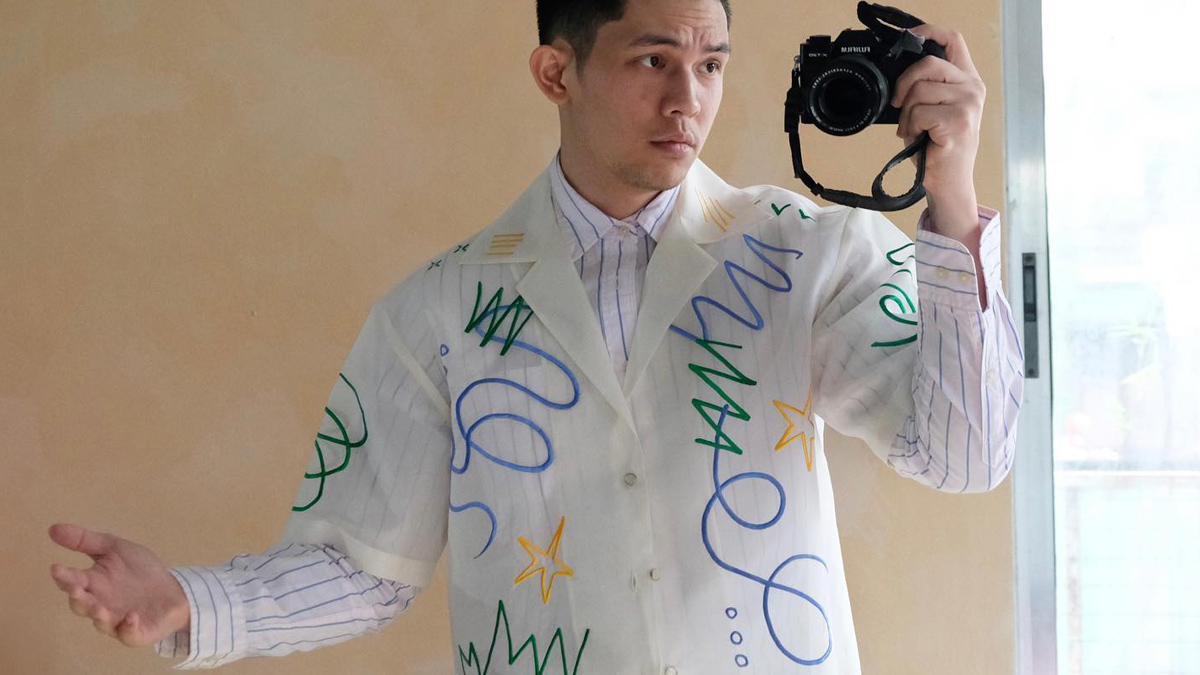
Preview BFFD 2023 awardee RJ Santos of Randolf Clothing, for instance, is among the most widely replicated designers in the local menswear scene. His modern barongs—known for their hand-drawn motifs, surrealist illustrations, and contemporary interpretations of traditional embroidery—have appeared in marketplaces and mass stalls as watered-down versions that make a mockery of the craft defining the originals.
"Seeing our designs being blatantly copied by other sellers can be pretty irritating,” he laments in an interview with Preview. "Imagine spending so much effort, brain cells, and energy to produce a single design only for it to be replicated and sold at a much cheaper price."
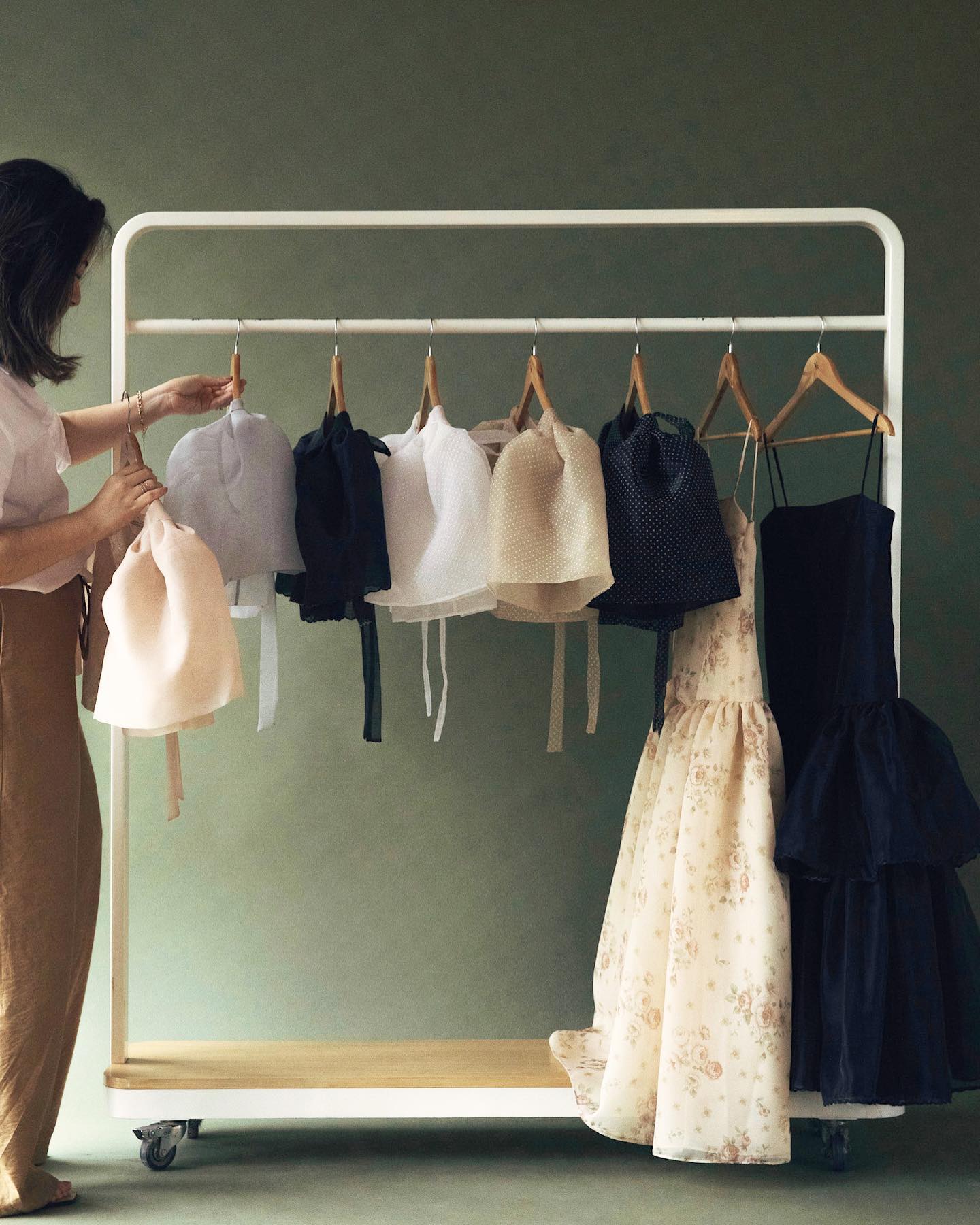
Vania Romoff wasn't immune to dime-store dupes either. Her well-loved Camisa top began as “a smart way to make something so traditional feel accessible”—a thoughtful, modern reimagining of a 19th-century blouse she developed during the pandemic. What started as a functional yet elegant “Zoom-ready” piece for congresswomen attending the SONA soon evolved into a signature design for her brand. When she released a capsule anchored on the Camisa, the entire run sold out in under five minutes. "We have continued to reimagine the piece in a number of fabrications and patterns, from the original piece in silk mikado to a lighter silk organza, to ones with bow closures in the back, to ones with a train and a variety of embellishments and prints," the designer says of her best-selling top.
But almost as swiftly as it gained traction, the imitations followed. Soon, countless versions began spawning online, bearing silhouettes and details unmistakably lifted from her original design. And, as with RJ’s experience, some counterfeit sellers even used her campaign photos without her consent.
Despite the influx of imitations, her clients could instantly distinguish the fake from the original. “I was surprised by the number of copies that ensued,” Vania shares, “but many of my clients were quick to point out the stark difference in pattern, material, and quality.”
Filipino designers know this paradox all too well: Success is both the reward and the threat. Before they can revel in the breakthrough of an original design, they are forced to brace for the inevitable risk of being ruthlessly duplicated for cheap.
The Pinoy Cultural Mindset That Enables Copying
How quickly the public seems to normalize it is arguably more baffling and troubling than the act of copying itself. Whenever a local designer speaks up against plagiarism, the comment section tends to expose how deeply ingrained imitation has become in our collective psyche.
These common refrains are very telling of how we truly view Filipino design, and they reflect a cultural mindset shaped by years of seeing Filipino creativity undervalued, our local artistic labor downplayed, and originality treated as something anyone can freely take.
“Unless it’s registered, anyone can copy.”
In reality, fashion is one of the least protected creative fields under Philippine IP law. The system is built to safeguard patents, logos, industrial designs, and certain surface patterns, but not the things that typically matter in fashion: silhouettes, techniques, construction methods, reinterpretations of cultural garments, or hand-embroidery styles. These exist in legal gray zones that the law hasn’t caught up with.
Most independent designers also don’t have the financial capacity to register every single design they create, nor does it make sense to do so in a fast-paced industry where collections change seasonally and inspiration evolves constantly. Filing a single design registration can cost thousands, and registration takes months. Meanwhile, a knockoff can be produced in days.
Legality and ethics are rarely the same thing. Hiding behind bureaucratic gaps or insisting that “anyone can copy” unless a design is registered is essentially being complicit in design theft.
“It doesn’t look exactly the same anyway.”
Does copying only count when a garment is duplicated stitch for stitch?
Plagiarism in fashion rarely looks like a carbon copy; more often, it's a dilution. It's a replicated design devoid of context, reduced to its most recognizable elements, and reproduced in cheaper fabric. Counterfeiters seldom recreate an original piece perfectly because they don't need to. They recreate it just enough to cash in on its recognition while avoiding the effort, skill, and labor that made it meaningful in the first place. The result is a watered-down version that resembles the original in concept but not in quality.
A designer’s authorship lives in their concept, proportions, reinterpretation of heritage, and fabrication choices, among many others. Copying the idea while discarding the skill, technique, and intention behind it is still copying. It’s just copying without the craftsmanship.
“The original is too expensive.”
Some argue that if the original is out of reach, then the cheaper version must be fair game. But affordability and plagiarism are not the same conversation, and there is danger in conflating the two.
The price of an original garment accounts for fabric sourcing, artisan labor, fair wages, pattern-making, sampling, and hours—if not weeks—of manual work. A handmade barong or a well-constructed camisa top is expensive because craftsmanship is expensive. But perhaps what we truly struggle to accept isn't merely the price tag itself, but the idea that Filipino creativity deserves to be valued at all. This mindset lays bare a convoluted double standard: We readily accept that luxury goods cost more because of craftsmanship and brand legacy, yet we hesitate to extend the same respect to Filipino artisans—even when their work demands equal, if not greater, skill.
Accessibility is a real issue, but design theft is not the solution. Cheaper alternatives can exist without stealing from independent designers. It’s reductive to frame the designer as unreasonable for pricing their work according to the labor it requires, while celebrating the counterfeiter for offering a shortcut. Affordability should push the industry toward better pricing diversity, more transparent production, and more inclusive design—not toward normalizing theft disguised as "accessibility."
The Role of the Community in Protecting Filipino Fashion
Legal protection, while necessary, will never be enough on its own. Even the most airtight intellectual property system cannot compensate for a community that shrugs at imitation. As long as design theft is treated as harmless and inevitable, there is no amount of paperwork that will protect a designer's work from being the next target of replication.
When asked what Filipino designers truly need, RJ Santos pointed not to lawsuits or registrations, but to a shift in collective behavior: “Beyond having laws that protect our designs, I think education is just as important both for manufacturers and the market. People need to understand why copying shouldn’t be normalized," Randolf's creative director notes. "Legal protection helps, but at the end of the day, sellers will still sell what they think will sell. What we really need is a shift in mindset to celebrate originality, not replication."
Vania Romoff, meanwhile, echoes the sentiment by underscoring the role of the consumer and how the community’s choices shape whether the original survives. “You can trademark or patent, and that’s always a smart thing to do. However, a lot of it has to do with our community as well. When people support and buy from designers or brands that they know sell copies, then it validates these [counterfeit] brands. Ultimately, it’s the consumerism that makes a difference,” she tells Preview.
While laws do exist to offer protection to designers, at its core, this isn’t just a legal issue but an ethical one. They can only go so far when we, as a community, fail to protect our own. It’s the everyday choices of consumers, manufacturers, influencers, stylists, public figures, and even fellow designers that ultimately determine the fate of the local design industry. Respecting Filipino design goes beyond calling out plagiarism—it demands that we refuse to participate in it.
RJ puts it plainly, "We’re part of the same community, and counterfeits affect not just the brand but the value of originality in local design."
When it comes down to it, perhaps the real solution lies not in punishing the copy, but in choosing—intentionally and consistently—to honor the original.

Marj is the Editor-in-Chief of Preview. A former economics major, she dove headfirst into fashion publishing and hasn’t looked back since.