What Is Transition Blush? The Controversy Behind the Viral Makeup Trend
The TikTok-famous blush technique has sparked an online debate after Patrick Ta's product launch reignited questions over who popularized the look.

by Kyla Villena
Published on Jun 25, 2026
Transition blush is the blush application technique taking over TikTok. However, its viral rise isn't just due to the seamless effect it creates; recently, it has also been fueled by a controversy over who originated the technique, involving two makeup artists.
What Is Transition Blush?
Ngozi Edeme, known professionally as Painted by Esther, popularized the transition blush technique. She frequently uses it on her roster of clients—including global artists Kelly Rowland, Tyla, Raye, and Chloe Bailey—but the look has become most closely associated with model and TV personality Olandria, who's been her muse.
The technique is characterized by its seamless blending and hyperfeminine finish, making it instantly recognizable. As the UK-based makeup artist told MAC Cosmetics, “It’s not blind, it’s purposeful, it’s intentional.”
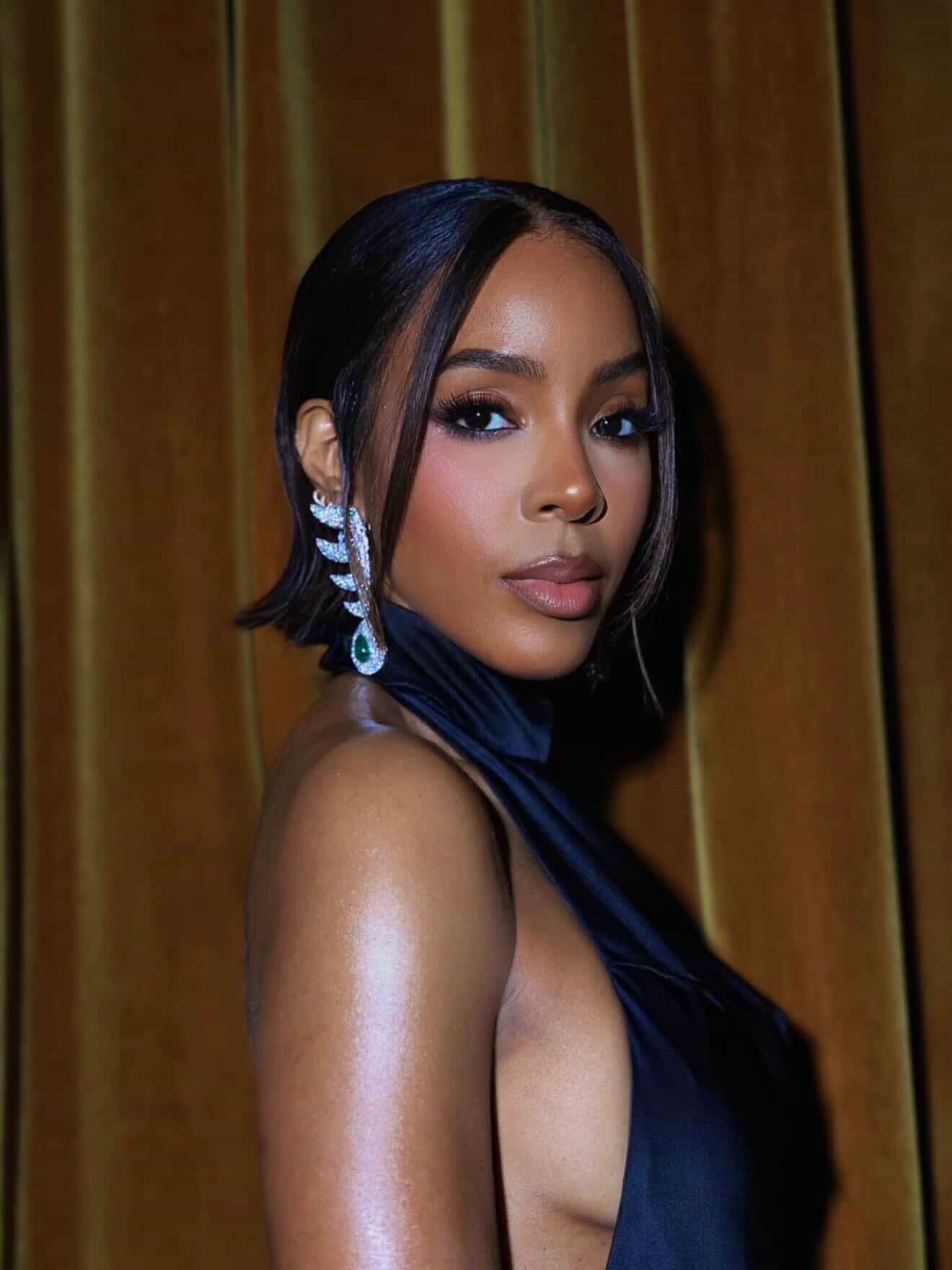
Kelly Rowland. Photo: Instagram/paintedbyesther
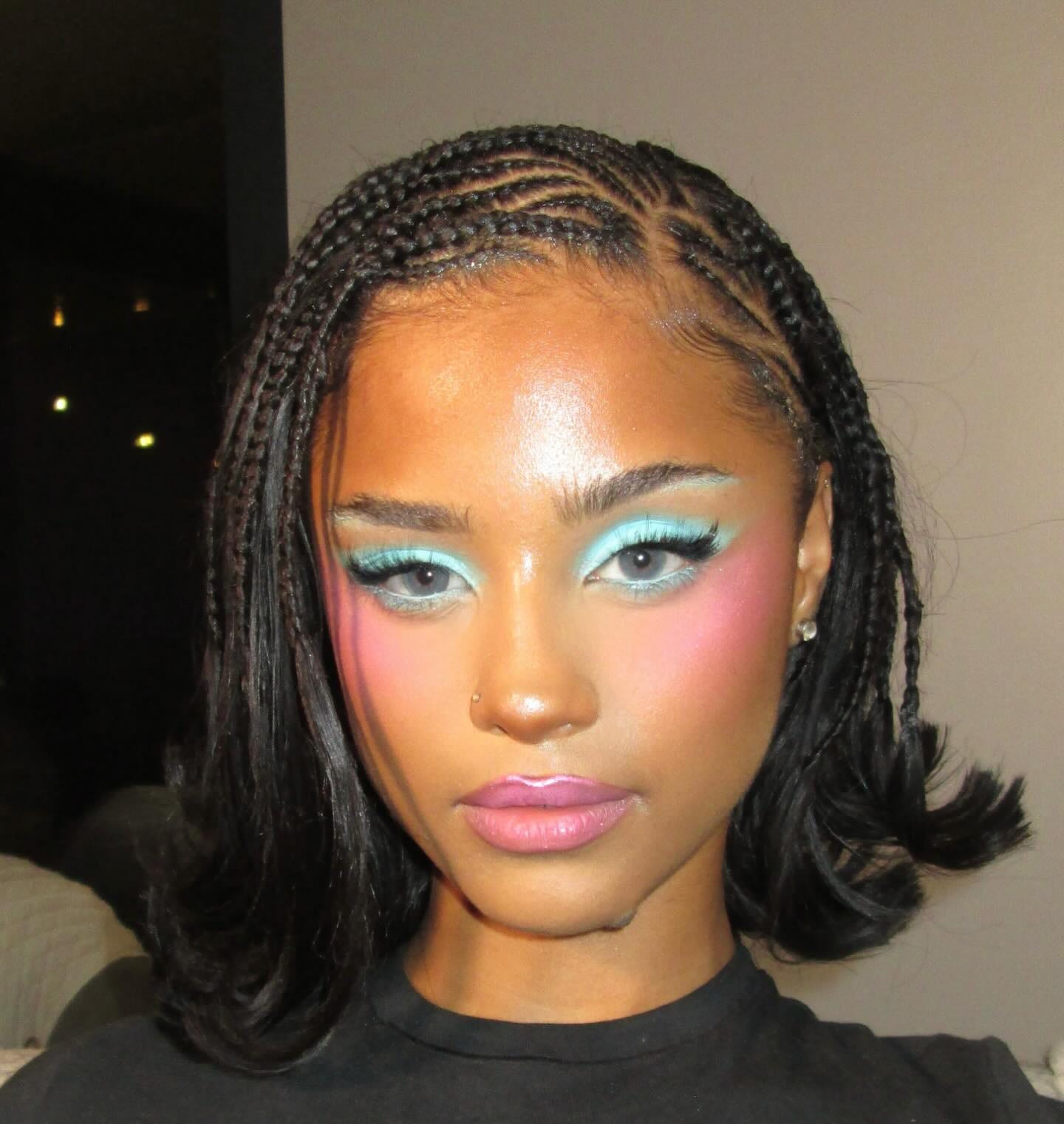
Tyla. Photo: Instagram/paintedbyesther
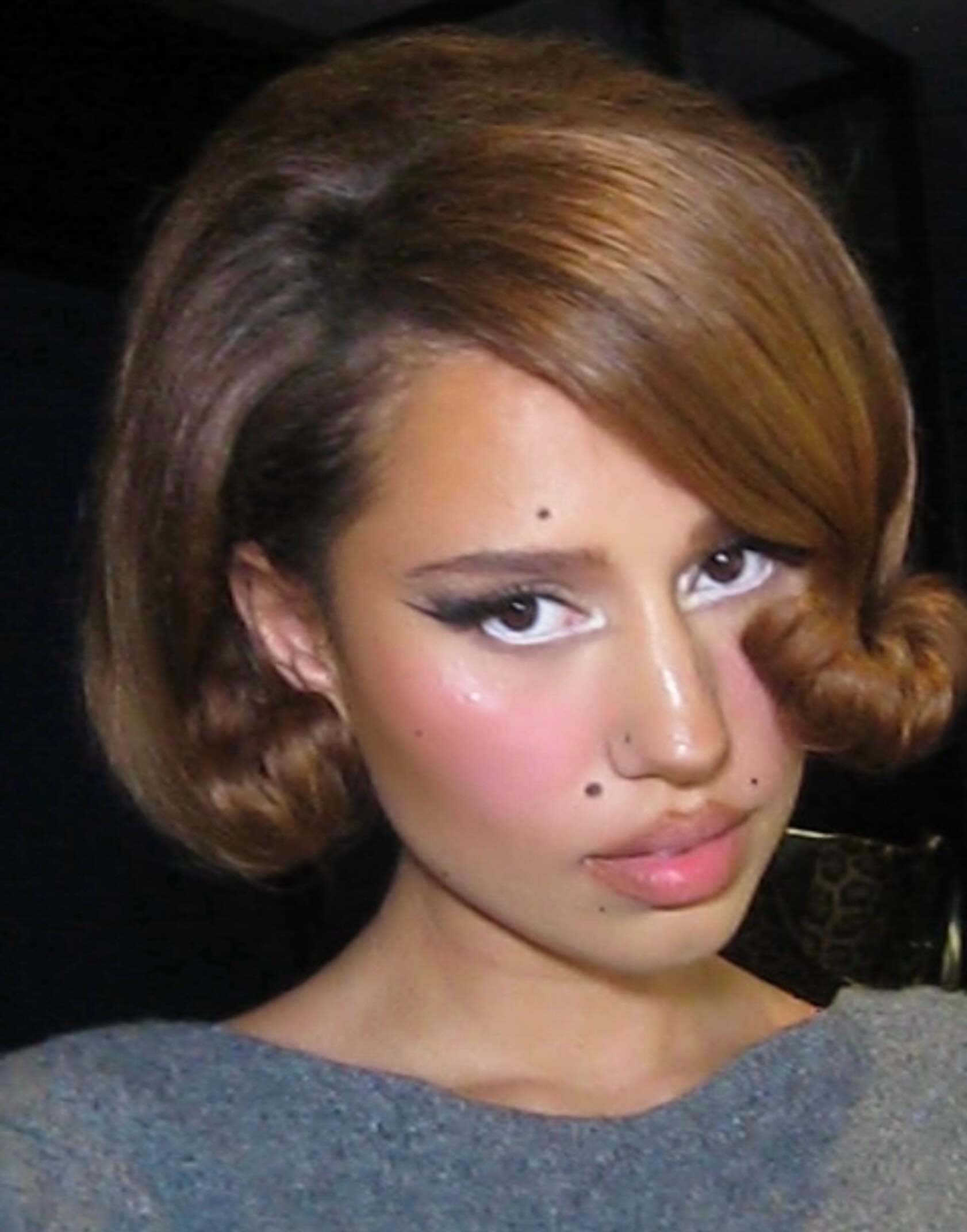
Raye. Photo: Instagram/paintedbyesther
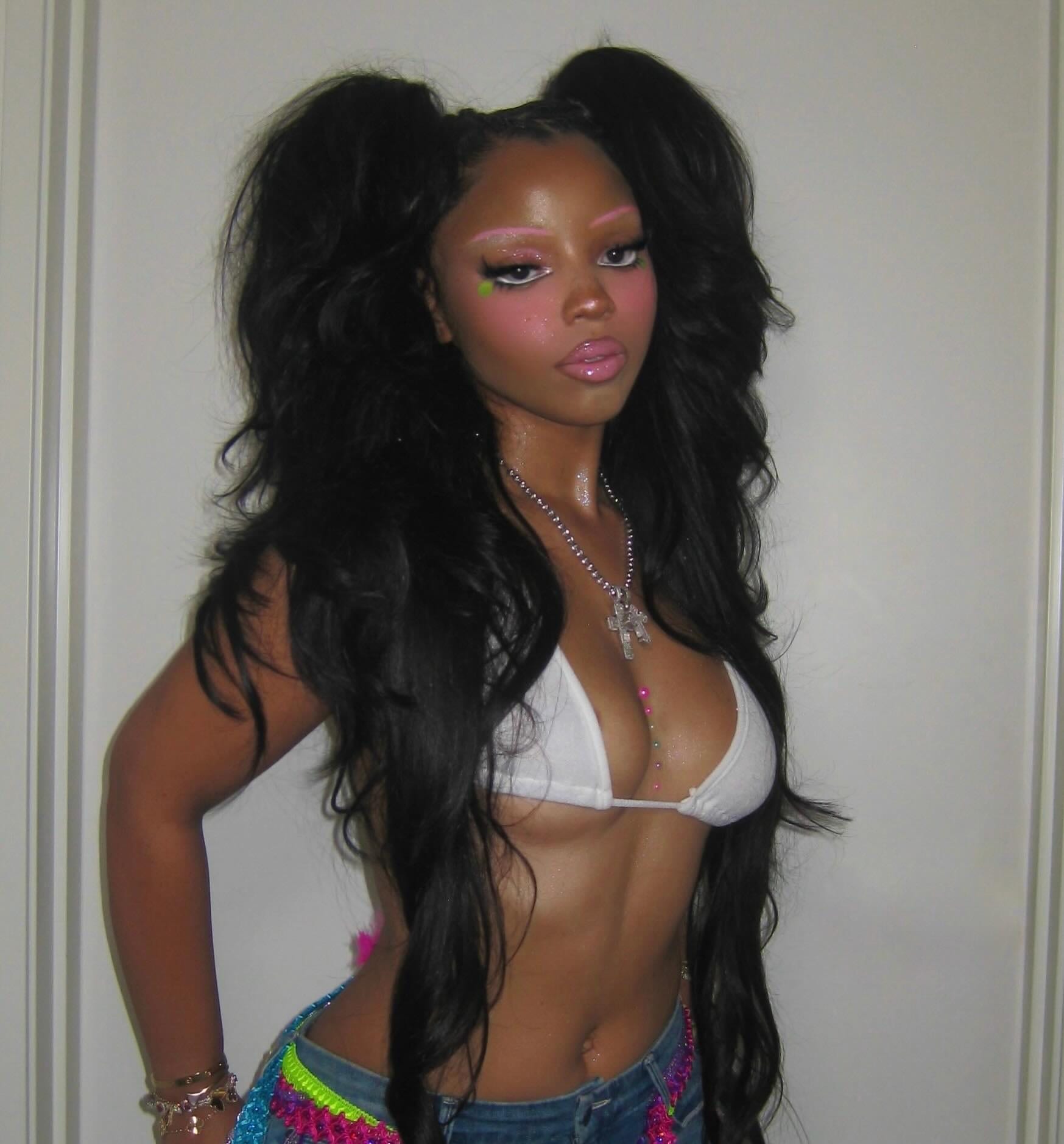
Chloe Bailey. Photo: Instagram/paintedbyesther
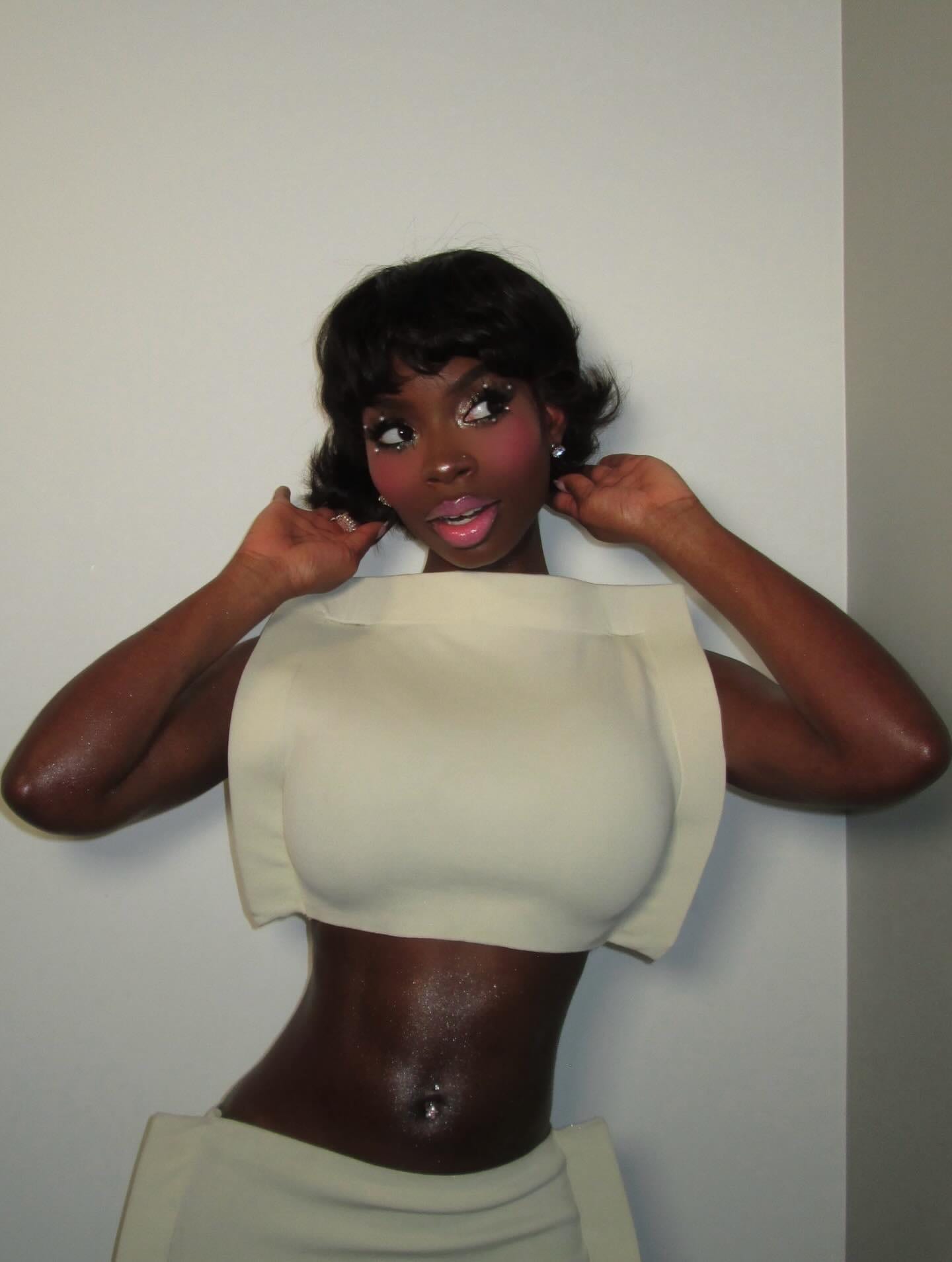
Olandria. Photo: Instagram/paintedbyesther
photos to expand
The steps to achieve it are not fixed and can be altered according to one’s preferences. For Esther, the blend starts on the outer side of the face and gradually goes inwards. “I tend to start light-to-dark or dark-to-light. It always has to have some sort of gradient,” she says. “It helps to blend and reinforce whatever color is the main color.” This technique allows for more dimension and color to show.
Here’s one way to achieve it, as demonstrated by Filipina model and content creator Bianca Ferro.
Prepare three similar blush shades from the same color family—a transition shade, a main shade, and a darker version of the main shade.
Using a makeup brush, apply the main color below your undereyes.
Clean it up with concealer. One dot under each eye and around the nose will do. Blend this with tapping motions so as not to disturb the blush underneath.
Take the darker blush and apply it upwards, starting on the apples of your cheeks
Lightly set your concealer with powder.
Take the transition shade and dust it in between the two previous blush shades to reinforce the color and create that seamless look.
The Transition Blush Controversy, Explained
The beauty community was surprised when Patrick Ta, makeup artist and founder of Patrick Ta Beauty, launched two new products: the Liquid Transition Brightening Blush, designed to tint the skin and brighten the area between the under-eyes and cheeks, and the Transition Blurring Blush Duo, a two-pan powder blush created to seamlessly bridge the blush and concealer. He has also reportedly filed a pending trademark application for the term "transition blush."
In a TikTok video posted on May 21, the Patrick Ta Beauty account shared a tutorial featuring the products. “I created a new blush technique to give you flawless blush every single time,” Patrick said before demonstrating the look using three blush shades.
The news eventually reached Esther, who addressed the controversy in a lengthy TikTok video posted on May 24 that has since garnered 4.2 million views. Holding back tears, she described the situation as a “strange” time in her career.
She clarified that she has never claimed ownership of any makeup technique, instead citing veteran artists Kevyn Aucoin, Danessa Myricks, and Pat McGrath as her inspirations. She said she looks to them for “how they move with grace and intention.”
Esther also claimed she had experienced several “weird occurrences” involving Patrick. She recalled one incident in which Rima Minasyan, co-founder of Patrick Ta Beauty, allegedly booked her for a “do and go” makeup appointment. Esther said she initially accepted the booking but later learned that Minasyan also wanted to film her applying the makeup.
“I said no, that doesn’t sit right with me. That’s not what you’re booking me for,” Esther recalled, adding that she ultimately canceled the appointment. “If you want me to teach you, then that’s a different service, so that’s conniving.”
Esther also spoke about the challenges of being a Black woman in the beauty industry. “You have to fight twice as hard to get just half of what you deserve,” she said. She later added, “I will reiterate: I did not start anything. I am 29 years old. That would be ludicrous to claim ownership of anything. But what you will not belittle is my influence.”
Patrick responded later that same day by posting another tutorial video, which he said had been filmed in early March. In the caption, he wrote, “I started working on transition blush one and a half years ago. I wanted to create a product that was specifically made for this blush look. I do not own this look.”
He also addressed Esther directly, writing that she is “amazing and so talented” and acknowledging that she “popularized this look through her work and through Olandria.” Patrick added that he had also been creating his own version of the blush look since 2021, emphasizing that it was “not the same as Esther but my own version.” He concluded, “I have nothing but love and respect for Esther.”
In a statement to Today, Patrick said he had reached out to Esther before the launch of the Transition Blush products to explore a paid collaboration but did not receive a response. “When I didn’t hear back, my team also followed up before launch regarding a paid opportunity around the campaign,” he said. Patrick added, “While Esther’s team declined the partnership, all of our interactions with her team remained warm and positive, and they expressed openness to staying in touch to work together down the line.”
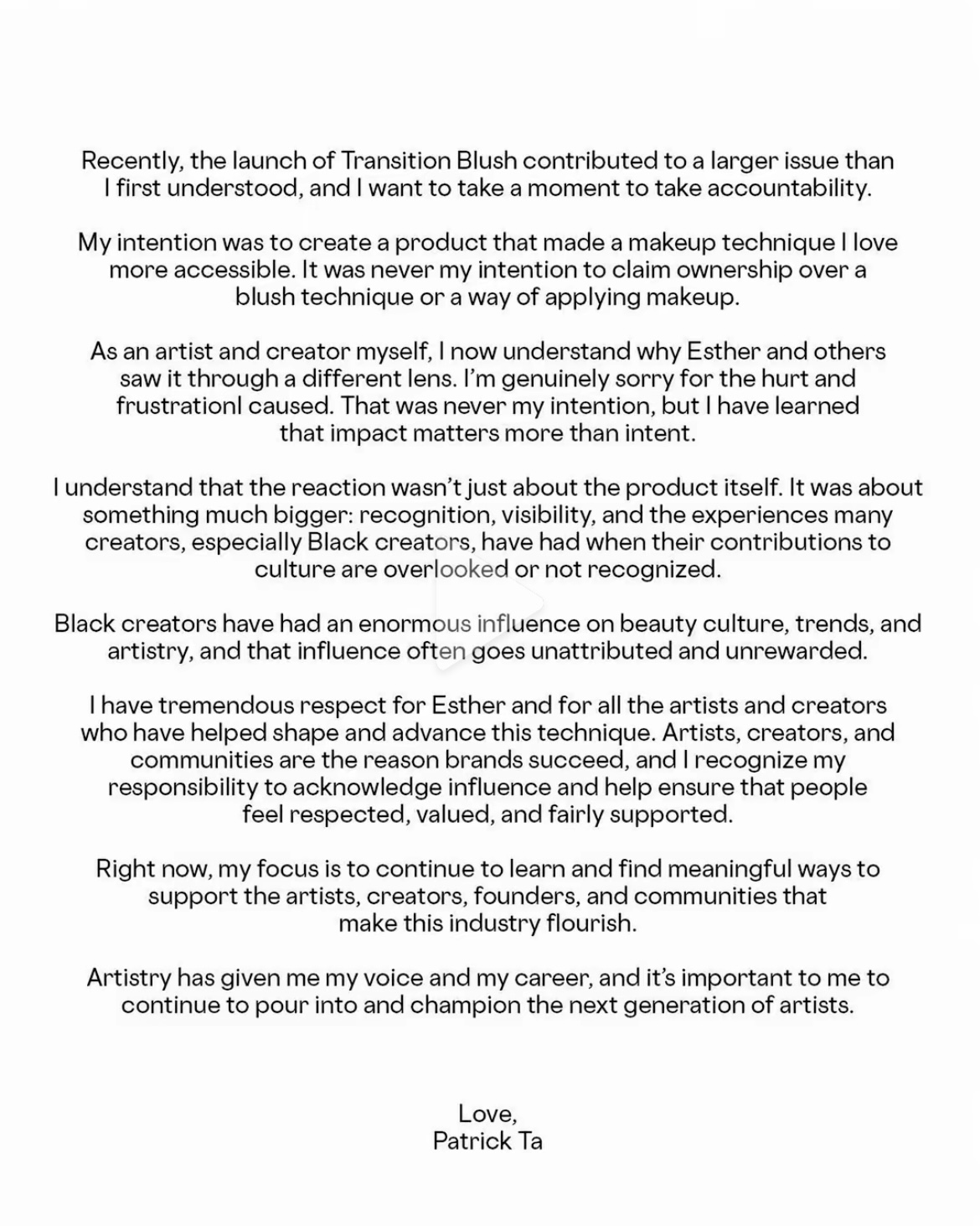
On June 16, Patrick also shared a public apology, acknowledging the “enormous influence” Black creators have had on the beauty industry.

Kyla Villena loves a good lip gloss and a trip to the art gallery. She is Preview's beauty girl, who doubles as a self-proclaimed motivational speaker.