Why the Bebot Makeup Trend Demands Historical Accuracy
The viral bebot makeup trend isn’t just about recreating a Y2K look. It’s a reflection of how Filipina beauty has been shaped, seen, and finally reclaimed.
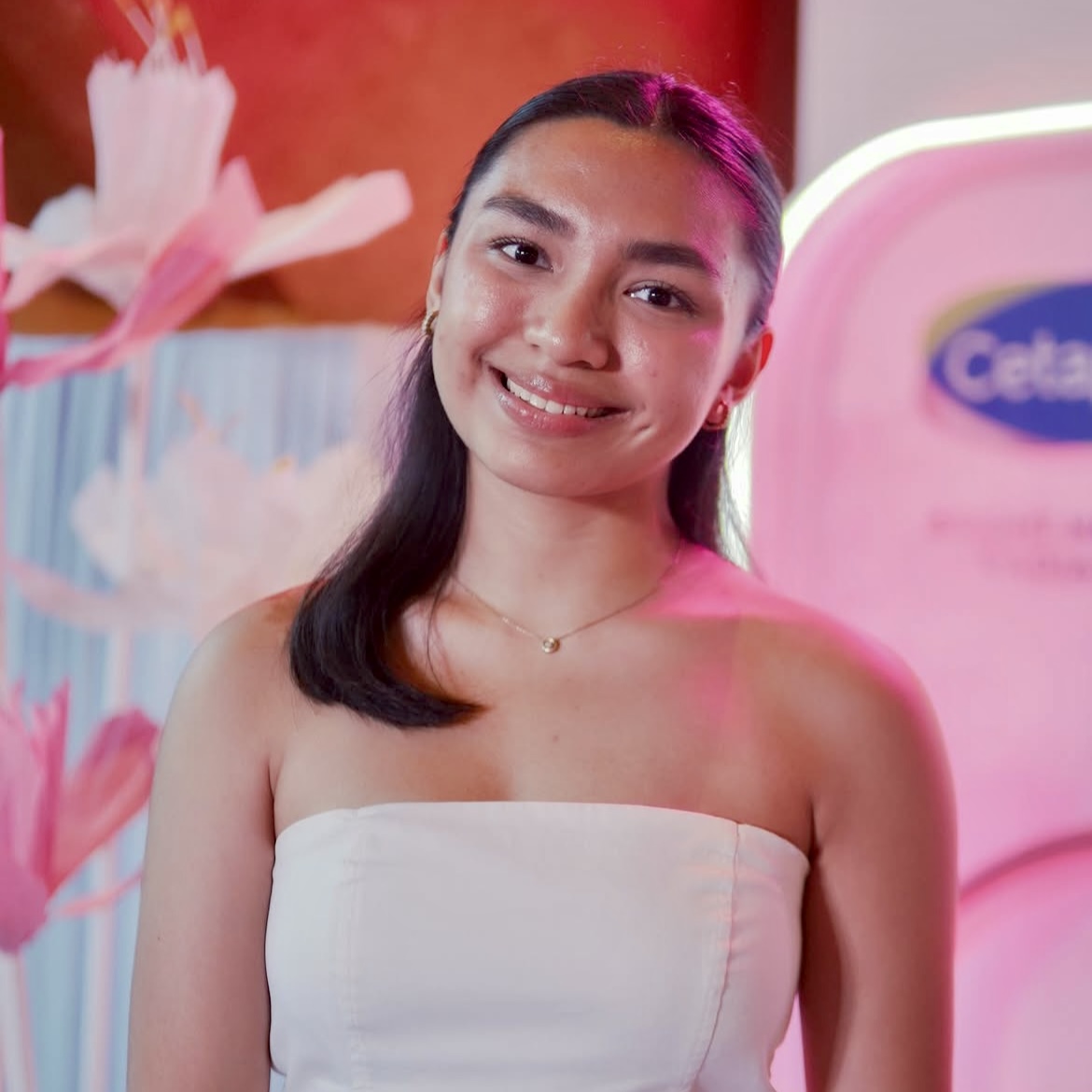
by Kyla Villena
Published on Feb 23, 2026
The bebot makeup trend has taken over social media. With its inescapability, chronically online individuals have probably familiarized themselves with the videos that reveal a nostalgic Y2K look to the sound of “Bebot” by Black Eyed Peas.
The conversation around the trend has moved beyond execution and taken on broader cultural weight, largely because of two words: “historically accurate.”
The aspiration for historical accuracy seemingly began with the TikTok entry of Cebu-based content creator Monique Libres (@monique_libres), whose TikTok entry has garnered over 3.8 million views in less than a month. It has since become a blueprint, guiding other content creators and celebrities who have followed suit.
She later posted a separate, more in-depth tutorial, which has also amassed hundreds of thousands of views. In the comments, a user named Eileen, who claimed to be the makeup artist behind the resurfaced music video, affirmed the recreation: “You nailed it,” she wrote.
Like any cultural conversation, there are differing takes. Some, like Monique and Eileen, believe that committing to the accuracy of a beauty look matters. Others argue that a trend is simply a trend—and that it isn’t necessarily that "deep."
So who better to weigh in than an OG bebot herself? Preview spoke with Myrza Sison, Summit Media’s Editor-at-Large and Preview’s founding Fashion Editor, who lived through the early 2000s as Cosmopolitan Philippines’ Editor-in-Chief, no less.
So What Makes a Historically Accurate Bebot?
Simply put, a bebot is an attractive young woman. Myrza describes her as “friendly, charming, and someone who always presents herself well.” Rather than experimental or edgy, her energy exudes a kind of warmth that’s easily likable.
Zeroing in on the details, Myrza noted that today’s TikTok recreations often feature the signature half-pony hairstyle with a pouf at the crown. At the time, long hair worn in a side part was just as common, whether pin-straight or softly curled. She herself favored a layered shag.
Makeup, meanwhile, was defined by thin, sculpted brows. The eyes were dressed in neutral or pastel tones, often topped with shimmer and anchored by black liner and generous coats of mascara. “I loved the smoky eye!” she recalled.
Warm bronzer added dimension to the face, which was typically kept matte or satin in finish, while glossy nude or pink lips completed the look.
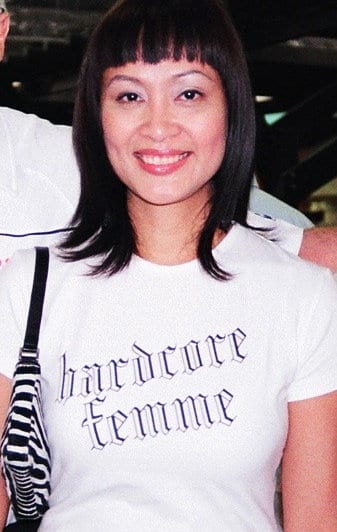
Photo: Courtesy of Myrza Sison
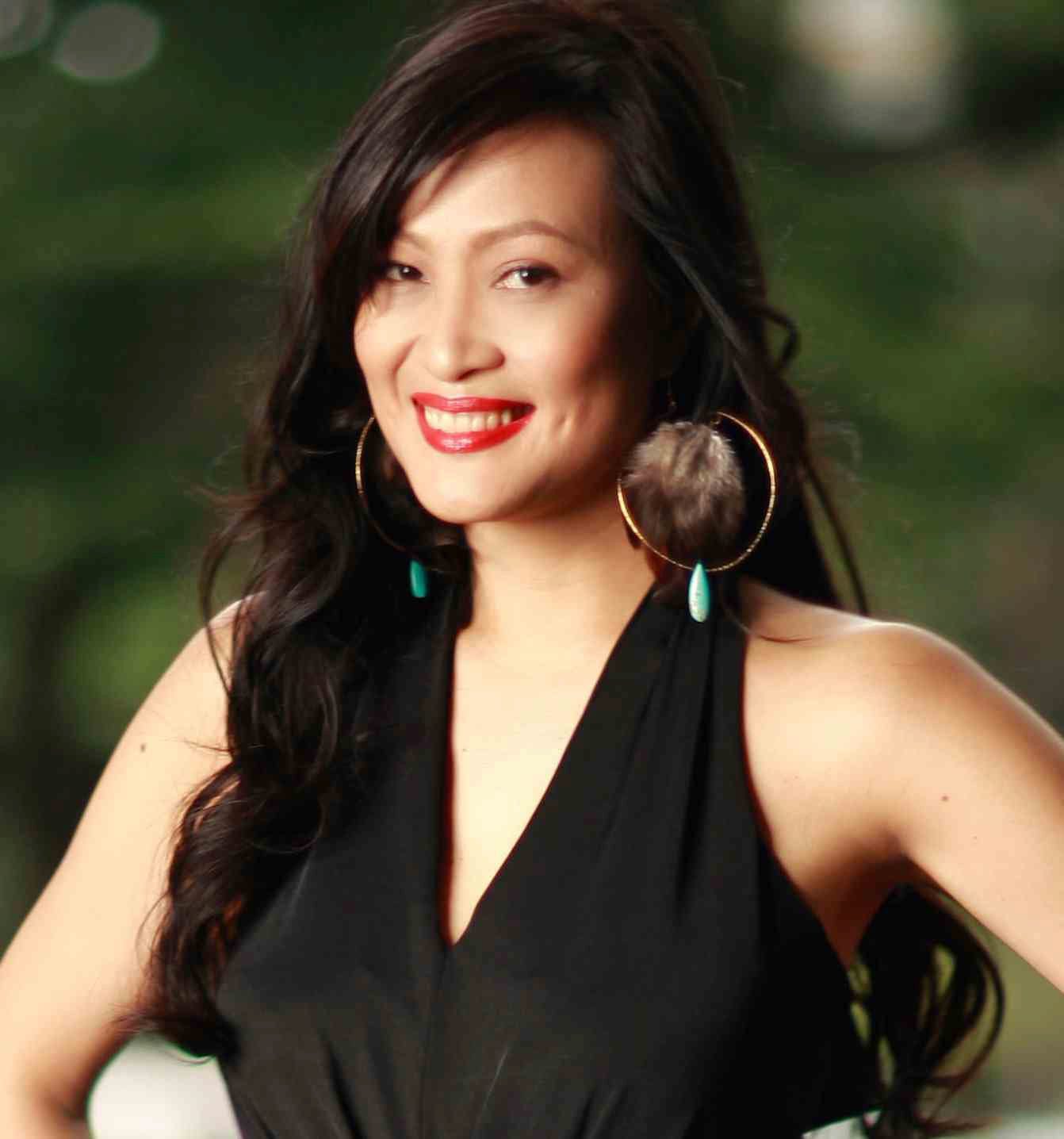
Photo: Mark Nicdao, courtesy of Myrza Sison
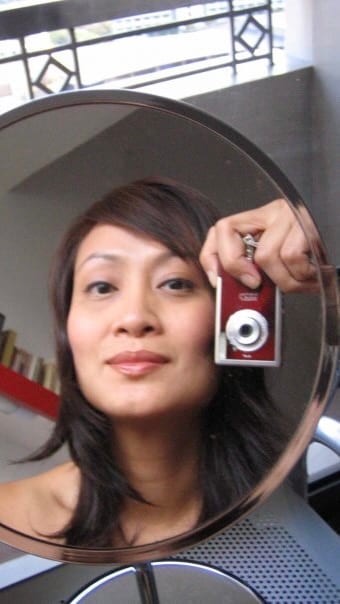
Photo: Courtesy of Myrza Sison
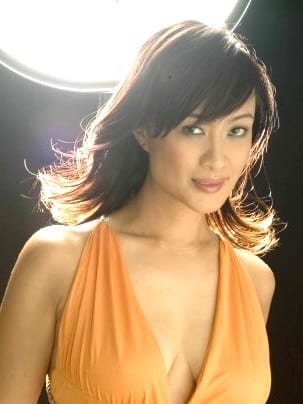
Photo: Xander Angeles, courtesy of Myrza Sison
photos to expand
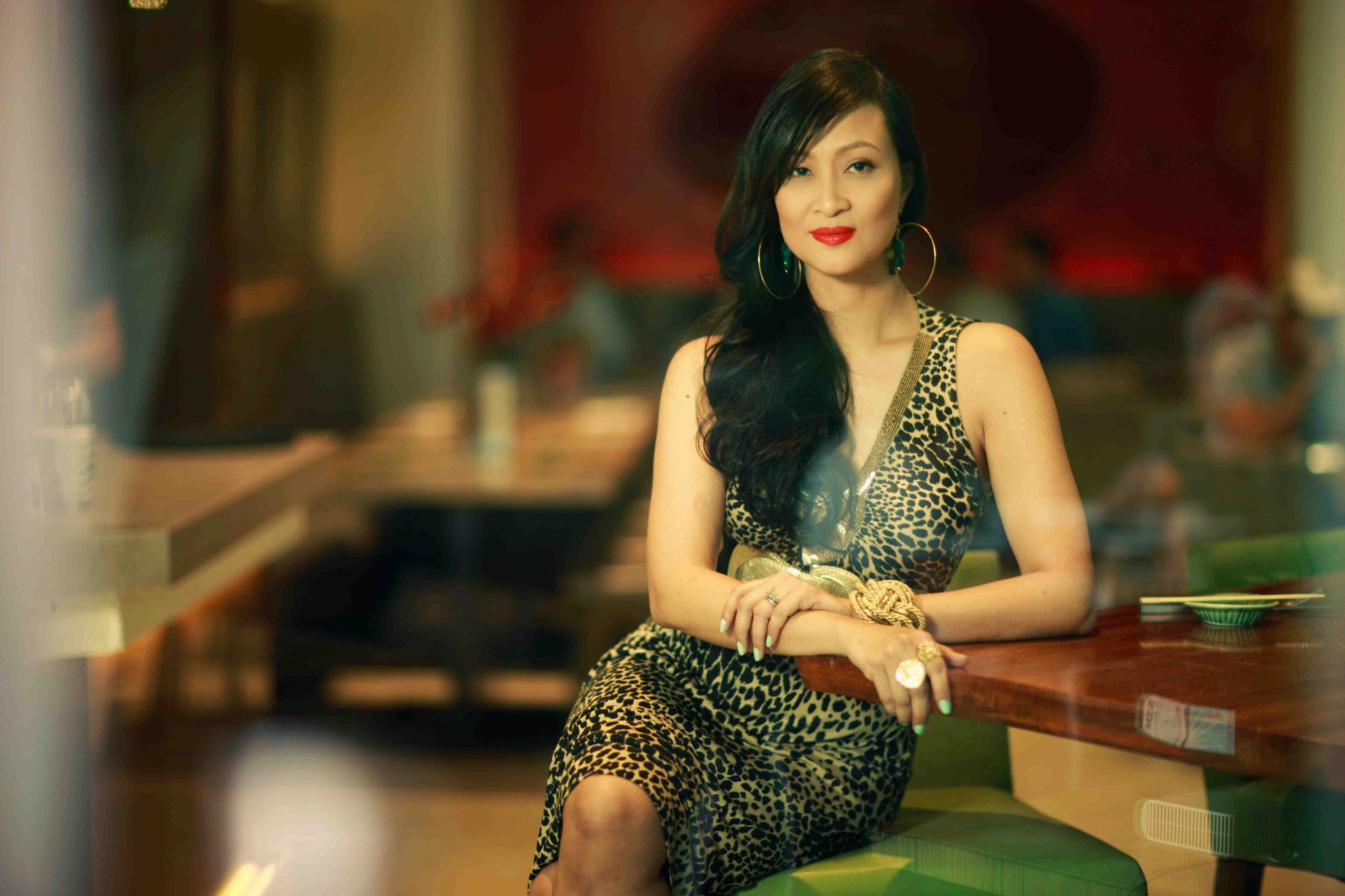
“Fitted, body-conscious pieces” were essential to a bebot’s wardrobe. Baby tees, tanks, halter and hanky tops were typically paired with low- to mid-rise jeans or minis, and finished with strappy heeled sandals. Hoop or chandelier earrings, meanwhile, were non-negotiable accessories.
According to Myrza, the look was already widely present before the 2005 hit came out. “The song captured and validated what many girls were already doing beauty- and fashion-wise.”
The Bebot Archetype and the Male Gaze
Undeniably, the dominance of the male gaze is portrayed in the music video that inspired the trend. Individual clips of the quartet—composed of will.i.am, apl.de.ap, Taboo, and Fergie—singing along to the lyrics appear throughout. While half of the members remained alone in their shots, two of the male members were accompanied by a woman dancing with (or on) them.
Much of the music video unfolds in scenes of gatherings and parties across the Philippines. Whether indoors or outdoors, the bebots are shown dancing and exchanging knowing glances with the men around them.
The video reflects the cultural context of the era—one that continues to shape how the trend is interpreted today. Some content creators have pointed out that the look evokes a specific archetype, associated with women perceived as flirtatious, regardless of whether the men in question were taken or not.
A similar look has also been depicted in Filipino films, with the prime example of Mocha Uson in Cathy Garcia-Sampana’s 2013 film Four Sisters and a Wedding. Her character—who checks all the boxes of how a bebot looked—cozies up with a womanizer named Chad (played by Bernard Palanca), who was in a relationship with Alex (Angel Locsin).
On Historical Accuracy and Why It Matters
For the longest time, standards in the Philippines have been shaped by outside influence. It shows in the language we speak, the food we eat, and even the educational systems we inherited—all bearing traces of the countries that once colonized us. Yet Filipinos have never simply adopted these wholesale. We reinterpret them, infusing our own sensibilities and reshaping them into something distinctly ours. The same can be said of the beauty look now recognized as bebot makeup.
The turn of the millennium marked a period of rapid cultural exchange. Emerging technologies brought global influences closer than ever, and Western pop culture played a defining role in shaping the visual language of the early 2000s. Artists and personalities like Britney Spears and Paris Hilton popularized the Y2K aesthetic that continues to resonate today. Ultra-thin brows, high-shine lips, and shimmering eyeshadow—as Myrza recalled—became part of everyday beauty in the Philippines.
Despite the influx of global beauty trends, the preference for brighter, fairer skin remained deeply ingrained. Whitening products dominated store shelves, and many Filipinas built their routines around achieving a lighter, more even complexion.
Although the male gaze was pervasive and fair complexions were often idealized at the time, the music video prominently featured Filipino-American singer Jasmine Trias alongside other Filipinas who appeared fully confident in their own skin.
Myrza reflected on this shift in perspective: “I love how the resurfaced Bebot music video celebrates Jasmine Trias and other morenas proudly owning their natural Pinay features: brown skin, black hair, real button noses, short lashes, and dark brown eyes sans colored contacts—a look that I hope can stay!”
When asked how the revival made her feel, Myrza shared that she was “nostalgic and amused that how I looked 20 years ago has become a thing again.” She added, “Trends always come back, but what’s interesting now is how self-aware Gen Z is about it.”
This is why historical accuracy matters.
I was three years old when Monkey Business, the album that included “Bebot,” was released. Growing up, my older siblings would keep music channels on, exposing me to the popular songs of the time alongside their personal favorites, which shaped my own taste in music and visuals.
Even then, there was a clear distinction between local and international media. Filipinas could take center stage, but often only within the context of Original Pinoy Music.
If we were to cross the great divide and challenge what it means to be beautiful, we would still have to look a certain way. (And we would probably have to dance.)
The bebot trend is something I associate with nostalgia, much like how we began 2026 by looking back at 2016. As Gen Z, of course, I hopped on that trend. I revisited my old camera roll and found hundreds of photos of women I had saved—faces my 14-year-old self admired and aspired to resemble. The 24-year-old me has since made peace with the fact that I look nothing like Taylor Hill or Kylie Jenner—and that's okay.
The historically grounded take on bebot makeup allows me to honor the ordinary Filipinas who went before me, who knew that they—we—deserve to be seen. I breeze through its origin and picture thousands of Filipinas getting ready in front of the mirror, carefully applying their makeup and wearing skin-tight clothing—sometimes, all for the sake of impressing men.

Seeing this look resurface on social media today underscores how much has shifted. We have evolved into women who wear full glam to their 9-to-5 simply because we can, and we choose to dress a certain way simply because we want to.
There are so many beauty trends that I let pass because I couldn’t see myself in them, but this one reminds me that beauty thrives when you interpret it in a way that makes sense to you—that doesn’t erase who you are and what makes you feel most like yourself.
Perhaps that’s why even content creators with no Filipino roots feel free to take part.
Myrza also cited beauty journalist Kristina Rodulfo, who observed, “For the first time in all my years of reporting on beauty, being Filipina is actually aspirational. So many of us grew up hating our skin, our noses, our eyes—and now these very features are being celebrated.”
It’s easy to dismiss a trend as fleeting, but trends do not emerge in a vacuum. They are shaped by context, reflecting the standards and perspectives of their time. Looking closely at them offers a way to understand not just how we looked, but how we saw ourselves—and how far that vision has evolved.
If society continues to dismiss beauty, fashion, and pop culture as shallow, it risks overlooking how these trends function as actual records of history.
So yes, it is that deep.

Kyla Villena loves a good lip gloss and a trip to the art gallery. She is Preview's beauty girl, who doubles as a self-proclaimed motivational speaker.