Beyond the "Tingi" Mindset and Why Filipino Creatives Deserve to Think Bigger
Reflecting on Nick Joaquin’s 1966 essay, A Heritage of Smallness, the long-standing Filipino tendency to stick with what’s small and safe may be limiting the potential of Filipino creatives today.

by Kyla Villena
Published on Oct 15, 2025
Falling down the rabbit hole of the internet often leads to regret, but if you’re lucky like I was on a random Monday evening, it can unlock a portal to the past that calibrates your lenses for the future. Typed into my search engine was my chosen topic for that night: the Philippines’ tingi culture. The light at the end of my doom-scrolling tunnel was Nick Joaquin’s A Heritage of Smallness.
The essay was written around 1966, nearly four decades before I was born, but its sentiments deeply resonated with me. It felt like it was just written yesterday.
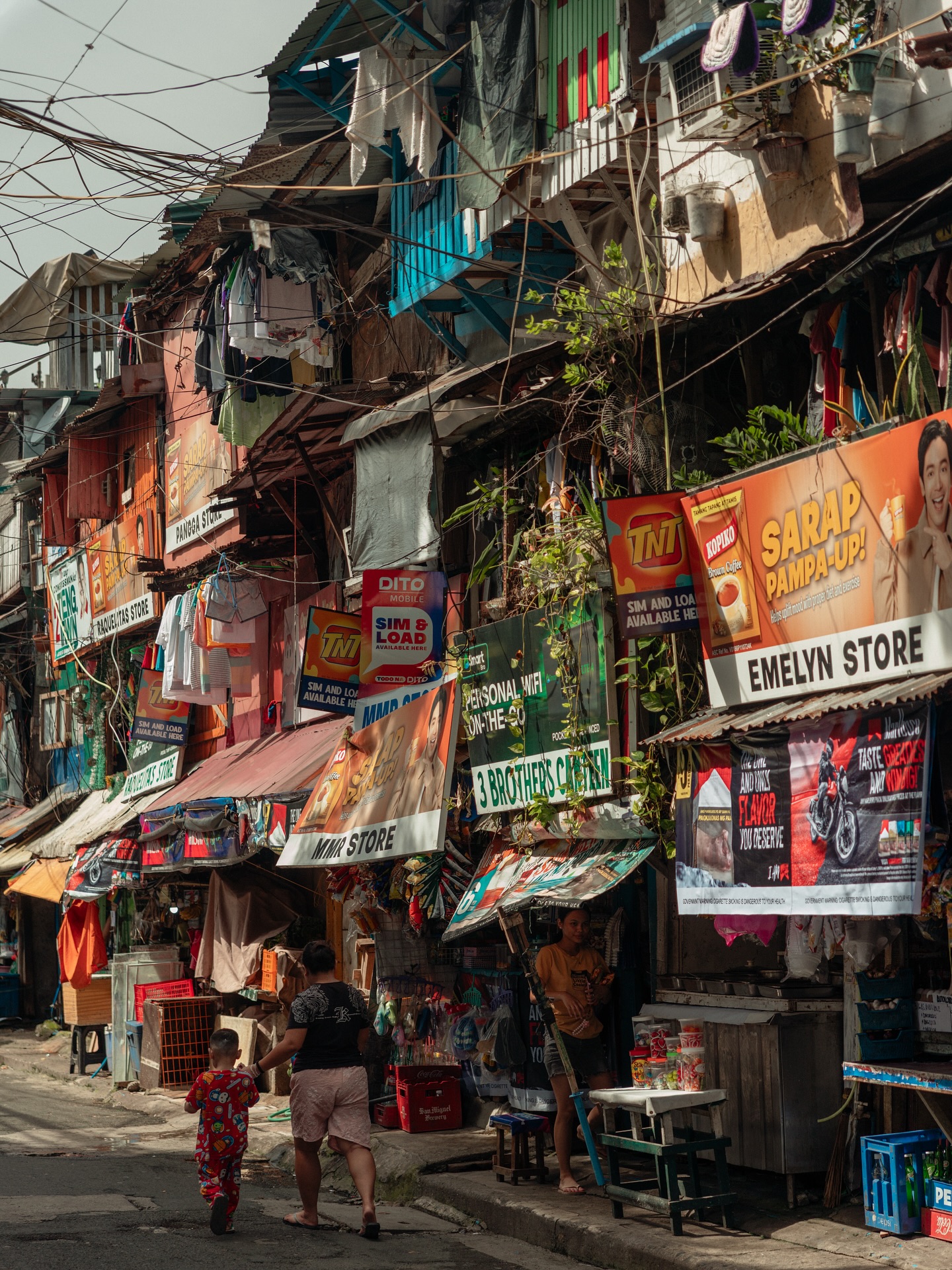
The National Artist for Literature started by enumerating examples in which this essence is embodied in our lives, and this was one: “Industry and production for the Filipino are the small immediate searchings of each day: isang kahig, isang tuka.”
It’s a sentence I read repeatedly, working with many creatives and being one myself.
Was Nick Joaquin simply ahead of his time, or has nothing much changed after almost 60 years?
In an endless pursuit of learning, Preview spoke with PJ Hernandez, the founder of The Traveling Salakot, which is a movement that promotes, protects, and enriches Philippine heritage and history. “Our history shows that we thrive in making things intimate, flexible, and close to daily life rather than aiming for permanence,” he explained.
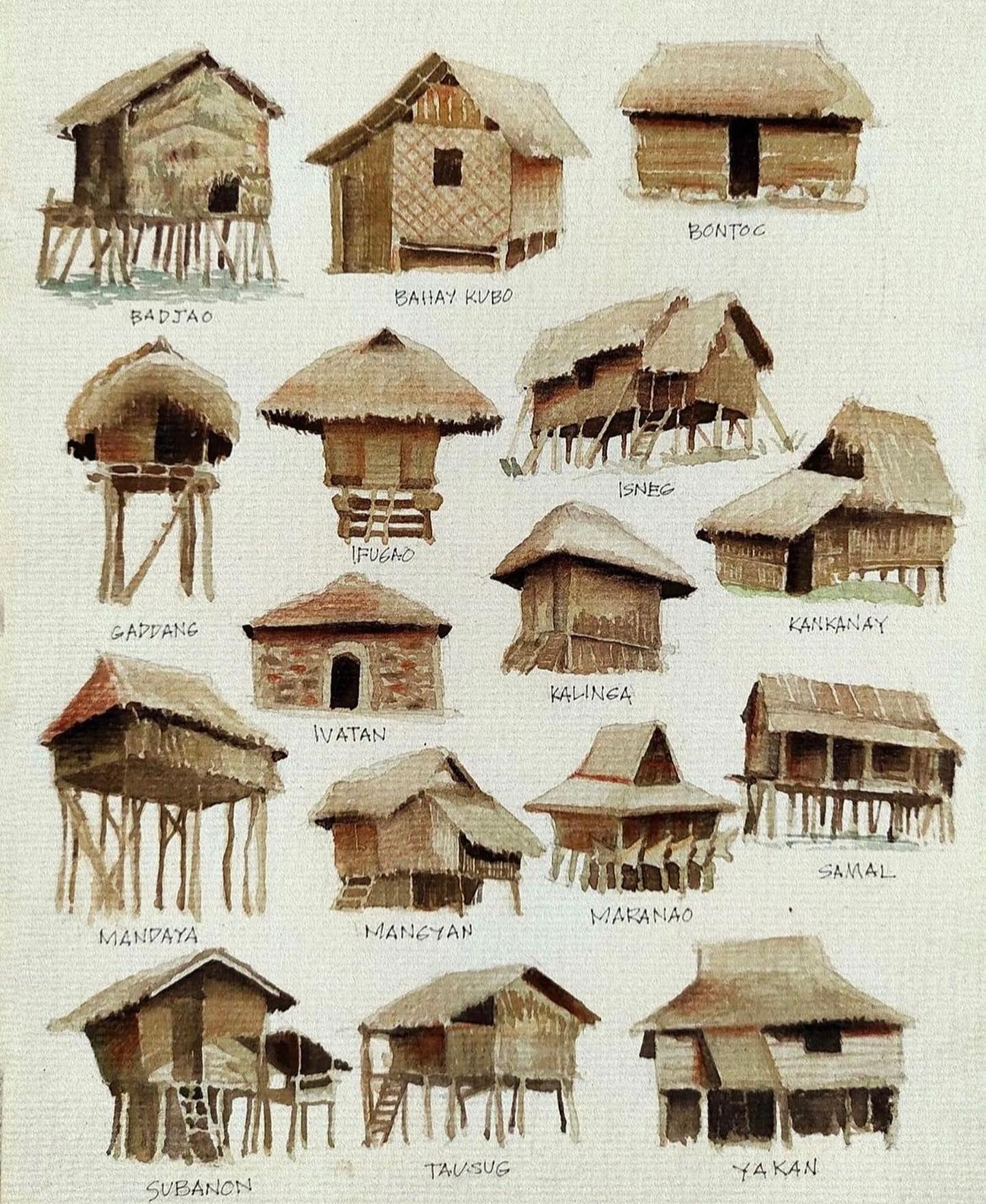
While the Egyptians built pyramids that continue to withstand thousands of years that have passed, and the Chinese constructed the immortal Great Wall, Filipinos created the bahay kubo. “Ingenious, eco-friendly, perfectly suited to our climate, but designed to be replaced, not to last forever.”
Also a cultural worker and a professional educator, PJ helped us map out just how this preference for the small, the temporary, and the familiar is present in the world of Philippine fashion today.
How Our "Tingi" Heritage Reflects in the Filipino Fashion Landscape
This mindset and behavior that we inherited is undeniably captured by the present sartorial scene. However, while being in favor of smallness is still alive and kicking, it has also been evolving. Below are five factors that prove so.
The Collection Size
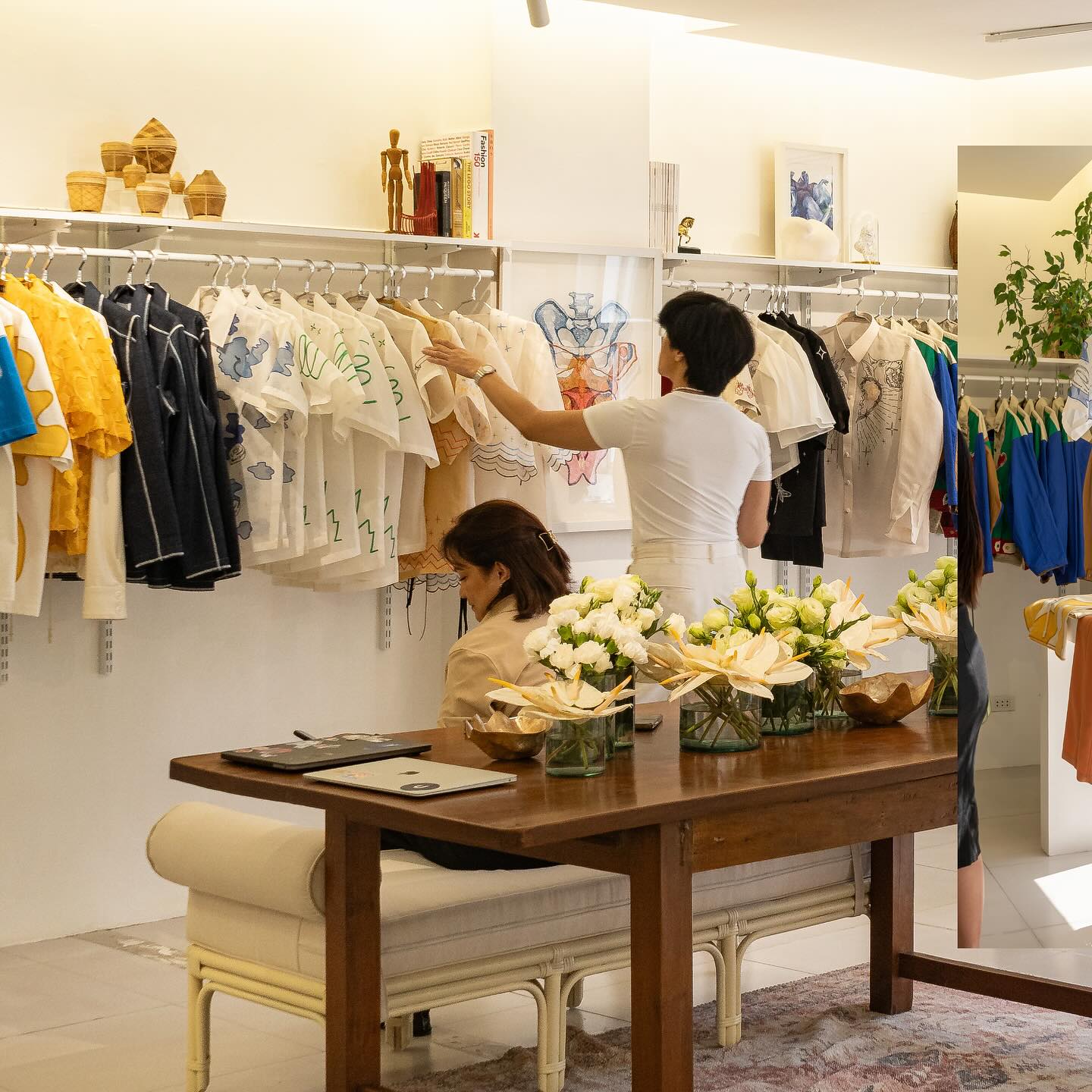
It’s not unusual for Filipino fashion designers—like Carl Jan Cruz and Nicolo Perez—to begin with carefully curated collections composed of a limited number of pieces.
This kind of restraint is often a deliberate creative choice, reflecting a design philosophy rooted in intimacy, craftsmanship, and deep storytelling rather than sheer volume. Their work illustrates how Filipino creativity thrives within thoughtful boundaries—proving that “small” can be purposeful, poetic, and powerful. It mirrors a broader creative culture that values meaning over scale, seen too in art spaces like Pinto Art Museum or Vinyl on Vinyl, which champion intimate, human-centered forms of expression.
As PJ puts it, “It’s that safe space we love, parang sari-sari store ng creativity—may konti pero sulit.”
He expounded that this doesn’t erase the fact that there are creatives like Francis Libiran and Leeroy New, who have their designs strut down global runways and emulate gigantic space-age installations, respectively.
The Use of Familiar Materials
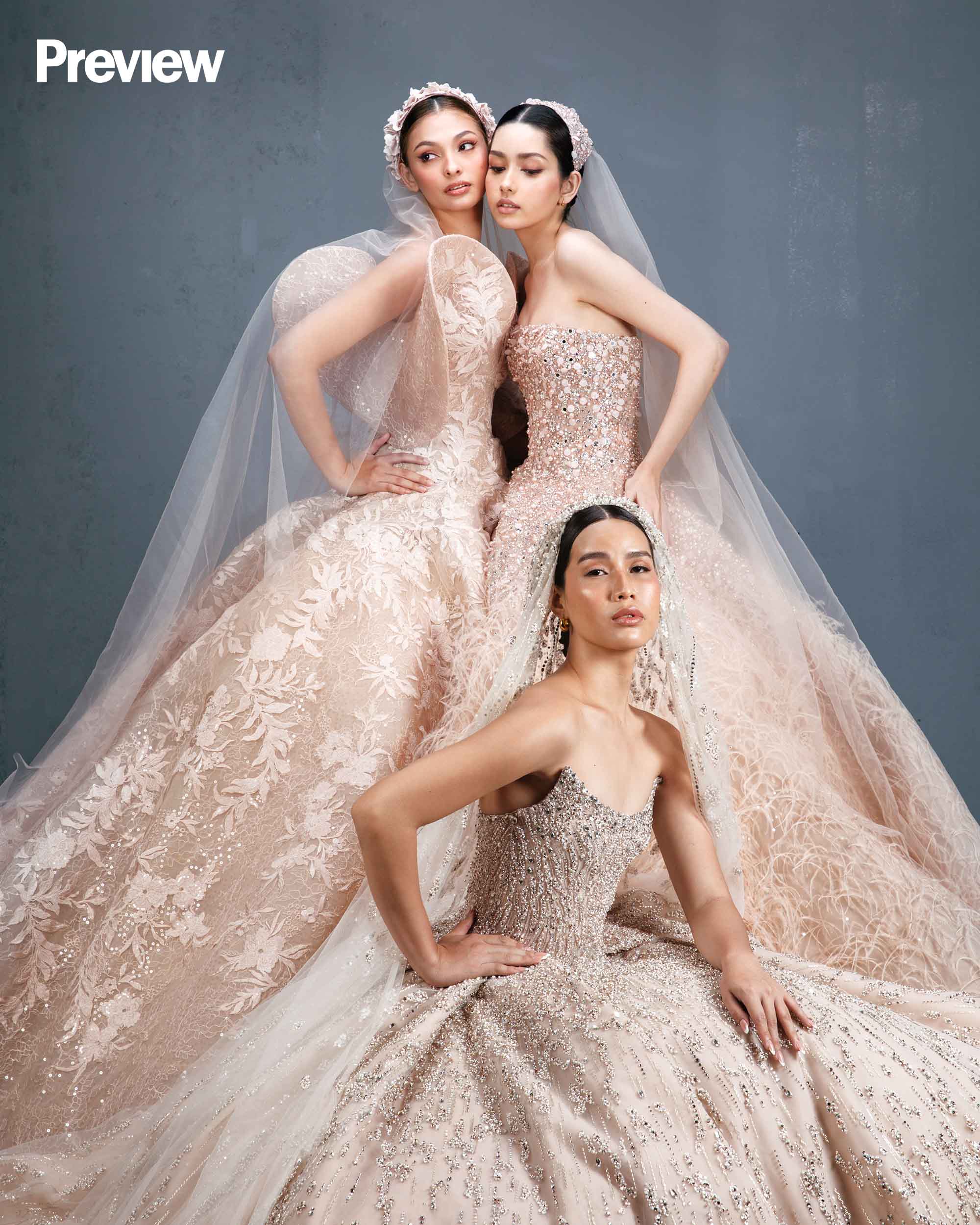
In the essay, Nick Joaquin also pointed out that Filipinos stick to “yielding” materials, which are mostly soft and easy to shape. This is one of the reasons why textiles, abaca, and rattan are still some of the go-to resources of many Filipino creatives, but this does not apply to each and every one. “In fashion, you have Michael Cinco and Furne One Amato, bedazzling gowns with crystals and beads—so heavy they probably come with a gym membership,” PJ cited. “Yes, soft materials are still here, but we’re not afraid of the hard stuff either.”
The Endurance of Typical Forms
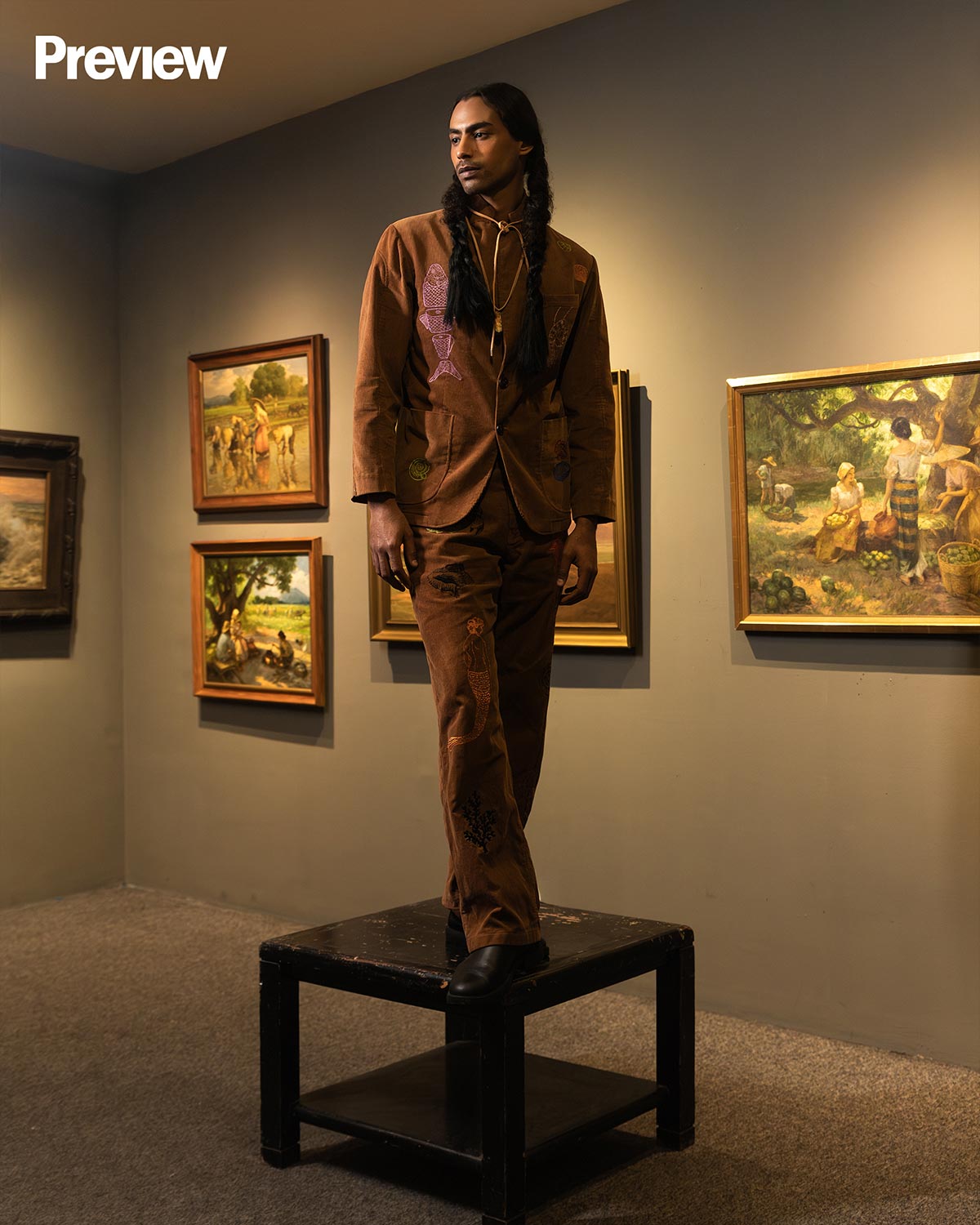
“Rutting” or repeating the same forms over and over to the point of becoming stuck is another thing the author warned us about. With this, PJ explained, “The terno and the barong are still kings of Filipino closets, especially at weddings, beauty pageants, and Independence Day selfies, but new designers are having fun shaking it up.” Just look at how Proudrace is making streetwear that embodies Pinoy pride, or how Kelvin Morales is experimenting with silhouettes that look like they come from a different world. Tradition is here, but so is reinvention.
The Love for Good Deals
From e-commerce flash sales to ukay-ukay treasure hunts, Filipinos don’t always refuse the chance to get their hands on something small and affordable. However, PJ noted that there is also a rising deviance from the “isang tuka” mindset. “Couture designers like Joey Samson or Vania Romoff are creating luxury pieces that Filipinos are willing to invest in, and there’s growing support for artisan-made and sustainable fashion,” he said, marking how Filipinos are developing the will to save up for pieces that last.

The Conservatism of Design
By the end of Nick Joaquin’s work, he mentioned that Filipinos would rather cling to the familiar than dare toward the grand. This can be seen in how designers carry the inevitable tendency to play safe with cuts and designs—conservative styles that are sure to work. Still, there are creatives who are coming up with more experimental looks that redefine what Filipino fashion is today. The global presence of Filipino designers is proof of this, too. As PJ put it, “Filipinos can think big, dream big, and actually deliver big.”
Why Is This Heritage Everlasting?
While Nick Joaquin’s essay was written almost six decades ago, the preference for smallness that he observed has probably been present for much longer than that. It’s easy to feel like a victim of this culturally inherited trait, but we may be responsible for it too. As PJ put it in a nutshell, “Maliit lang ang kaya ng merkado, maliit ang puhunan, at maliit din ang suporta.”
Scarce Systemic Support
Structural realities, apart from personal comfort, are one of the reasons creatives stick to the safe and familiar. The quality of selling limited lines or creating small batches may be intentional for some designers, but it can also be because producing large collections would require much bigger infrastructures and capital that we simply do not have.
“We’ve never had the tradition of state-backed patronage like France with its national museums, or Japan with its subsidies for both traditional and modern crafts,” PJ said. This reality that artists face leads them to tailor their outputs accordingly.
Lack of Patronage
Echoing the previous point, creatives don’t really have a solid system to rely on, leaving them to largely depend on patronage from buyers—but this is also not as strong as it could be. Referring to the creatives’ tendency to keep their collections small, PJ shared, “These choices aren’t just aesthetic, they’re economic survival strategies shaped by a society that still thinks in terms of ‘what is enough for now’ rather than ‘what can last and grow.’”
The idea of buying items that are “pang-isang-gamit lang” trickles down to the Filipino’s consumer practices in fashion. Using art as an example, PJ explained, “Hindi ka gagawa ng 20-foot sculpture kung alam mong walang bibili or mag-iinstall nito sa public space.” He concluded, “That cycle of small demand and small supply keeps the industry, well, small.”
Being Factored Out in Economics
“Colonization trained us to produce for export, to get by with less, and to prioritize survival over grandeur,” said PJ. If you trace back in our history, you’ll see that we didn’t really have grand projects, primarily because they require long-term vision, big investments, and institutions that will surely provide support. “Our creatives mostly rely on private buyers, small grants, or their own pockets.” In other words, diskarte lang.
How the Heritage of Smallness Could Hold Us Back
An outsider’s perspective would say it’s a skill to be proud of—being able to survive with what little you have—but seeing it from the inside reveals the truth.
Nick Joaquin was right, it’s not something we should be happy about. Here we are around sixty years later, still embodying this heritage that has become disguised as culture, and still looking at the possibility of a grand and well-supported creative industry as if it’s a fictional reality from a land far, far away. Living in survival mode was nothing anyone wanted; it was born out of necessity.
How can we possibly think of our larger-than-life visions or out-of-this-world dreams when we don’t even know if we’ll still have a roof over our heads or food on our plates tomorrow?
So much time has passed, and we are now faced with the mission of not letting another six decades go by without even trying to progress forward. “The challenge now is how to honor that heritage of intimacy and practicality while still breaking out of the cycle, pushing for bigger museums, bolder collections, and stronger cultural policies that prove Filipino art can be both malikhain and malakihan,” PJ said.
How Do We Break Free from the Heritage of Smallness?
We established a heritage of smallness, but we can take it from here, and build a heritage of greatness, too. “Hindi ibig sabihin na iiwan natin ang ating small, intimate, and practical traditions; they’re part of who we are, but we need to balance them with ambition, scale, and permanence.” This leads us to one question: How?
Establish Stronger Institutions
“Government funding, corporate sponsorships, and even community-driven patronage can help artists think bigger, create monumental works, and dream beyond ‘sakto lang.’” Stronger institutions won’t only cater to the tourists’ want to learn about the Philippines, they will also allow Filipinos to engage with their very own country in a multitude of lasting ways.
Cultivate a Culture of Patronage
Filipinos must value boldness with less fear, less shyness, more faith, and more pride. PJ explained that when creatives see their fellow countrymen supporting their works and sincerely rooting for them—such as governments commissioning artists, corporations funding large-scale fashion shows, and schools finally framing art as an actual career—only then will they be encouraged to move past the safe and small.
Shift the Mindset Through Education
Previous generations were raised to embody the “small” lifestyle, but this doesn’t have to (or should not) be continued. The new generation of audiences must see the value of venturing into the unfamiliar, and investing in the grand and the daring. We, Filipinos, tend to stick to what we’ve always known. Ganito tayo mabuhay kasi ito ang nakasanayan natin. If we teach others, especially the youth and children, to see art as nation-building, they will grow up unafraid to support big projects, to voice out their big ideas, and to champion lasting monuments.
“We need to educate and inform the public that funding art and culture is not ‘arte lang,'” PJ expressed. Many would say “Hindi naman nakakain ‘yan,” equating it to a waste of money, but building a heritage of greatness actually helps the economy and the people in more ways than we can imagine.
In PJ’s words, “Greatness doesn’t mean copying the West’s monuments or excess. It means daring to dream big in our own way, building works that last, institutions that nurture, and industries that sustain.”
It is both a blessing and a curse to live small and to be expected to live small. Once we break free from it, creative industries can and will transform. Filipinos can carry the essence of this heritage of smallness in little, heartwarming ways, but we can also step into a world that is much bigger—in vision, in result, in impact.

Kyla Villena loves a good lip gloss and a trip to the art gallery. She is Preview's beauty girl, who doubles as a self-proclaimed motivational speaker.