Fashion
Meet Preview's Best Filipino Fashion Designers for 2025
On its 30th year, the publication honors five homegrown talents that capture the diversity of Philippine fashion.
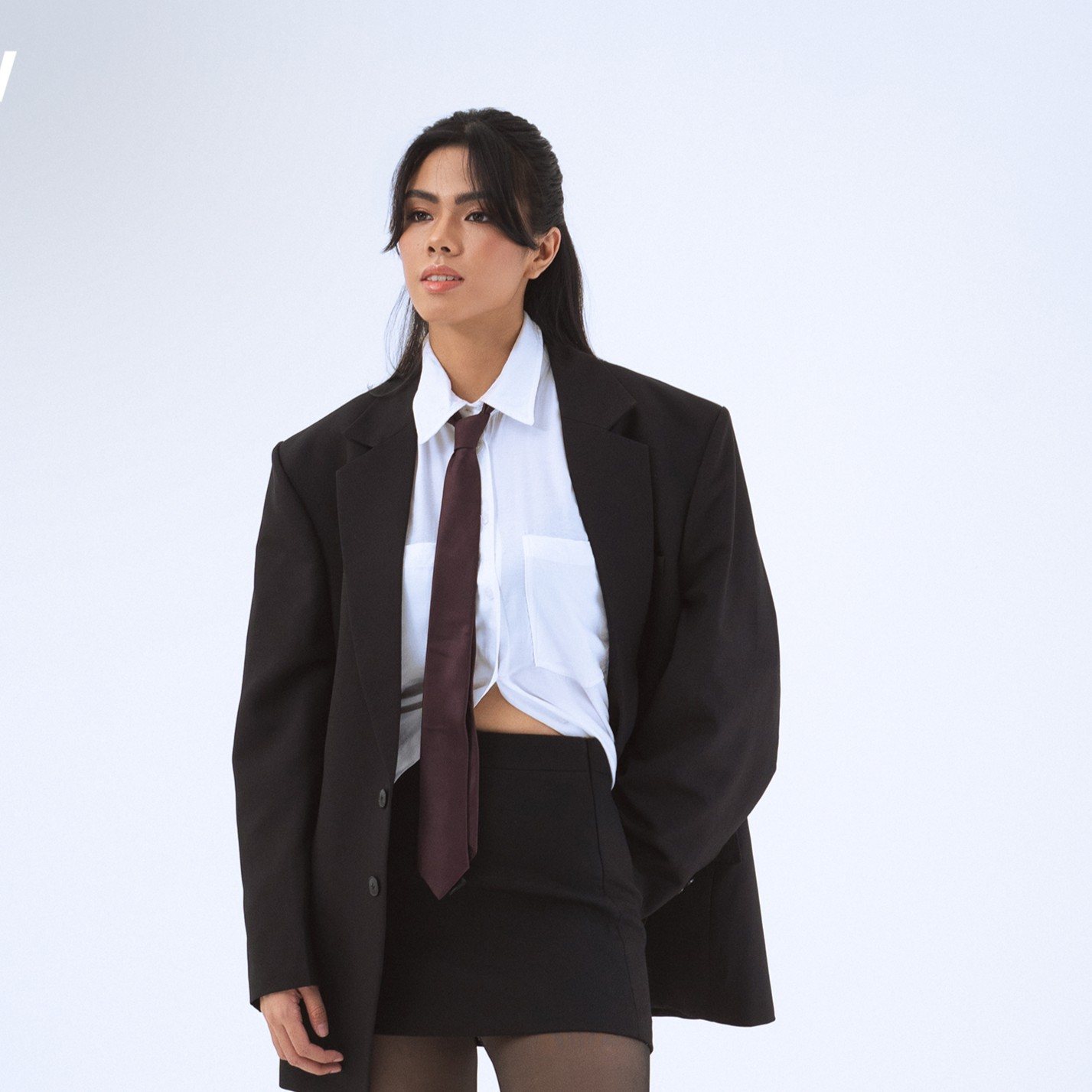
Published on Sep 1, 2025
Since its maiden issue in June 1995, Preview has served as a platform where Filipino creativity takes center stage. Thirty years later, the mission remains the same: to champion homegrown talent and celebrate the artistry shaping the way Filipinos dress.
Now in its third year, the annual Best Filipino Fashion Designers (BFFD) list carries this tradition forward. This edition’s cohort brings together five designers whose work has left a lasting impression on Philippine fashion over the past year. Their creations reflect the diverse perspectives defining Filipino fashion today.
Ahead, Preview proudly presents the third installment of the Best Filipino Fashion Designers list, and with it, the talents shaping the future of fashion within our shores.
ADVERTISEMENT
Antonina Amoncio
There’s a certain sentimentality at the heart of Antonina’s approach to fashion.
From childhood, she was surrounded by well-made clothes. Among her earliest memories is her mother dressing her and her Irish twin, Nona, in coordinated outfits. “I remember it so well na my mom would always buy us clothes, and put us in nice clothes. Little coats,” she recalled. “Ako 'yung palaging naka-blue and siya 'yung naka-pink.”
One could say this sentimentality became deeply rooted in the young designer’s psyche—an instinct to draw from personal experiences and encounters. Her approach to fashion is not overly cerebral; rather, it springs from an inherently human impulse: to feel. Ultimately, Nina’s gift lies in her ability to translate those memories into garments that speak to a broader audience.
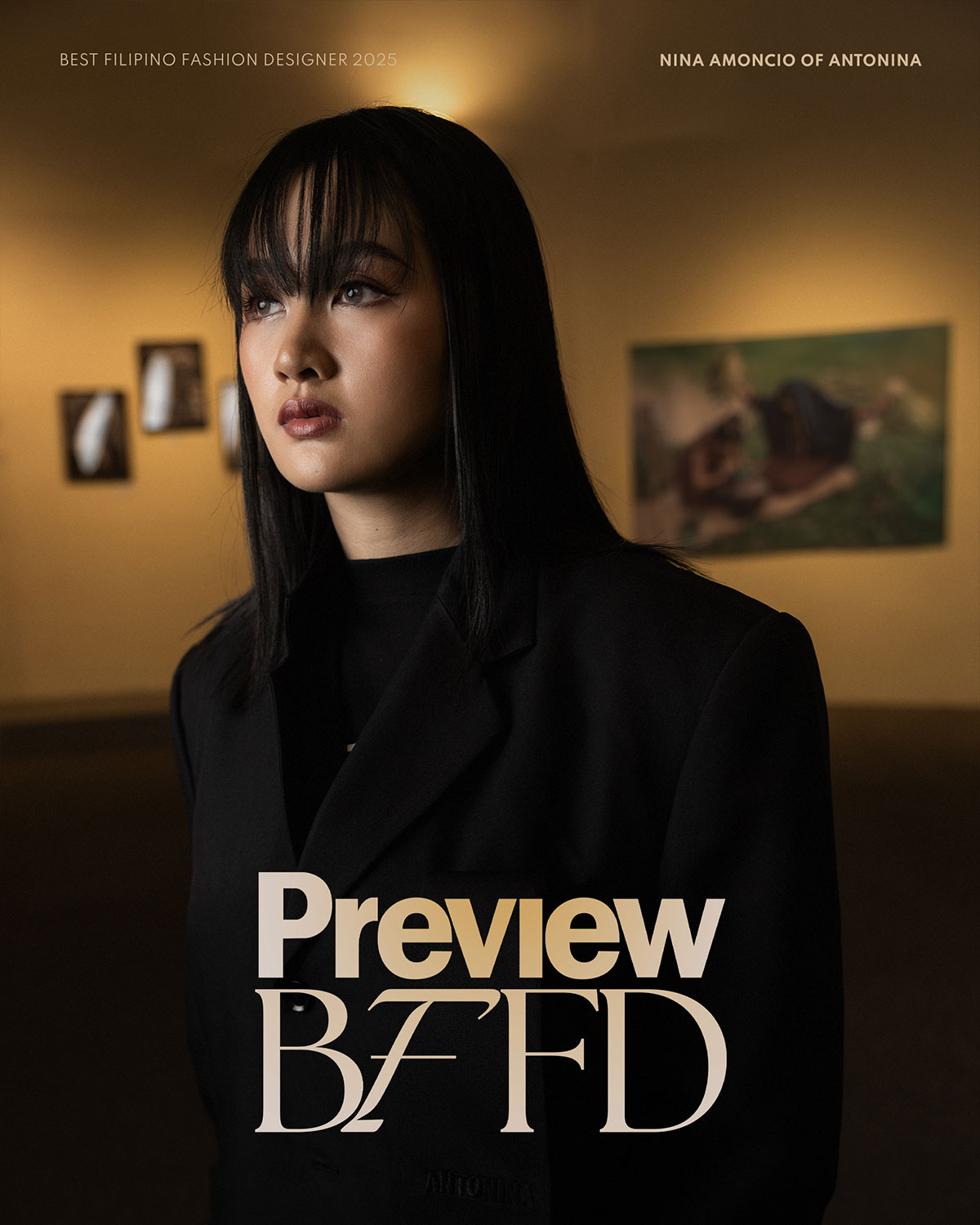
Click to Enlarge
PHOTO: PAOLO PINEDA.
Her collections often lean toward an achromatic palette, with only occasional bursts of color. “The clothes that I produce, I would also imagine myself wearing. I guess [it’s] personally driven, [and] aesthetically, 'yun 'yung naisip ko,” she said. This restrained color story has become a hallmark of her work, allowing the focus to shift toward structure and form.
Clean lines, precise cuts, and meticulous construction define each piece, reflective of her belief that garments should empower the wearer while remaining versatile. Her precision is underpinned by technical training from the University of the Philippines Diliman’s Clothing Technology program, where she learned the “science” behind garment construction—knowledge that would become the backbone of her design process. Coupled with experience as a finisher for Paul Cabral and an intern for bridal atelier Heleyna, she developed the discipline required in high-end garment making.
At 21 years old, Antonina took a leap forward and entered the Bench Design Awards. The year was 2018, and the then-college senior was among the finalists. She joined again the following year, ultimately winning the competition. The victory opened the door for her to present a collection in Tokyo as part of Rakuten Fashion Week’s official calendar.
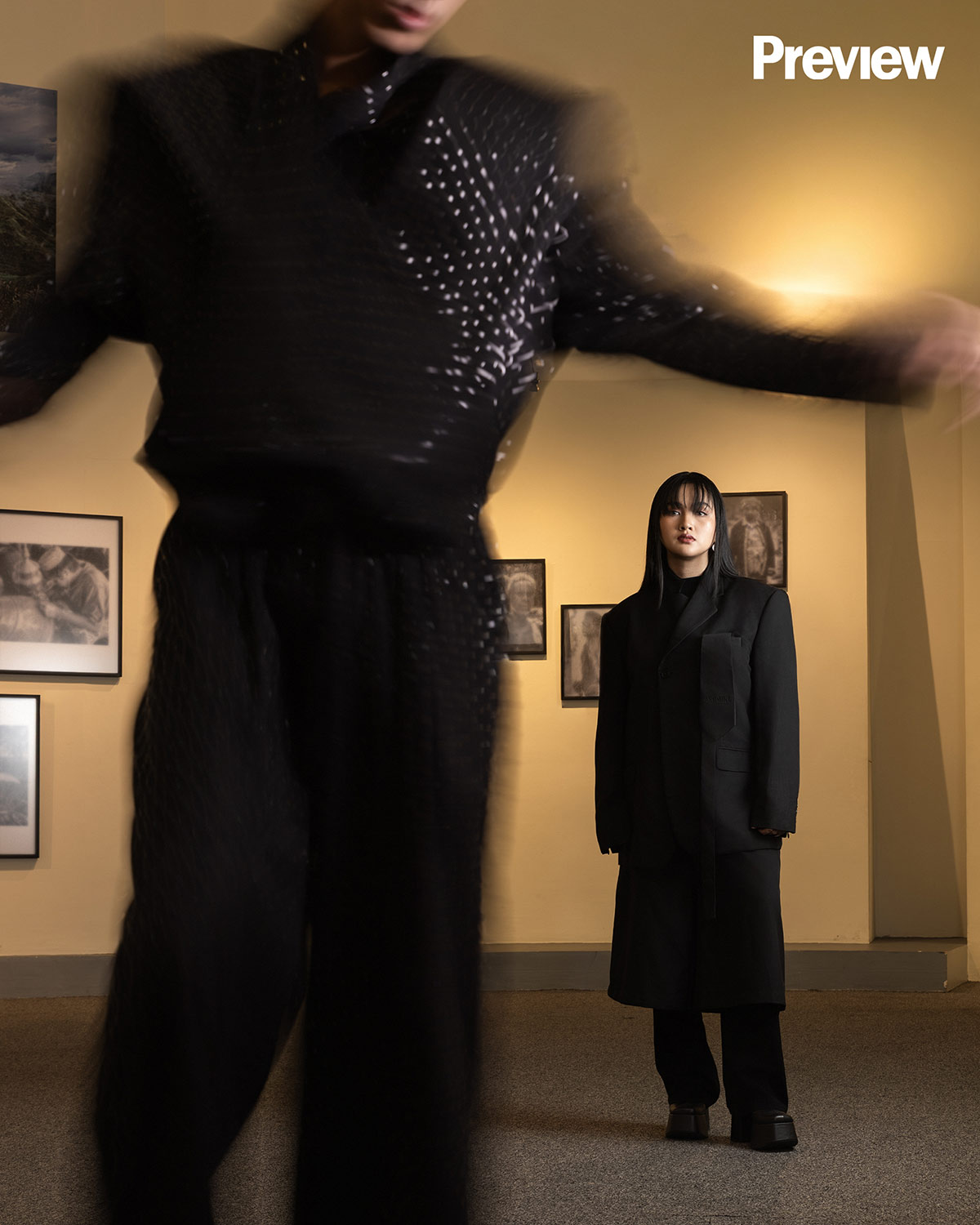
Click to Enlarge
PHOTO: PAOLO PINEDA.
Today, Antonina continues to build her eponymous label. She frequently participates in pop-ups across Metro Manila. Recently, she has presented a collection at BYS Fashion Week in 2023, as well as a bridal collection “I Don’t” at Bench Fashion Week for Holiday 2024. Looking back, she acknowledges how far she has come in seven years as an independent designer—though the path has been far from easy.
On a larger scale, Antonina envisions a future where the local fashion industry receives genuine institutional support. “I’m very hopeful na the Philippines would be a fashion capital someday,” she said. For her, achieving that requires investment in vocational training and the creation of physical spaces—such as a dedicated retail complex—where small brands can sell their work.
“Accessibility has always been a problem in supporting Filipino brands, and that’s mainly because we don’t have accessible spaces for it… We [designers] have to figure things out on our own.”
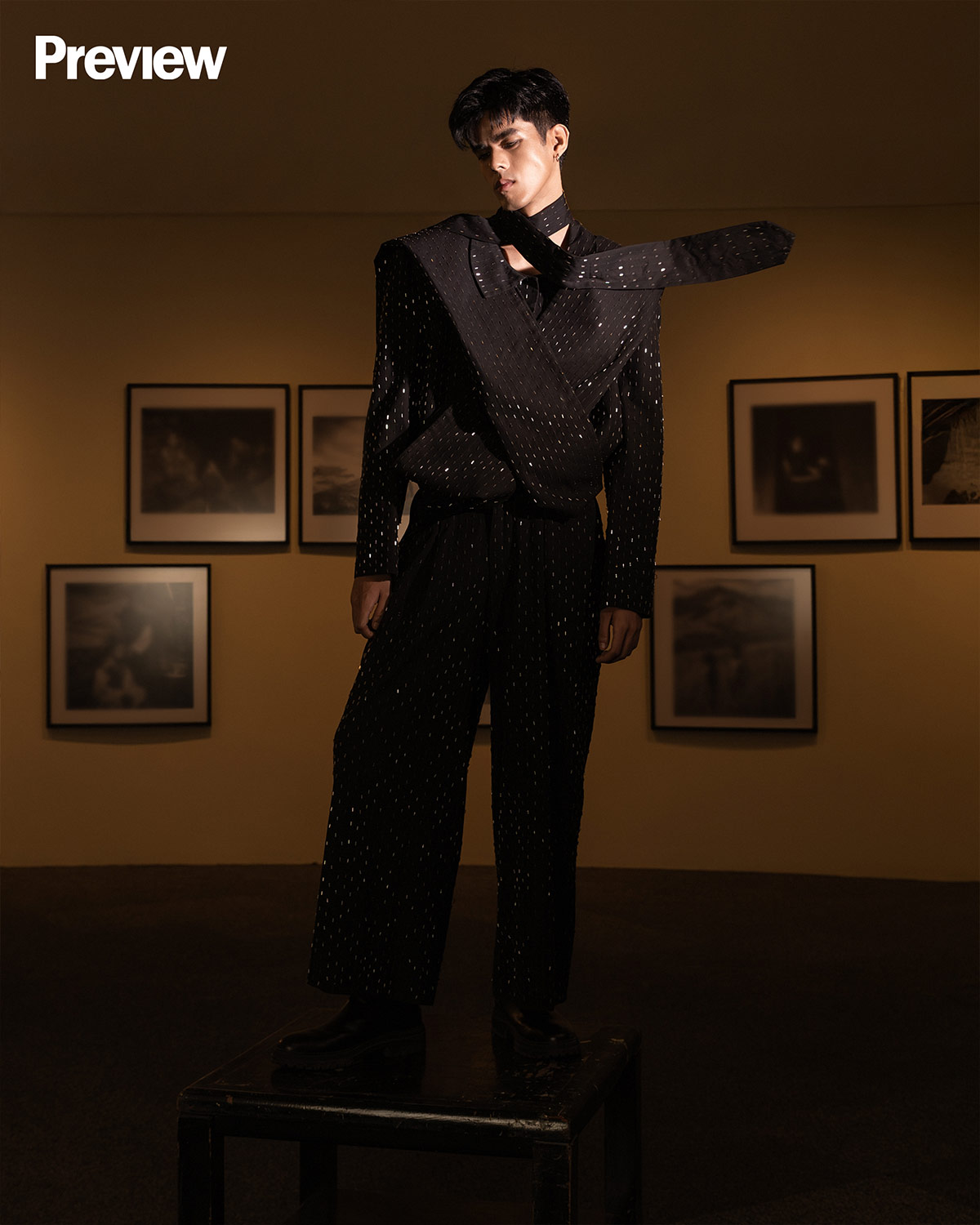
Click to Enlarge
Ethan Fabella of PMAP wears ANTONINA. PHOTO: PAOLO PINEDA.
Axel Que
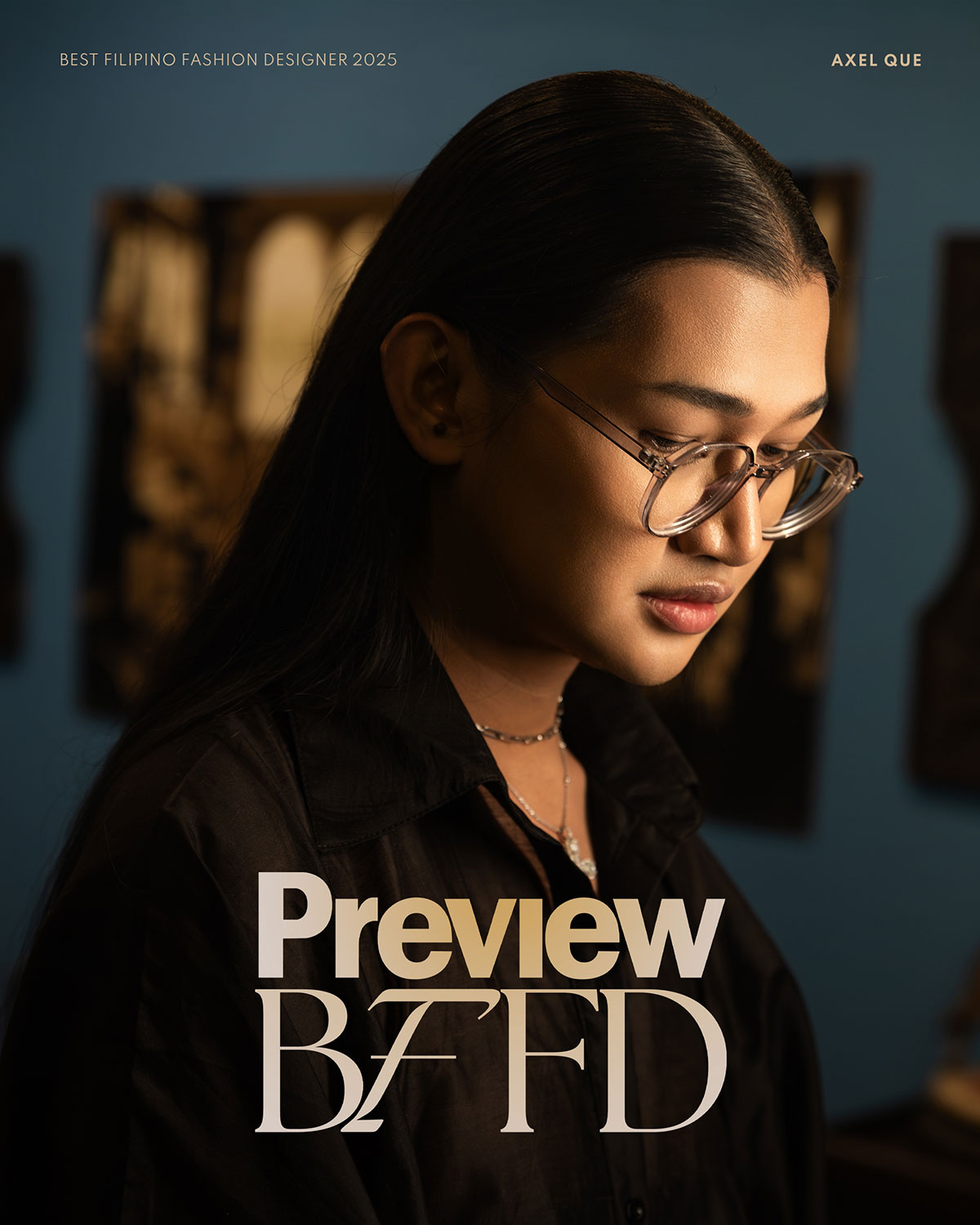
Known for her larger-than-life creations, Axel Que has carved out a place for herself in the Philippine fashion scene by embracing the unconventional. “When you hear Axel Que, it’s very extravagant,” the Cebuana designer says. “At the same time, very artsy—like an art installation you can wear.”
Initially a furniture designer, Axel earned a degree in Industrial Design at the University of the Philippines Cebu, where she developed a strong foundation in precise construction and symmetry. After graduation, she went on to work briefly for Kenneth Cobonpue, designing lamps and home accessories for the internationally acclaimed furniture designer.
The discipline’s focus on calculated detailing would later shape her approach to garments—visually arresting pieces built around sharp and meticulous construction.
Click to Enlarge
PHOTO: PAOLO PINEDA.
Axel’s shift to fashion began when the Fashion Institute of the Philippines set up its Cebu outpost in 2012. Enrolling on a whim, she quickly immersed herself in the craft, even teaching embellishment and beading as she studied. Not long after, she won the Cebu Young Designers Competition, opening her doors to editorial styling, competition pieces, and bespoke commissions.
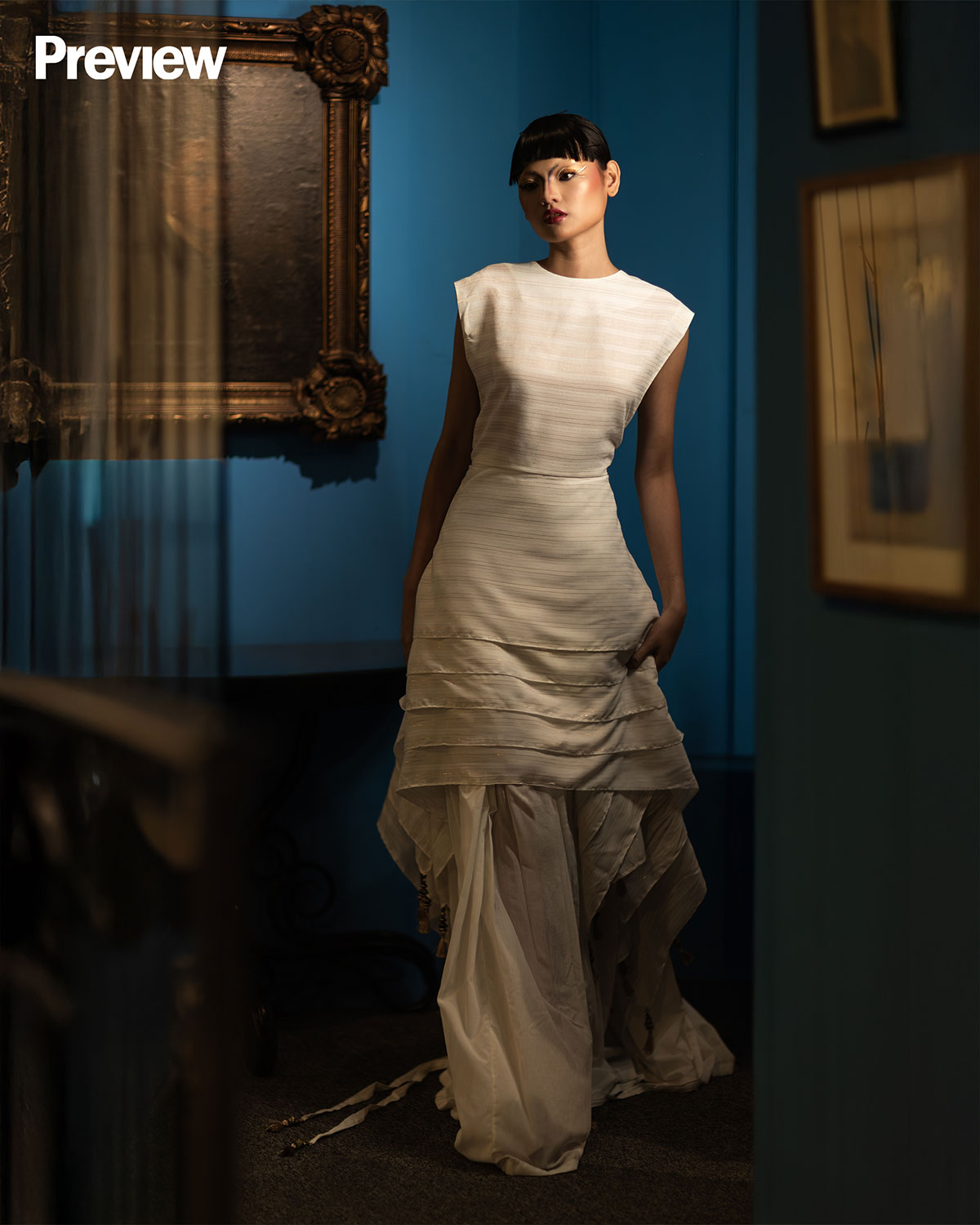
For years, Axel’s work was primarily associated with bridal wear. But things took a turn when Miss World Philippines 2021 Tracy Maureen Perez enlisted her help for a national costume piece, which was a leather Filipiniana inspired by Tausug motifs. Initially created in 2017 and reworked with ornate beading, the outfit received an enthusiastic response from pageant fans and fashion insiders. The community finally embraced her avant-garde vision, freeing her from the commercial constraints she once feared.
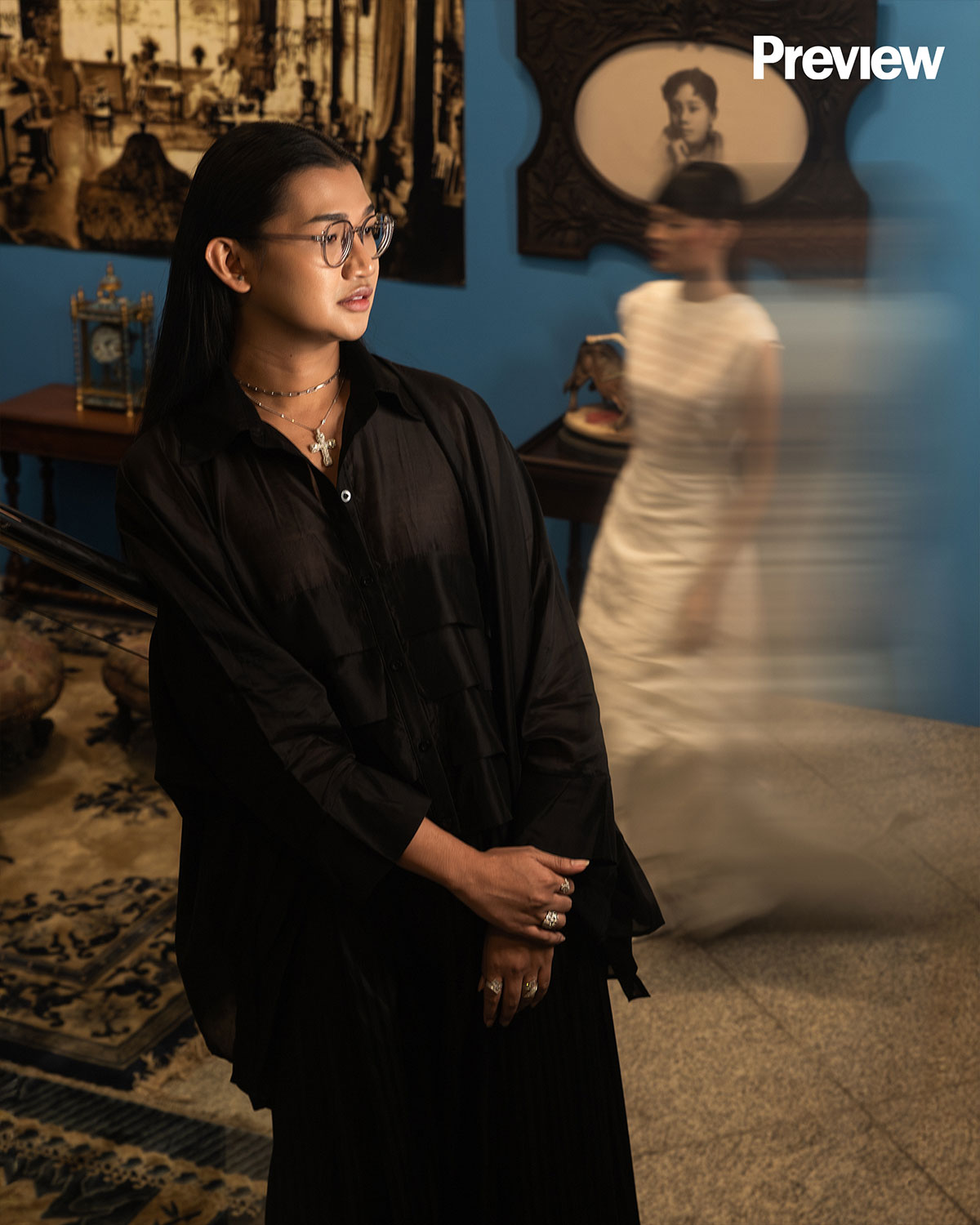
Since then, Axel’s work has drawn heavily from Philippine mythology, from the serpentine Bakunawa for Beatrice Luigi Gomez to the shimmering “Bangus” costume for Marina Summers on Drag Race UK Vs. the World. Myth captivates her for its mix of fantasy, cultural weight, and creative freedom. “We don’t have a basis for what these creatures look like,” she says. “My imagination just runs free.”
Click to Enlarge
PHOTO: PAOLO PINEDA.
Today, Axel heads a 15-person team in Cebu, producing labor-intensive, hand-stitched pieces that often require several artisans to complete. She travels frequently to Manila, where she finds the fashion scene more open to her out-of-the-box perspective.
Looking ahead, Axel’s vision extends well beyond local runways. One day, she hopes to see her work on the MET Gala red carpet and her name beside major European houses, shown on international fashion week stages. Closer to home, she hopes for a Philippine fashion industry that is more open to risk-taking, supportive of regional talent, and committed to celebrating local textiles and artistry.
For now, Axel stays true to her creative identity: “Not everyone will appreciate [my work], but at least it’s me. I’m not pretending to be another brand. This is Axel Que.”
Click to Enlarge
Habie Mondido of PMAP wears AXEL QUE. PHOTO: PAOLO PINEDA.
Jaggy Glarino
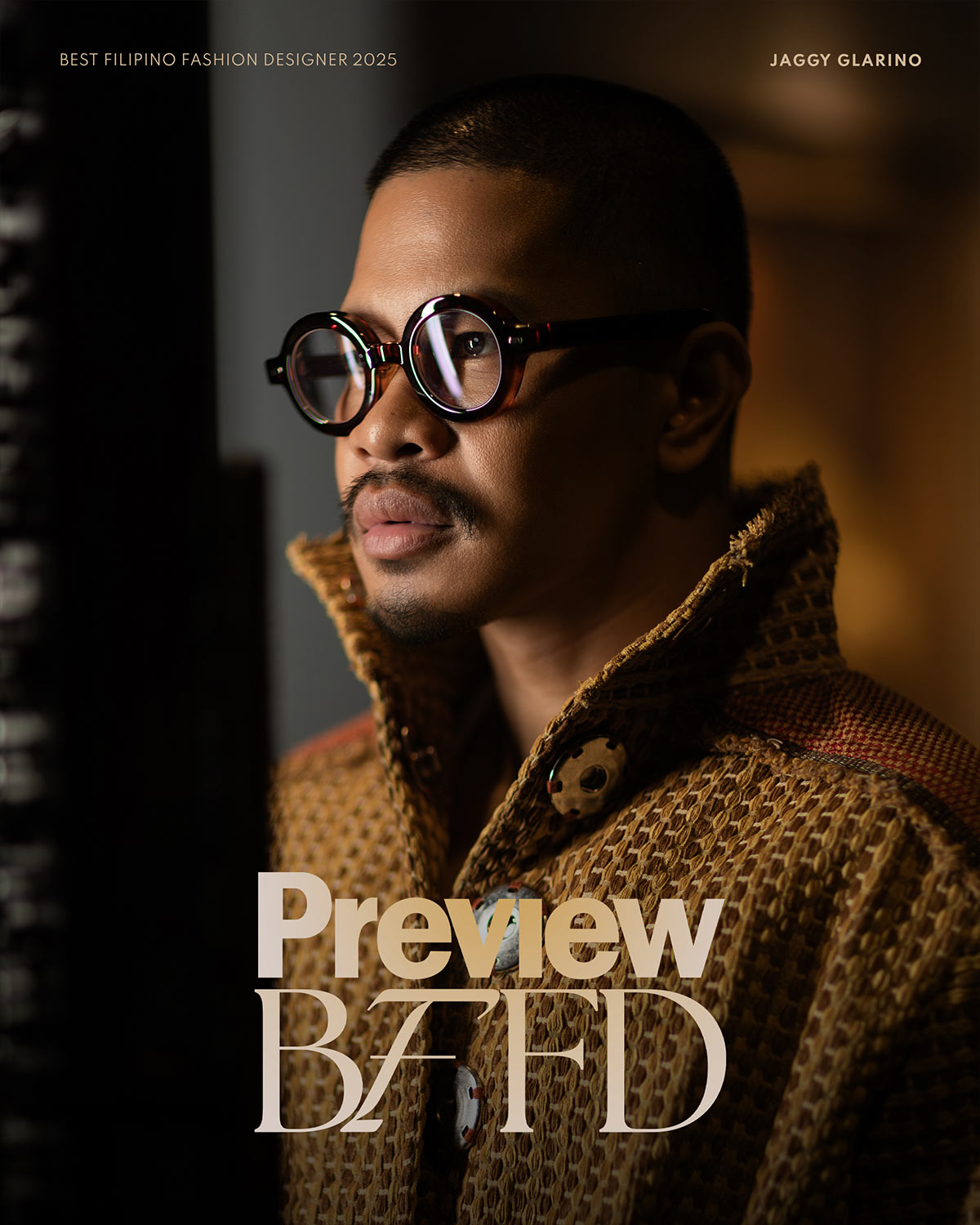
Intuition is Jaggy Glarino’s sixth sense. When constructing garments, the Mindanaoan designer moves on instinct. His clients will know that he’s never one to present a sketch. “I hate sketching. It almost boxes me into a particular idea,” he says bluntly. Instead, ideas occur to him as a reverie—through the feel of a fabric, a passing image, or a memory from his childhood in General Santos City. “It can start from anywhere, anytime,” he adds. “It’s an organized mess."
Click to Enlarge
PHOTO: PAOLO PINEDA.
Before entering fashion, Jaggy worked as a nurse—a path that, in the province, felt far removed from design and often carried pageantry-related stereotypes. “I had to fight for the opportunity to be allowed to do fashion,” he recalls. Still, his early love for the arts found an outlet in school, where he made costumes for plays, joined the theater, entered poster-making contests, and even tried fruit carving. “I was really into any form of artistic expression… and probably, that’s what prompted me to do fashion.”
His foray into the industry came unexpectedly. “My first job offer was in Dubai because someone saw me do a costume in the province.” He accepted a creative director role, which served as his crash course in garment-making. “I didn’t have the technical know-how then… I was faking it till I made it,” he admits. Working alongside skilled tailors from India revealed the gaps in his knowledge. Returning to the Philippines, he formally studied at the Fashion Institute of the Philippines (FIP). In the years thereafter, Jaggy took every opportunity to refine his craft, even earning a generous short-course scholarship from Lulu Tan-Gan at the prestigious Central Saint Martins.
Click to Enlarge
PHOTO: PAOLO PINEDA.
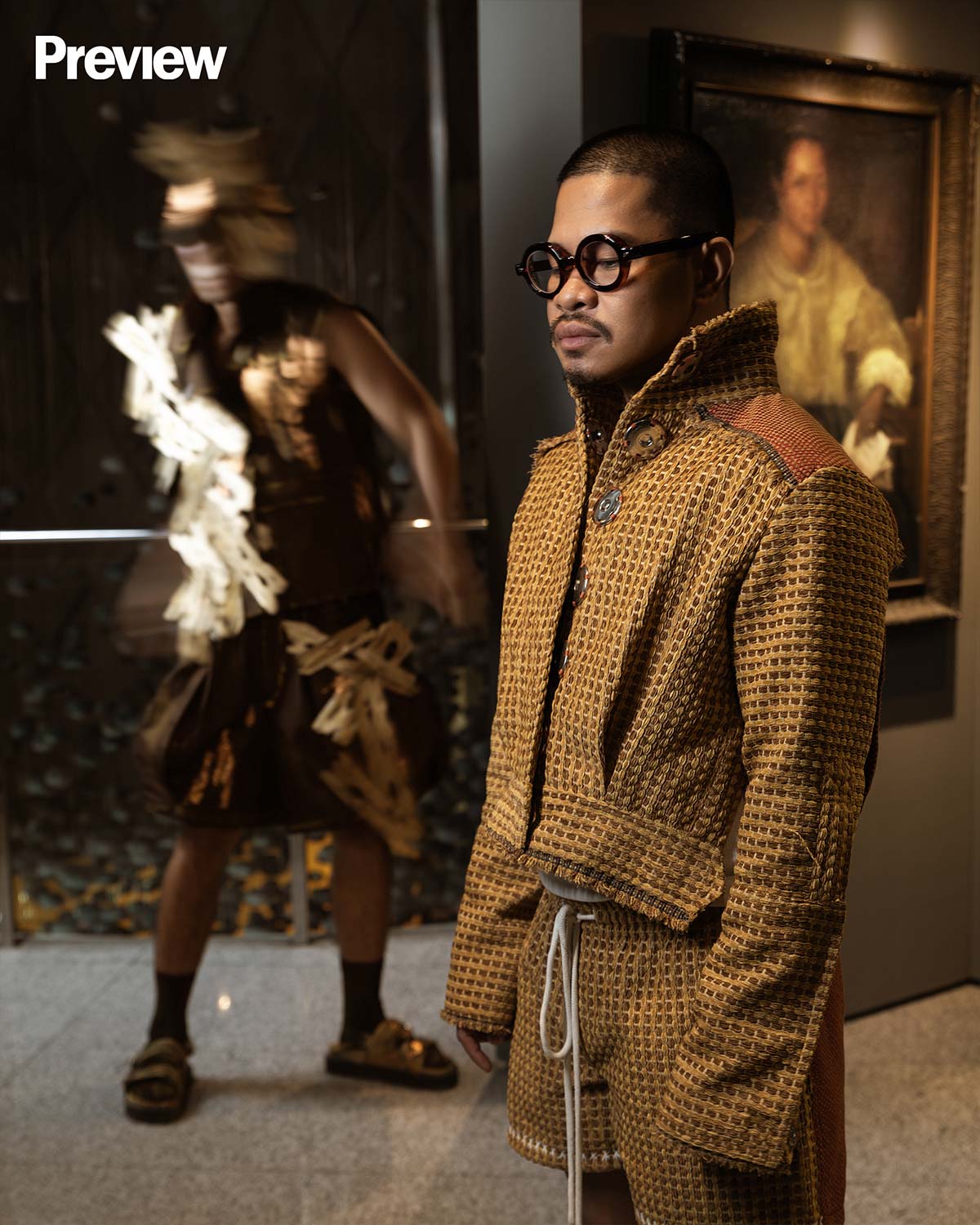
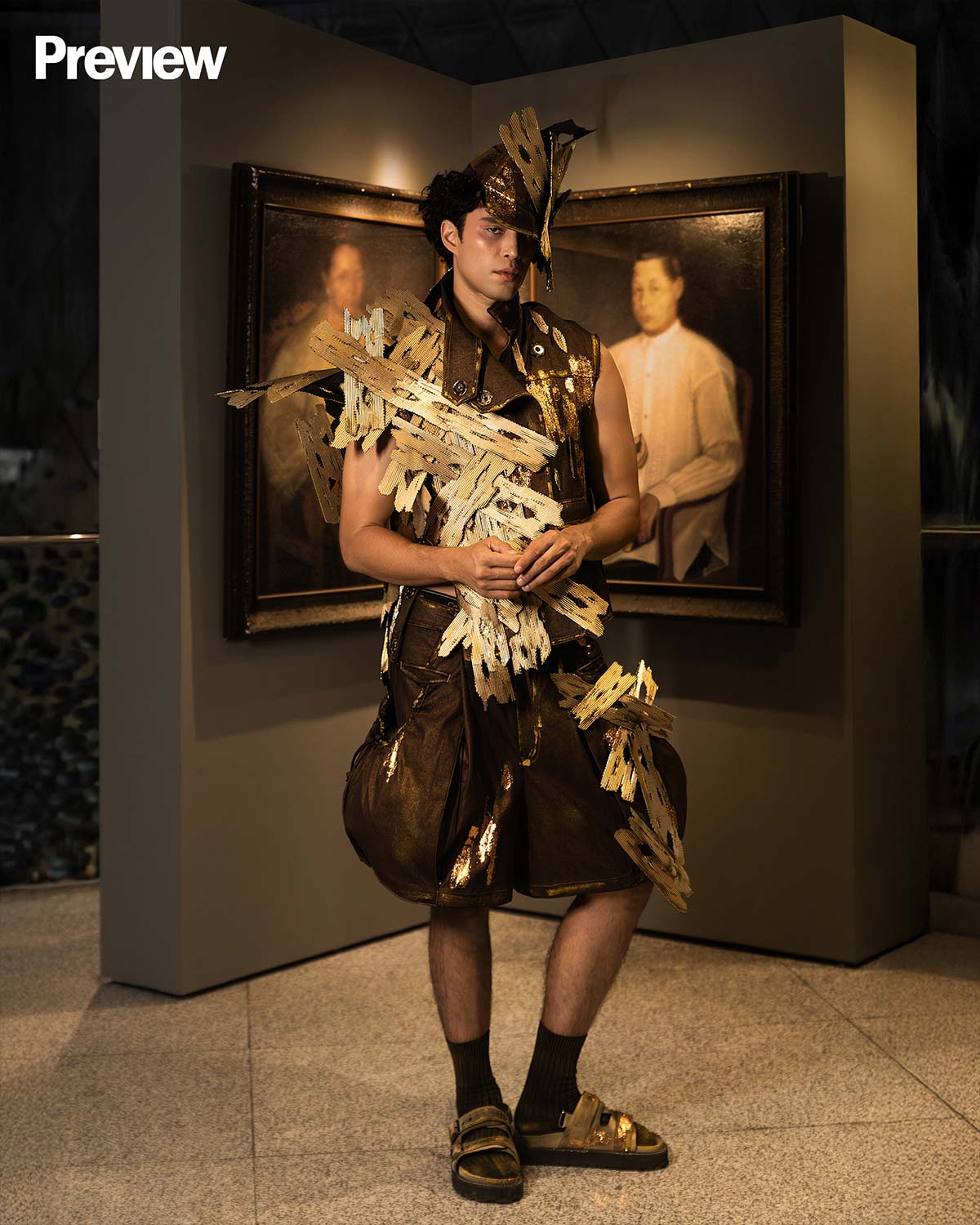
Jaggy’s earlier work was more about proving his technical skill and creating strong runway visuals, but the pandemic shifted his focus inward. Stuck at home, he pored over family photo albums and recognized the design language hidden in his heritage. Memories of his grandmother's crocheting and weaving banig resurfaced, along with the textures of his childhood home’s woven bamboo walls. “These cues are very familiar to me. I realized I can use them as a design code,” he says.
Today, those elements are woven into the very fabric of the Jaggy Glarino DNA. They carry the weight of his lived experiences and the vulnerability that came with it. “When you can be vulnerable as a person, you have the power to be bold,” he reflects. This authenticity resonates with many of his clients, many of whom trust his perplexing, sketch-free process, understanding that his creations emerge through his own introspection.
For now, Jaggy continues to chase the thrill of the unknown in his process. Paradoxically, his greatest goal is clarity—but only to a point. “If it ever becomes easy to read my mind and my design process,” he says, “that’s the time I’ll have to call it a day.”
Click to Enlarge
Philippe Magalona of PMAP wears JAGGY GLARINO. PHOTO: PAOLO PINEDA.
Kelvin Morales
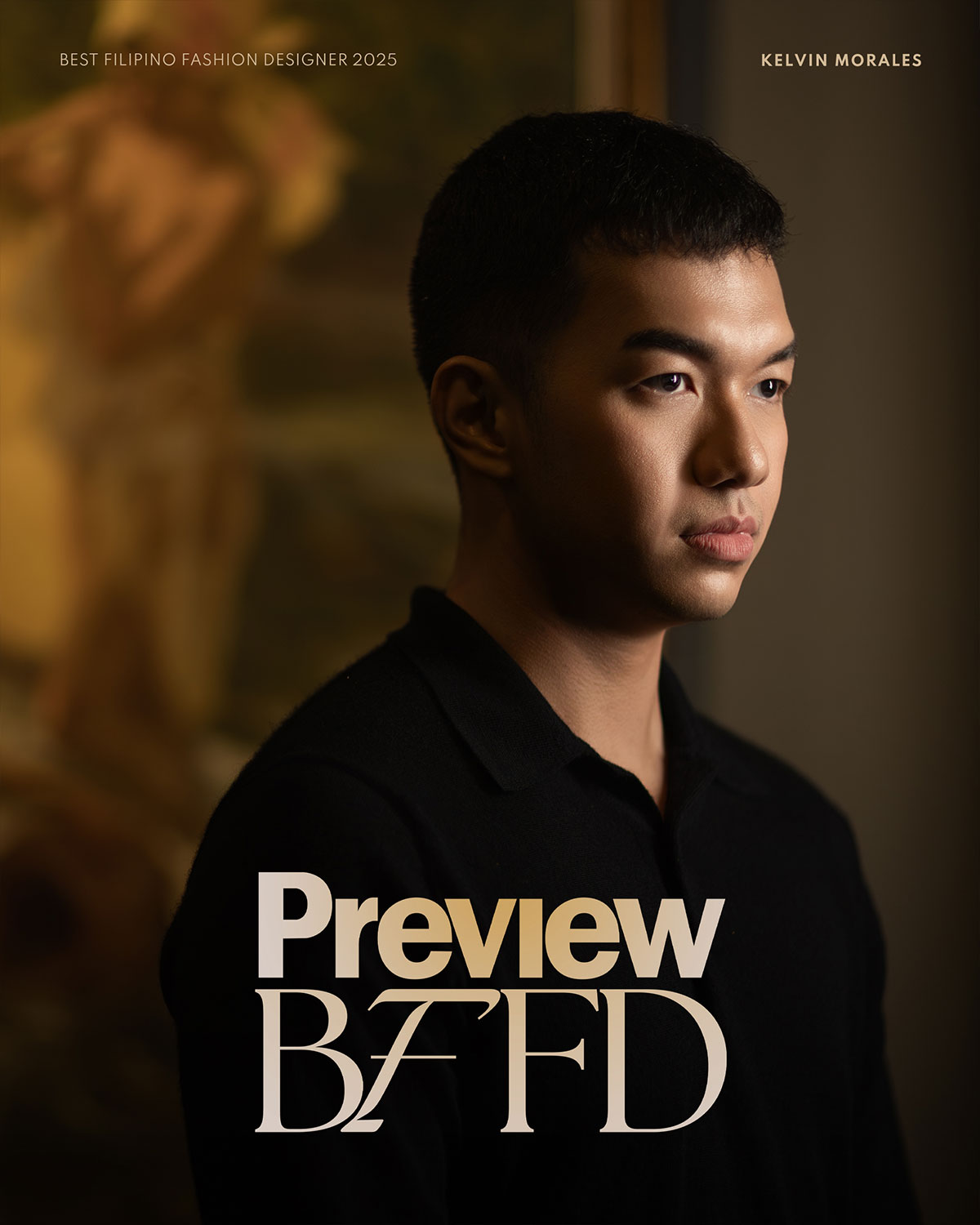
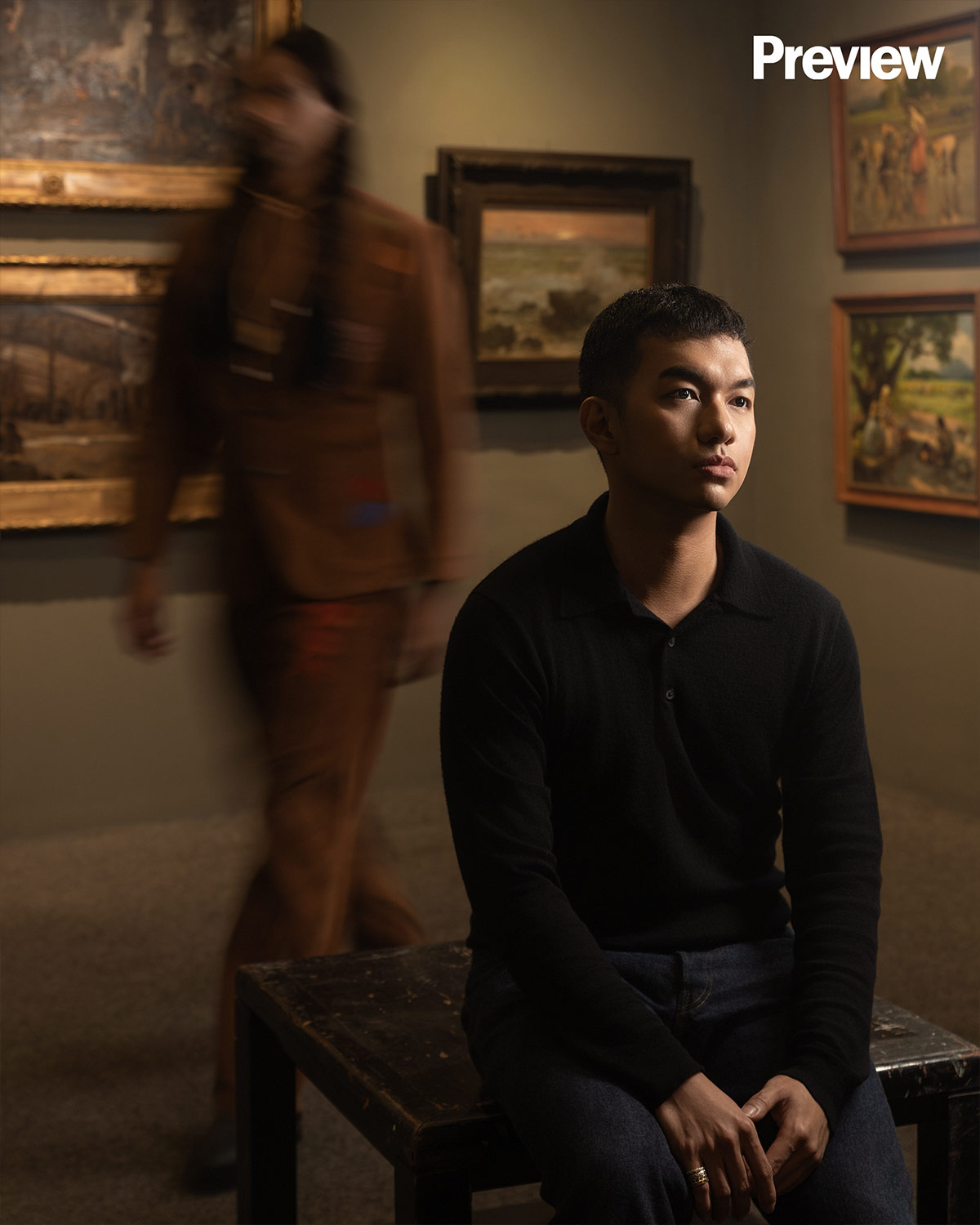
Kelvin Morales approaches each collection like a director staging a film. He sets a mood, builds characters, and dives into the research, often perusing his growing library of books. Inspiration springs from his musings and observations, coupled with touchstones of Filipino culture. “I want to connect pa rin with Filipino stories,” he explains.
A graduate of the De La Salle–College of Saint Benilde’s fashion program, Kelvin entered the industry without an internship or a background in the business of fashion. Fresh out of school, he resisted the temptation to slow down, launching his namesake menswear label while his excitement for design was at its peak. From the start, his vision was clear: to preserve traditional Filipino elements, like the barong, and reimagine them for the modern wearer.
Click to Enlarge
PHOTO: PAOLO PINEDA.
His earliest works were what he described as “experimental”—toying around with oversized silhouettes, silicone rubber, acrylic glass, and other industrial materials. A shift in perspective came with his “Hazard” collection in 2022, where he introduced the now-crowd favorite Phalaenopsis barong. Silk was layered with floral patchwork, edges intentionally frayed, and embroidered accents for added texture and depth. The market responded warmly to his work, motivating him to integrate more embroidery into his pieces. “Wala pang gumagawa that time to add more dimension and texture sa barong,” Kelvin says.
Today, embroidery is the brand’s defining strength, created in collaboration with artisans from Rizal. Kelvin’s partnership with them began serendipitously when a tailor for a school project mentioned his embroidery background. That chance exchange led to a partnership that pushed the craft forward—transforming it from the monochrome stitches of the traditional barong to vivid scenes, such as a taho vendor at work or a school of fish rendered in a gradient of color. The work is intricate, as it is entirely hand-guided.
Click to Enlarge
PHOTO: PAOLO PINEDA.
Nature remains a recurring influence, shaped in part by his friendships with florists. “Flowers are already beautiful,” he says. “When you create or curate them, like in a flower arrangement, they become even more appreciated.” These organic inspirations find their way into his textiles and compositions. It’s a reflection of his belief that beauty often lies in what already exists—waiting only to be seen differently.
Though he has ambitions of bringing his designs to a global market, Kelvin is focused on strengthening his team and laying a lasting foundation. Still, the scarcity of skilled embroiderers remains his greatest challenge. “Hindi namin ma-maximize yung market namin because kulang ng artisans… dying art na rin yung embroidery.”
For Filipino fashion at large, Kelvin hopes for greater collaboration and the discovery of more young creatives. “'Dun mas mag-go-grow 'yung industry,” he points out. Until that vision takes shape, Kelvin continues to work stitch by stitch, in partnership with the artisans whose hands keep an endangered tradition in motion.
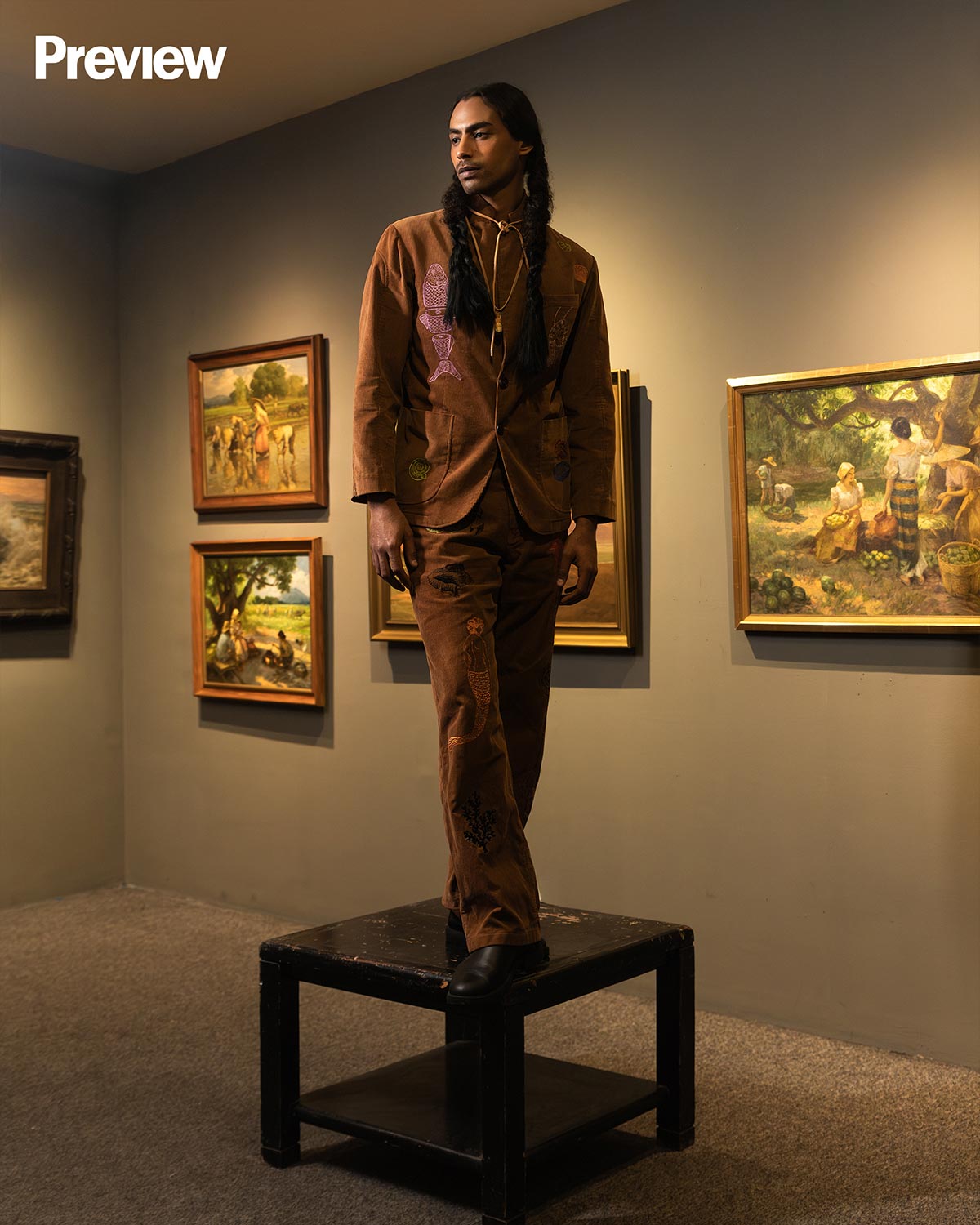
Click to Enlarge
Hash Taha of PMAP wears KELVIN MORALES. PHOTO: PAOLO PINEDA.
Renz Reyes
Renz Reyes’ process begins long before the fabric meets the scissors. It starts with a sketch—lines mapped with the accuracy of technical drawings. His design vocabulary rests on tailored seams, geometric pattern drafting, and embroidery that locks into the garment’s shape like joints in a frame. The contrast stitching reinforces his garments’ cuts, putting his impeccable construction front and center.
“I’m a pattern nerd,” he confesses. Trained in fine arts and once headed for a career in advertising, Renz began collecting pattern-making books the way others collect first editions. As he would come to discover, fashion became the meeting point for two sides of his brain—the artist who loves to draw, and the problem-solver who finds beauty in garment construction.
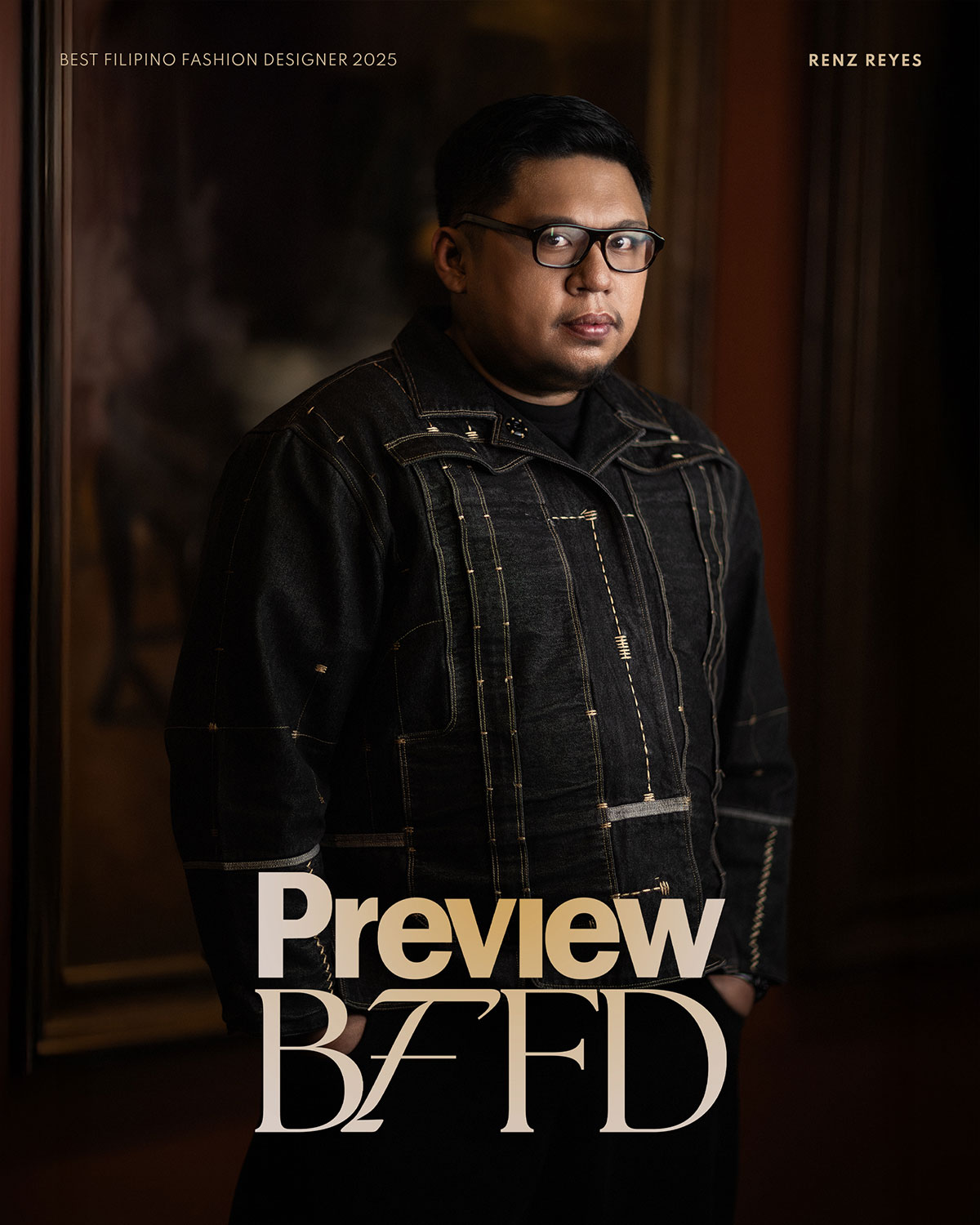
Click to Enlarge
PHOTO: PAOLO PINEDA.
As a fashion student, Renz entered the Preview Emerging Fashion Talent Awards (PEFTA) in 2011—his first competition and his first taste of the public stage. Soon after came a decade at luxury lingerie house Josie Natori, where he climbed from junior to head designer. It was an education without shortcuts: designing embroidery, overseeing samples, and navigating the hum of factory floors. Those years built the muscle he would later rely on for his own brand.
Even while working full-time, his brand lived and breathed alongside his day job. In 2018, while still working full-time, Renz entered the Bench Design Awards. Winning secured him a slot in the official Rakuten Fashion Week calendar in Tokyo, placing his work before an international audience for the first time. From then on, his eponymous label grew alongside his day job.
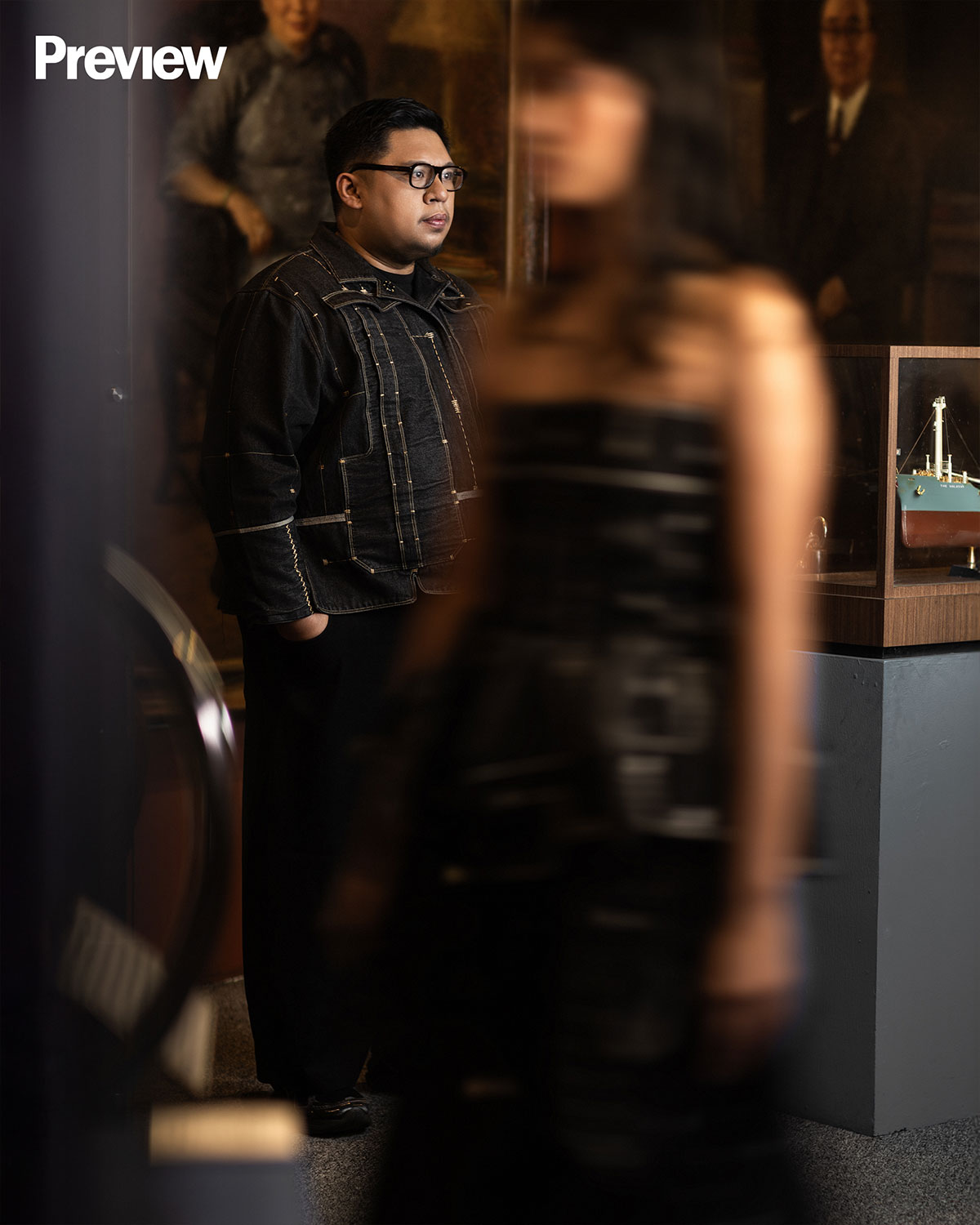
Click to Enlarge
PHOTO: PAOLO PINEDA.
Every collection came out of his own pocket. Sundays—his only free day—were spent hunched over pattern paper or at the cutting table, chasing an idea from a sketch to its final, tangible form. That double life lasted until 2024, when he resigned from his day job to commit fully to the brand. “Even if I had to work seven days a week, I would do it,” he says, matter-of-factly. “I believe too much in this brand to let it go.”
Looking ahead, Renz aims to take his work far beyond local shores. Later this year, he will present a collection in Milan, Italy, alongside a group of Filipino designers—an important step toward his long-term ambition of entering the LVMH Prize. At the same time, he hopes to see stronger Southeast Asian visibility in the global market. “There are so many great designers here,” he says. “We just need that extra nudge, that extra spotlight.” He also calls for greater industry support for emerging talent, particularly funding that could make ready-to-wear more accessible and sustainable.
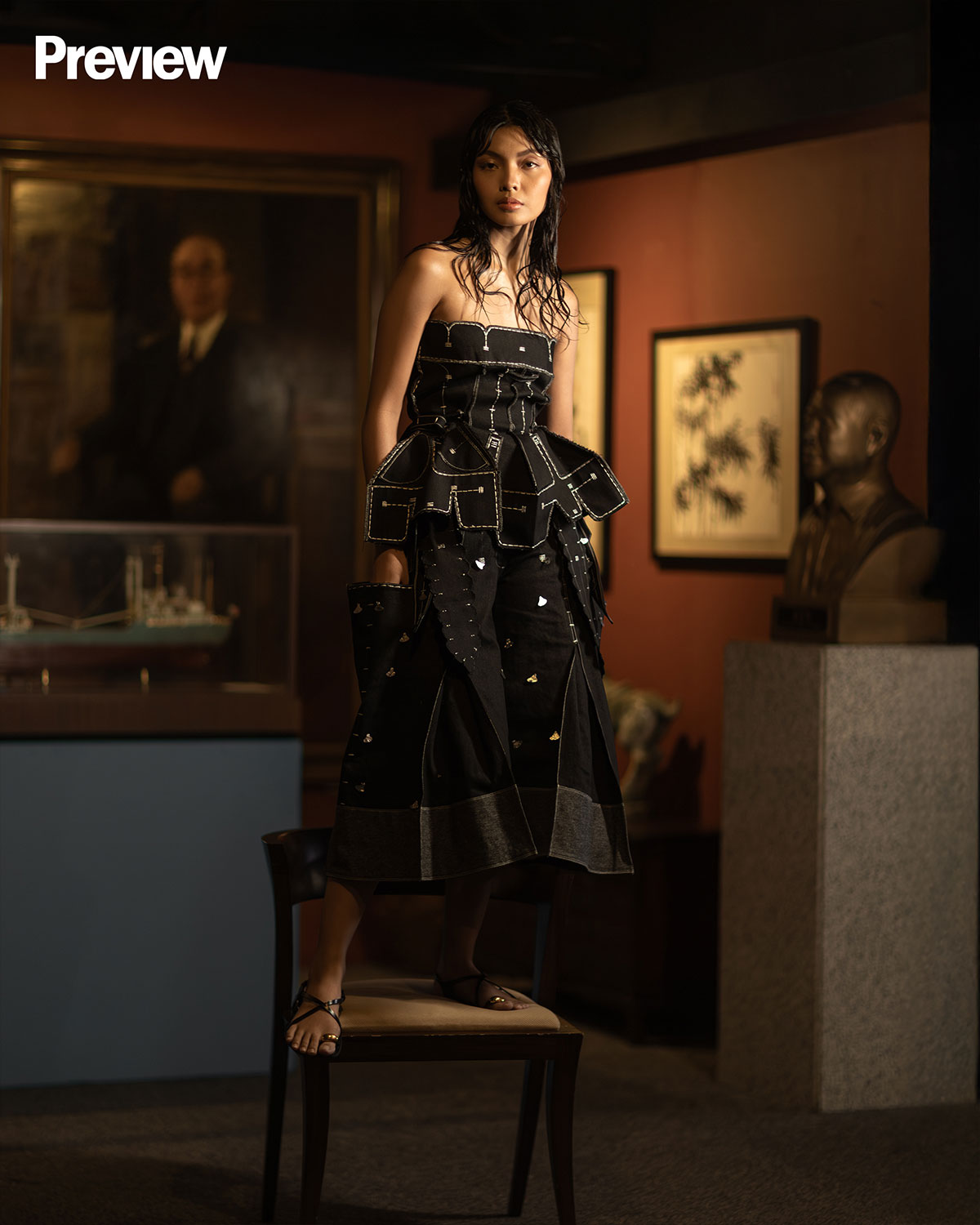
Click to Enlarge
Raejell Roxas of PMAP wears RENZ REYES. PHOTO: PAOLO PINEDA.

Produced by the Preview Team
Editor-in-Chief: Marj Ramos-Clemente
Creative Director: Bacs Arcebal
Managing Editor/Producer: Reg Rodriguez
Co-producers: Kyla Villena and Paulina Singh
Assoc. Multimedia Director: Jana Jodloman
Photographed by Paolo Pineda. Beauty Direction by Kyla Villena. Models: Ethan Fabella (for Antonina Amoncio), Habie Mondido (for Axel Que), Philippe Magalona (for Jaggy Glarino), Hash Taha (for Kelvin Morales), and Raejell Roxas (for Renz Reyes). Makeup by Team Muriel Vega Perez. Hair by Creations Salon by Lourd Ramos. Story by Paulina Singh. Video direction by Jana Jodloman, shot by Teddy Garcia Jr. Social media coverage by Sophia Rosello. Photographer’s assistants: Isidro Pejoto and Cesar Salve. Shot on location at Yuchengco Museum. Special thanks to Shermaine De Ramos of the Professional Models Association of the Philippines (PMAP), Pia Peña-Lejano and Gloria Ocampo of Yuchengco Museum.
Pau is Preview’s go-to fashion girl. On most days, you’ll find her with headphones on, coffee in hand, and likely dressed in an oversized blazer and floor-grazing jeans.