"Kikay" Is Back—and It Signals a New Era of Unapologetic Girlhood
From Jolina Magdangal to today’s TikTok generation, kikay is being reclaimed as a form of self-expression, cultural pride, and unapologetic femininity.
by Kyla Villena
Published on Feb 26, 2026
With a strong regard for individuality and self-expression, it is only natural to find ourselves imperceptible in some of the trends that come and go. It seemed to be the case for Eileen, whom you might have seen on TikTok as @faerieleen.
Filipinas kicked off the year by bringing back bebot glam, a hot Y2K look tailored for fierce, flirtatious energy. At the height of the trend, she posted a video of herself in soft makeup, beaded accessories, and pastel clothing that leaned toward a more whimsical fashion sensibility. The text read, “Oh to be a kikay in a world of bebot.”
Clarifying that it was never intended as an attempt to steal the spotlight, she emphasized that “we are all beautiful Filipina girls.” Instead, she aimed to spotlight a term deeply embedded in Filipino identity—one that resonated with her personally. It also became an opportunity for kikays to find and connect with one another—and that, they did.
So now the kikay trend is here. Here’s what you need to know about it.
Meet Kikay, TikTok's Latest Beauty Trend
The trend typically begins with the subject mouthing the words “sayaw kikay,” set to Viva Hot Babes’ 2004 single, Kikay. At the beat drop, the video transitions to reveal the subject in full kikay mode.
Some women have embraced their innate duality, too! Case in point: Another take on the trend is to begin with a bebot look before transforming into a full-force kikay.
There is no singular look that defines this trend. Common hairstyles include newspaper hats, butterfly clips, and bubble ponytails secured with multi-colored rubber bands—or in Pinoy slang, sanrio.
The beauty look leans feminine, with eyes adorned in pastel hues and sometimes amplified with a touch of shimmer. When trying it out, don’t shy away from layering on pink—it’s the perfect trend to express your love for the color. Tinted and glossy lips are essential, too.
A kikay is usually dressed in bright, vivid colors. She isn’t afraid of patterns or accessories, playfully styling them however she pleases.
She is an anik-anik girl at heart, even before the internet made anik-anik cool again. She probably carries a large pencil case filled with markers in more colors than a rainbow. And somewhere in her bag, you’ll likely find a well-used but neatly kept bottle of baby powder and a travel-sized perfume.
Oxford Languages defines the Filipino term as both a noun and an adjective referring to a girl or woman who is “stylish and interested in fashion and beauty products.” She embraces her femininity, unafraid to use these arenas as a medium to express her identity and pursuits.
The trend asserts a spirit of unapologetic playfulness, whether in one’s personality or sartorial choices.
The Kikay, As Seen in Philippine Pop Culture
In Films
No conversation about the kikay trend would be complete without the mention of Jolina Magdangal, who helped define its original blueprint.
In the 1990s, she catapulted to stardom through a string of rom-coms that cemented her love team with Marvin Agustin. Whether in FLAMES: The Movie, Hey Babe, or the many films in between and beyond, she effortlessly embodied the playful, unmistakable spirit of a kikay.
She carried that same energy into music. Chuva Choo Choo, in particular, has long secured its own permanent space in pop culture—and has likely etched its own space inside your brain, too.
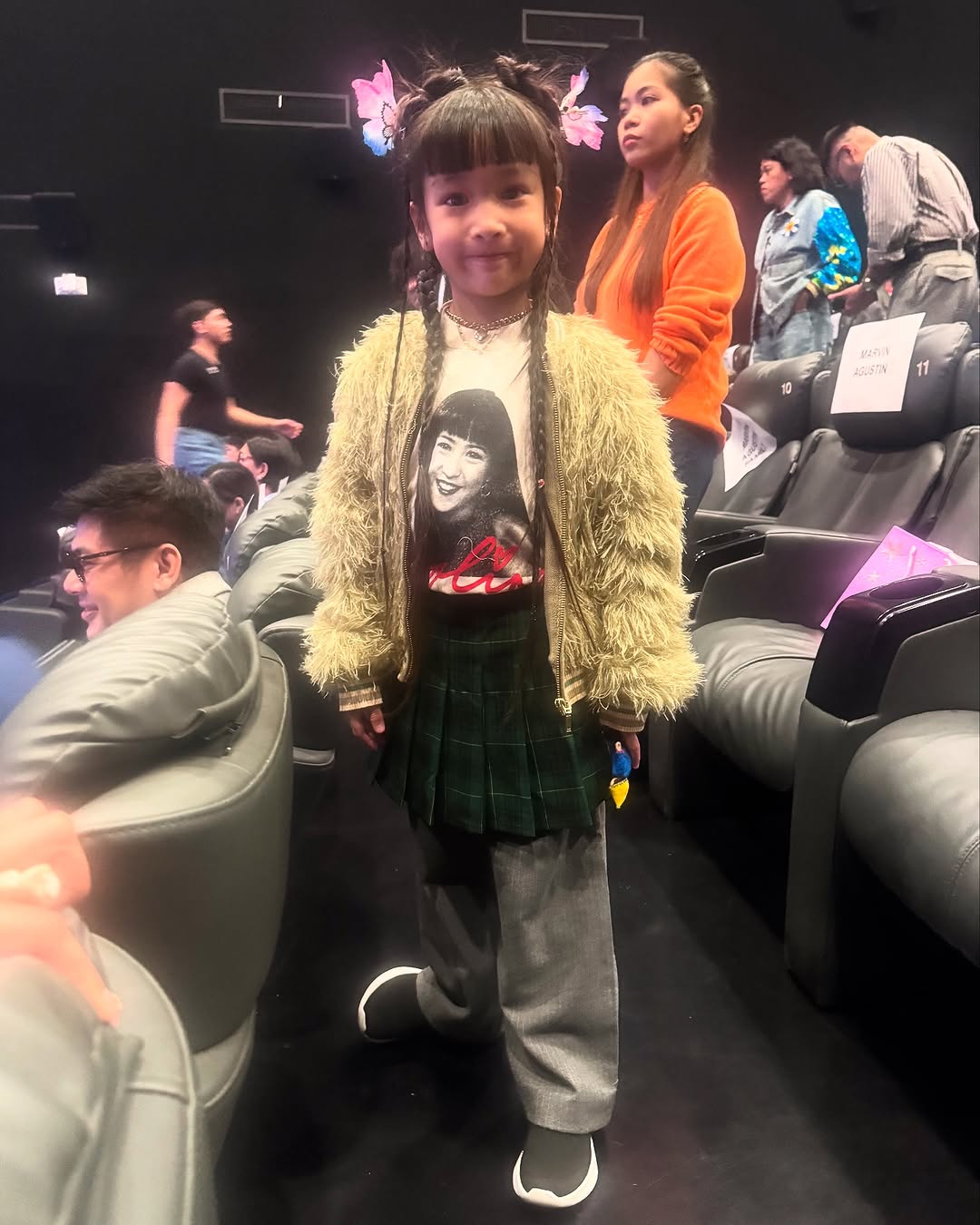
Her name has become synonymous with that bubbly energy, often conjuring images of exuberant, colorful fashion that has served as a template for generations of young Filipinas. Even her daughter has adorably taken after her in this regard.
Angelica Panganiban is another pillar of Philippine entertainment who has embodied what it means to be kikay. Having entered show business at a young age, she took on numerous roles during her child star years that presented her as the quintessential “girly girl.”
Not a single strand of hair was out of place—her bangs were perfectly combed, while the rest was neatly clipped back. Her outfits were never without jewelry, and her cheeks were always flushed with a rosy glow. Ang Pulubi at ang Prinsesa and Ama, Ina, Anak are among her early works that captured this image.
Anne Curtis had a kikay phase, too. Perhaps you remember her role in the 2007 film Ang Cute ng Ina Mo.
Her portrayal of a young woman navigating a relationship with her estranged mother called for a more restrained emotional tone, but her style still reflected the archetype. Tank tops, headbands, and statement jewelry were among the staples she wore—each one reinforcing that distinctly kikay sensibility.
As seen in these movies, a kikay is not boxed into a singular attribute. She can be shy, romantic, proud, or strong. Whatever attitude she embodies, her femininity remains unfazed, encapsulating a kind of steadfastness and confidence in her identity.
In Music
The resurgence of the song Kikay by Viva Hot Babes could also be credited to the return of Philippine girl groups. Listeners today enjoy the upbeat and energetic tunes of girl groups, with BINI at the forefront. Since their debut in 2020, the octet has been releasing music that embraces the various aspects of girlhood.
Salamin, Salamin tackles the longing for a romantic confession, while Cherry on Top highlights self-worth. They have also utilized their platform to shine a light on Philippine culture, as demonstrated in Shagidi, a special tour single that was inspired by the traditional Filipino game.
A quick browse through their music videos and visual concepts reveals just how deliberately they channel Y2K kikay energy. Through bold colors, playful styling, and unapologetically feminine codes, BINI has helped reintroduce the aesthetic to a new generation—proving that kikay has never really gone out of style.
Along with the awakening of bebot and kikay beauty trends, 2026 has also seen the comeback of Philippine girl groups that paved the way. The SexBomb Girls, for instance, held a reunion concert in December 2025. With its massive, sold-out success, they are currently gearing up for their sixth show and their upcoming world tour.
There is no certainty on whether we can expect Viva Hot Babes to return to the spotlight as well, but with the strong current of these trends that re-popularize Filipino terms and music, one thing is for sure: the new generation of Filipinas is expanding their radar, introducing themselves to iconic pillars in Philippine pop culture that brought us where we are today.
In Beauty
A kikay would mark her beauty kit with high importance as an emergency kit. After all, when you don’t look your best, you won’t feel your best—and that’s why beauty is an aspect worth paying attention to. This material culture contributes to the term’s staying power throughout these decades.
Oxford Languages even recognizes the Philippine English term “kikay kit,” defined as “a bag for holding toiletries and cosmetics.” It typically takes the form of a small but secure pouch, filled with essentials that reflect the owner’s personal priorities and routines.
These portable vanity bags hold a wide range of items deemed essential to personal care and grooming—from refreshing facial mists, blotting sheets, and makeup for spontaneous plans or touch-ups, to facial tissues and even menstrual pads. The fact that a kikay kit’s contents are open to personal interpretation reflects how femininity itself is multifaceted, shaped by individual needs, rituals, and expressions.
Society has labeled “maarte” as an undesirable trait. Fortunately for a kikay and her overflowing kikay kit, there is no space for that kind of judgment. More than a passing trend, being a kikay is about intention in how one presents herself to the world, on her own terms.
In a patriarchal society like the Philippines, women and feminine individuals are often met with disapproval for embracing girliness. Sometimes, it even gets confusing. A delicate woman is told to toughen up, while a fierce one is advised to soften a little.
The parallel resurgence of bebot and kikay signals something more meaningful beyond trend cycles. It encourages women to embrace—and proudly express—their femininity, whatever form it takes.

Kyla Villena loves a good lip gloss and a trip to the art gallery. She is Preview's beauty girl, who doubles as a self-proclaimed motivational speaker.