Is There a Right Way to Behave When the Country Is in Crisis?
Pia Wurtzbach’s vacation photos sparked a debate about sensitivity, social responsibility, and what we actually owe one another when disaster strikes.

Published on Aug 19, 2026
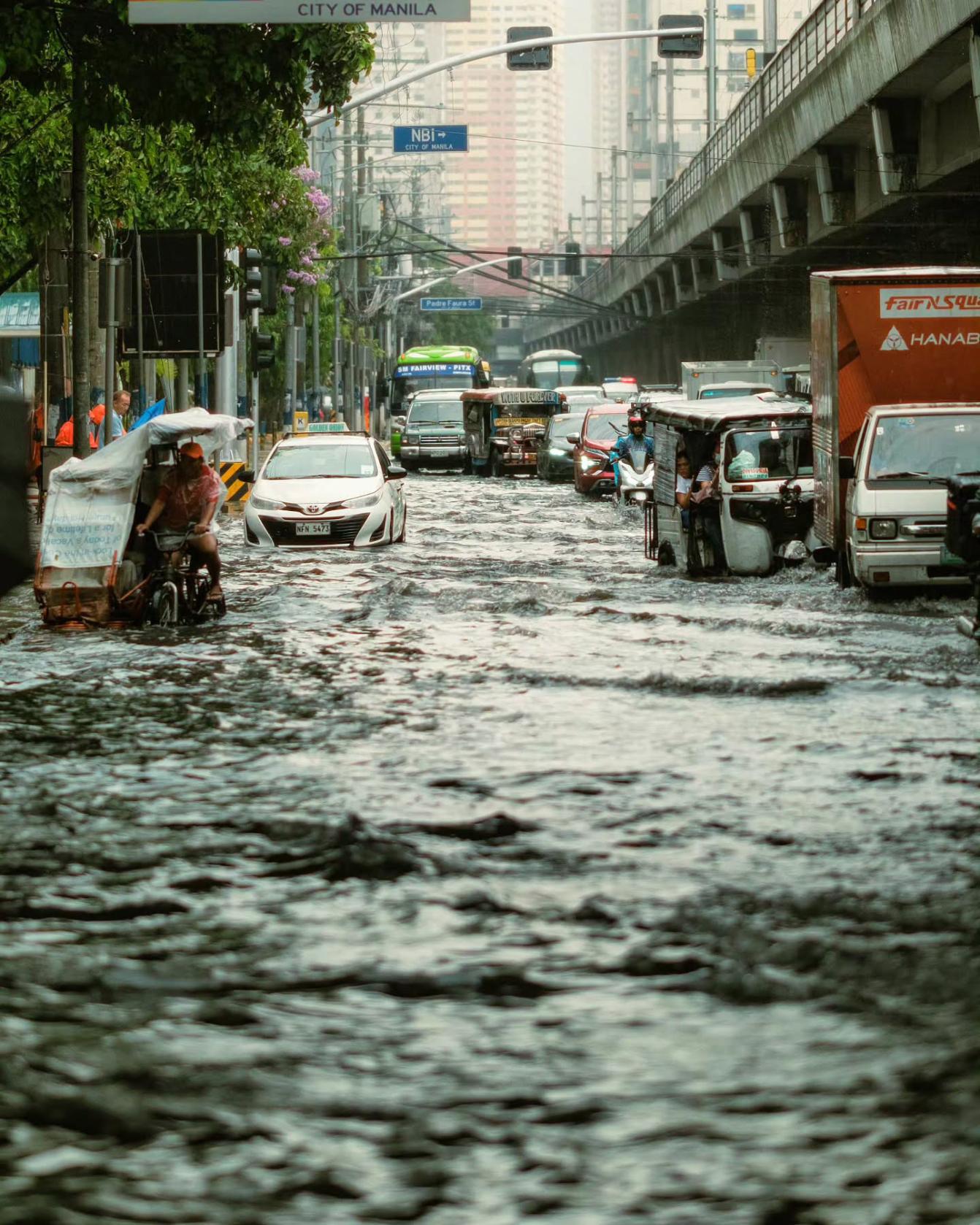
Every time disaster strikes the Philippines, the internet, like clockwork, begins to take on a different form. Flood warnings replace memes. Rescue hotlines are reposted. Donation drives circulate. Photos and videos document streets disappearing beneath floodwater. Frustrated Filipinos take to social media to ask the same questions all over again.
And inevitably, someone gets called out for posting something else.
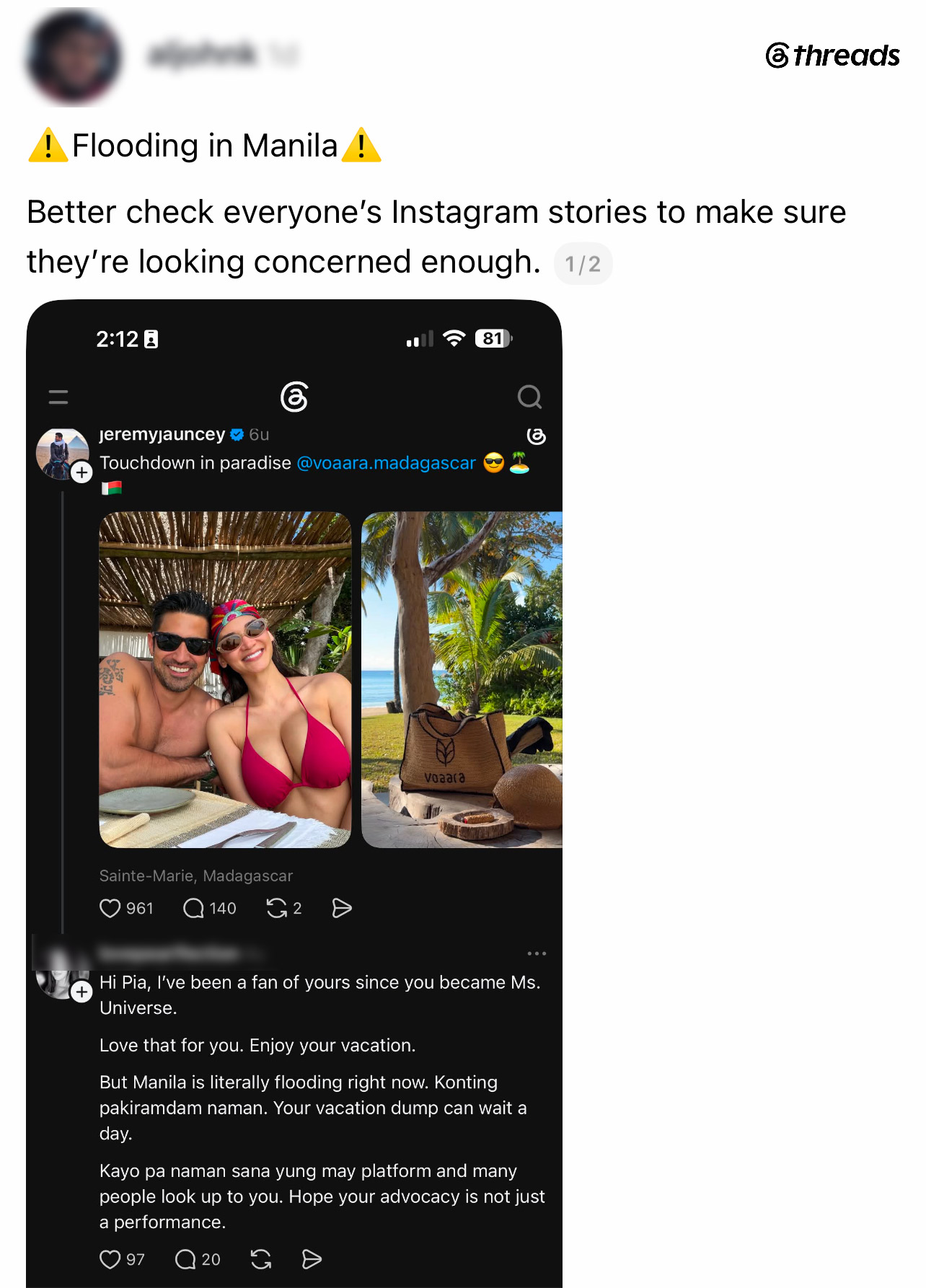
This week, as heavy rains once again caused widespread flooding in Metro Manila and other parts of the country, Pia Wurtzbach and her husband, Jeremy Jauncey, found themselves at the center of a conversation about it. The couple, who were vacationing in Madagascar, shared photos from their trip as flood scenes filled feeds back home.
One commenter took issue with the timing, telling the former Miss Universe that her “vacation dump can wait a day” and arguing that someone with her platform should show more sensitivity while Manila was flooding.
But the criticism—and the backlash against it—raises a bigger question: What, exactly, do we expect private citizens to do during a national crisis?
Is There a Right Way to Behave During a Crisis?
As with everything else, context always matters.
There is something inarguably distasteful about using someone else's misfortune as an opportunity to flaunt your own privilege. There is a difference between posting a vacation photo while a calamity happens elsewhere and posting about how comfortable you are because you have been spared from the calamity that's affecting everyone else.
But taken to its logical conclusion, the expectation that everyone must suspend ordinary life whenever some part of the Philippines is suffering is difficult to sustain.
Should someone cancel a vacation because Manila is flooded? Should they simply refrain from posting it? For how long? Does the rule apply only to celebrities? To influencers? To anyone with a public Instagram account? And does posting a black square, a donation link, or a message saying “stay safe” necessarily demonstrate greater concern than remaining silent?
These questions become particularly complicated in a country where crises are distressingly frequent. Typhoons, floods, earthquakes, volcanic eruptions, and other disasters recur throughout the year. If simply going about one's life while someone else is suffering is inherently insensitive, there will rarely be an appropriate time to do anything at all.
Birthdays will still be celebrated. People will still eat at restaurants, travel, take time off, and find reasons to enjoy themselves. None of that diminishes the gravity of what others are going through. Nor should continuing with one's life automatically be mistaken for indifference to theirs.
Perhaps the more useful question is what we reasonably owe one another when disaster strikes.
Does Empathy Have to Be Public?
Social media can be enormously useful during calamities. Filipinos have used these platforms to circulate emergency information, locate missing people, organize relief operations, raise funds, and amplify calls for rescue. For someone with a sizable following, a single repost can put critical information in front of thousands—if not millions—of people.
Using one's platform to help can make a tangible difference, and doing so should naturally be encouraged. But encouragement is different from obligation, and posting is not necessarily proof of concern.
Somewhere along the way, social media has also given us the ability to audit one another's reactions to tragedy. Did this celebrity post about the floods? Did that influencer share a donation drive? Why is this person at the beach? Why hasn't this person said anything?
It has created a peculiar expectation that concern must be publicly demonstrated to be considered real. Yet someone's Instagram Stories can tell us very little about what they actually did. We don't know whether an individual donated privately, checked on affected communities, volunteered, or contributed in ways that simply never made it online.
The reverse is just as true. Posting about a calamity doesn't necessarily tell us much about what happened after the post. A person can share “praying for everyone” and go about their day; another can say nothing online and quietly send money to a relief operation. Public attention can, of course, mobilize people, spread information, and keep an issue in the conversation. But perhaps we shouldn't be too quick to treat visibility as evidence of virtue (or silence as evidence of its absence).
Who actually owes us something?
There is another danger to policing the vacation photos of private citizens: it can redirect public anger toward people who were never responsible for preventing the disaster in the first place.
Celebrities may have influence. Wealthy Filipinos may have resources. Those with large platforms can certainly choose to use them for good.
But they do not have the same responsibility as elected officials and government agencies entrusted with public funds, infrastructure, and disaster preparedness.
Flooding, after all, is not merely an unfortunate act of nature. It is a recurring national problem that Filipinos have spent billions trying to address. So whenever our streets are submerged again, perhaps the more consequential question isn't why someone posted a bikini photo. Why do the same communities continue to suffer? Where did the money meant to protect them go? And if public funds were wasted or stolen, who will be held responsible?
A private citizen's Instagram Story cannot keep floodwater out of someone's home. Public infrastructure can.
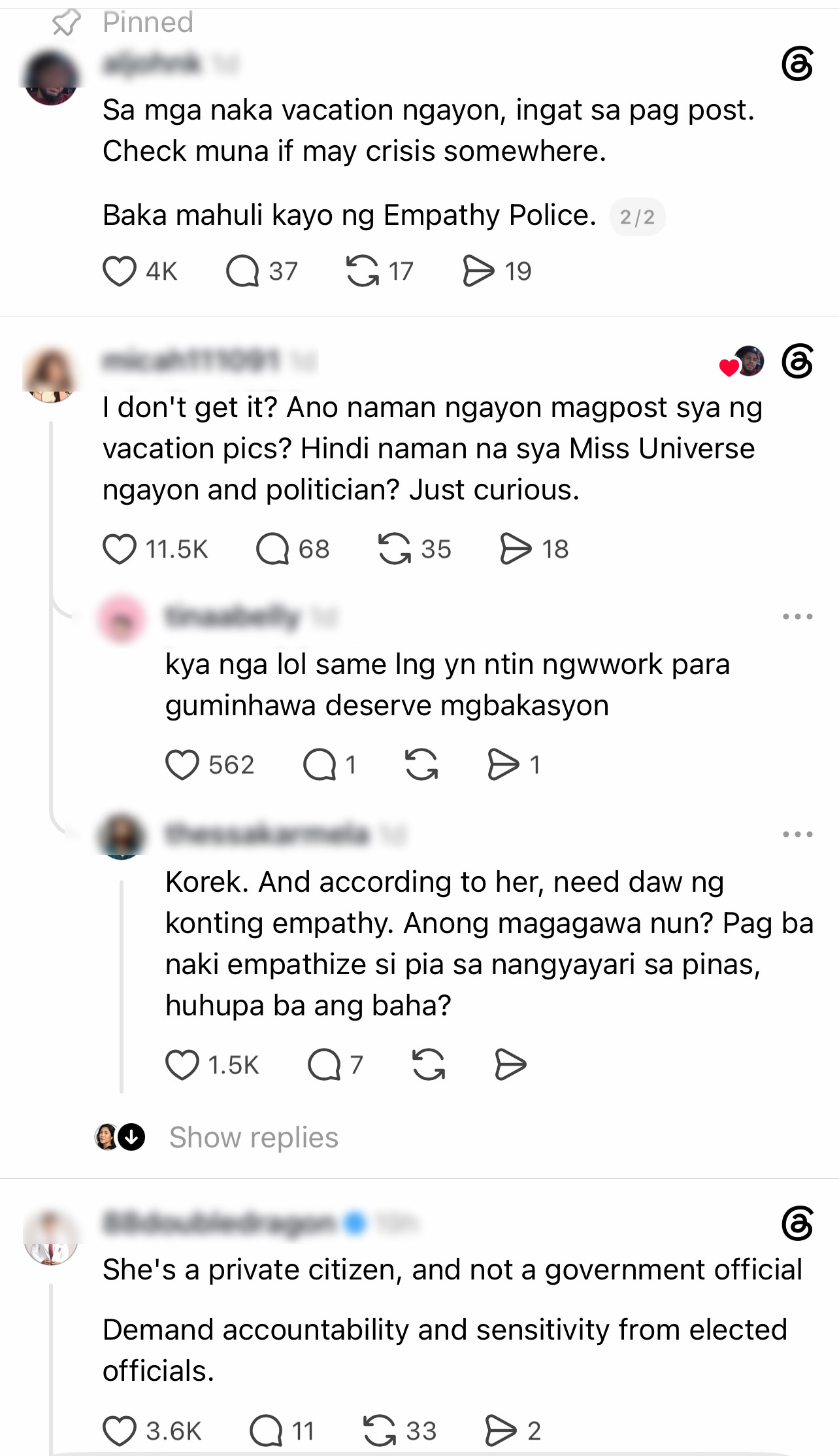
To set the record straight, none of this is an argument for indifference. We should acknowledge suffering beyond our immediate circumstances, and those with large platforms can make a meaningful difference by directing attention toward people who need help. There are also moments when discretion is simply the humane thing to exercise.
But perhaps we should measure empathy by more than what appears—or doesn't appear—on someone's feed.
Donate if you can. Share verified information. Volunteer. Check on people. Demand better infrastructure. Remember the names involved in questionable projects long after the rain stops. Vote accordingly.
But also, yes, take the vacation you've worked for.
A functioning society should not require ordinary citizens to feel perpetual guilt for continuing with their lives while their country is in crisis. What it should require is accountability from the public officials whose job it is to make sure the same crisis does not keep happening.
That is where our outrage belongs. And unlike a vacation photo, this demand for accountability shouldn't disappear from our feeds once the waters recede.

Marj is the Editor-in-Chief of Preview. A former economics major, she dove headfirst into fashion publishing and hasn’t looked back since.
Read more stories about
flood ,flood control ,politics ,social media ,op-ed ,preview thinkpiece ,thinkpiece