Culture
In Praise of the Single, Unmarried, Mothering Auntie
In a matricentric society like ours, aunties—often unmarried and child-free—help hold the family together. Their economic and emotional support usually goes unacknowledged, but just like any other role that women play in society, they deserve to be celebrated.
Published on May 9, 2025
With complete and utter reverence, I call my aunt by a name I cooked up myself. Yeye—my mother’s 58-year-old eldest sister—refuses to don an honorific, saying it would only make her “old.” On the other hand, the bisyllabic Yeye, is short and cool. It was how I, as a baby, pronounced the rather complicated, diphthongal “Noelle”, her real name, wherein you pronounce a “y” sound between the vowels “o” and “e”. I, as a baby, took only the “y” and “e”, and sealed her fate. She was mine: my Yeye, a person who had a precious and unique place in my life, straddling a line between parent and partner-in-crime.
ADVERTISEMENT
When my mom and dad separated, Yeye became an instant extended parent. She took it upon herself to buy my P.E. shoes or school bag every academic year. When my mom struggled to make ends meet, Yeye volunteered to give me my daily allowance from grade six until college. Yeye was the person I would ask for wants (not needs), like Jolina Magdangal’s butterfly clips or the Polly Pocket pencil case (These days, I return the favor by buying her Nikes and Labubus). An early retiree, unmarried and child-free, Yeye has always been content with a simple life, giving what she can and also mediating in family issues when necessary. There is no heavy drama between us: just good vibes and trends to bond over.
As I grew older, I found that I wasn’t the only one with a “Yeye” in their life. Many more people had their own enduring Yeyes—aunties who are often unmarried, child-free, but loyal extensions of their siblings’ families.
Their economic and emotional support usually goes unacknowledged, but just like any other role that women play in society, they deserve to be celebrated.
The Many Roles of Aunties
I didn’t need to look far to find another Yeye in the form of Ate Bb, our staff for several decades, who took a ship from Cebu to Manila 30 years ago. Until her homecoming this year, she never let a single payday pass without wiring money, whether for her siblings, nephews, or nieces—whose photos are on her bedside table. Once, I asked her, "Don’t you ever get tired?" To this, she responded confidently, “Para sa akin, ito na ang misyon ko sa buhay.”
Often, the tita is depicted as rich, hot chocolate-drinking Mary Grace patrons who swear by essential oils and get Botox. But there’s more to aunts than this caricature. Sometimes, the support of aunties comes in the form performing household chores or raising their nephews and nieces with discipline.
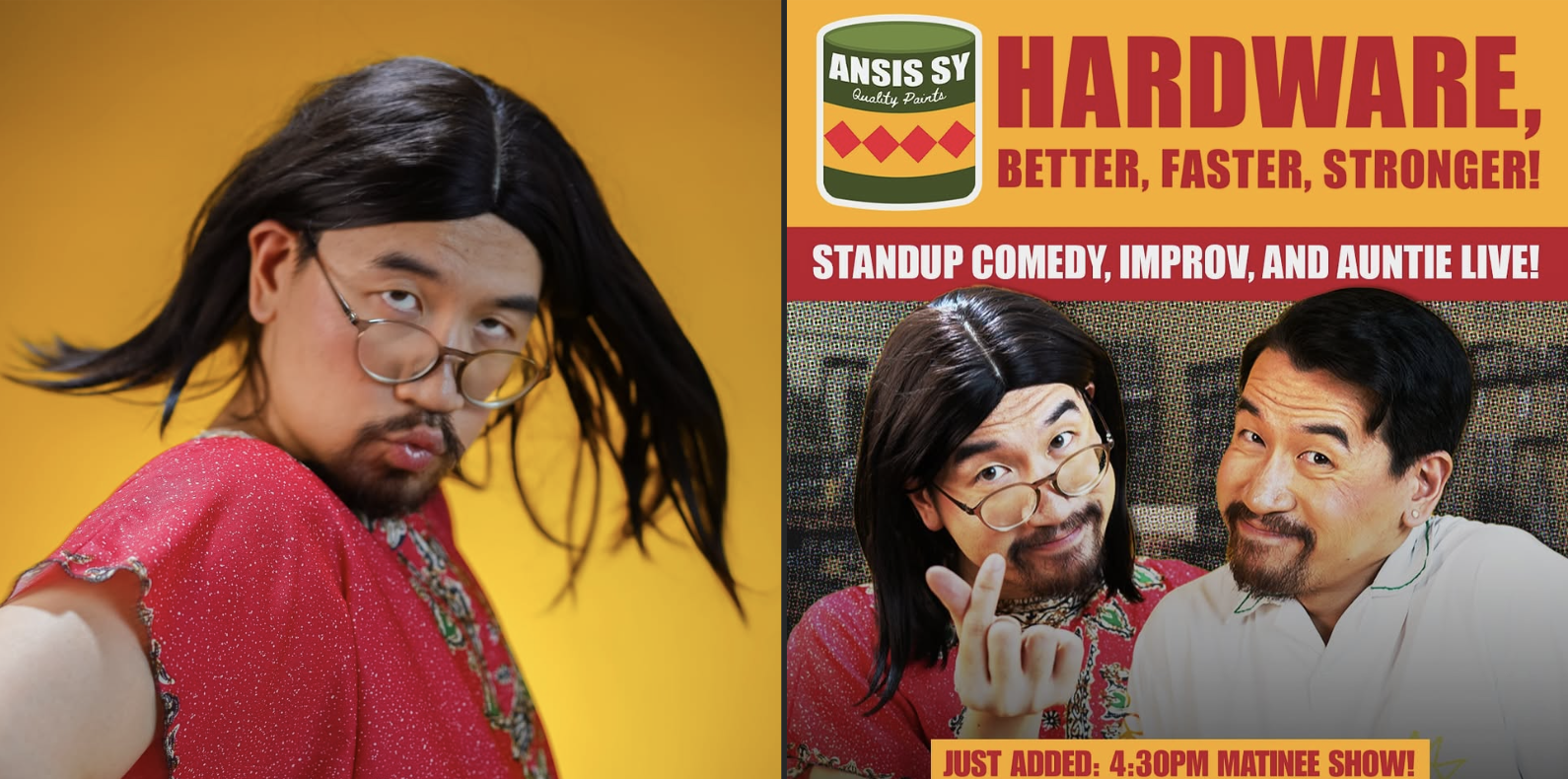
This is what standup comedian Ansis Sy channels through his wildly hilarious “Auntie” character. Auntie is a nightgown-wearing Filipino-Chinese mom who is strict, but deep inside is actually full of tenderness. Auntie will go onstage for Sy’s first-ever headlining theater show on the 24th of May at Teatrino Greenhills.
Click to Enlarge
PHOTO: Ansis Sy.
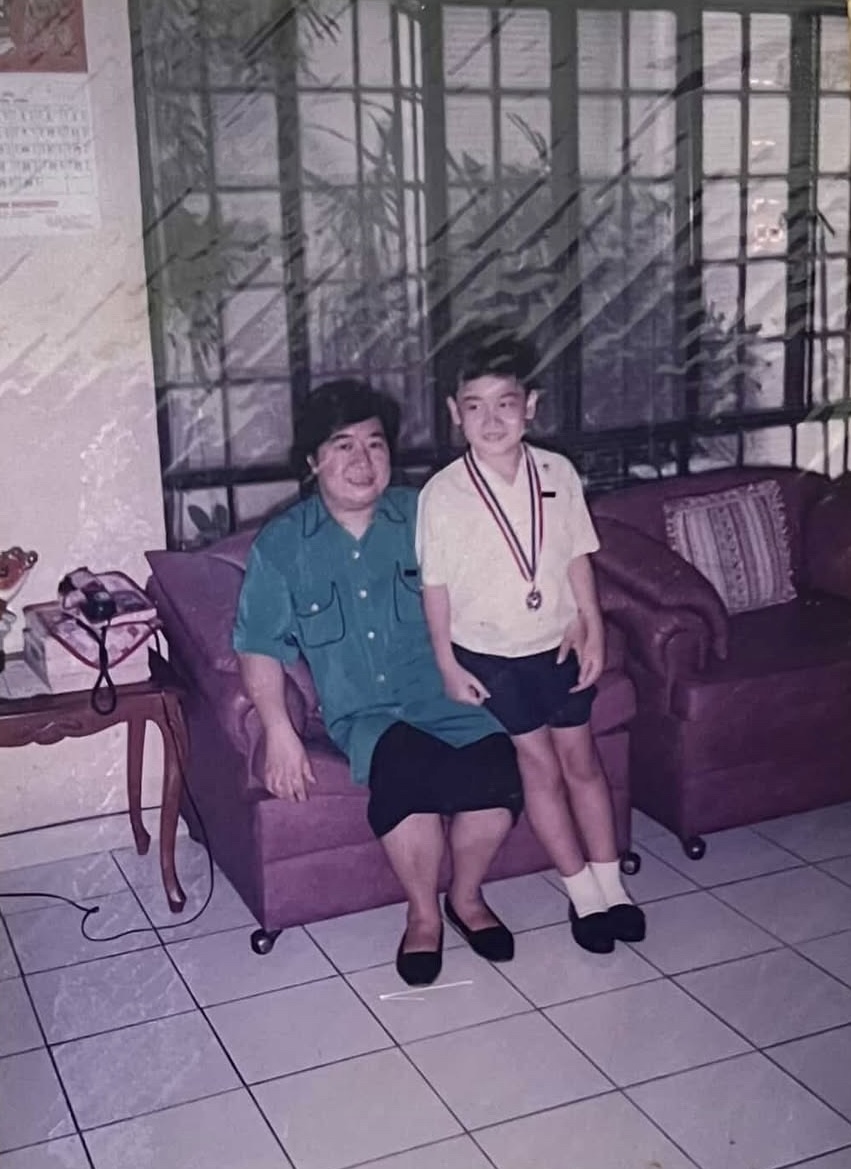
Auntie, apparently, is inspired by many women in his life, particularly his late aunt Ruby.
Click to Enlarge
PHOTO: Courtesy of Pola del Monte.
Sy recounts that Aunt Ruby, Sy’s father’s sister, whom he addresses as a-ko, was his tutor. She was known by his teachers and classmates from grade school to high school, and was a disciplinarian. Aunt Ruby passed when Sy was in college.
“Nung bata ako, I also found the strictness annoying,” Sy said. “But they deserve to be celebrated because they are our second moms. Malaki yung impact nila sa life and upbringing natin, not only monetary, but also in terms of life lessons.”
“Pinakatumatak sa ‘kin was her dedication to just serve her family,” he said. “Yun yung naging parang purpose niya in life.”
Banker Melody White also saw this in her Tita Nenet, 67, who filled the role of a homemaker in their household while White’s own mother worked full-time as a single parent. “Luto, plantsa, laba, hugas ng pinggan, pati paggawa ng reviewer namin, siya,” she said. White is now in her 40s, and only recently got married, but Tita Nenet is still by her side. “Pag dumadating ako sa bahay, kahit gaano ka-late, hinihintay niya ko para may kasabay ako kumain kahit hindi siya kumakain.”
Tita Nenet never worked or earned money for herself, relying on White and White’s mother (Tita Nenet’s sister) for financial support. And yet, “nung COVID, yung ayuda na matatanggap niya sana, hahatian niya ko para pambayad sa kuryente,” White recounted. “Ganun siya ka-selfless na tao.”
Aunties in Filipino Culture
This sense of sacrifice is very common for aunties: “It’s part of Asian culture—familial piety,” explains feminist Jelen Paclarin, executive director of the Women's Legal and Human Rights Bureau, and a mothering (albeit married) auntie herself.
Jelen emphasizes that most unmarried people who live with their extended families are pressured to help. Sometimes, the auntie role can also fall on parents’ friends, though not blood-related. However, between an uncle and an aunt, there is a greater level of expectation for the auntie to manage household responsibilities.
“Parang yung Miss Universe question na ‘What is the essence of being a woman?’,” said Jelen, “Ang nakagisnan nating expectation para sa womanhood ay ang pagbubuntis. Kaya ang auntie, ang tingin ng lipunan sa kanya ay hindi niya na-fulfill yung fullest potential niya to become a woman, and that is to have a child. Kaya ang nangyayari, ang tendency ng mga auntie, kahit wala naman silang kailangan patunayan, they need to be good.”
An auntie enjoys a unique position in the household: She has a certain stature where she commands a bit of authority, but she can still be sought for good times. At home, she plays a role that other women do not play. For example, as opposed to grandmothers, aunties show by example that there are other ways to live your life, which includes being perpetually single. It’s a seemingly radical choice, but a valid choice just the same.

Click to Enlarge
Jelen Paclarin with husband and nephew. PHOTO: Courtesy by Pola del Monte.
“In a way,” Jelen said, “nakakatulong na may kababaihan sa paligid na pinapakita sayo kung sino ka, who you can be, and who you want to be.”
And in this, there is no shame, because I know for a fact that our house wouldn’t be a home if Yeye is not around. Yeye is not just a shadow whom I just happen to live with: She is a model who taught me that one need not have a traditional parental role to be capable of giving love.
“Every Mother’s Day or Women’s Month speech ko, sinasama ko lahat ng babaeng roles sa pamilya, tulad ng mother-in-law, or auntie,” said Jelen. “Lahat sila may papel na ginagampanan pero dahil supporting or extra, di sila naha-highlight.”
We see it as a supporting role, but for all of them—Yeye, Ate Bb, Aunt Ruby, Tita Nenet, and Jelen included—being an auntie is a deeply cherished identity in which they give their one-hundred percent.
“We need to celebrate them,” Jelen urged. “They’ve become mothers in their own way.”

Pola del Monte is a journalist, former UN Women consultant and Cosmo Women of Influence 2024 Awardee. She posts about writing, communication and media literacy on Instagram: @MissChiefEditor.