Anima Tierra Fuses Filipino Tradition and Global Sounds Without Missing a Beat
The 12-member collective turns live performance into a space for collaboration, rhythm, and cultural exchange.

Published on Dec 25, 2025
Anima Tierra sits at the intersection of traditional music practice and contemporary performance, but it doesn’t present itself as a revival act or a genre exercise.
The collective works with percussion-heavy arrangements, layered vocals, and instruments drawn from multiple cultural traditions, using live performance as its primary testing ground. “We’re not the type to get too cerebral or technical about it,” says vocalist and percussionist Maia Dapul. “We really just experience everyone's backgrounds and personas in the moment, then bring them together during our rehearsals and performances.”
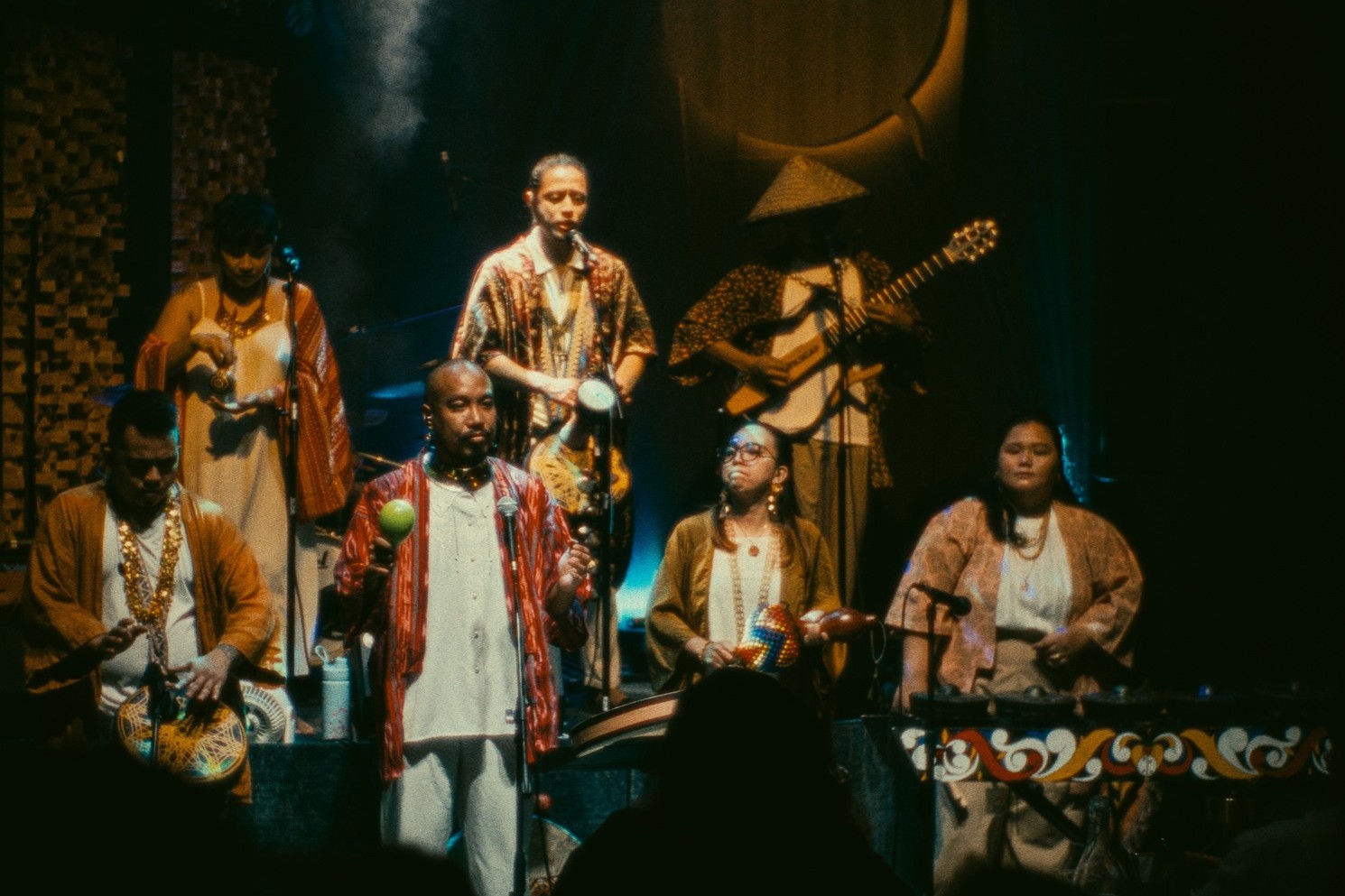
Formed around 2018, the 12-member group grew out of overlapping circles within the Philippine world music scene. Several of its senior members trace their roots to Kontra-GaPi, while others arrived through different bands, workshops, and informal music communities. Rather than consolidating into a fixed lineup or sound, the group functions as a flexible collective, allowing individual musical backgrounds—traditional, classical, self-taught—to remain audible within the whole.
Their work moves across formats. Anima Tierra performs in bars, festivals, and corporate spaces; scores plays, films, and silent cinema; and facilitates workshops that prioritize participation over polish. Audience involvement—through drum circles and jam sessions—is framed as a continuation of musical practices, where rhythm is shared and learned collectively. This same logic carries into their approach to sound design.
In September, during the Preview Ball 2025 marking Preview’s 30th anniversary, the group performed a rendition of the T’boli folk song “Koyu No Tebulul.” Placed within a fashion-led event, the performance underscored how Anima Tierra navigates: adapting traditional material without flattening it, and letting rhythm and voice carry meaning.
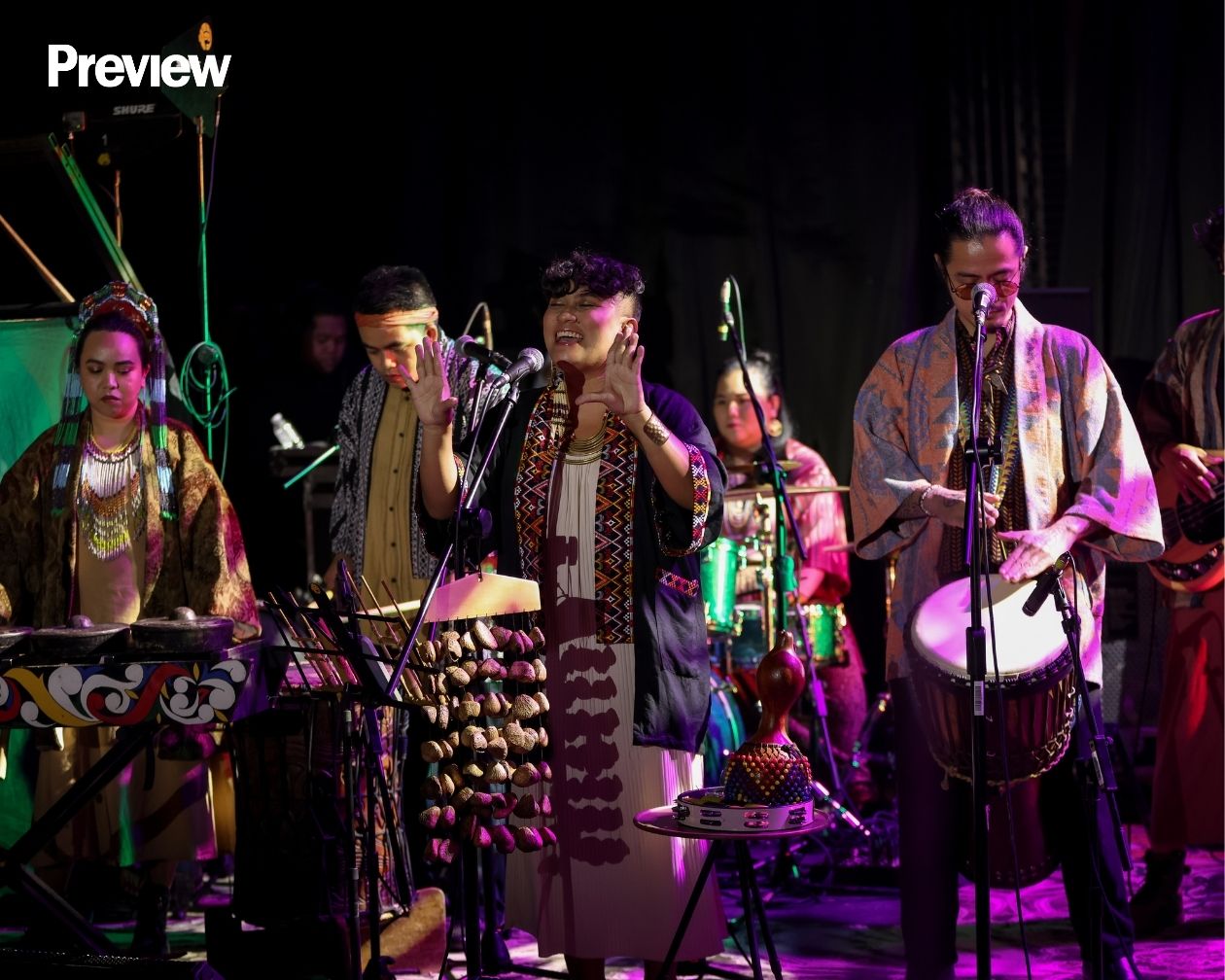
As Anima Tierra prepares to represent the Philippines at All That Jazz 2026 in Jaipur, India, the collective is also navigating the realities of scale—logistics, funding, and the question of what it means to appear internationally as a complete ensemble. The conversation around the group now extends beyond sound alone, and how Filipino world music travels when it leaves home.
Anima Tierra: Inside the Filipino World Music Collective Making Waves
Anima Tierra describes itself as a “power world music collective.” When did that identity fully take shape for you, and what did it take to arrive there as a group?
Yvette Lazaro, associate manager: “The phrase ‘power world music collective’ came from online discourse on world music evolving with modern sounds. ‘Conventional’ instruments like bass guitars and drumsets, and electronic music like dance synth, changed the way the world music genre sounded. Examples of this genre today include artists like Djemdi and Hilight Tribe.”
Your music pulls from traditions across the world while staying grounded in Filipino roots. How do you decide which global influences to bring into a piece without losing your own center?
Maia: “Jayson Gildore, our leader and artistic director, and senior members Rhea Dagñalan and Desiree Frivaldo are alumni of Kontra-GaPi. They have years of experience when it comes to finding inspiration from global traditions while keeping close to Filipino roots. It can be as theoretical and as academic as necessary, but sometimes, what makes a piece of music Filipino isn’t necessarily about the depth of the lyrics or how many instruments we use—sometimes it’s just a deep sense of community, and Filipinos collaborating for music that makes us come alive.”
Santie Navarro, percussionist: “Factor 'din 'yung kanya-kanyang style. May natuto sa traditional instruments, sa classical singing. May mga natuto sa wala lang—binigyan lang ng tambol. Pero na-incorporate pa rin 'yung style at naging collaborative 'yung tunog. At music pa rin 'yung kinalabasan.”
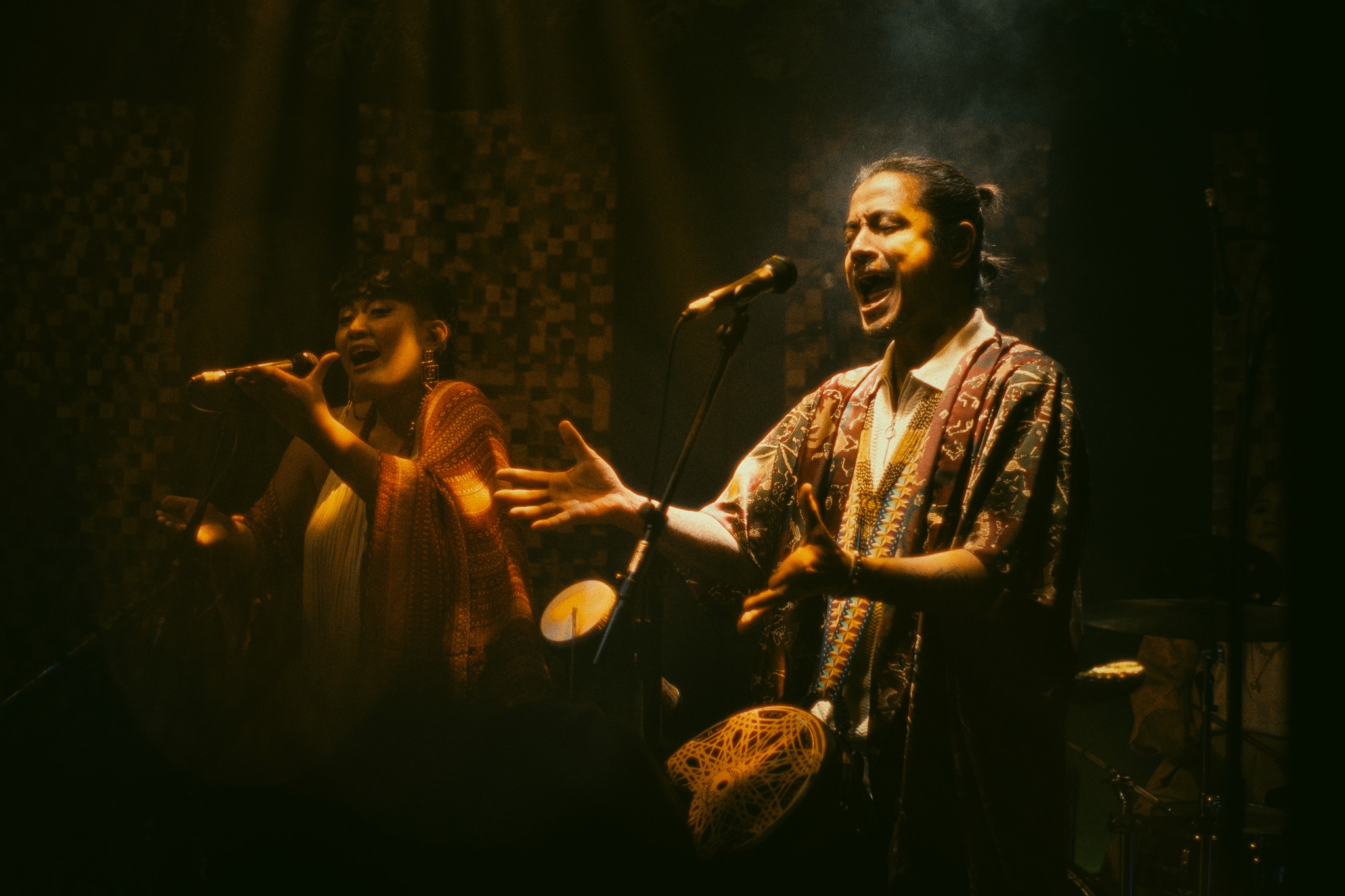
Rhea Dagñalan, drummer, percussionist: “Our music is a process, it keeps evolving, so this gives us time and opportunities to bring things back to where they need to be.”
Jayson Gildore, artistic director, percussionist, multi-instrumentalist: “Bukod sa Pilipino nga kaming lahat sa Anima, kapag feel namin na hindi na masyado Pilipino, as much as possible pinapasok din namin ‘yung Pilipino instruments at rhythms 'din. May ‘hala bira / pwera pasma’ kami sa Kundalini, may version kami ng Bagbagto na may pagka-Afrobeats 'din. We make it different, we base it on the world. Puro Pilipino nga 'yung tumutugtog.
“At kung may humingi ng mas Pilipino na tunog, ina-arrange namin 'yung repertoire. Pero aware kami, at mas global talaga inspirasyon namin. Isa lang din kami sa continuous generations ng banda at musikero na gusto mag-highlight sa beauty at kultura ng bansa.”
Many of the instruments you use carry deep cultural histories. How do you approach playing them with respect while also reimagining them in contemporary contexts?
Maia: “We get to know where they come from, we do our best to learn about the communities that shaped them, and we advocate for their cultures and traditions moving forward.
“Some of our members have been playing djembes and various world music instruments for decades now, and they learned from established institutions like Kontra-GaPi, the Tam Tam Mandingue Djembe Academy, and more. But others in our group are getting to know these instruments for the first time, too. What we all have in common is a deep respect and curiosity for the cultures and people that made these instruments, so by keeping those values and that spirit alive, we’re able to reimagine them in contemporary contexts with a sense of joy and celebration.”
Live performance seems central to your spirit. What happens onstage that simply can’t be replicated in a studio recording?
Maia: “You know that feeling when your heart pounds and the earth shakes with the beat of a really powerful percussion line? Or when you can't help but feel emotional when everything goes quiet, and all that's left is a singular voice singing a soft melody? Those are things that can be recorded, sure, but that can never truly capture the feelings you get when you listen to live music with the performers in front of you and an audience beside you.”
Desiree Frivaldo, kulintang player, Igal dancer: “And it’s in our culture to take part in music-making as a means of community-building. Kailangan sama-sama, tao sa tao 'yung musika natin. Di ‘yan makukuha sa recordings lamang–it’s important for us to feel that sense of community through Anima performances too.”
Beyond concerts, you’ve expanded into sound design and musical scoring for film and theater. How does storytelling through sound differ when you’re supporting a narrative rather than leading one?
Rhea: “You have to remind yourself that it’s in the service of that project. You balance your personal creative decisions with what’s best for a particular production. It takes a lot of compromise and collaboration.”
Santie: “Sa scoring kasi, dinadala mo sa ibang dimensyon 'yung istorya using instruments na tumutugma sa emosyon. In terms of sound design and scoring talaga, dinidikit mo 'yung tunog doon sa emosyon nung mga karakter, nung bida.”
Benedick Amurao, string multi-instrumentalist: “You give what the scene needs. As musicians, we’re painters of time; we paint a whole picture, we set the mood, so we paint what is needed in addition to what’s provided.”
Bogs Castro, vocalist, percussionist: “We’re adding color, like the scene is black and white and the music adds color to the scene. Tayo yung tagakulay. And that’s different from what we usually do in our performances as Anima Tierra kasi buo na 'yung mga piyesa namin usually. But when we score, we ask ‘ano 'yung hinihingi ng moment?’ So we detach the idea of Anima as a performance group and just add color to the scene and moment. It makes us more aware and collaborative, and it helps us grow and become more open to supporting narratives.”
Workshops are a big part of what you do, from handpan sessions to Igal. What do you hope participants walk away with beyond technical skills?
Rhea: “Appreciation and respect towards cultures they’re not familiar with. An explorative and curious nature na, ‘di ako familiar dito, pero I will try.’”
Desiree: “Hindi ko siya nakikita as ‘sharing technical skill’ per se. It’s more of sharing what you love, what you find interesting and beautiful, so that you can share it with others, so they find it beautiful too.”
Benedick: “To have learned or tried something that might open doors for you, na ‘eto pala yung instrumento ko.’ That’s a really big thing that you can take everywhere.”
Alon Kalmado; flow artist, vocalist, percussionist: “Workshops are also a way for us to give back to the communities that have supported us all this time.”
Santie: “Klase 'din ng therapy 'yung drumming. Bukod sa natutunan mo 'yung technicals, na-e-express mo rin ang sarili mo, na 'di mo kailangan maging magaling, kailangan mo lang mag-enjoy at ma-release 'yung negative sa katawan mo through drumming, handpan, kung ano mang instrumento.”
Bogs: “My goal is for everyone to honor traditions and cultures na hindi originally sa’tin, to pay respect doon sa culture na tinutugtog natin. ‘Di lang sa drumming styles na galing West Africa ah, pero, for example, sa mga kulintang 'din na mula sa Mindanao–‘di natin ‘to kinalakihan, but it’s something we’re promoting and advocating for, that is, Indigenous cultures around the world. We want to pay our respects, and honor traditions and cultures that aren’t necessarily Filipino, while also highlighting and advocating cultures that are ours.”
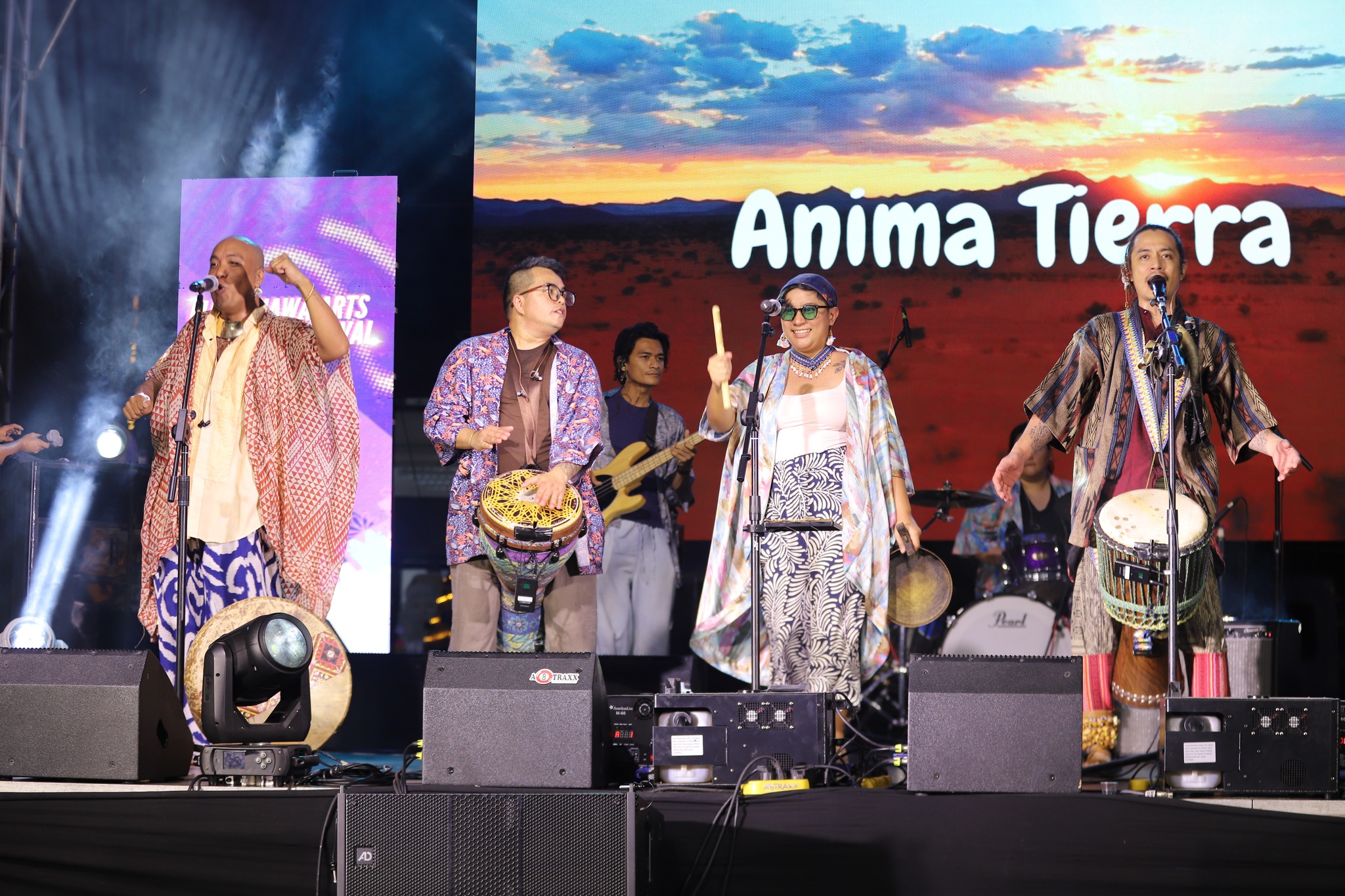
Performing internationally, like at Fai Jai Flow Fest in Thailand, marked a milestone for the group. How did that experience shift your perspective on where Anima Tierra could go?
Maia: “It really helped us understand how powerful we could be if we put our minds to it, and how disciplined we had to be to achieve greater goals. It also helped us see how many people we could connect with around the world. Even if folks don’t understand what we're saying or know what language we’re speaking, we can connect with them through feeling and having a great time through our performances.”
Being selected to represent the Philippines at All That Jazz 2026 in India is a major moment. What does that responsibility mean to you as artists and cultural ambassadors?
Maia: “With great power comes… char! It’s a big honor and responsibility.”
Bogs: “We’re excited, grateful, and very proud as Filipinos to represent our country internationally sa isang festival na nilahukan ng iba’t ibang musicians from other parts of the world. Medyo kabado, kasi it’s a big responsibility nga, kasi dala namin 'yung bansa namin. But I’m more excited than anxious.”
Santie: “Responsibility namin is 'yung ma-promote kung anong merong tunog ’yung Pilipinas na bigay ng Anima Tierra. At the same time, ma-promote din ‘yung instrumento na meron dito sa Pilipinas, bukod doon sa usual na instrumento na galing sa ibang bansa.”
You’ve been open about the need for community support to bring your full team to Jaipur. What does it mean for you to carry your whole team to an international stage like this?
Maia: “Quite frankly, it currently means a lot of hard work getting gigs, reallocating our own earnings to our India fund, and worrying about whether we have to leave crucial members of our community behind because of cost. But we would love the ability to bring our whole team of 12! It would mean a lot to us, and it would prove that there’s institutional and community support out there for all kinds of Filipino artists.”
Looking ahead, what does growth look like for Anima Tierra?
Maia: “In general, growth would look like a busier but more fulfilled year for Anima Tierra. We’d get to connect with more communities and perform for bigger, more meaningful stages, both locally and abroad. We’d also get to learn from more cultures and discover new instruments and styles, and keep learning overall.”

Kat is Preview's Lifestyle Editor, explorer, and occasional rhymer. When not globe-trotting, she's over her computer, writing her next big novel.
Read more stories about
anima tierra ,preview exclusive ,Music ,musicians ,interview ,sc25 ,Preview Ball 2025 ,lch-00398