Rajo Laurel Envisions the Future of Philippine Couture
Through his 2026 couture collection titled "Lahi," the veteran designer reflects on identity, heritage, and what it means to be Filipino today.
Published on Feb 3, 2026
How does one distill the essence of being Filipino? The proposition in itself is a behemoth of a task. After all, the Filipino identity as we know it has been shaped by centuries of colonization, shifting political landscapes, and waves of cross-cultural exchange. It is, by nature, layered and composite.
Across the 7,641 islands of the archipelago, no single narrative can wholly encapsulate who we are. National Artist Nick Joaquin articulated it best in his 2004 book Culture and History: “Identity is the history that has gone into bone and blood and has reshaped the flesh.”
Filipino identity, then, is not a self-contained concept. It is embodied—formed through generations, collective experience, and forged relationships across communities.
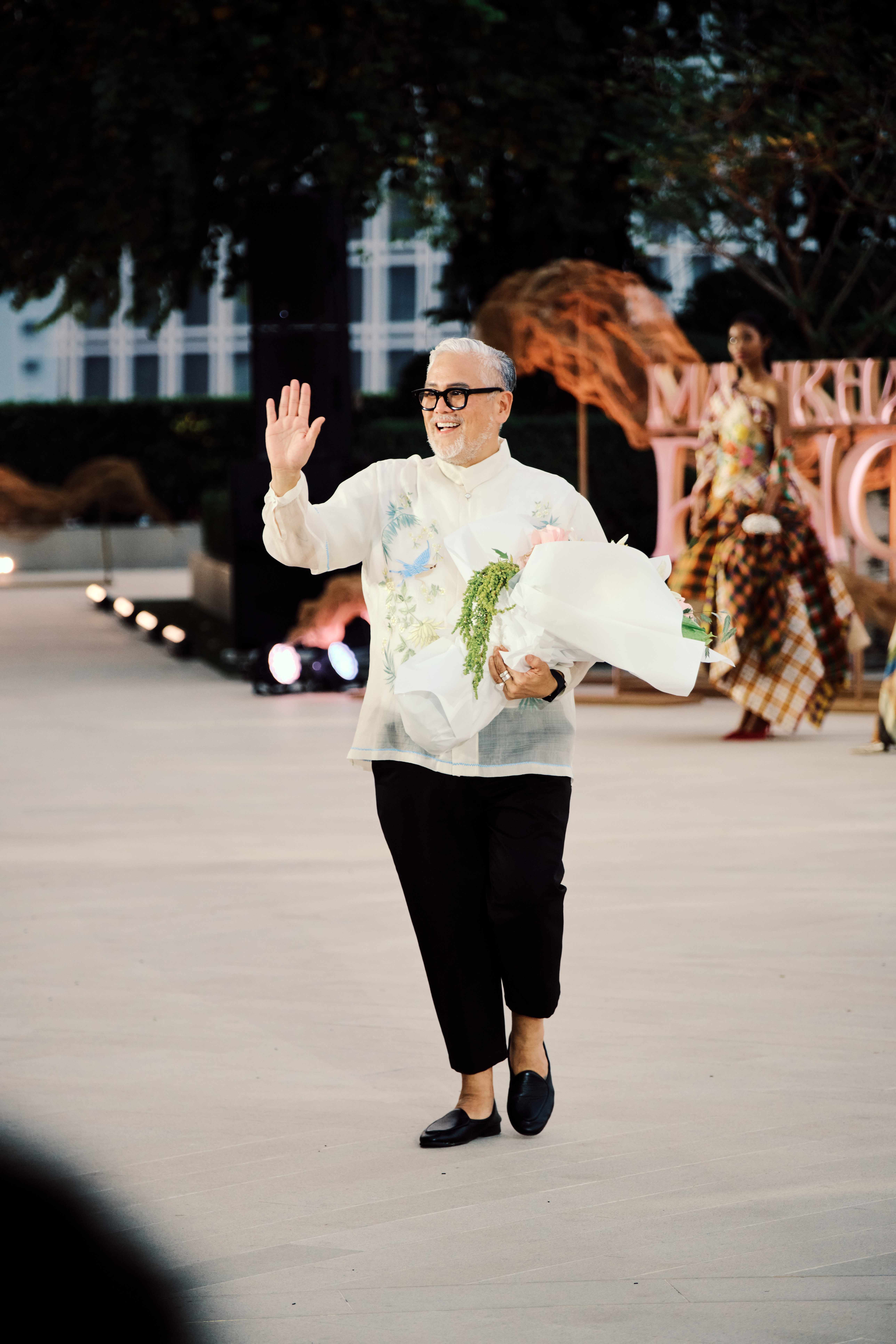
This plurality is what Rajo Laurel is able to capture through his couture 2026 collection, fittingly titled “Lahi.”
Rajo Laurel's Couture 2026 Collection, "Lahi"
On January 30, Rajo unveiled the 33-piece lineup at the Dusit Thani hotel in Bangkok, mounted in partnership with the Department of Trade and Industry (DTI)’s Malikhaing Pinoy program. Set against the Thai capital’s skyline, the show introduced an international audience to a distinctly Filipino perspective on couture.
“I wanted to show the world who the Filipino is now. The language I know best is fashion, so I wanted to showcase to the world who the Filipino is,” Rajo tells Preview.
“Lahi” draws from a mix of cultural signifiers across Luzon, Visayas, and Mindanao. To bring the vision to life, Rajo enlisted fellow Filipino creatives to design accessories for the collection: footwear by MX Studios, jewelry by Arnel Papa, bags by Celestina Maristela Ocampo, fans by Monchet Diokno Olives, and headpieces by Cholo Ayuyao.
Narrative progression has long defined a Rajo Laurel presentation. Here, chromatic sequencing was his central storytelling device. The runway opened with pristine white ensembles, before transitioning into a series of noir frocks, and culminating with a vibrant burst of color, prints, and texture.
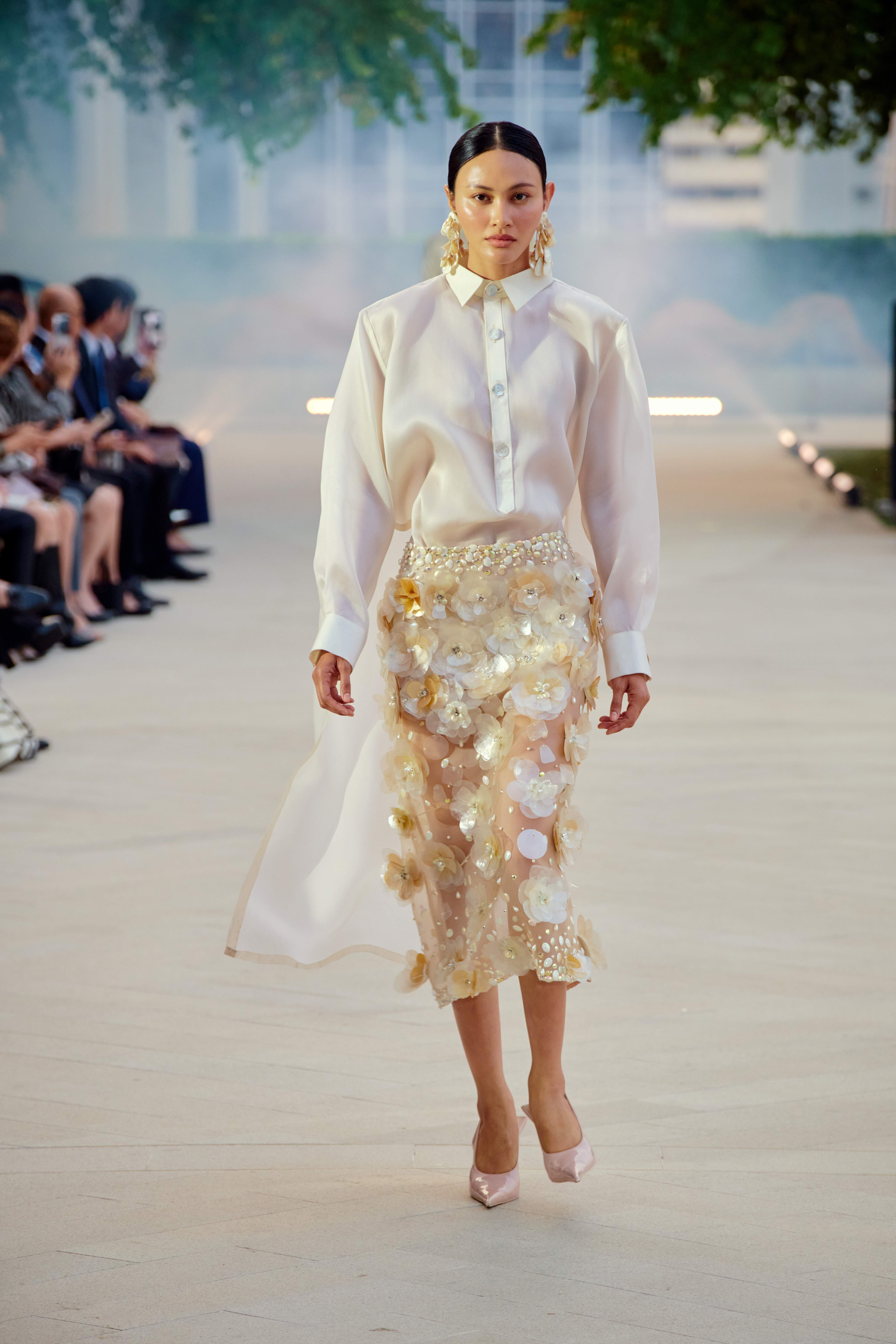
The opening look immediately established the collection’s guiding philosophy. A silk button-down shaped like a traditional barong, extended with a cape detail at the back, paired with a pencil skirt embellished entirely in floral-cut capiz shells.
Immediately, Rajo’s message is made clear—that while the collection is rooted in our heritage, this is just as much about reimagining traditional elements for a new generation.
Regional references surfaced throughout the lineup. A look inspired by the Ivatan kanayi—the sleeveless, all-weather vest worn in Batanes—was reinterpreted as a long-sleeved, poncho-like silhouette. Made of shredded vuyavuy palm, Rajo injected a sense of modernity into the ensemble with a streamlined maxi skirt streaked in gold.
Textiles from various communities appeared across multiple ensembles. Banig informed an A-line tube dress, its inherent rigidity shaping the skirt’s structure. Elsewhere, two T’nalak fabrics in purple and blue converged in a corseted gown layered beneath a floor-grazing overcoat.
Then, of course, there is the spotlight on the piña fabric, a longstanding fixture in formal dressing. The sheer, luminous textile appeared in several barongs and sculptural dresses, emphasizing its versatility well beyond the traditional barong tagalog.
Colonial-era influences were a defining theme as well. A classic terno nodded to Spanish sartorial codes. Americana tailoring made its way onto the runway. A diaphanous, ribboned frock embroidered with avian imagery seemed to reference Nihonga, the Japanese painting tradition that originated from the Meiji period.
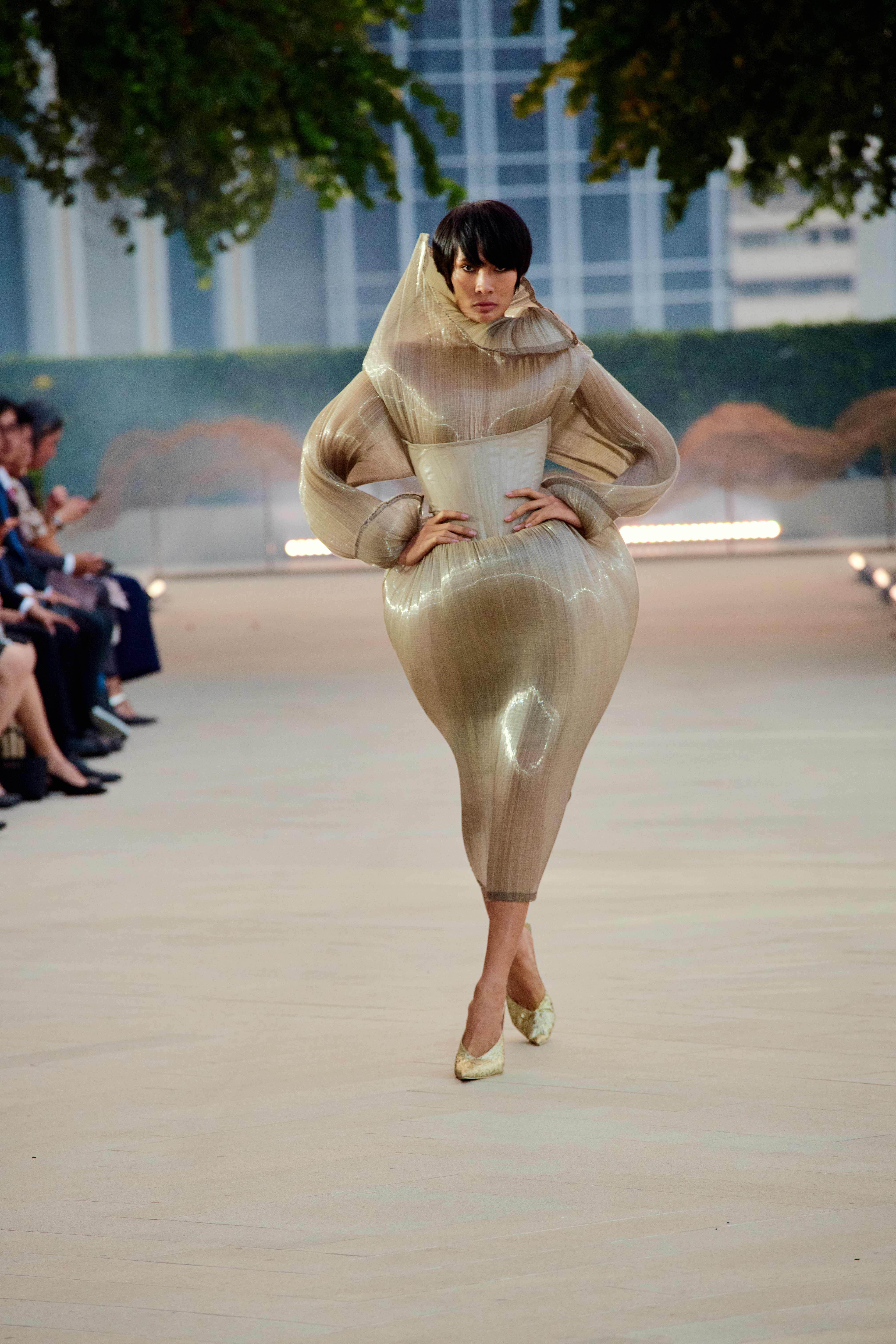
The finale offered a striking closing statement.
A model stepped out in a gray sculptural creation, its corseted bodice cinching its wave-like form. Crafted from what appeared to be a specialized weave of silk and abaca, the textile caught the sunlight with a subdued sheen.
It appeared almost futuristic. Yet, interestingly, the use of local textiles lent it that distinct Filipino look.
Through Lahi, Rajo outlines a possible trajectory for Philippine couture—one grounded by our storied traditions, yet attuned to contemporary sensibilities.
“Fashion has been my medium to understand heritage, identity, and culture—not only through materials, but through how our people interact, the values that guide us, and how these stories can remain relevant for today and for future generations,” Rajo shared in a press statement.
About the DTI "Malikhaing Pinoy" program
The Malikhaing Pinoy program is the DTI’s flagship initiative to strengthen the Philippine creative economy. The effort operationalizes the Philippine Creative Industries Development Act (Republic Act No. 11904), signed into law in July 2022, which mandates a 10-year roadmap positioning the country as a leading creative hub.
The initiative provides support across multiple sectors through capacity-building, expanded market access, promotional platforms, and innovation programs—efforts designed to sustain long-term growth.
Malikhaing Pinoy spans nine creative domains, including fashion. In a brief conversation with Preview, Asec. Nylah Rizza Bautista of the Department of Trade & Industry – CIG waxed about how Rajo’s presentation stood as a reflection of the program’s goals.
“The beauty with Rajo is that he worked with [different] designers to also collaborate with him. So it’s a confluence of both major and upcoming designers to promote Filipino talent on the global stage,” she shared.
.jpg?format=original)

Pau is Preview’s go-to fashion girl. On most days, you’ll find her with coffee in hand, and dressed in an oversized blazer with floor-grazing jeans.