Fashion
Stop Pitting Filipinas Against Each Other at Fashion Week
At the end of the day, it's not about who wore it better.
Published on May 21, 2025
Ingrid Chua launched her fashion blog in 2005, not yet knowing that just a few years later, she’d be sitting front row at the world’s top fashion weeks and trading notes with industry fixtures like Chiara Ferragni and Jane Aldridge. To Filipino fashion insiders, the woman behind The Bag Hag needs no introduction. But for the uninitiated, Ingrid is a journalist, TV presenter, and one of the Philippines’ earliest fashion week insiders. Before Heart Evangelista was turning heads in Paris, there was Ingrid—lugging around her bulky DSLR to Ann Demeulemeester, navigating unfamiliar cities in heels as she rushed to the next show, and praying she wouldn’t miss Rick Owens.
"Fashion week back then was unlike how it is today," says Ingrid, who has since stepped back from the circuit to focus on the business side of fashion. "No one came with a glam team except for the celebrities—and even then, it was very rare to have a Hollywood celebrity grace a show."
ADVERTISEMENT
Ingrid Chua a.k.a. "The Bag Hag" during her busy days attending fashion week. PHOTOS: Courtesy of Ingrid Chua
Unlike the spectacle it’s become today, fashion week then was far more insular—one that felt closed off to anyone without a press pass or purchasing power. The scene was dominated by legacy editors, department store buyers, and a tight circle of insiders who operated behind velvet ropes and closed showrooms. There were no glam teams on standby, no IG Reels to upload in real-time, and certainly no algorithms driving visibility.
Influence wasn’t measured in likes or follows. Rather, it was a slow climb—built on credibility, consistency, and hard-won connections.
For Ingrid, entering that world meant learning to move through a system that wasn’t built for newcomers—especially not those from underrepresented markets. Even with a full calendar and steady invitations, she still felt like an outsider navigating unfamiliar ground. Her schedule, though, suggested otherwise. With back-to-back shows, showroom appointments, and after-hours dinners, it was physically impossible to attend everything she was invited to. “That was really a superhuman effort to make it to most of those on time,” she says.
Click to Enlarge
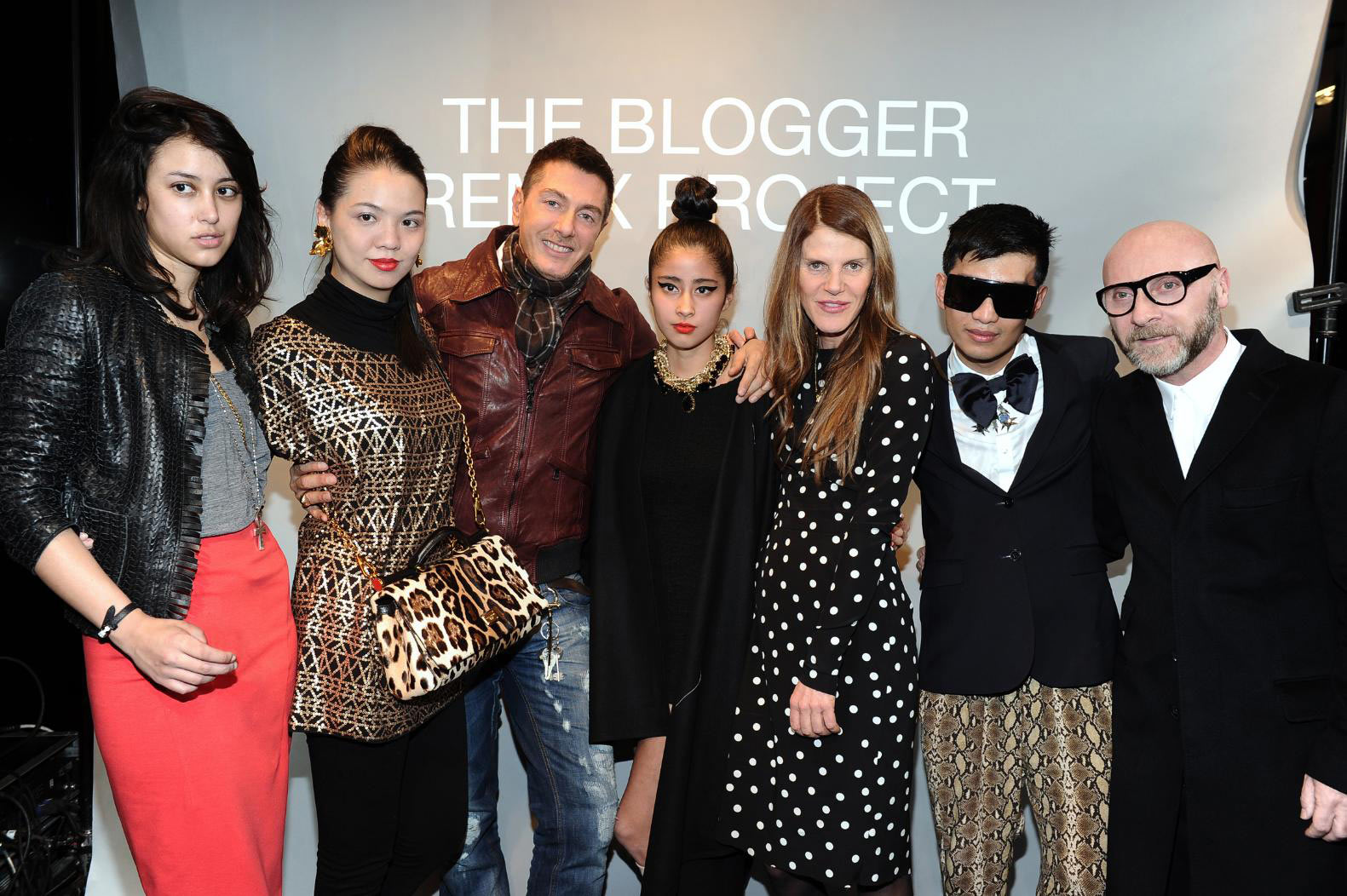
Dolce & Gabbana's Domenico Dolce and Stefano Gabbana with the world's top bloggers, including Filipinos Ingrid Chua and Bryanboy. PHOTO: Courtesy of Ingrid Chua.
Being one of only two Filipinos on the scene (the other was Bryanboy) came with both pressure and purpose. It made Ingrid acutely aware of the weight she carried. "I saw that as a huge honor and a big responsibility because we almost acted as ambassadors for the Philippines, to put the country on the international fashion map," she recalls.
"I’ve always felt we needed more Filipino representation, and am really glad that now, that is finally happening."
Filipinos Paving the Way
Ingrid wasn’t alone for long. Over time, more Filipinos began making space for themselves on the international stage—no longer content to sit quietly on the sidelines. One of the earliest digital trailblazers was British-Filipina model and creative Kim Jones, who launched her fashion blog Miss Jones during the heyday of Blogspot. Long before “content creator” became a buzzword, Kim was already experimenting with photography, styling, writing, and digital storytelling—skills that would eventually lead to collaborations with luxury powerhouses like Louis Vuitton, Gucci, and Bottega Veneta.
Her vision and consistency paid off. She became a regular at the shows and even caught the attention of The Sartorialist’s Scott Schuman—an early stamp of approval for any digital fashion creative. "I entered at a time when digital media was disrupting a heavily gate-kept traditional media landscape, allowing new voices to break through in unexpected places—albeit clumsily on Blogspot," she tells Preview.
The journey hasn’t always been affirming. Once in a while, there would even be pressure to water down her identity. “Someone—well-meaning, I’m sure—once advised me to say I was from Asia rather than specifically the Philippines. I knew the judgments existed, as they always have, and it reflected something much larger... I ignored them.”
Click to Enlarge
Click to Enlarge
Click to Enlarge
Click to Enlarge
Known in her early days for the blog "Miss Jones," Kim Jones was a fixture at fashion week in the mid-2010s. PHOTOS: kimcamjones.com
For years, being invited to shows—let alone sitting front row—meant jumping through hoops. According to longtime fashion editor and stylist Kat Cruz, even landing a single confirmed invite meant sending out endless requests and proving one's worth through impressive social media metrics and a track record of collaborations with global brands. “Sometimes, even that wasn’t enough,” she explains. "You might send out 10 requests for shows and end up with just one confirmed seat for the season."
At the core of it, beyond gaining access to the shows, the bigger challenge was about getting the industry to recognize the Philippines’ growing influence. It didn’t help that many luxury brands didn’t have a local footprint in the country. And with no market to speak of, invitations rarely followed; many didn't see the value in having Filipino creatives and influencers grace their events. But the rise of digital influence began to change the rules. “Today, more Filipinos are front row, dressed by the house, even featured on official pages as friends of the brand,” Kat says.
Click to Enlarge
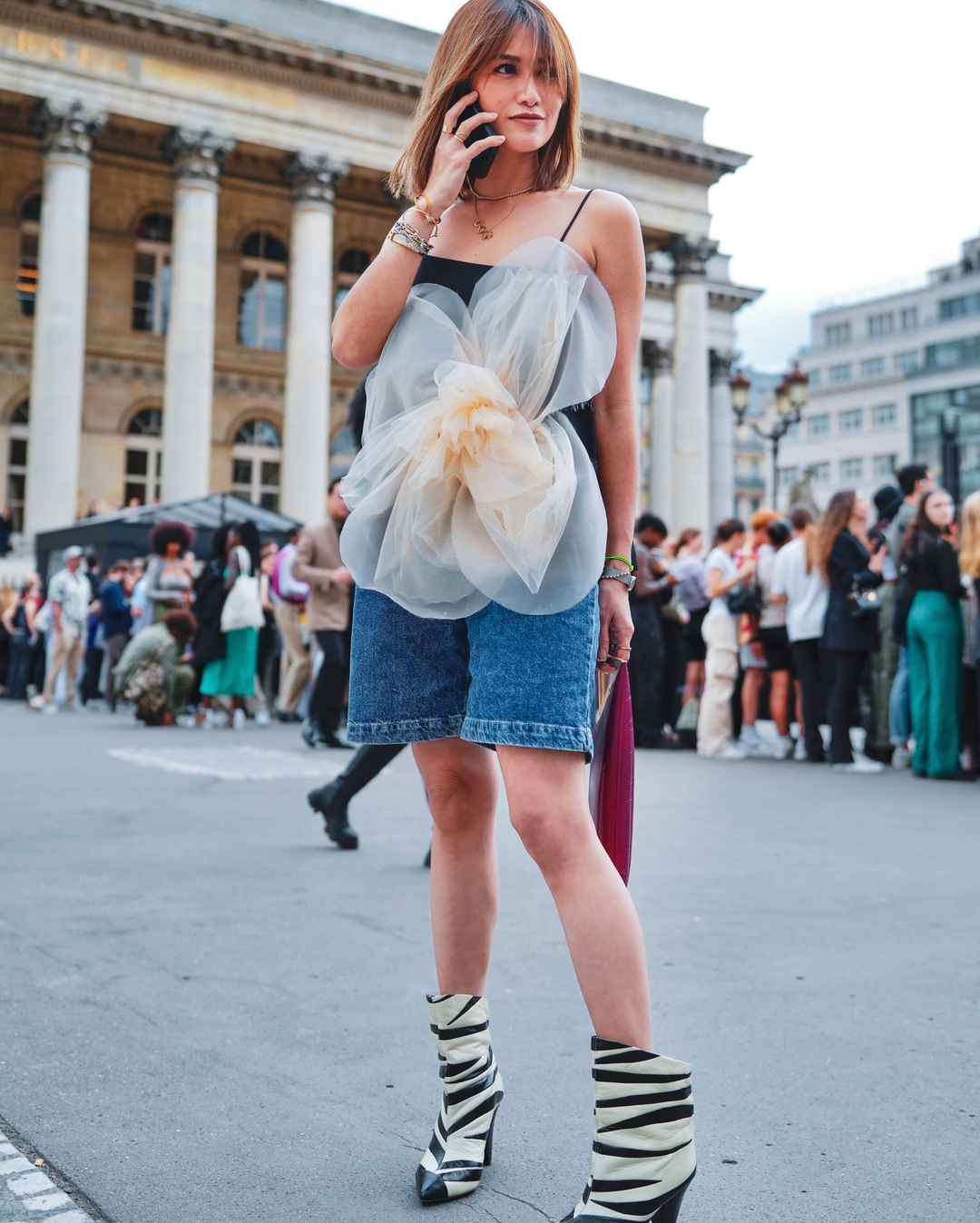
Stylist and editor Kat Cruz during the busy fashion week season in Paris. PHOTO: instagram/amkatrinacruz.
These early efforts laid the groundwork for a larger cultural shift. Ingrid Chua, Kim Jones, Liz Uy, and a handful of others may have entered the room quietly, but their presence was a signal that Filipino creatives belonged in the conversation. As more Filipinos continued to push forward in carving out their place in an industry that's historically resistant to outsiders, the tide began to turn.
And then came the tipping point—when fashion week stopped being a faraway dream and became a stage where Filipino style could fully flourish. Enter Heart Evangelista: strategic, camera-commanding, and impossible to ignore. Her arrival didn’t just open the door. It flung the floodgates wide open.
Welcome to Fashion Week
Already a beloved artista with an established fan base, Heart brought global fashion into mainstream Filipino consciousness. Her presence at couture shows, backstage with designers, and inside brand dinners brought visibility to an arena that once felt worlds away. She sat front row at the likes of Schiaparelli, Louis Vuitton, Fendi, and Giambattista Valli, and was profiled repeatedly by international publications. Heart made style feel aspirational yet accessible to a new generation of Filipinos.
And just like that, fashion week became part of the local mainstream lexicon.
Click to Enlarge
Click to Enlarge
Click to Enlarge
Click to Enlarge
A front-row fixture, Heart Evangelista remains a standout presence across fashion capitals from Paris to Milan. PHOTOS: instagram/iamhearte
Heart's presence marked a step toward democratization. Fashion week was no longer reserved for editors, buyers, and select insiders—it began to feel less exclusive, more within reach. For Filipinos watching from afar, it suddenly felt relatable. And one by one, more names followed.
It’s become increasingly common to spot familiar Filipino faces at the world’s top fashion weeks, from New York to Paris to Milan. Anne Curtis made headlines when she chose Loewe’s Spring/Summer 2024 show in Paris over the ABS-CBN Ball. Nadine Lustre brought her sustainability ethos to the circuit, arriving at shows with vegan accessories that matched her grounded, intentional style. Kelsey Merritt, now a front-row fixture in her own right, has earned coveted seats at major houses—including a rare spot on Chanel’s guest list. Meanwhile, Sofia Andres, Max Collins, Sarah Lahbati, Camille Co, and others continue to take up space, showing that Filipinas aren’t just present—they belong.
Filipinas conquering global fashion weeks. PHOTOS: instagram/kelseymerritt, sarahlahbati, itscamilleco, iamsofiaandres, maxcollinsofficial
Then came Pia Wurtzbach.
Pia’s entry into the global fashion scene wasn’t immediate, but it was intentional. In 2024, she became the first and only Filipina ambassador for Bvlgari, joining an elite roster that includes Zendaya and Anne Hathaway. Her presence at major fashion weeks has been headline-worthy and impossible to overlook, as she regularly ranks among the top celebrities in terms of media impact value. She’s held front-row seats at the likes of Dior, Prada, Gucci, and Fendi, and made history as a Filipina who walked in L’Oréal’s Le Défilé show during Paris Fashion Week, sharing the runway with names like Kendall Jenner and Cara Delevingne.
Click to Enlarge
Click to Enlarge
Click to Enlarge
Click to Enlarge
A rising presence on the global fashion circuit, Pia Wurtzbach continues to stand out in Paris, Milan, and New York. PHOTOS: instagram/piajauncey
Once known for her Miss Universe crown, Pia has since established herself as a commanding force in luxury fashion. From editorial covers and designer partnerships to her global ambassadorship with Bvlgari, she’s earned her place in an industry that rarely makes room for Southeast Asian voices—and she’s done it on her own terms.
As her fashion presence expanded, so did public attention. With Heart already a mainstay on the global circuit, comparisons were inevitable. Two Filipinas, both seated at the industry’s top tables, both front-page regulars, both dressed by the world’s most coveted brands—each with her own rhythm, aesthetic, and following.
Individually, they embody what it means for a Filipina to claim her place in the global fashion conversation.
Let Us All Rise
“What we’re seeing now is the result of years of effort from countless Filipino designers, stylists, photographers, interns, writers, seamstresses, creatives—people who pushed forward when nobody was watching,” Kim Jones emphasizes to Preview. “The Philippines may not have been seen as a dominant fashion market, but the influence now is undeniable.”
Kat Cruz echoes this forward-thinking stance, envisioning "a future where Filipina representation continues to grow and thrive." For her, the much-needed shift is already happening. “The industry is increasingly recognizing the power of diverse voices, and I see Filipina creatives playing an even more pivotal role... With greater visibility and more opportunities, I believe Filipina talent will gain the recognition it deserves.”
Both Kim and Kat have spent years navigating the global fashion space. They understand what true representation looks like—and why one Filipina’s success should never be viewed as a threat to another’s.
She adds, "Collaboration is beautiful, and community is deeply ingrained in our culture, but that doesn't mean we all have to move in unison. The women in this space deserve to be celebrated for their individual impact, not just as part of a larger movement. People will always dissect success, trying to define it, reverse engineer it. But what we really need is contrast—multiple perspectives, individual voices, even if they don't always align. That friction, that nuance—creativity thrives on it."
Yet too often, that nuance often gets lost in the noise, especially in how fashion week is publicly framed. Heart and Pia’s appearances, for example, are frequently reduced to a rivalry. It turns into a game of comparisons that distract from what truly matters.
Click to Enlarge
Click to Enlarge
Pia Wurtzbach and Heart Evangelista both represent what it looks like when a Filipina takes her place on fashion’s global stage. PHOTOS: instagram/piajauncey, iamhearte
Amid all the drama, if you find yourself wondering who is dressed better, who racks up more invites, or who pulls in higher media impact value, then you're asking all the wrong questions. The fashion world is big enough for equally amazing Filipinas to thrive—what we should be doing instead is clamoring for more seats at the table.
Fashion week is not a competition. But if it must be framed that way—measured in follower counts, press coverage, or best-dressed rankings—then let’s at least be clear of one thing: This isn't a contest between fellow Filipinas. The real battle has always been carving space in an industry that wasn’t designed with us in mind. Every Filipina who shows up—dressed, deserving, and fully present—chips away at old structures that once excluded us. The goal isn’t to outshine one another; it's to amplify our collective presence until we’re no longer seen as exceptions, but as a permanent part of the global conversation.
There’s room for more than one. And the win is when we all rise.

Marj is the Editor-in-Chief of Preview. A former economics major, she dove headfirst into fashion & pursued a career in publishing—she hasn't looked back since.