Marian Rivera and the Pinoy Obsession with Perfect English
Over the years, Marian Rivera has learned to take the jokes about her English in stride. But what does our fixation on fluency say about how Filipinos measure intelligence and social standing?

Published on Oct 29, 2026
There was a moment during the Century Tuna Superbods competition in 2024 that could have gone terribly wrong for Marian Rivera. As one of the judges, she had just asked a contestant a question in Filipino when he requested that she translate it into English. For most people, it would have been an ordinary request. But for an actress whose command of English has been the subject of countless jokes and online criticism, the stakes were higher.
"I will try my best," Marian said, drawing laughter and cheers from the audience. Then, with impeccable comedic timing, she declared, "Listen very carefully! Here's my question," before proceeding with the translation.
The exchange quickly went viral, earning Marian praise for turning what could have been an uncomfortable situation into something genuinely endearing. It's refreshing how she's willing to play along. She's funny, self-aware, and seemingly unbothered by the occasional joke.
But of course, as many of us know, it wasn't the first time Marian's English had sparked public conversation. For years, the actress has been teased about her pronunciation, grammar, and apparent discomfort with the language.
Yet somewhere along the way, Marian became remarkably good at laughing along, often beating everyone else to the punch. These days, she doesn't even appear remotely interested in convincing everyone that her English is better than they think. She simply refuses to let it define her.
How Marian Rivera Has Learned to Laugh Along
During her October 25 appearance on Gandang Gabi Vice, the GMA primetime queen once again found herself talking about her English. Speaking with Vice Ganda, Marian appeared comfortable being in on the joke, acknowledging that she doesn't mind the occasional teasing and can even laugh along with it. But she also made it clear that there's a line between harmless humor and personal attacks.
"Kapag dumating sa punto na ang English ay pinang-iinsulto na sa pagkatao ko, aba, ibang usapan na 'yan," she said.

Marian may have learned to laugh at herself, but that doesn't mean the jokes have always been easy to take. Behind her humor, after all, is an insecurity she's openly acknowledged. In a March 2025 interview with Karen Davila, Marian admitted she still felt self-conscious about speaking English. Growing up in Cavite, she explained, she never felt particularly pressured to speak the language fluently. That changed when she moved to Manila and entered show business, where English seemed to be an expectation, especially during interviews.
"Siguro 'yung pagsasalita ng English, kasi very big deal 'yan sa'tin ngayon," she told Karen. "Pero kasi ako, hindi naging problema sa akin 'yun, kasi sa Cavite parang hindi naman kami English-speaking doon."
What had never been a particular concern growing up eventually became a source of insecurity, one that followed her even as she established herself as one of the country's most successful actresses. Over nearly two decades, Marian has headlined some of Philippine television's biggest hits, earned numerous acting accolades, and become one of the most recognizable and sought-after celebrity endorsers in the country. Yet her accomplishments have done little to discourage people from judging her by the way she speaks.
According to Marian, her husband, Dingdong Dantes, has helped put things into perspective, reassuring her that she doesn't need to change who she is to be loved. "Mahal ka namin bilang ikaw," he would tell her. For Marian, the reassurance of those closest to her matters more than the approval of people who only know her through a screen. She can acknowledge her insecurities while recognizing that they don't diminish her worth.
Our Obsession with Perfect English
In the Philippines, speaking English has long been about more than simply being able to communicate. For many, it also carries assumptions about one's education, intelligence, and social standing.
We joke about getting a "nosebleed" when someone speaks complicated English. We describe imperfect English as "carabao English." We also casually call out other people's "wrong grammar." These expressions are often used in jest, but they also reveal how conscious we are of linguistic proficiency and how readily it becomes a basis for judgment.
This attitude has deep historical roots. During American colonial rule, English was established as the principal medium of instruction in the public education system, eventually becoming associated with education, authority, and opportunity. Over time, proficiency in English became closely associated with academic achievement, professional success, and upward social mobility.
In her 2020 research, Periphery ELT: Myths About English in the Philippines, Isabel Pefianco Martin, a scholar from Ateneo de Manila University, examines how American colonial education helped perpetuate misconceptions about the language. Among these are the beliefs that American English is the only correct form of English, that English is the only language of knowledge, and that proficiency in the language is the solution to economic difficulties.
More than a century after American colonial rule began, its influence on how Filipinos perceive English remains evident. The language continues to occupy a privileged position in education, business, and employment. Proficiency in English can open doors to better educational and professional opportunities, reinforcing its association with social class and economic advancement.

Of course, there's nothing fundamentally wrong with valuing English proficiency. It's a useful skill, and being able to communicate effectively in another language is certainly an advantage. The problem begins when we mistake fluency for intelligence, or assume that someone who speaks English well is somehow more educated, capable, or deserving of respect than someone who doesn't.
In a country where Filipino and numerous regional languages are part of everyday life, the ability to express oneself confidently in English is hardly the only measure of effective communication. And yet, it can still become the standard by which someone's abilities are questioned, regardless of what they've already accomplished.
The Joke Is on Us
Marian Rivera is hardly the only accomplished Filipino whose English has become a subject of public amusement.
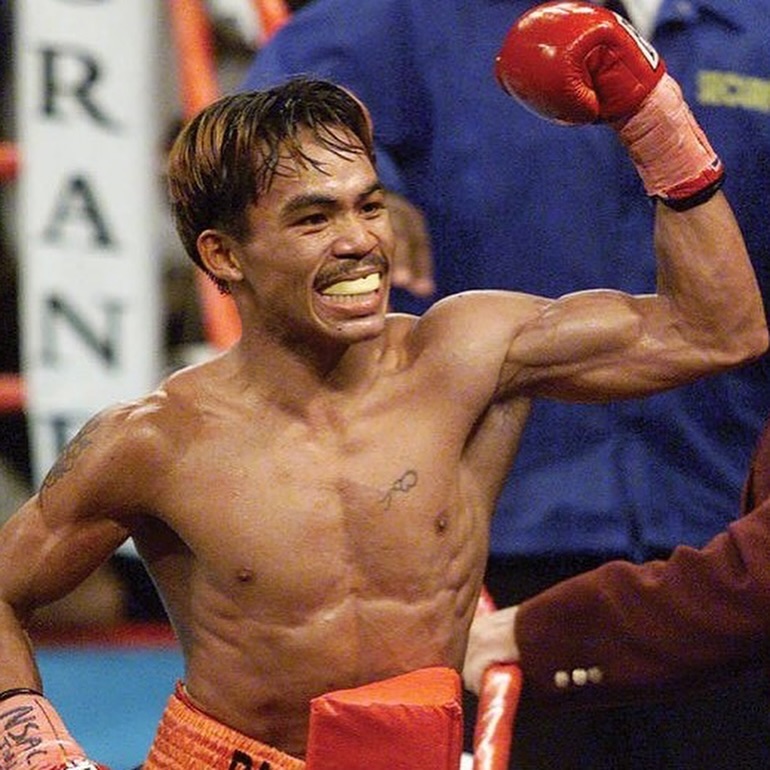
Consider Manny Pacquiao, whose pronunciation and grammar have been mocked and imitated throughout his career. Even as he made history as boxing's only eight-division world champion, his English remained a recurring subject of commentary. Here was a Filipino athlete who had conquered the international boxing stage, earned the respect of some of the world's greatest fighters, and become a source of national pride. Yet the way he speaks English can still become a punchline among his own countrymen.
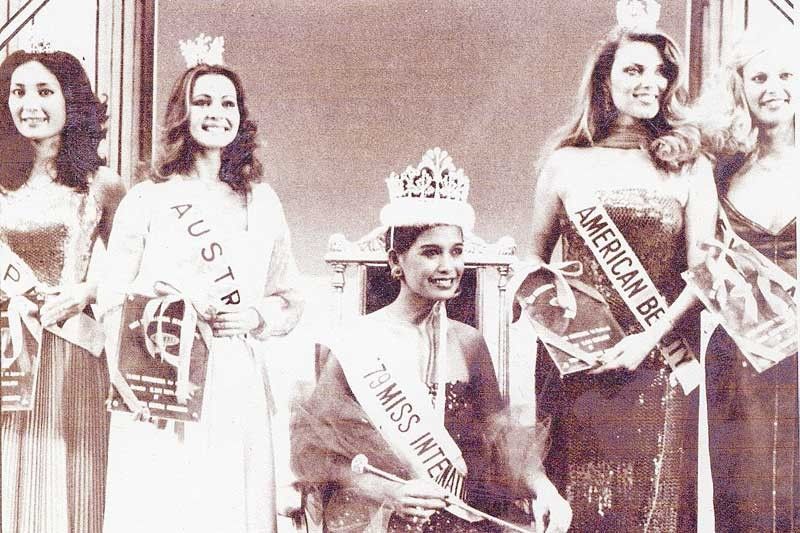
Melanie Marquez, who won Miss International in 1979, is another example. Beyond her achievements as a beauty queen and model, she also became widely known for her English malapropisms, which eventually earned the nickname "Melanisms." Her grammatical mistakes and unusual expressions became a source of entertainment, repeated in television appearances and pop culture. Although Melanie herself has often played along with the jokes, her experience illustrates how readily Filipinos can reduce an accomplished public figure to the way she speaks.
Come to think of it, we don't always extend the same generosity to our fellow Filipinos. When someone from another country attempts to speak our language, even imperfectly, we often respond with encouragement and appreciation. Yet when a fellow Filipino struggles with English, we're not always as gracious.
It's ironic how we take pride in being a multilingual nation, yet we can be remarkably unforgiving of our own people for not speaking one particular language well. And in doing so, we continue to reinforce the very hierarchies that have long shaped our attitudes toward education, intelligence, and social class.
There's nothing wrong with wanting to improve our English. But there's something worth questioning about a culture that can celebrate someone's achievements and still find reasons to belittle them over how they speak.
Perhaps the next time we find ourselves laughing at a fellow Filipino's English, we ought to consider what makes us feel entitled to judge them in the first place. Because if we still believe that speaking English well makes us superior to those who don't, the joke is on us.

Marj is the Editor-in-Chief of Preview. A former economics major, she dove headfirst into fashion publishing and hasn’t looked back since.
Read more stories about
preview thinkpiece ,thinkpiece ,op-ed ,marian rivera ,manny pacquiao ,english ,melanie marquez