A Tale of Fashion and Plunder
Luxury, privilege, and a billion-peso scandal lay bare the cost of turning a blind eye to corruption in the Philippines.
Published on Oct 9, 2025
I've always wanted a Balenciaga City bag. In my early 20s as an editorial assistant, I regularly reported on celebrity style and the exact designer arm candy clutched by the stars. A gold clasp here, a logo there—it was detective work, piecing together which bag cost more than my rent. That was the 2010s, mind you, which was the heyday of Celine Luggage, Givenchy Pandora, and the aforementioned "it bag" birthed by the house's former creative director Nicolas Ghesquière. But of course, with my measly paycheck as a budding creative then, buying a Balenciaga City on a whim was only a far-fetched dream.
I did eventually get there nearly a decade and at least three promotions later. When I finally got myself a City, it had already lost its “it” status. But that didn’t matter, because to me it represented something bigger:
Is Fashion Political?
As a Preview editor, I’ve always seen fashion as a language—one that tells stories of identity, creativity, and self-expression. And for a long time, that language was treated as if it existed apart from politics. Fashion weeks, runway reports, celebrity style, designer bags—this was the world we revered, a sacred space built on fantasy and escape. It had no business being caught in the chaos of governance... or so I once thought.
Turns out, as Filipinos living in a country repeatedly betrayed by those sworn to serve it, pretending that fashion exists in a vacuum is a luxury we cannot afford.
In recent weeks, the nation has been shaken awake by headlines beyond belief. Exposés of staggering corruption and billions of pesos plundered from public funds have flooded every feed and conversation. Luxury cars, designer bags, and obscene displays of wealth flaunted by contractors living like royalty while the rest of the country literally drowns have become impossible to ignore—even for those who once preferred to look away.

It took a resurfaced vlog of Julius Babao interviewing Pasig City's mayoral candidate Sarah Discaya and her husband Curlee Discaya to expose just how deep the rot runs.
While Filipino families waded through waist-deep floodwaters and entire communities endured the consequences of unfinished or substandard projects, the couple was brazen enough to show off their fleet of luxury cars and ostentatious wealth that were reportedly amassed at the expense of public suffering.
Soon after, the trail led higher. Among the names that surfaced in the Senate’s flood-control probe was the now-resigned Congressman Zaldy Co, founder of Sunwest Construction and Development, one of the country’s biggest contractors for the Department of Public Works and Highways (DPWH). His companies’ dominance in infrastructure projects and the staggering scale of flood-control allocations under his watch placed him and his family squarely at the center of public scrutiny.
The spotlight naturally trickled down to his niece, Claudine Co, a lifestyle influencer who quickly became the face of what netizens now call the “Disney princesses” and “nepo babies.” Her now-deactivated Instagram feed—once an endless carousel of private jets, designer hauls, and champagne-soaked vacations—felt like a taunt to the working class, a glossy contrast to the lives of the very people her family’s empire was accused of exploiting.
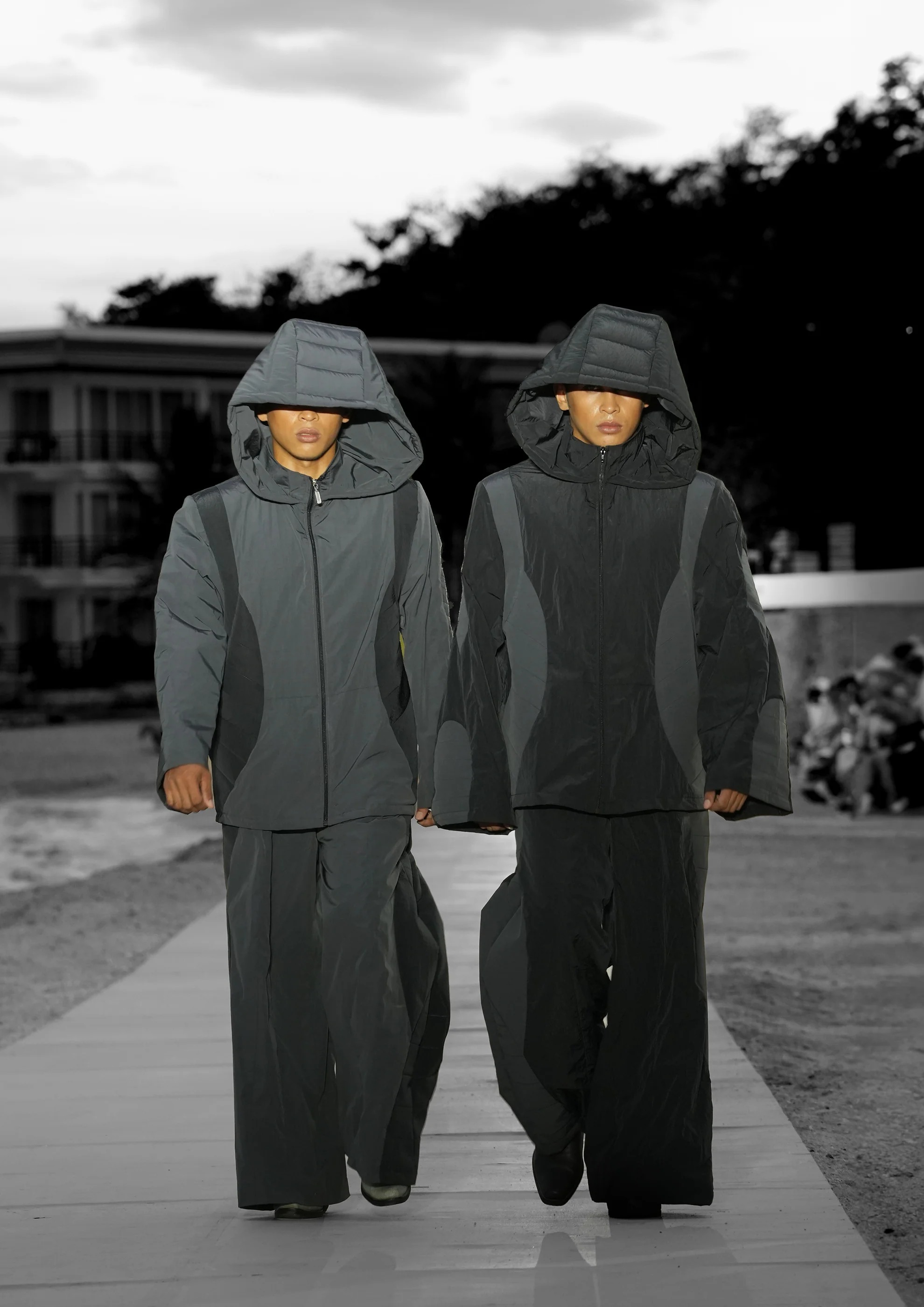
As if to drive the point home, netizens were also quick to discover Zaldy’s own son, Ellis Co, who staged a grand runway show for his label .ARCHIVES at the family-owned Misibis Bay Resort in 2023. The 22-year-old designer flew in guests from Manila to showcase "gender-neutral silhouettes" on a 700-foot lavish beachfront runway—hailed by GMA News as “the longest in Bicol, if not in the Philippines.” (If only the same high praise and record-breaking vision could be extended to our damning flood-control infrastructure.)
Few young designers—many of whom pool their savings just to mount their first collection—could ever dream of staging a show of this scale. Most are lucky if they don’t abandon their fashion dreams altogether, given the economic realities of the local creative industry.
To dismiss this as the innocent efforts of a young designer would be a slap in the face to Filipinos who’ve actually worked tirelessly to build something from nothing. Privilege has a way of disguising itself as merit, but it’s all smoke and mirrors when you hail from a bloodline accused of siphoning billions in public funds.
My Balenciaga City still sits in my closet. I haven’t carried it in years, but today I felt the sudden urge to pull it out of its dust bag. And as I opened it, I began to see it differently.
It now reminds me that luxury isn't corrupt in itself. At its best, it celebrates milestones, rewards perseverance, and sparks joy. But in a country where systemic greed has betrayed trust too many times, what we wear—who flaunts it and how loudly—must answer to context. And when context demands it, it must answer with accountability.
A gown is never just a gown. A bag is never just a bag. Even fashion must stop pretending it has the privilege of looking away.

Main cover image photographed by Jilson Tiu.
Marj is the Editor-in-Chief of Preview. A former economics major, she dove headfirst into fashion publishing and hasn’t looked back since.