Fashion
Tailored for Power: Tracing the Evolution of Power Dressing
With each decade, designers infused the once-masculine suit with an interplay of structure and softness, a harmony of crisp tailoring with unexpected, feminine flourishes.
Published on Mar 25, 2025
Fashion has always reflected the social and political currents that shape history. In boardrooms, courtrooms, and corridors of influence, the power suit was once an exclusive symbol of authority—a uniform only worn by those in command. Yet as women entered these spaces, they adopted the language of suiting and reshaped it into a sartorial declaration of their own.
By the 1970s, women had secured a more visible presence in the workforce. In the 1975 book The Woman’s Dress for Success Book, business consultant John T. Molloy prescribed strict sartorial guidelines for professional women, advising them to take cues from men’s suiting—but never too closely.
Chinese-collared suits and soft cardigan jackets were deemed inappropriate. So were garments that suggested any form of creativity—dresses, slacks, knits, skirts with slits, and bold colors were all off-limits. In his framework, personal style had no place in the corporate world. “Can you imagine a man wearing an orange suit?” the male author remarked in a Los Angeles Times interview in 1985.
But as rigid dress codes began to loosen, the modern power suit emerged as a tool of self-expression and defiance. What once signified male dominance evolved into a statement of visibility—a declaration that women belonged in rooms where their authority had long been questioned. Over time, designers infused tailoring with a balance of structure and softness, blending sharp lines with feminine details.
ADVERTISEMENT
Click to Enlarge
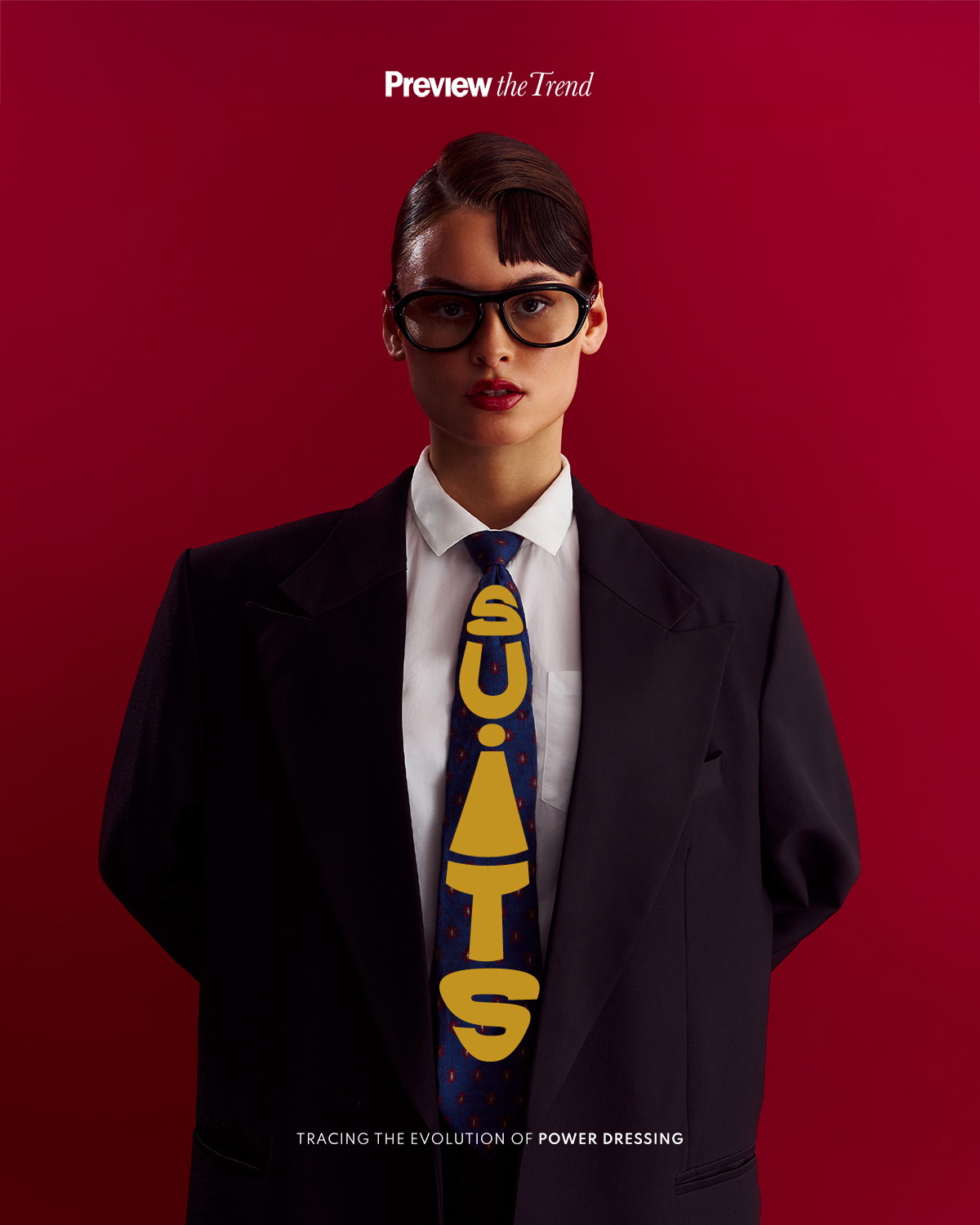
PHOTOGRAPHY BY YEL DELA PAZ, ILLUSTRATED BY BACS ARCEBAL.
The 1960s: Foundations of the Power Suit
The earliest iterations of the power suit trace back to the 1920s, when Coco Chanel designed tweed ensembles that reflected the evolving role of women during World War I. As they entered male-dominated industries, the suit adapted to their changing needs, retaining masculine elements while incorporating fitted sleeves, metallic buttons, and collarless jackets paired with slim skirts.
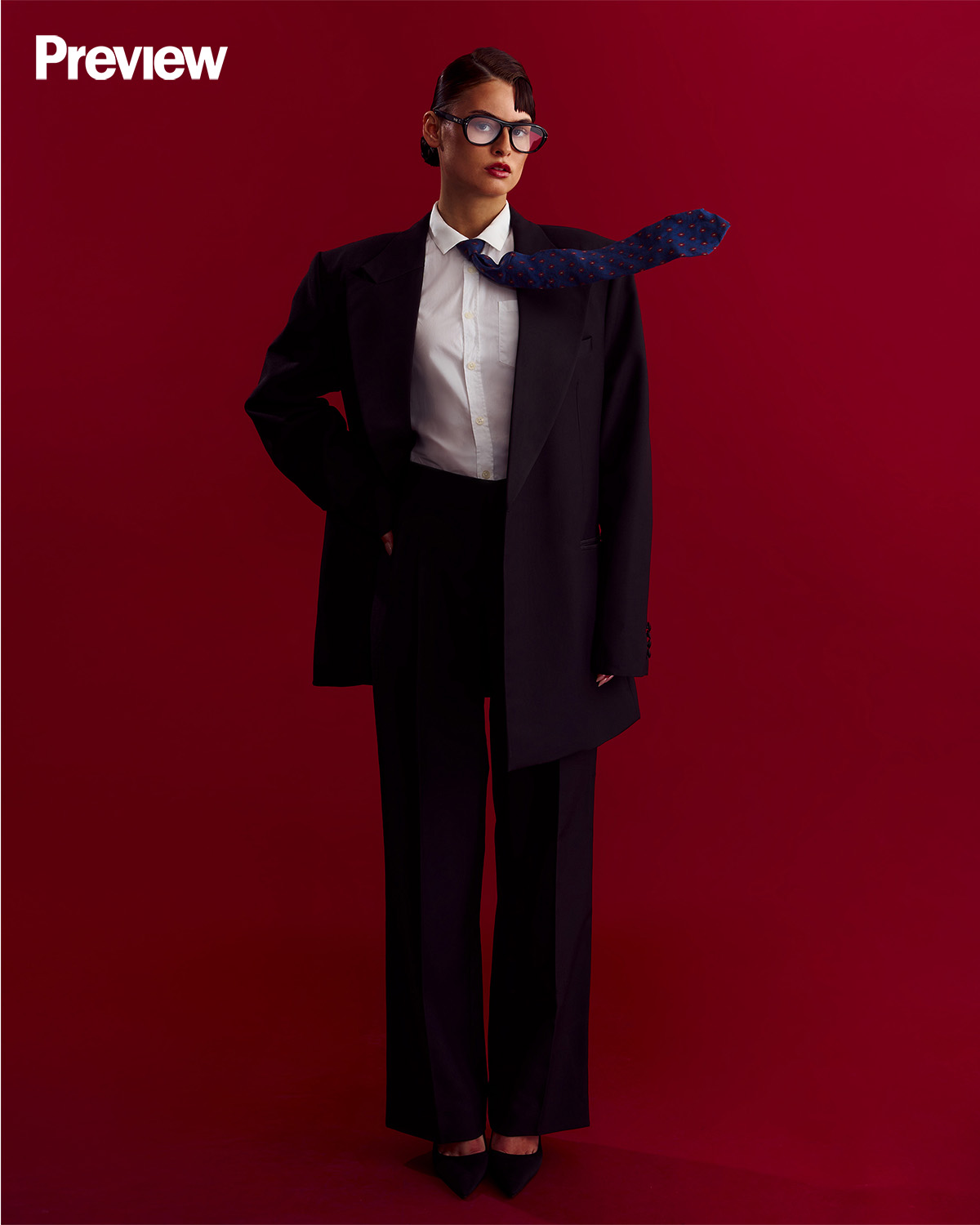
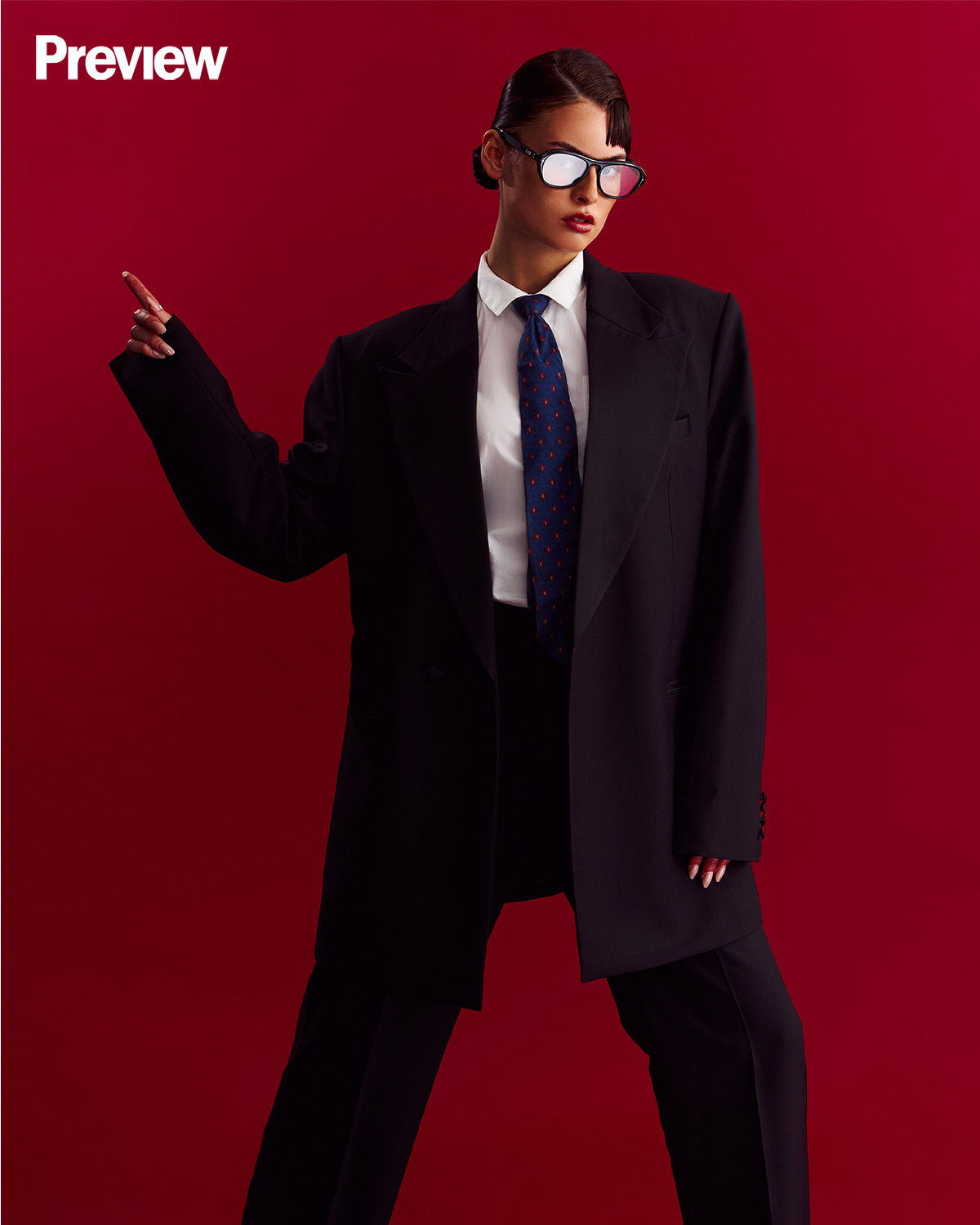
By the 1960s, a postwar economic resurgence ushered in a return to glamour. Yves Saint Laurent, just five years into his eponymous label, introduced Le Smoking in his Fall/Winter 1966 collection—a sleek tuxedo for women inspired by Marlene Dietrich’s androgynous style.
Click to Enlarge
PHOTOGRAPHY BY YEL DELA PAZ. Black Armani Double Breasted Ultra Oversized Tuxedo Top Coat and Wide Leg Pants, CHRIS NICK. Oaa 01, P13,700, GENTLE MONSTER..
While closely mirroring men’s eveningwear, Le Smoking featured a streamlined collar and a subtly tapered waist, reinterpreting the tuxedo for the female form with an elegance that was both simple yet striking.
“A woman wearing a suit is anything but masculine. A strict, clean cut accentuates her femininity, her seductiveness, her ambiguity,” Yves Saint Laurent stated in a documentary interview from 1968.
Click to Enlarge
PHOTOGRAPHY BY YEL DELA PAZ .
The 1980s: Power Dressing in Full Color
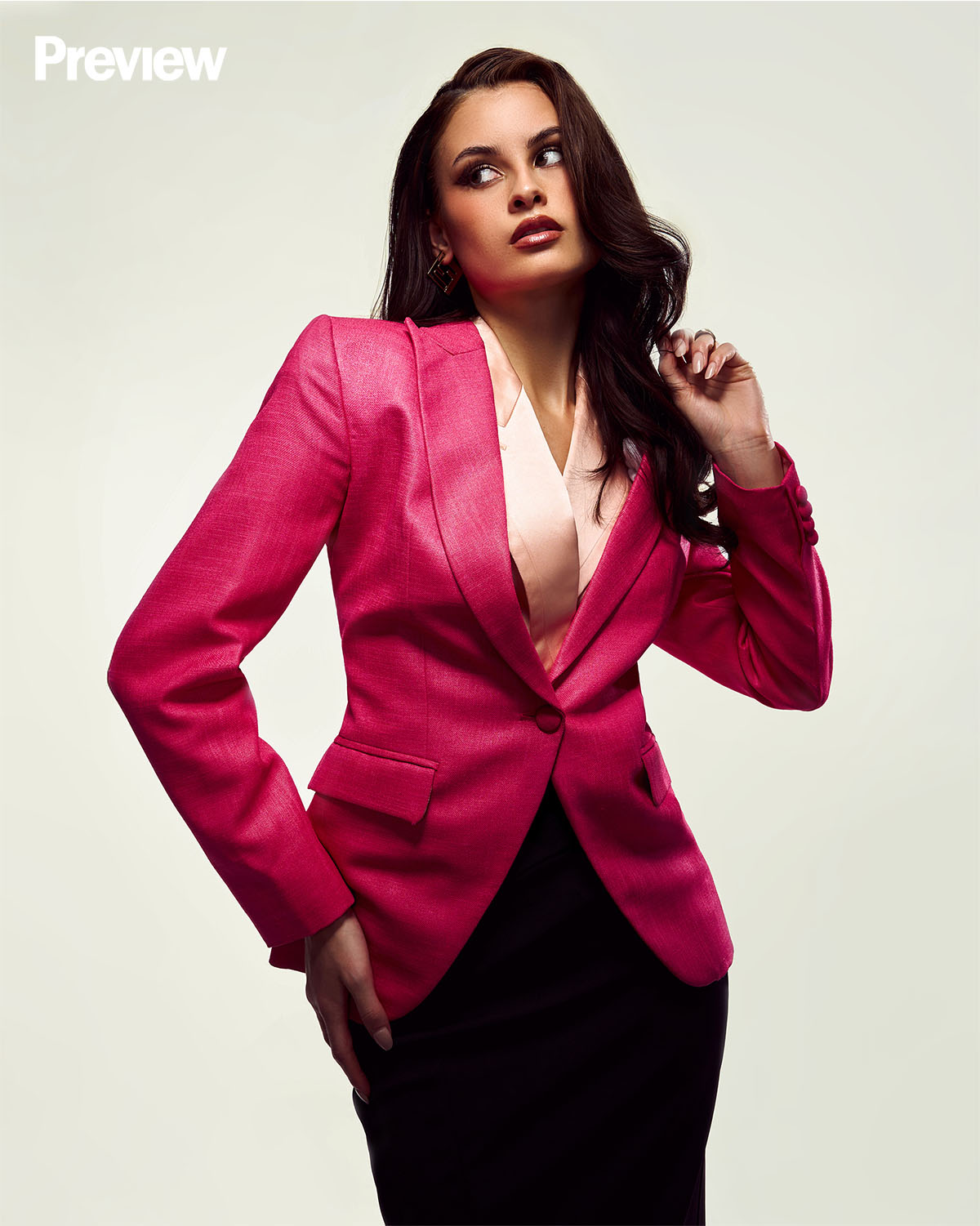
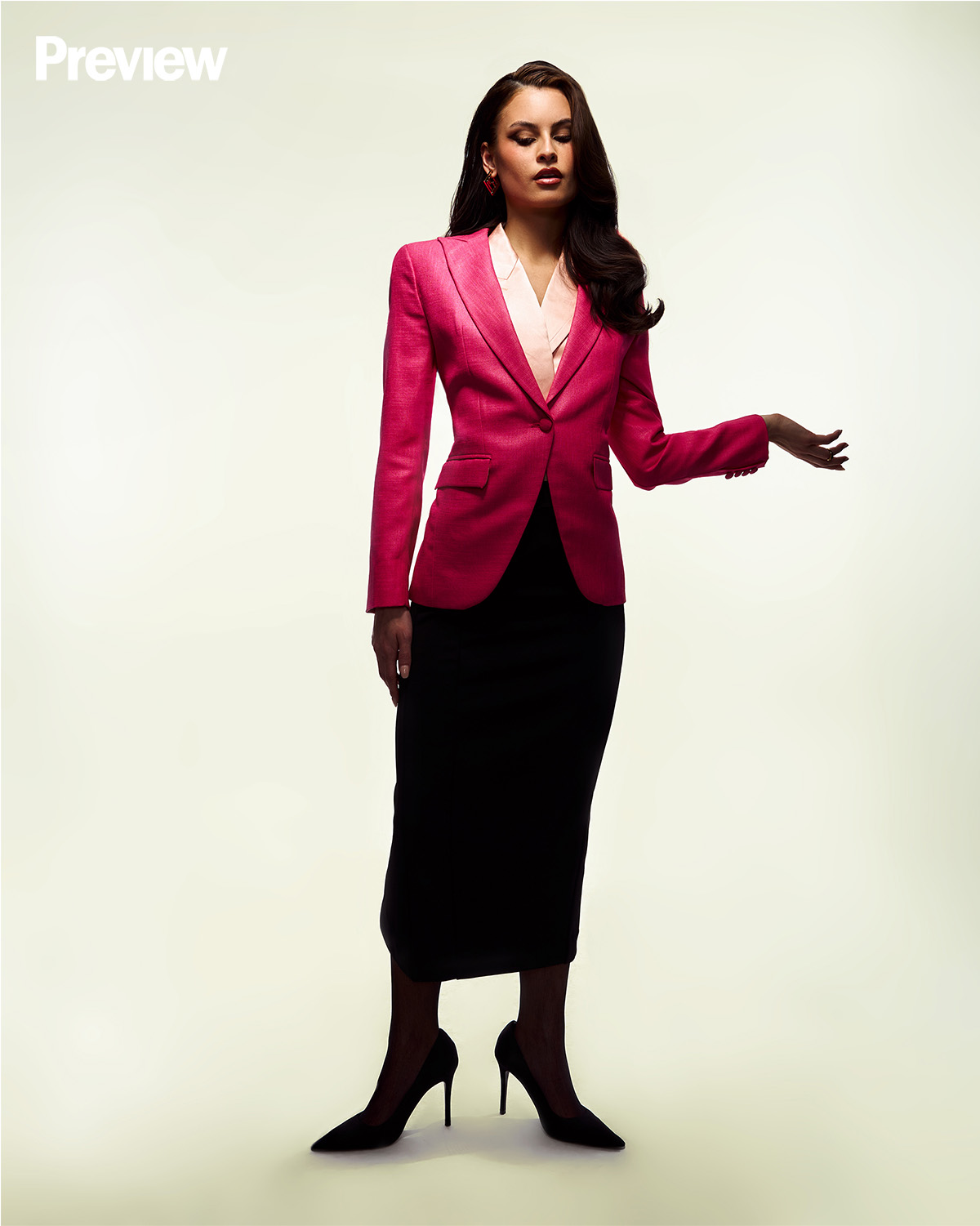
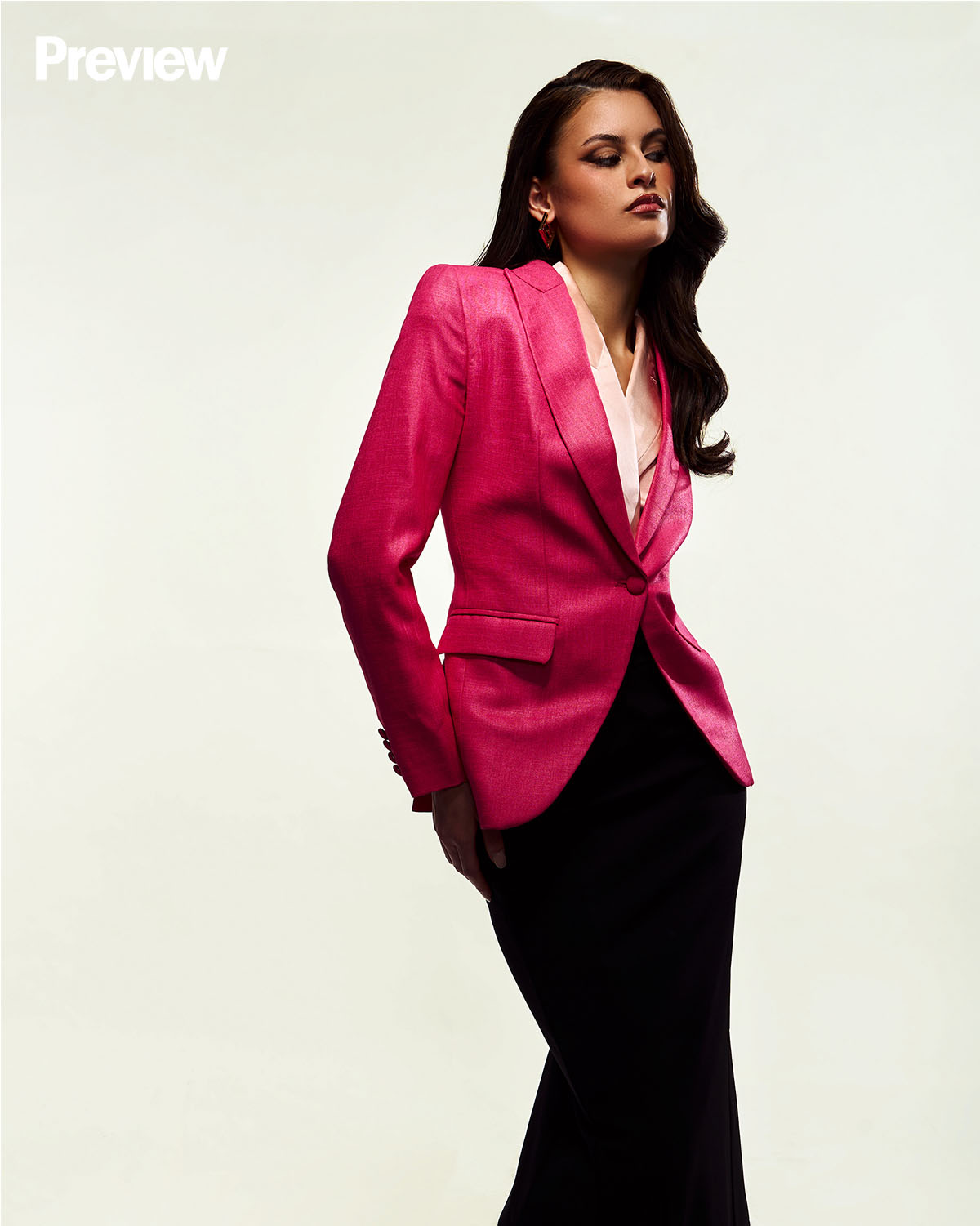
By the 1980s, power dressing had crystallized into a distinct corporate aesthetic. Women, now entering boardrooms in unprecedented numbers, used fashion as a means to project authority. Designers like Claude Montana, Thierry Mugler, Azzedine Alaïa, and Jean Paul Gaultier redefined suiting with strong shoulders, cinched waists, and bold hues—shaping a wardrobe that exuded pure confidence and autonomy.
The origins of this movement emerged in the late 1970s as more women pursued leadership roles in male-dominated industries. Seeking to command respect in workplaces that often dismissed femininity, they gravitated toward structured tailoring, sharp silhouettes, and assertive styling.
Click to Enlarge
PHOTOGRAPHY BY YEL DELA PAZ. Hot Pink Blazer, ORIAS, Orias Studios Quezon Avenue. Light Pink Vest and Medium FF Click Cutout Earrings in Metal / Soft Gold, FENDI. Seam-Detail Pencil Skirt, P4,990, H&M STUDIOS, www2.hm.com. .
This shift extended beyond office spaces into popular culture. Television shows like Dynasty glamorized power dressing, while public figures reinforced its significance. Margaret Thatcher, for example, leveraged tailored suits to establish a formidable presence, proving that attire could serve as a visual extension of authority.
Click to Enlarge
PHOTOGRAPHY BY YEL DELA PAZ .
Click to Enlarge
PHOTOGRAPHY BY YEL DELA PAZ .
The 1990s–2000s: Softening the Edges
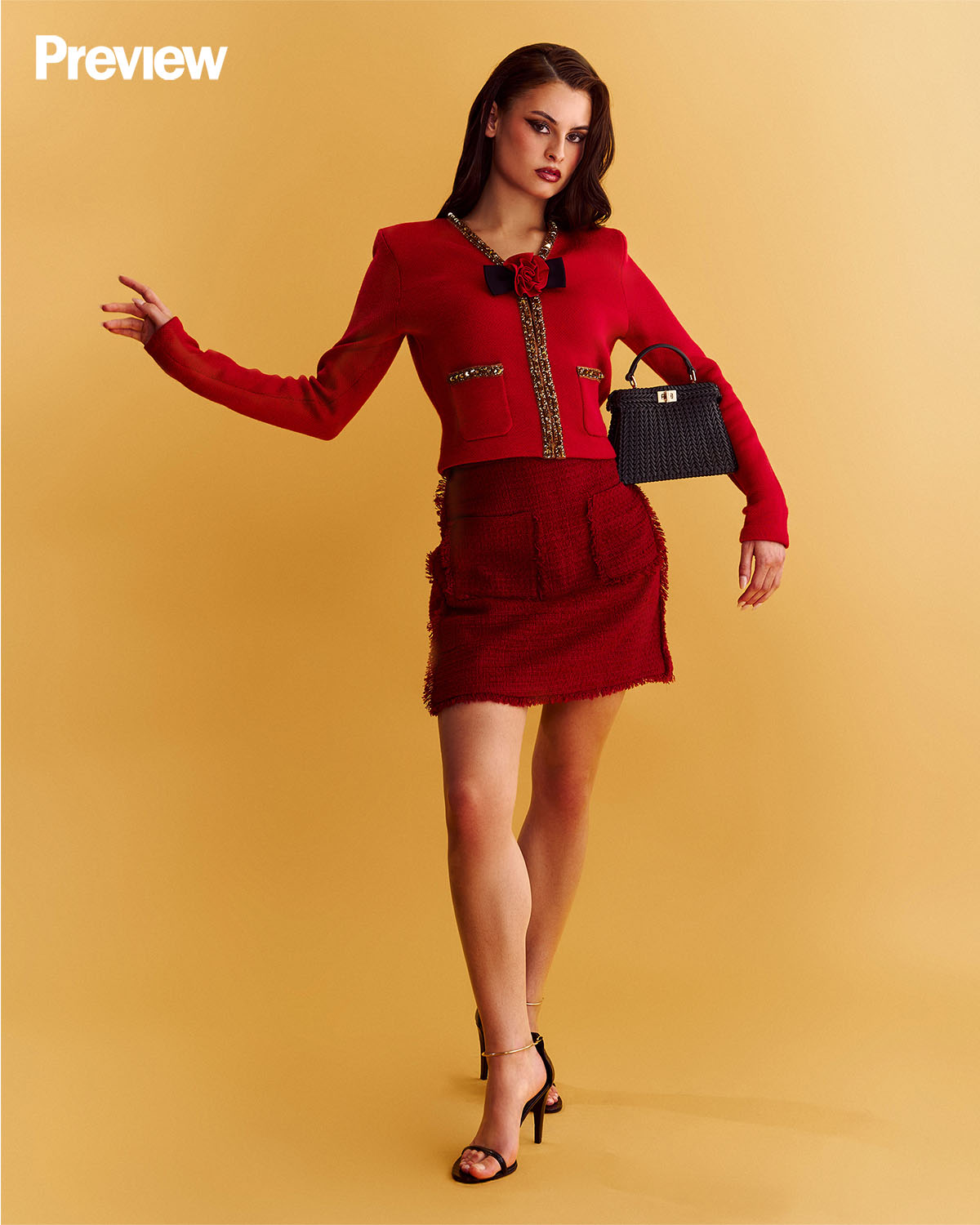
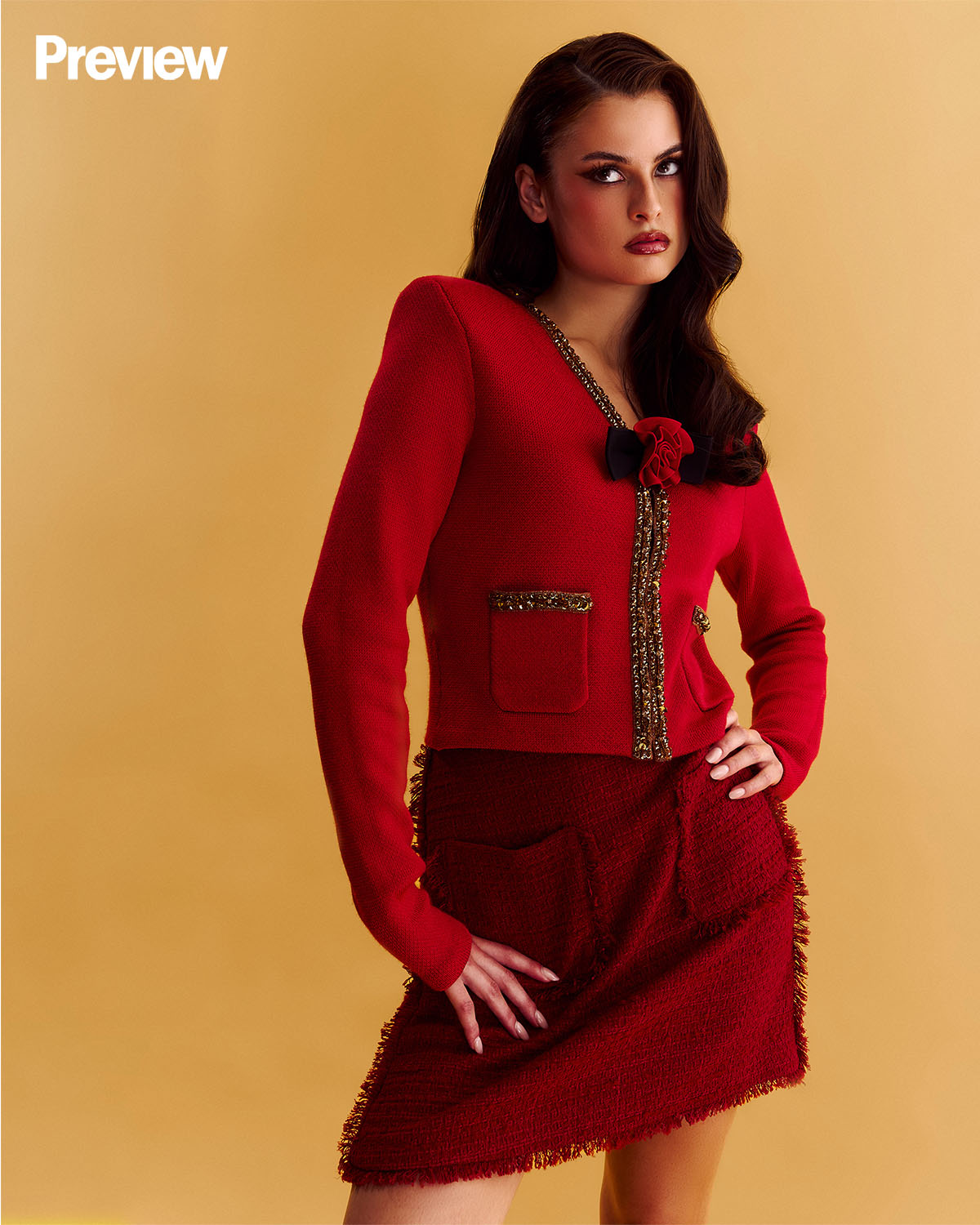
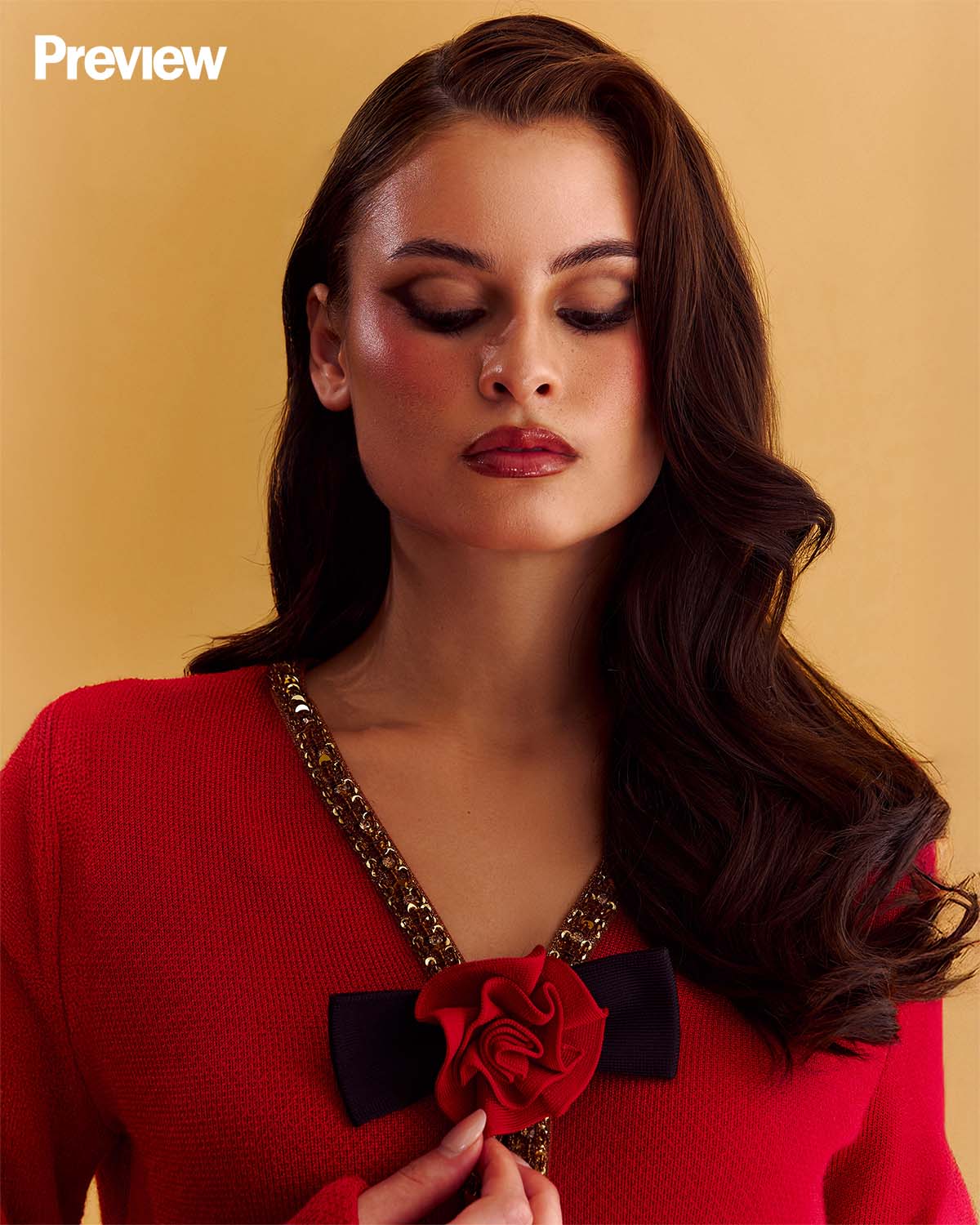
In the 1990s and early 2000s, power dressing shed its rigid, imposing aesthetic in favor of a more refined, distinctly feminine approach. Dark neutrals gave way to a spectrum of vibrant shades, ranging from soft pastels to fiery reds.
Click to Enlarge
PHOTOGRAPHY BY YEL DELA PAZ. Red Knit Cardigan wih Detachable Ribbon, P40,200, SELF-PORTRAIT, Moressi Shangri-La Plaza. Red Tweed Skirt, P11,750, MARELLA, Moressi Shangri-La Plaza. Fendi Peekaboo Interlace Petite; Fendi Sandalo Vitello Stampa Cocco Nero, FENDI. .
One of the defining silhouettes of this period was the mini skirt suit. Unlike the conservative knee-length versions of previous decades, these sets featured sharply tailored blazers paired with shorter hemlines, reflecting a shift toward suiting as an element of polished, casual wear among women.
Rendered in an array of fabrics ranging from tweeds to knits, the suit was reimagined with slimmer cuts, collarless silhouettes, and tasteful embellishments. Designers and fashion houses were central in defining the look of the power suit from this era. Fashion houses like Chanel and Versace championed body-conscious tailoring that emphasized curves, while Calvin Klein, known for its effortless minimalism, championed fluid cuts that conveyed strength without excess rigidity.
Click to Enlarge
PHOTOGRAPHY BY YEL DELA PAZ .
By the early 2000s, corporate dress codes had begun to relax, allowing for greater self-expression. Silk blouses replaced stiff button-downs, and hemlines varied from mini to midi. The new power dressing no longer sought to mirror masculinity; instead, it fully embraced the innate playfulness associated with women's dressing.
Click to Enlarge
PHOTOGRAPHY BY YEL DELA PAZ .
The 2020s: The Rise of Corpcore
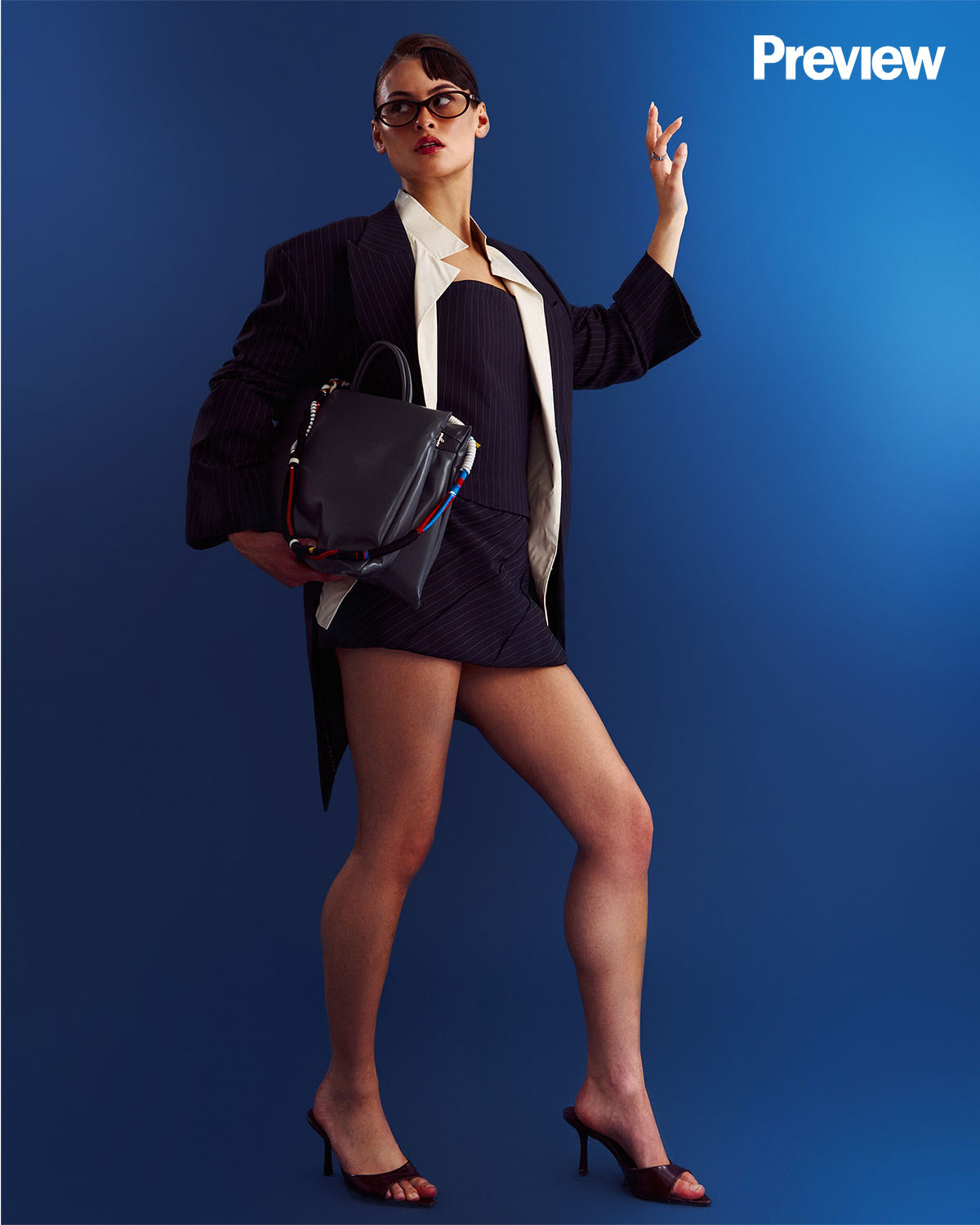
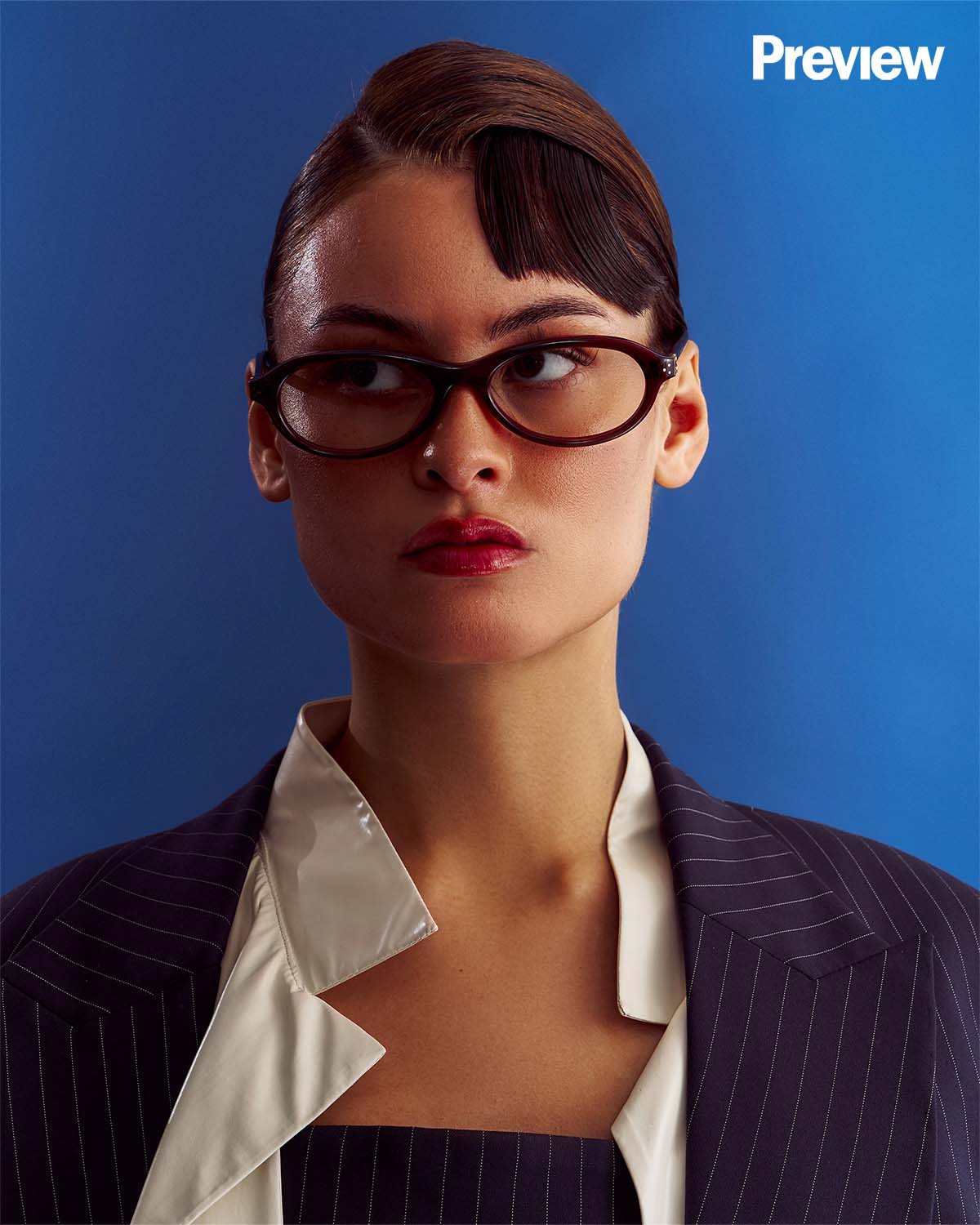
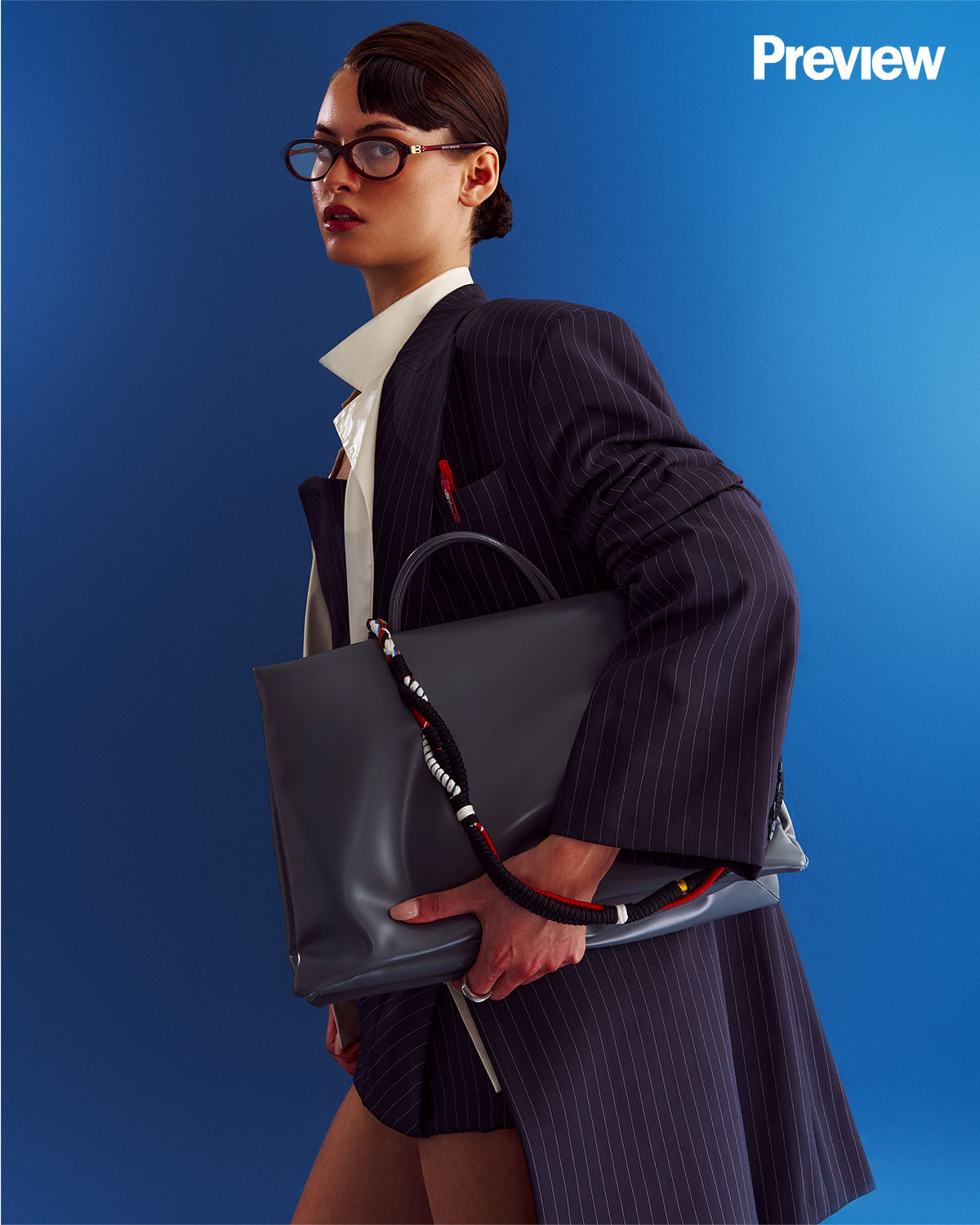
Today’s interpretation of power dressing—dubbed “Corpcore”—takes cues from the muted palette of the 60s, combined with the sultry silhouettes of the 90s. Marked by clean lines and polished tailoring, the aesthetic revolves around structured yet wearable pieces, such as oversized blazers and streamlined trousers, and integrating them with elements like corsets, narrow-framed bayonetta’s, and capacious office totes.
Click to Enlarge
PHOTOGRAPHY BY YEL DELA PAZ. Pinstripe Blazer, Corset, and Mini Skirt, ORIAS, Orias Studios Quezon Ave. Corori T4, P15,000, GENTLE MONSTER. Large Padded Bag, P4,990, H&M STUDIOS, www2.hm.com. Silver Ring [made to order], Price available upon request, ELEMENTARI. .
This evolution aligns with a broader cultural shift toward versatility. No longer confined to strict dress codes, Corpcore adapts to contemporary work environments, where style must transition seamlessly from boardrooms to social settings. Unlike previous iterations that swung between formal and casualwear, corpcore sought a balance between sophistication and youthful dressing.
Click to Enlarge
PHOTOGRAPHY BY YEL DELA PAZ .
By 2023, runway showcases among the world's top fashion houses gave a glimpse into the modern day power dressing in womenswear. Prada’s Autumn/Winter 2023 collection featured impeccably tailored suits in muted tones, while Bally’s Spring/Summer 2024 lineup incorporated knitwear and oversized blazers. Even traditionally playful brands like Miu Miu and Loewe have embraced corporate-inspired elements, demonstrating the current trend’s adaptability through a variety of occasions—well beyond the office setting.
Click to Enlarge
PHOTOGRAPHY BY YEL DELA PAZ .
Produced and Styled by the Preview Team
Photographer: Yel Dela Paz, assisted by Angelika Aluyen and Jhay R Baylon
Creative Direction: Bacs Arcebal
Editor-in-Chief: Marj Ramos-Clemente
Production: Isha Fojas and Paulina Singh
Fashion and Story: Paulina Singh
Beauty Direction: Isha Fojas
Makeup: Miz Raffy
Hair: Mark Capalar
Videos: Jana Jodloman
Model: Seline Jasmin Bjermeland of Luminary Manila
Special thanks to Vani Altomonte
Read more stories about
preview the trend ,lch-06887 ,power dressing ,preview dna ,preview originals