Meet Preview's Best Filipino Fashion Designers for 2026
This year’s class of five designers reflects the many layers of Filipino fashion through craft, innovation, and distinct points of view.

Published on Sep 9, 2026
Clothes are often judged by their finished form, but a collection is never just the garments themselves. Every textile holds a lineage of material, technique, and labor. Every silhouette reflects the time, place, and people that shaped it. Fashion reveals itself most fully when viewed through all of these layers at once.
Filipino designers have long understood this instinctively. Their work draws from inherited craft and contemporary life in equal measure, carrying memories of place, conversations with artisans, evolving ideas of identity, and an unwavering commitment to making. Each collection becomes part of a larger story, which continues to evolve alongside the country that inspires it.
Preview’s Best Filipino Fashion Designers for 2026 celebrates five creatives whose practices reveal the depth and breadth of Filipino fashion today. Their work takes many forms, yet they share a belief that clothing carries meaning. It can preserve tradition, translate emotion, challenge convention, and give shape to the way people see themselves and the world around them.
Ahead, meet the designers whose work reminds us that the most compelling fashion is rarely defined solely by what reaches the runway, but by everything woven into it long before it arrives there.
Jerome Lorico
Stories are where Jerome Lorico’s collections begin. The narratives emerge from material held in his hands, or through memory lingering long enough to demand a physical form. “All my designs reach into a specific kind of story or emotion,” he says. “I use my designs in order to tell stories—to tell a personal emotion. Sometimes I even channel a different culture, a different story.”
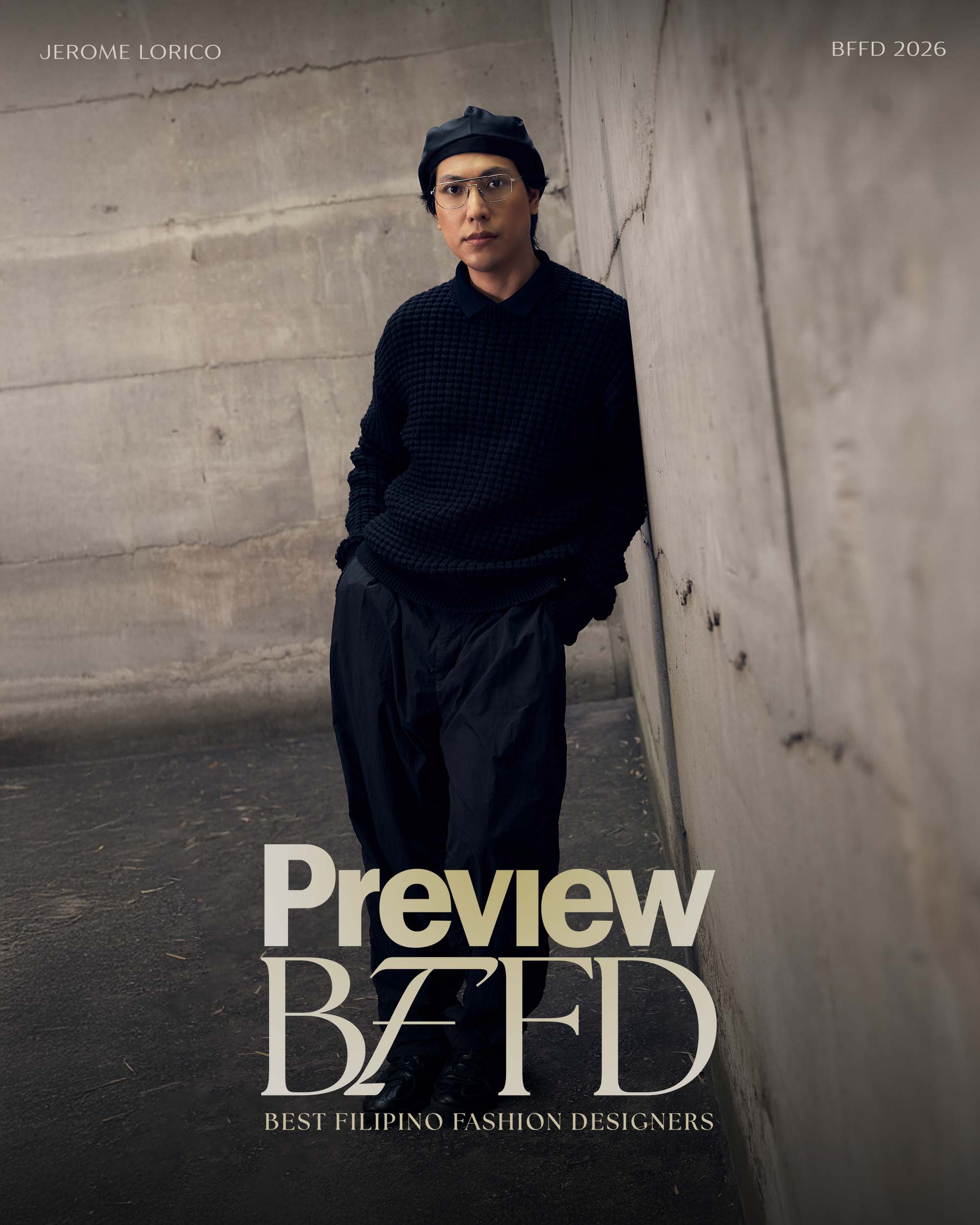
Raised in Legazpi, Albay, Jerome was surrounded by basket weavers and artisans, watching natural fibers transformed into objects by hand. Limited opportunities to formally study the arts led him to Literature and Language instead, where storytelling became another creative language. The degree sharpened his instinct for narrative, but it also clarified what he was searching for. “I knew in my heart and my spirit that I really wanted to do something that was beyond words,” he says. “Something that is physical. Something that you can really touch.”
His earliest work took shape through product design before naturally expanding into clothing. Entering the fashion industry without a conventional background meant finding another path, so Jerome turned to national design competitions, where his work steadily earned recognition and opened the doors that would shape his career. Now, he still resists identifying a single turning point.
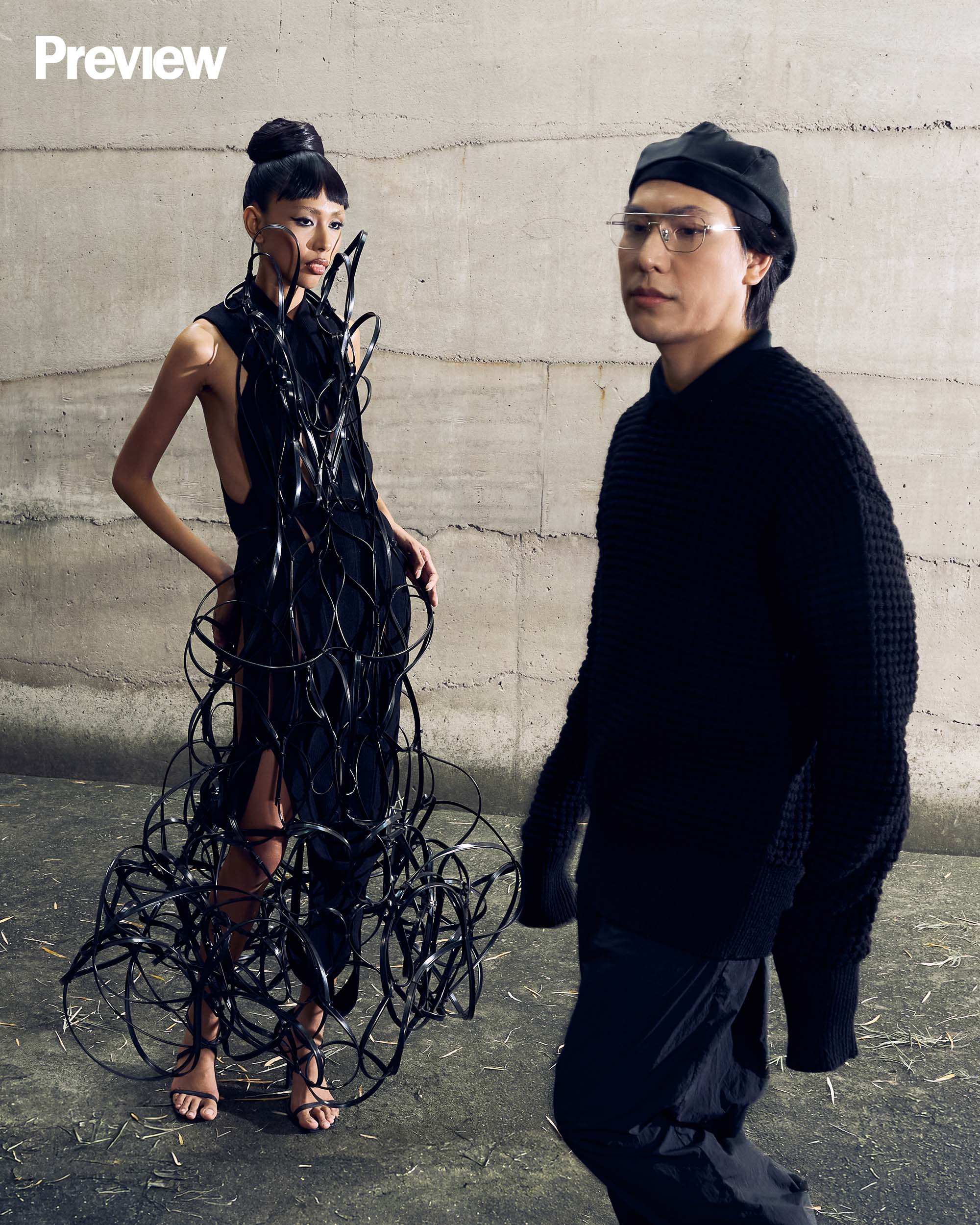
“Every day is a breakthrough moment for me,” he says. “Every year as a creative in the Philippines is sort of a baptism of fire. But I enjoy every bit of it because if you’re really passionate about what you’re doing, all you have to do is forge on. Eventually you’ll realize that you’re already living your dream.”
The garments themselves carry much of what he wants to say. Jerome hopes a piece can communicate its inspiration before anyone explains it. Materiality, for him, begins with asking where a fiber originated and what histories it carries into the finished garment. “It’s very important for me that my work communicates in itself,” he says. “I don’t have to explain a lot. The garment itself is already explaining itself.”
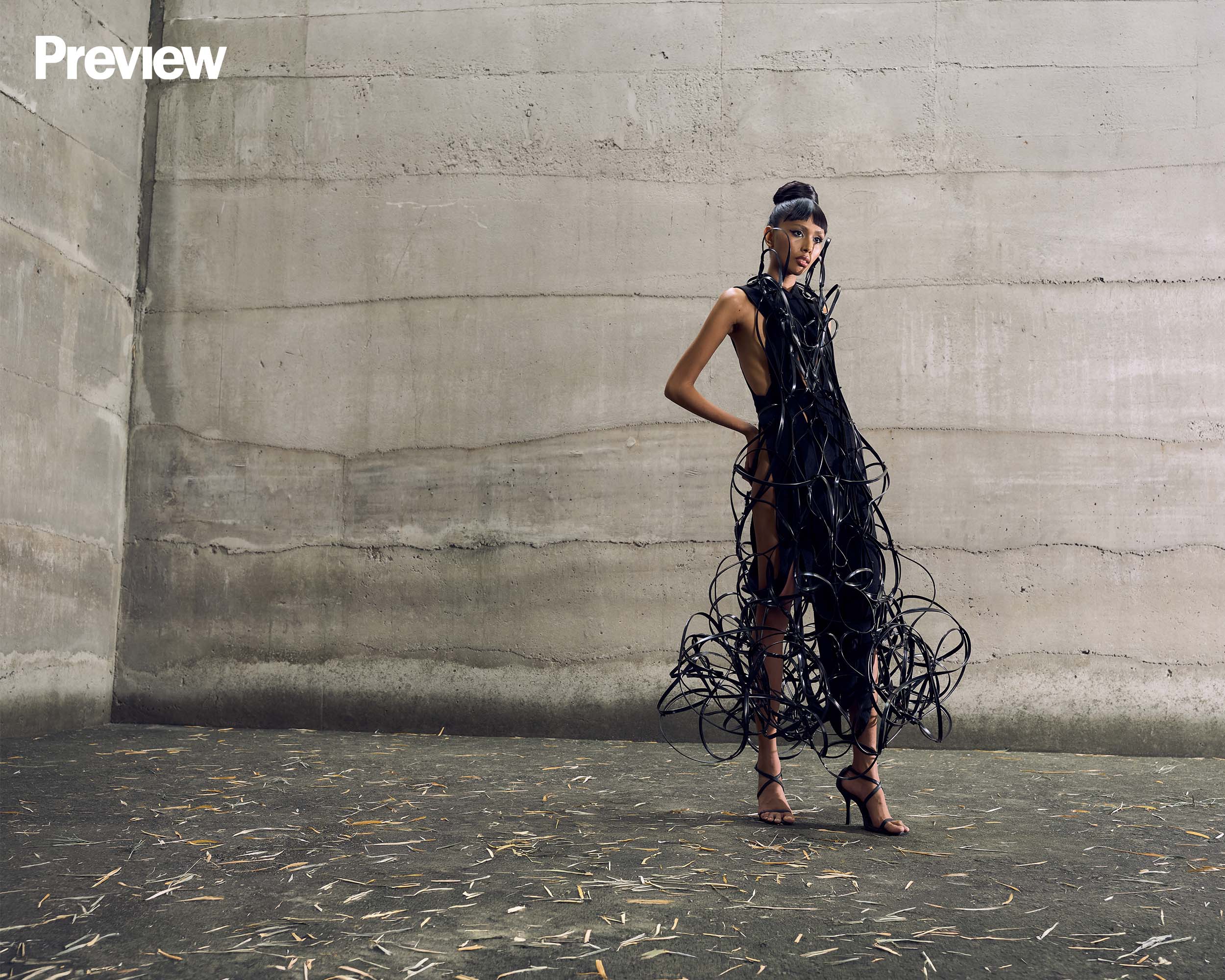
The philosophy perhaps finds its clearest expression in knitwear, a medium Jerome returns to repeatedly for its fluidity and openness. “It’s like liquid,” he says. “My hands can be a vessel.” The material earned him one of the defining moments of his career: a sculptural knitwear piece that won top honors in Tokyo. Presenting his work abroad expanded his understanding of how Filipino craftsmanship could resonate beyond the country while affirming the perspective he had been cultivating all along.
Jerome still sees his label as an incubator for stories, where the chapters continue to unravel, with many of them still waiting to be written. Looking ahead, he hopes to bring even more of the Philippines to an international audience. “What I wanna do is to really showcase the beauty of our islands, the beauty and diversity of our materials, the depth of our craftsmanship, the expertise of the Filipino hands,” he says. “These are the things that are still waiting to be told to the global stage.”
Nicolo Perez
Nicolo Perez has little interest in keeping fashion at a distance. Sheer layers, sculptural curves, and unexpected textures lend his collections their distinct character, each one distilled into ready-to-wear. “People often get intimidated by fashion,” he says. “I want interesting ideas, but make it approachable.”
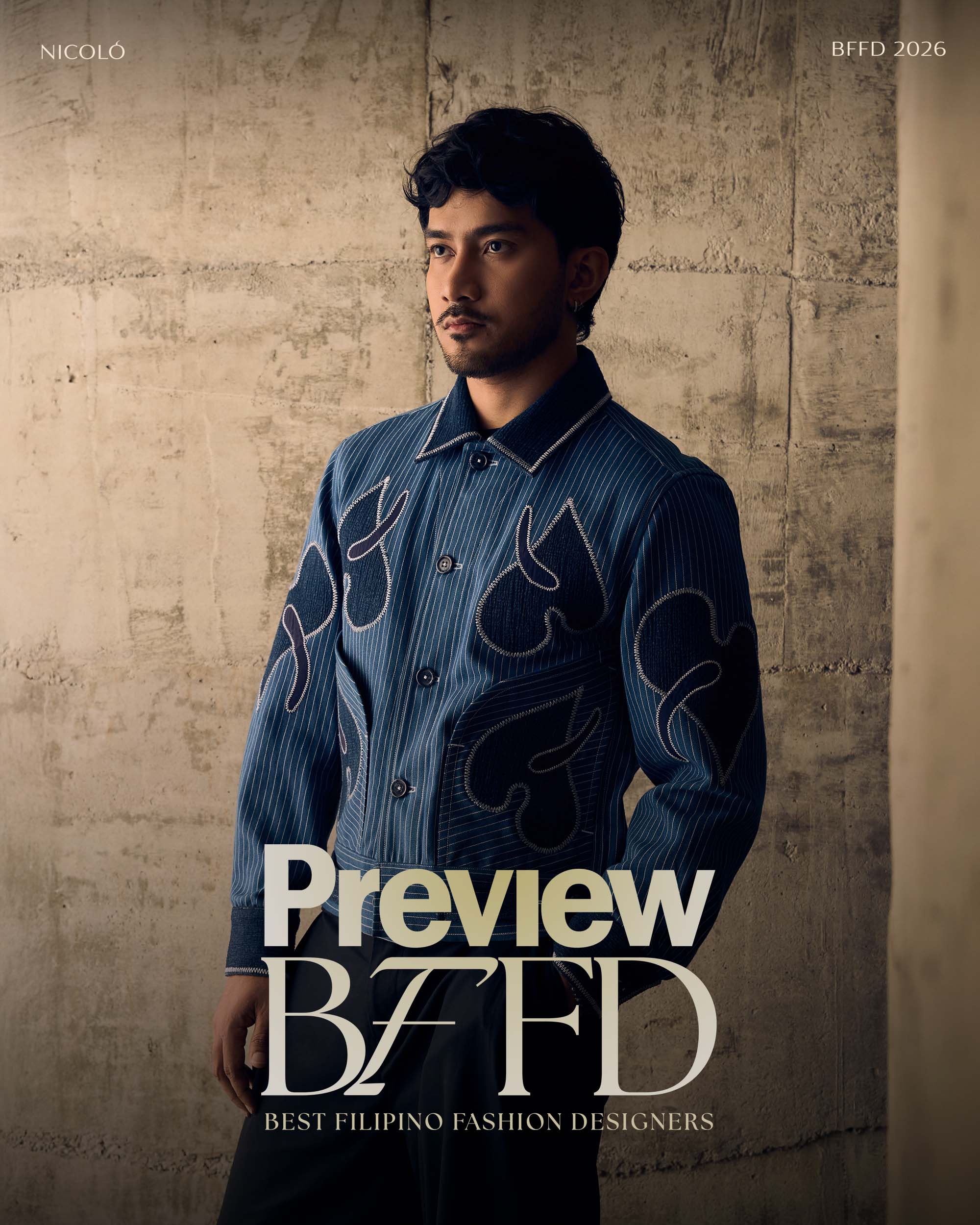
The ethos has guided the label from the beginning. Nicolo launched the brand with menswear before expanding into womenswear, allowing a broader range of silhouettes to enter his design vocabulary while preserving the same sense of balance. Transparency meets structure, soft surfaces meet clean construction, and every collection arrives with an ease that makes even its more experimental ideas feel lived in.
Fashion first captured his attention before he imagined it as a career. Left alone with the television as a child, Nicolo would inevitably switch to FashionTV, mesmerized by the worlds created by designers such as Alexander McQueen and performers such as Lady Gaga. His own sketches reflected that fascination, filled with dramatic gowns and theatrical silhouettes.
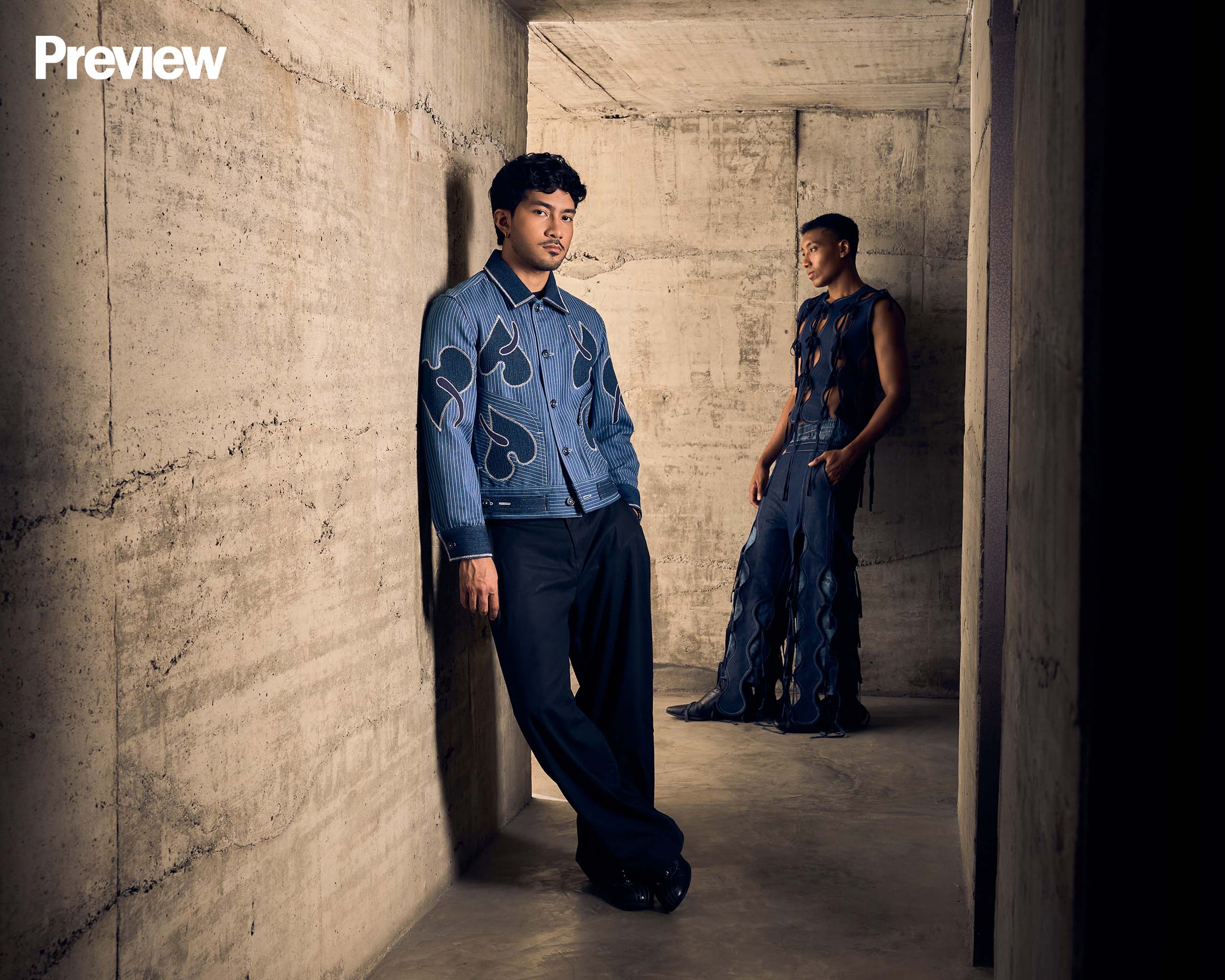
College initially led him elsewhere. He enrolled in psychology with plans for medicine before theater and a costume design course clarified where his interests had been pointing all along. “I decided I’m really gonna go for fashion,” he says.
His process remains deliberately open. Inspiration may arrive through images gathered for a collection, a particular fabric, or an idea that surfaces while a garment is already taking shape in the studio. Lately, Nicolo has found himself relying even more on instinct. “While making some pieces, some ideas will emerge,” he says. “It’s not strict.”
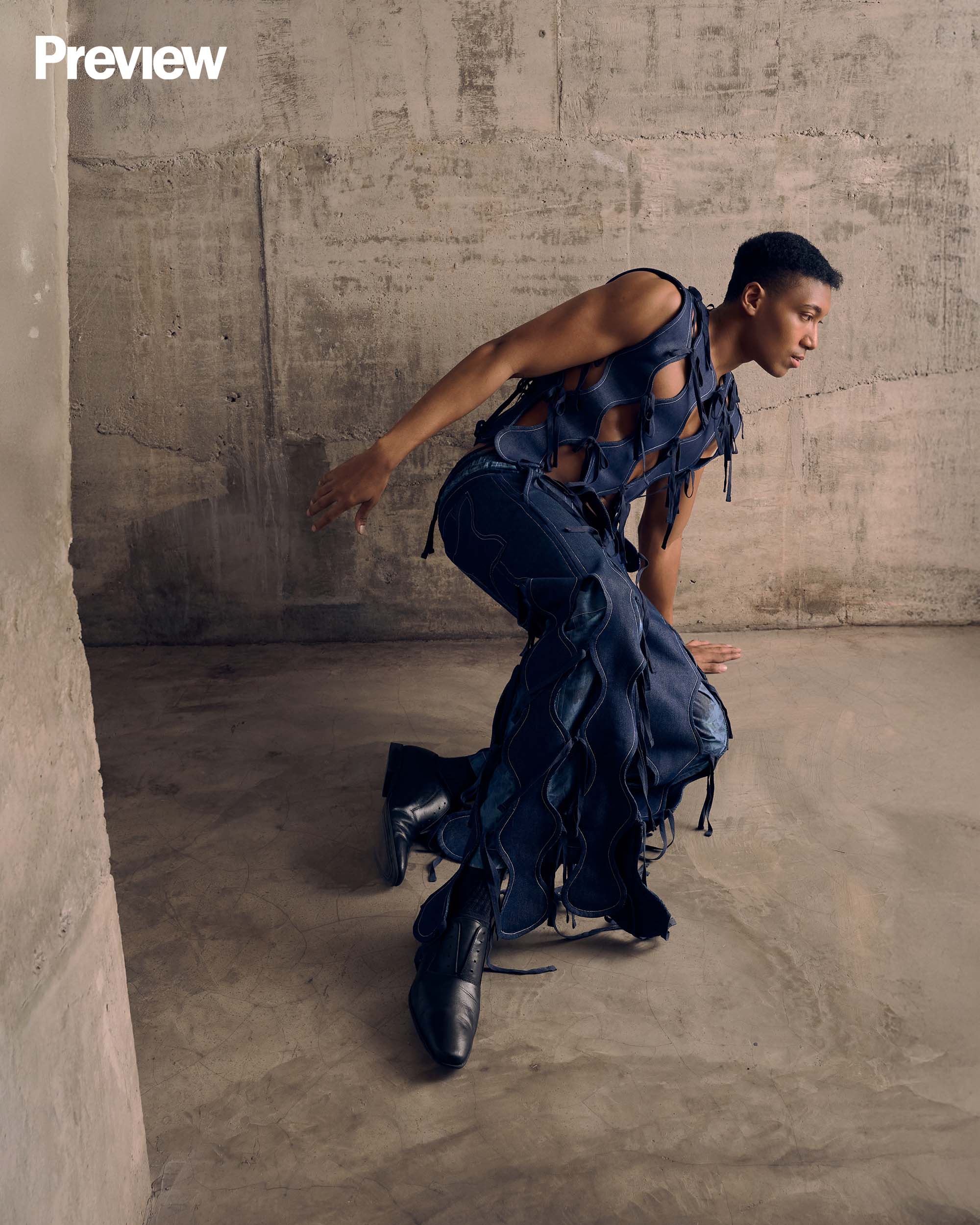
The collection Daydreamer, presented during his first pop-up in 2023, marked an important turning point for the brand. Organic wavy lines, sheer fabrics, and approachable ready-to-wear silhouettes came together into a visual language that continues to shape his work today. Seeing people connect with the clothes affirmed that the label could grow into something lasting. “That’s when I realized this could actually be something that I could be doing forever,” he says.
He hopes people keep his pieces for years, returning to them because they still feel authentic to the person wearing them. “Dressing up should be fun and authentic to you,” he says. “The pieces that you may get from us are something that will be with you for a long time.”
Nicolo hopes to build a fashion house with the kind of structure and longevity that can endure across generations, while continuing to expand his womenswear and refine a ready-to-wear model he believes has room to grow in the Philippines. He also sees that future as collective. More young designers, more distinct perspectives, and a constantly evolving understanding of Filipino design can only strengthen the industry. As Nicolo sees it, the conversation is still unfolding, and there is plenty of room to push it further.
Rajo Laurel
Ask Rajo Laurel how he introduces himself, and the answer is surprisingly simple: a Filipino fashion designer. The description feels understated for someone whose career has helped define contemporary Philippine fashion, but it reflects the way he has always approached his work.
Even after building a fashion house, expanding into ready-to-wear and manufacturing, and becoming one of the country’s most recognizable creative voices, Rajo rarely lingers on accomplishments. His attention naturally drifts toward the process, with the ideas that spark a collection and the stories woven into every garment.
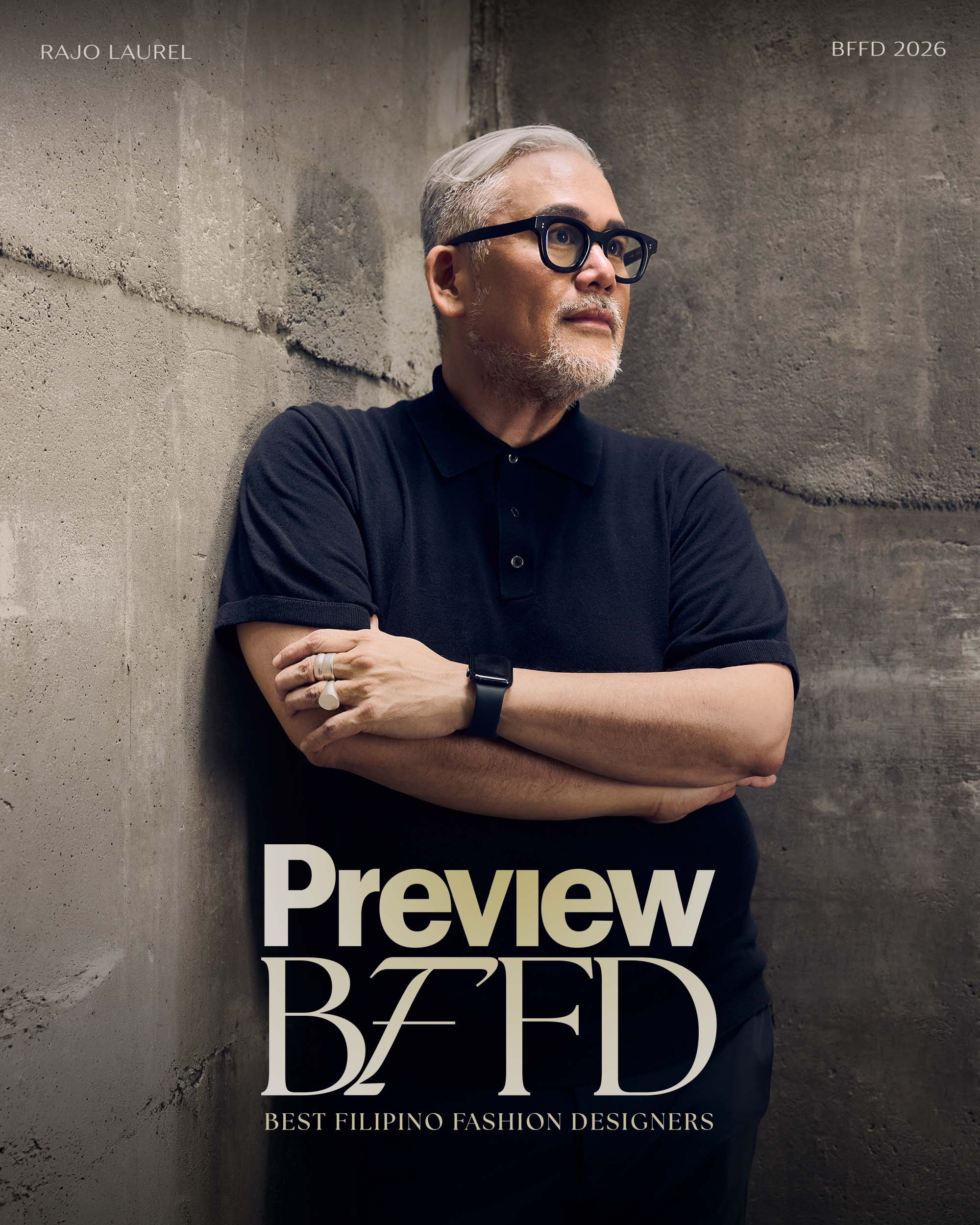
At five years old, Rajo joined Repertory Philippines’ production of The King and I, where he first witnessed what clothing could do. “I was able to see how clothes can completely empower, transform, and make one person just another person completely,” he recalls. However, it wasn’t until years later, watching his grandmother’s household seamstress bring garments to life, that design itself became tangible. He remembers suggesting how a pile of fabric should be made into a dress, then watching the idea leave his imagination and become something real.
Winning the ASEAN Young Designers Competition in Singapore in his early twenties affirmed his path. After studying at the Fashion Institute of Technology in New York and Central Saint Martins in London, Rajo returned to the Philippines to establish what would become one of the country’s most enduring fashion houses. The scale of his practice has grown considerably since then, yet he has never believed a designer’s philosophy should remain fixed. As trends and techniques evolve, so, too, should the work. “The vocabulary of design always evolves,” he says. “However, what remains in place for me is the duality of paradoxes.”
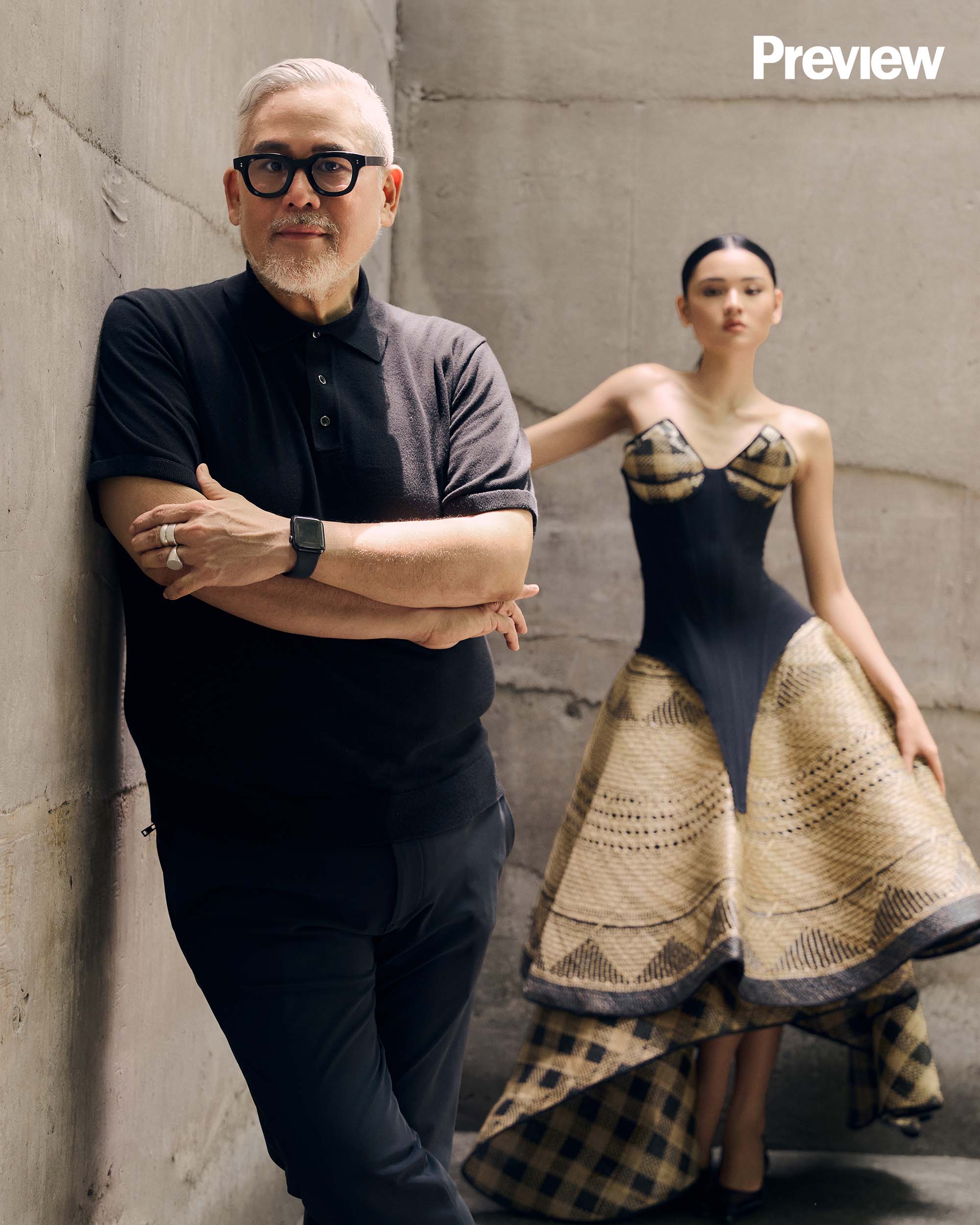
The interest in contradiction has become one of the defining qualities of his work. Sculptural silhouettes meet fluid movement, sentiment exists alongside experimentation, and heritage is viewed through an unmistakably contemporary lens. More recently, Rajo has found himself returning to a question that continues to unfold: what does it mean to be a Filipino designer today? It’s a conversation that informs collections like Lahi, which explores Filipino culture without treating identity as something frozen in time. “Being Filipino isn’t supposed to be static,” he posits. “It should be continuously evolving.”
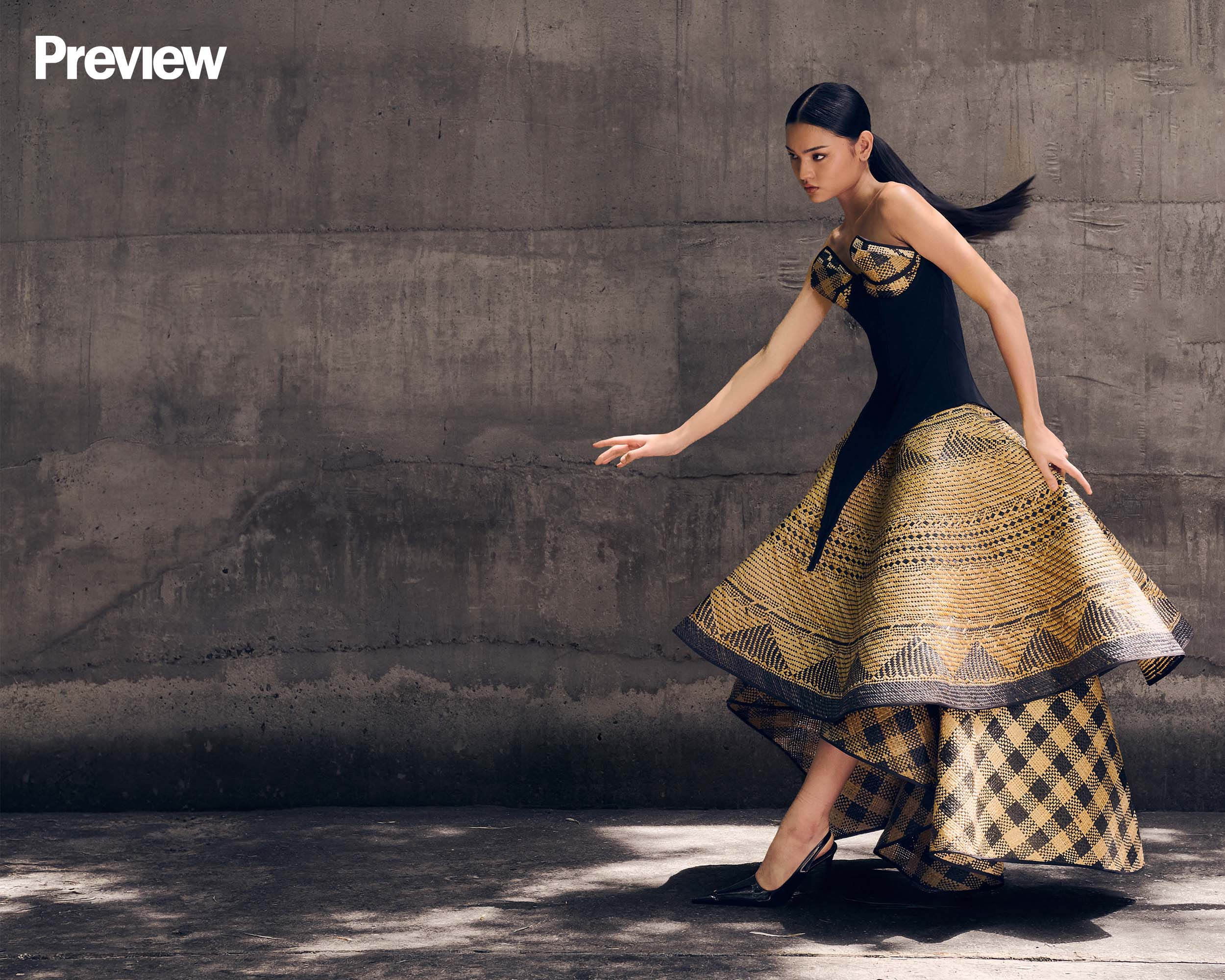
He often describes himself as a storyteller, tracing that instinct back to his years in theater, where narrative always came before costume. Today, that order remains unchanged. Before choosing a fabric, developing a silhouette, or building a collection, he begins by asking what story he wants to tell.
Revisiting decades of work for this year’s Preview award prompted Rajo to return to his archives, rereading old collections while reflecting on the ideas he still hopes to pursue. “I pray that I still have stories to tell,” he says. “I pray that I still have things to discover about myself and about my craft.” Even after decades of designing, he speaks about remaining open—to learning, to vulnerability, and to whatever comes next.
Vania Romoff
Women have always been the starting point for Vania Romoff’s designs. Before a collection takes shape, she thinks about the person who will eventually wear it—the emotions that come attached to clothing, from the confidence a piece can inspire to the memories it carries after it leaves the studio’s confines.
“I create for the woman that wears my pieces,” Vania says. “Every time I create something, the end goal is always to create something beautiful.”
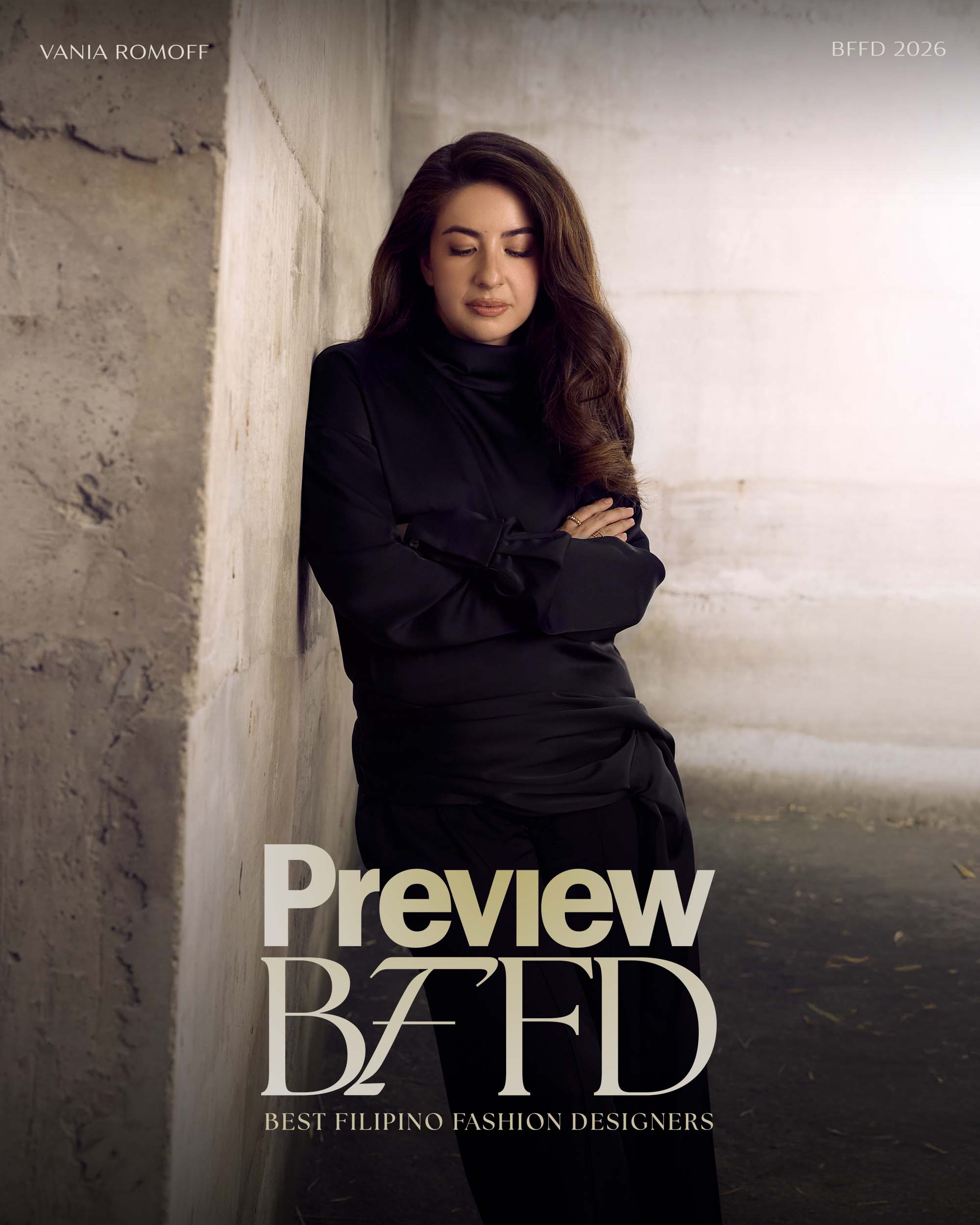
In her home province of Cebu, Vania grew up in a family where garments were made and appreciated, with her grandmother—one of the province’s earliest fashion designers—serving as one of her first influences. The craft was always within reach, whether through the fabrics around her or the process of watching an idea become something tangible.
However, her move to Manila became an exercise in building something of her own. Leaving behind the familiarity of Cebu meant introducing herself to a new set of clients and allowing her work to speak independently. In 2010, she was among the first recipients of Preview’s Emerging Fashion Talent Awards, early in the development of the label that would become her signature.
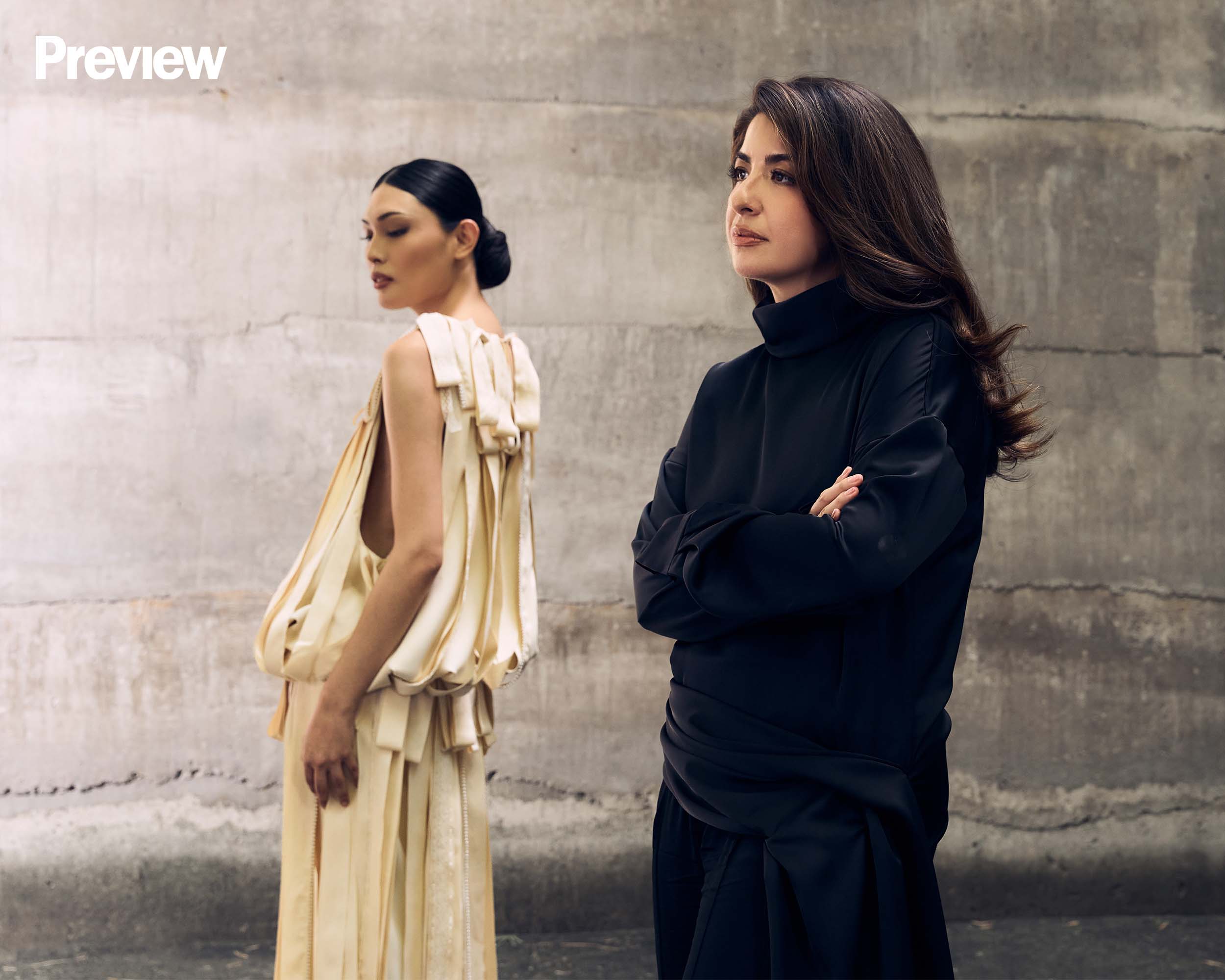
The process behind her collections has remained deeply personal. Each piece develops through a conversation between her own instincts and the person who will eventually wear it.
“I think what I do is very emotional,” she says. “I think what I do is purely instinctive. And it’s born out of years of creating and the experience that I have learned.”
Her designs have carried a sense of femininity and romance, but their meaning is ultimately completed by the women who wear them. For her, beauty exists in the connection between the piece and the person it becomes part of.
Her collection Woman brought this idea into focus. Dedicated to the women who have inspired her throughout her career, the nearly 50-piece collection became a reflection of the work she felt most connected to. “It was about going back to what felt right,” she says. “Everything that I’ve created at that time was and is something that I’m proud of.”
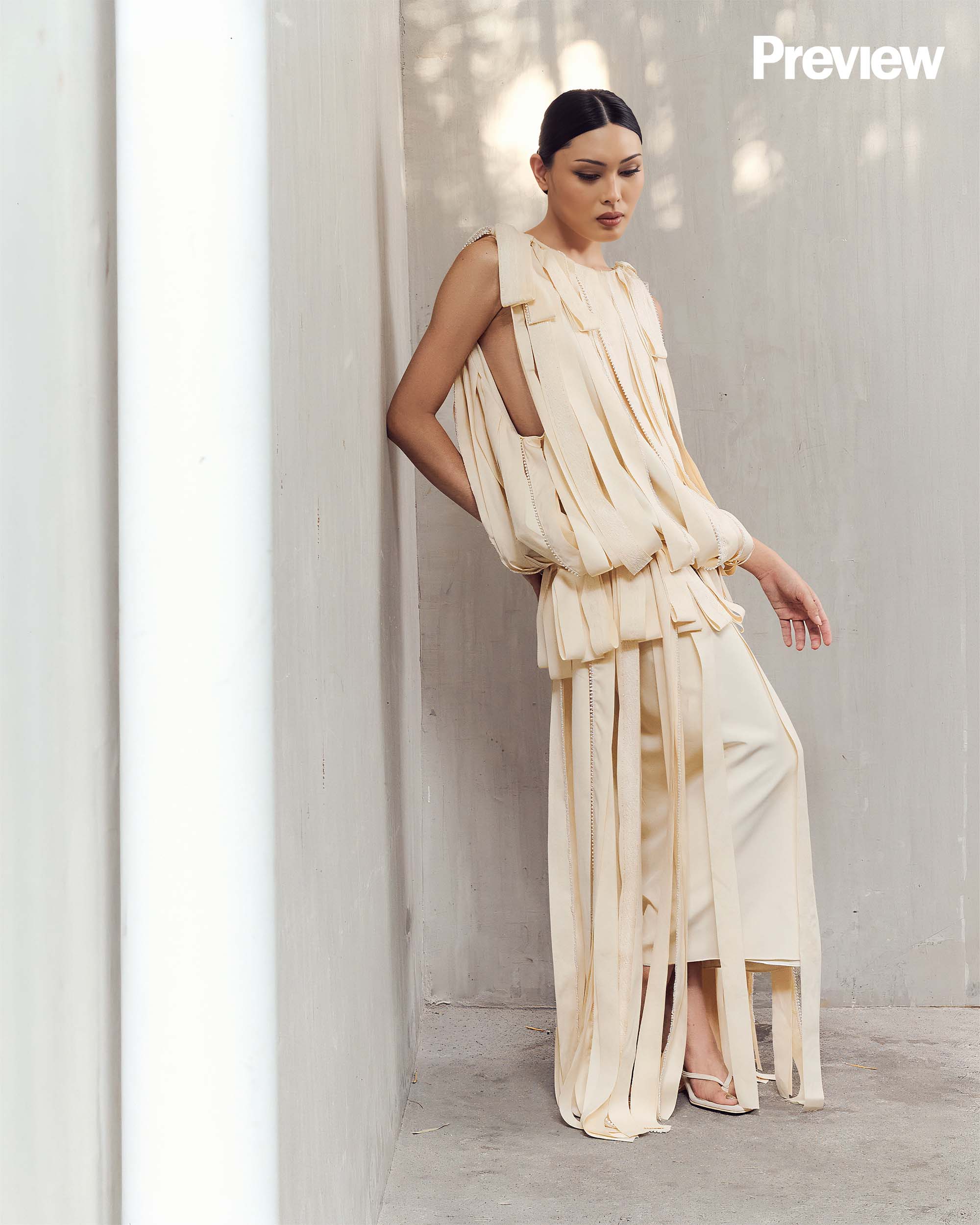
After years of dressing women through some of their most memorable moments, Vania continues to see possibility in the work ahead. The relationships built through her pieces remain one of the reasons she continues to create.
“I feel that I still have so much to give,” she says. “There are just so many possibilities ahead. I’m really excited to just learn more, create more, strengthen the brand, and dress more women who I haven’t dressed before.”
Viña Romero
Quiet confidence is a phrase that comes up often when Viña Romero talks about the people she designs for. It could just as easily describe the designer herself. As her label marks a decade in the industry, Viña doesn’t dwell on anniversaries or milestones for very long. “In reality, we feel like we’re just starting,” she says.
From its origins as a womenswear label, the brand gradually expanded into gender-neutral dressing, a direction that emerged after Rustan’s invited the designer to develop a menswear line. The silhouettes she had been exploring had always resisted rigid categories, making the transition a continuation of the work she was already doing.
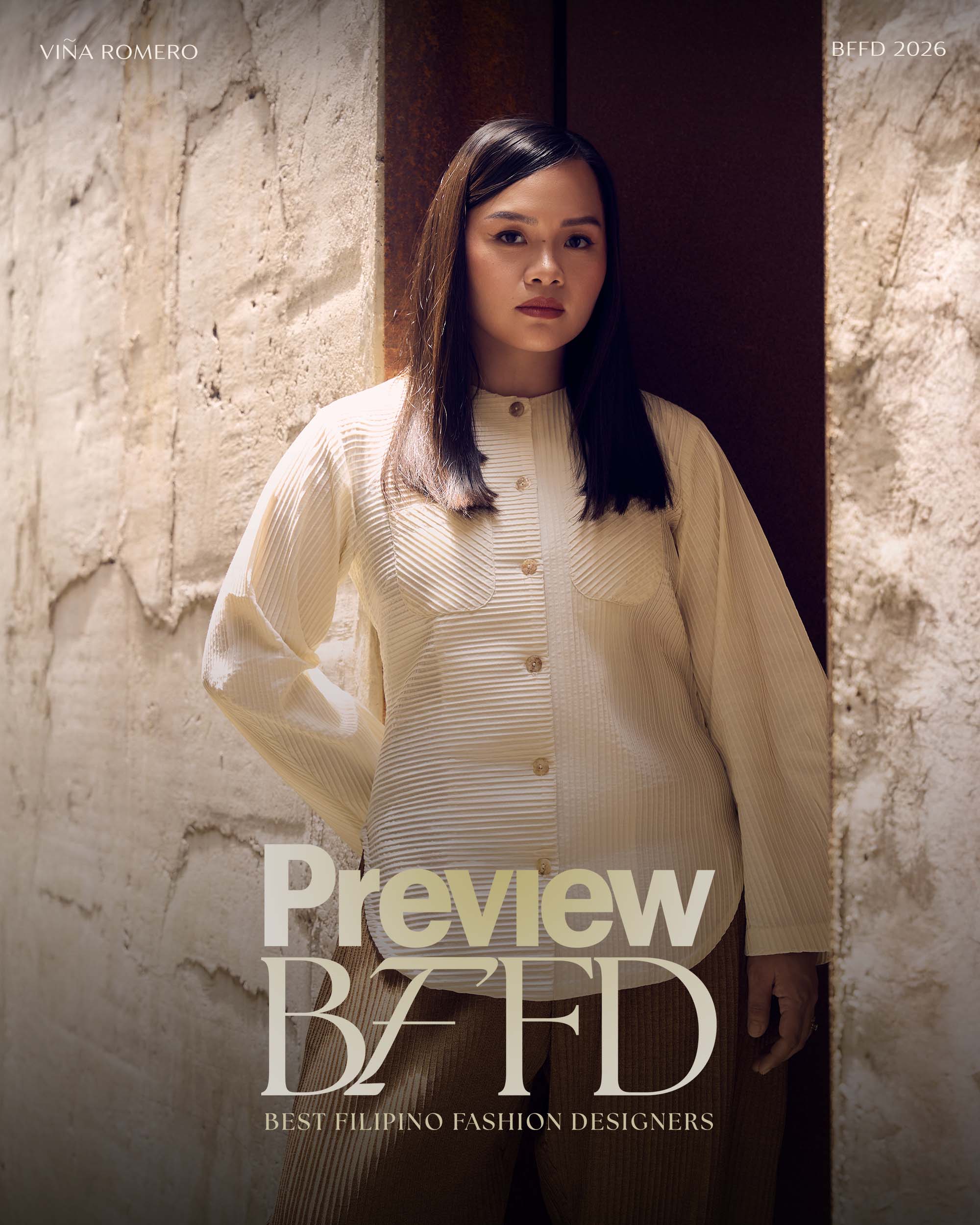
The designer’s understanding of clothing, however, began somewhere much quieter. Growing up in San Jose del Monte, Bulacan, Viña remembers watching her mother have school uniforms sewn, paying close attention to how garments were put together before she understood fashion as an industry. Construction fascinated her first, followed by fit, proportion, and the satisfaction of seeing an idea become something you could actually wear.
It eventually led Viña to study Fashion Design and Merchandising at De La Salle-College of Saint Benilde before interning with SM Men’s Fashion and joining BCBG Max Azria. Winning the 2014 Look of Style Awards, which included the chance to study a short course in London, gave her the confidence to pursue ready-to-wear—a path she has never questioned since. “That’s where my heart is.”
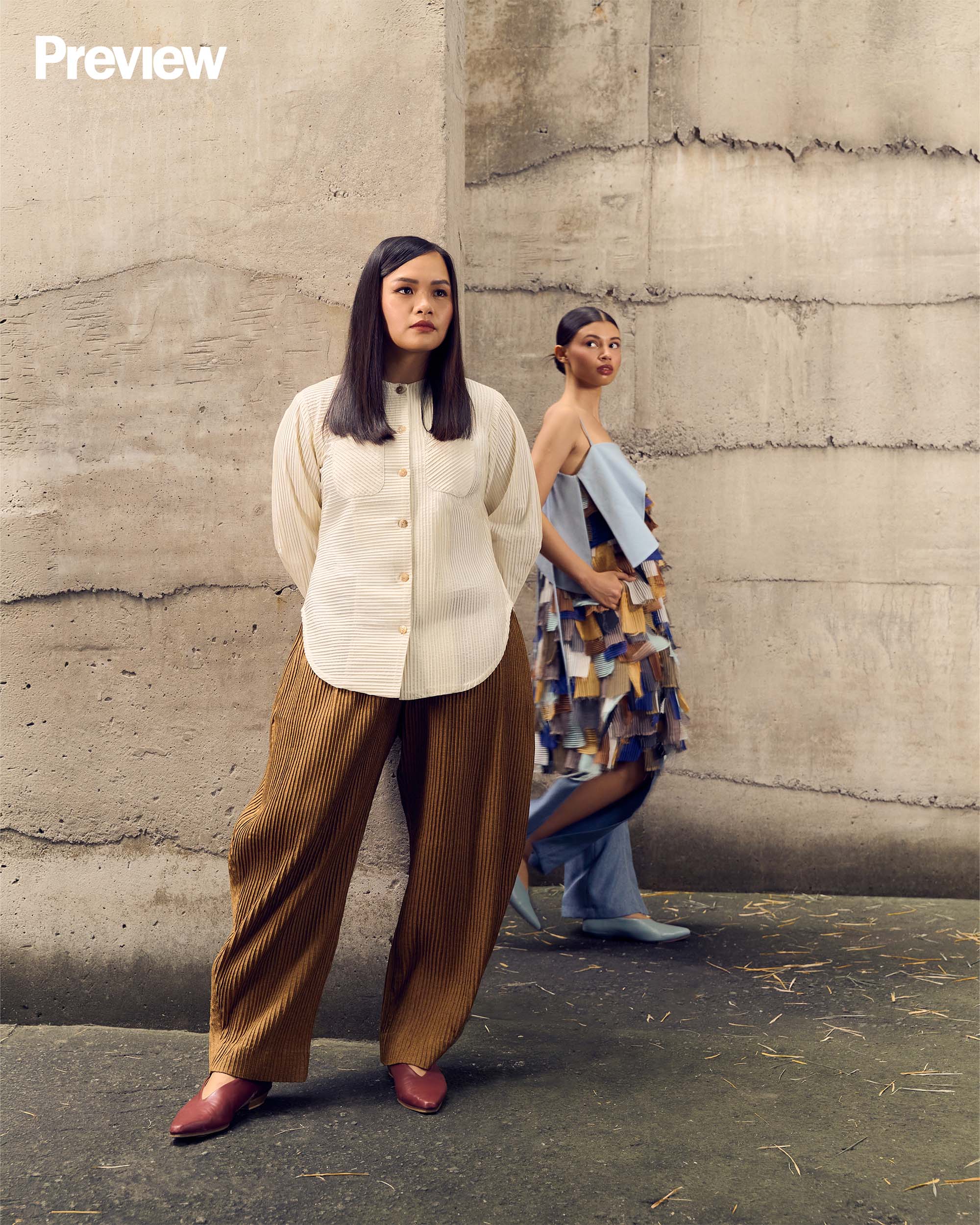
Viña has built a design language that rewards close attention, where fabric manipulation and construction often reveal themselves only after a second look. “Simple is definitely not plain,” she says. “It’s easy to make a piece beautiful, but to make it distinctly yours, and in line with your values and your process, it’s a whole different story.”
One technique has become especially synonymous with the label. Hand pintucking can take nearly 20 hours across just three yards of fabric, making every piece as much a record of time as it is craftsmanship. Viña began stitching leftover offcuts into patchwork textiles simply because she couldn’t bring herself to throw them away, and this gradually became one of the brand’s defining signatures.
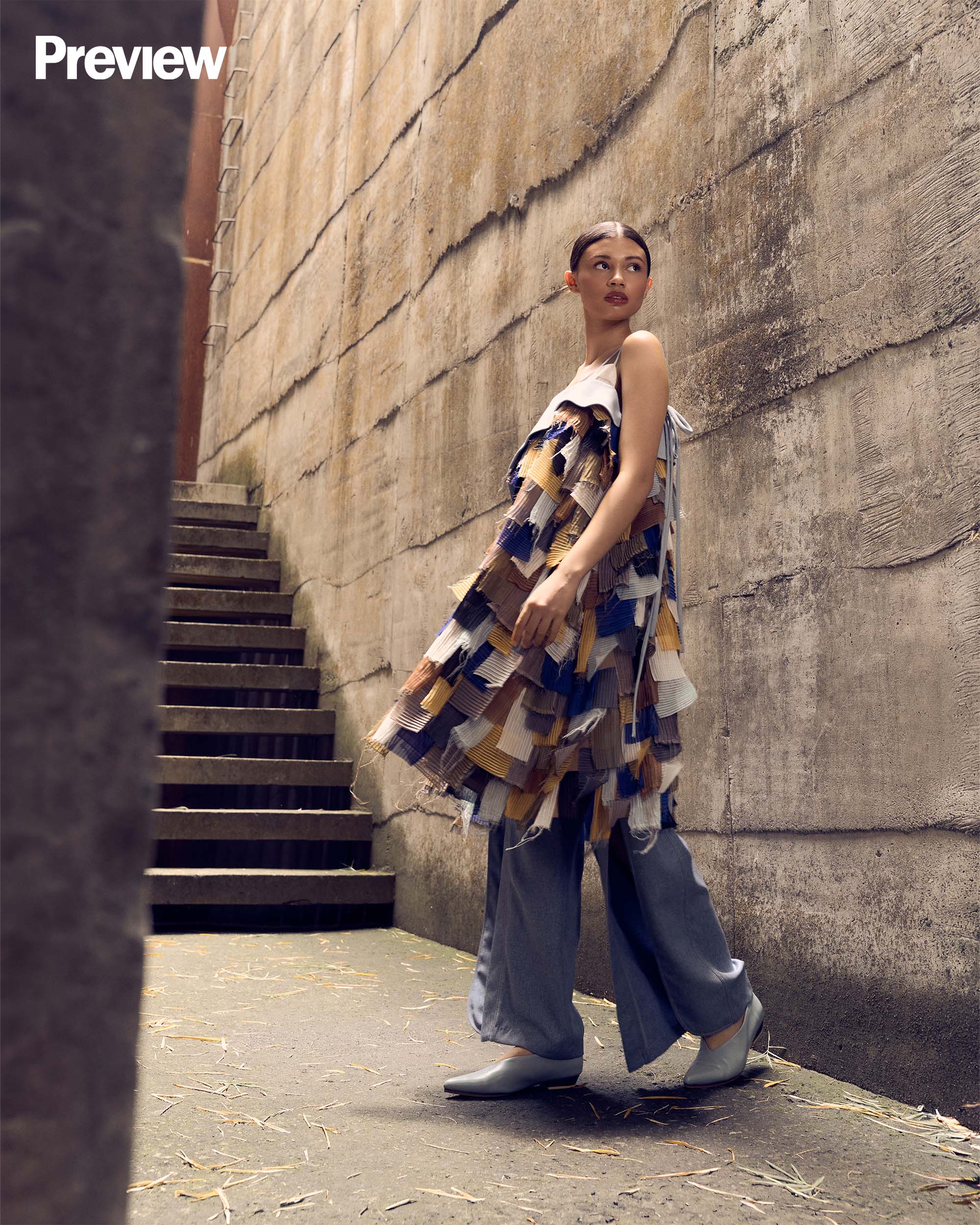
Looking back over the past decade, she sees herself as a designer who has grown more certain of her own voice. Earlier collections came from the desire to prove herself. Now, every collection begins with a much quieter question of what she genuinely wants to create. Because the label bears her name, every piece inevitably reflects how she sees the world. “The philosophy never changed,” she says. “It matured with me.”
The goal is to continue refining the work, expand the team behind it, and create clothing that remains honest to the people who wear it. She hopes to create more opportunities for the pattern makers and seamstresses who have grown alongside the brand, a belief that also shapes her vision for the local industry. “If one moves forward,” she says, “then lahat mag-mo-move forward.”

Produced by the Preview Team
Editor-in-Chief: Marj Ramos-Clemente
Managing Editor/Producer: Reg Rodriguez
Assoc. Creative Director: Jana Jodloman
Co-producers: Katrina Maisie Cabral and Em Enriquez
Assoc. Multimedia Director: Bea Felice Panganiban
Photographed by Yel Dela Paz. Models: Helaena Bercasio (for Jerome Lorico), Chumason Ngjigha (for Nicolo Perez), Habie Mondido (for Rajo Laurel), Justine Llarena (for Vania Romoff), and Isabella Downy (for Viña Romero). Makeup by Team Muriel Vega Perez for BYS. Hair by Patty Cristobal for Kiss and Urban Care. Story by Katrina Maisie Cabral. Video direction by Bea Felice Panganiban, shot by Greeko Junio. Social media coverage by Jamina Nitura. Photographer’s assistants: JR Baylon and Max David. Shoot assistants: Alfred Locsin and Almarc Rico. Special thanks to Shermaine De Ramos of the Professional Models Association of the Philippines (PMAP), Vani Altomonte, and iFace.
Kat is Preview's Lifestyle Editor, explorer, and occasional rhymer. When not globe-trotting, she's over her computer, writing her next big novel.