The Fine Art of Being Solenn Heussaff
As her body of work continues to evolve, so does Solenn Heussaff, finding meaning in nature, change, and the humanity that connects them both.
Published on Jul 9, 2026
The natural world dabs the waters of Balayan Bay a vivid orange as the six o’clock sunset arrives on schedule. Judging by how many pulled out their phones just to take a quick shot, it's no surprise this scene has been a muse to painters since time immemorial.
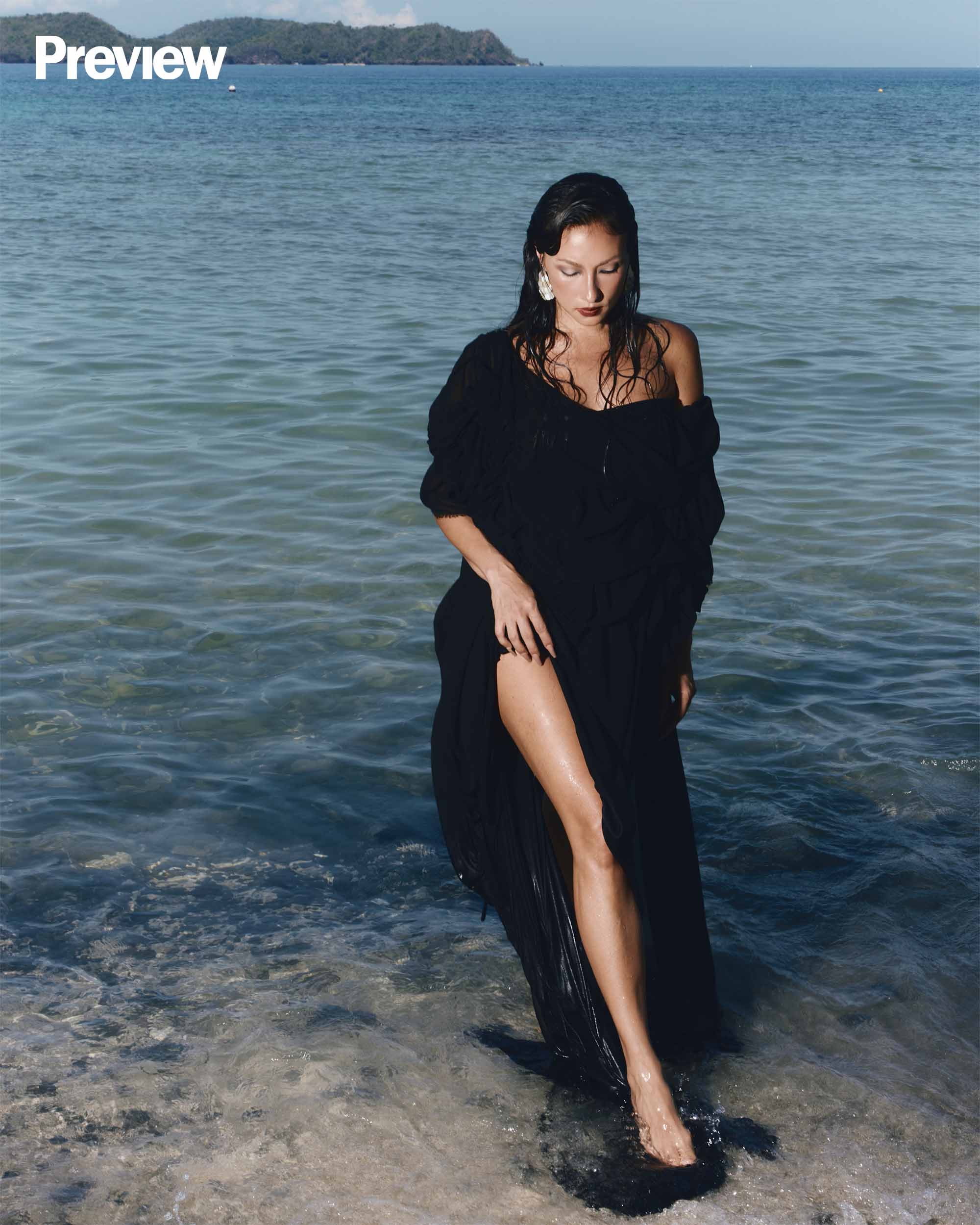
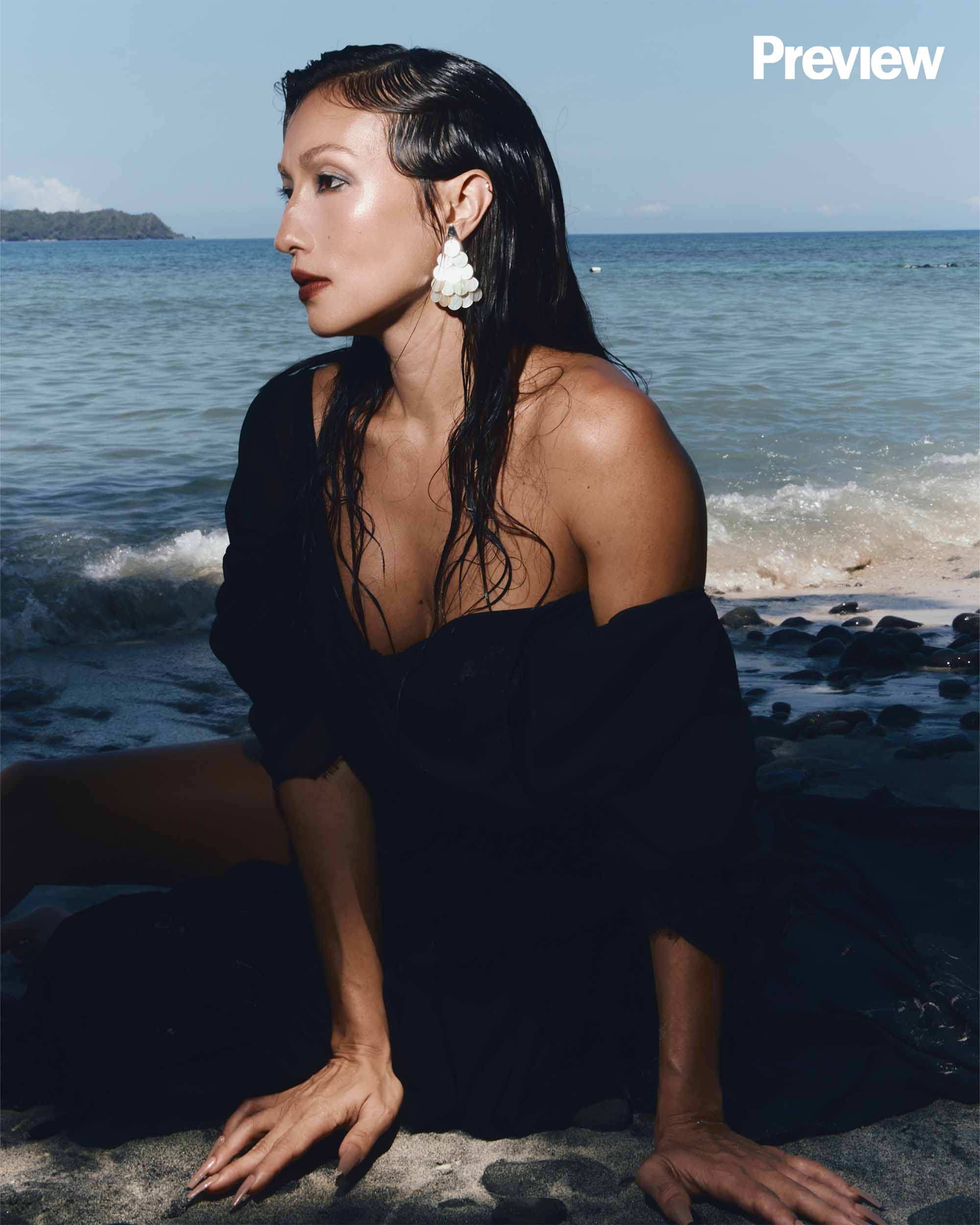
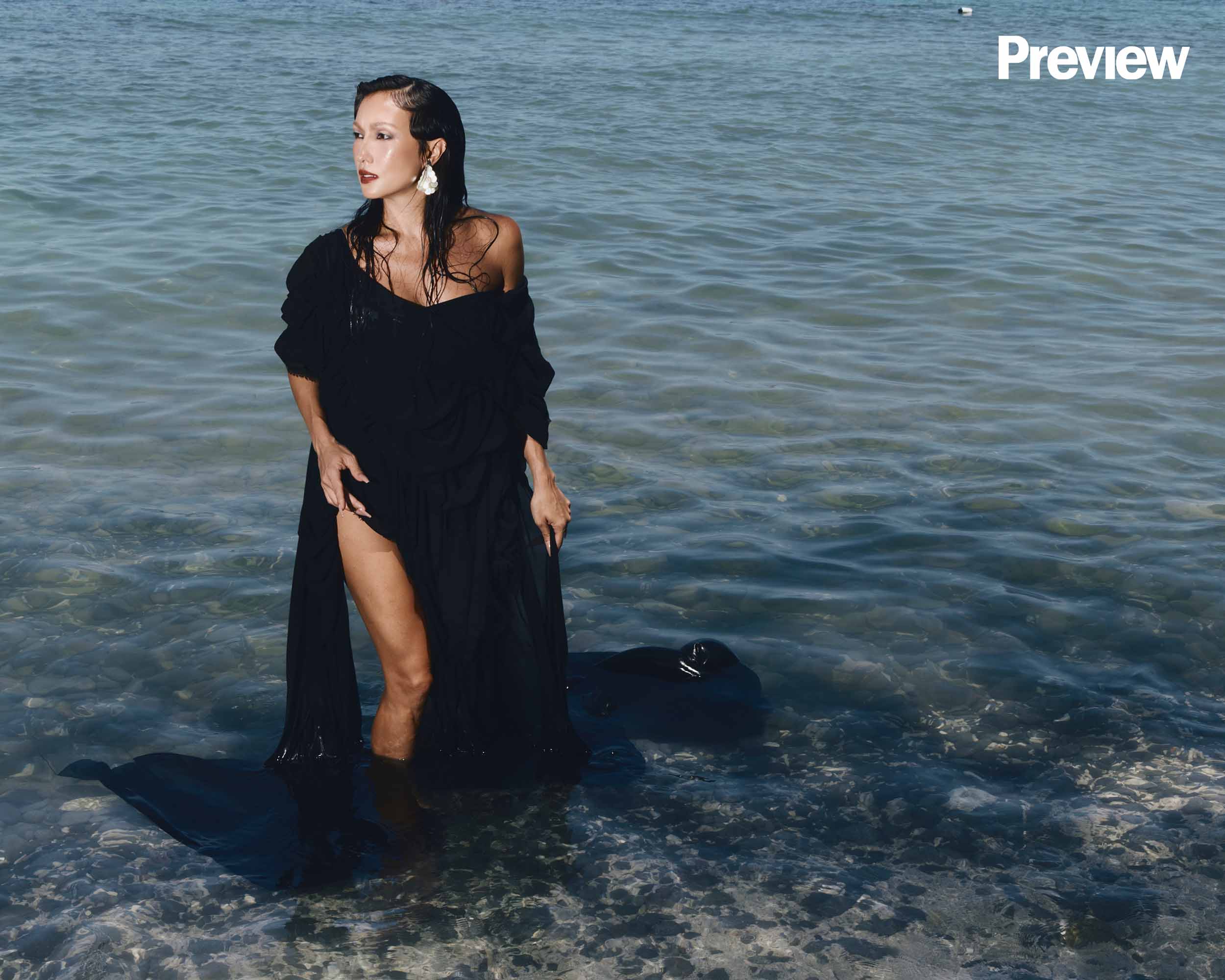
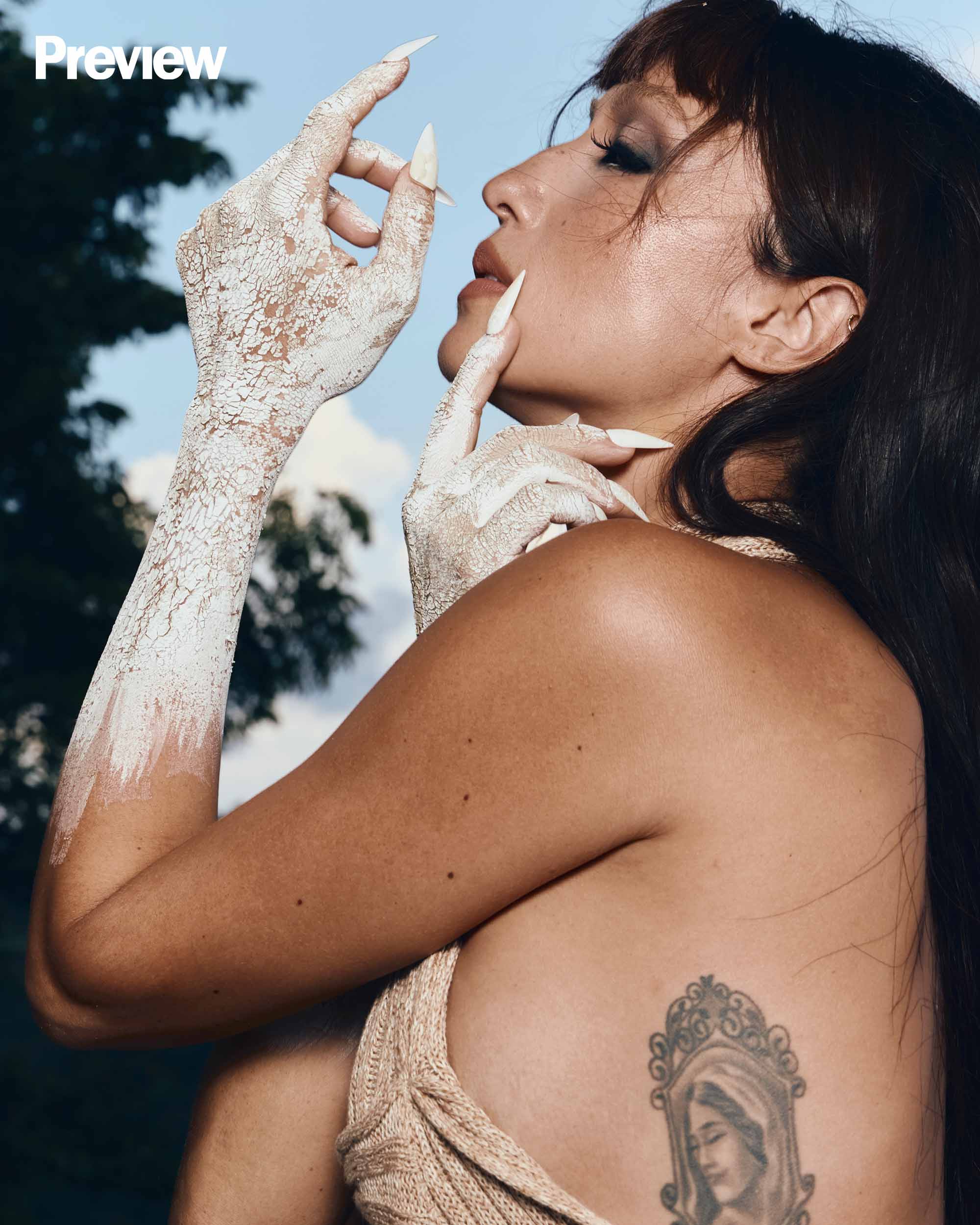
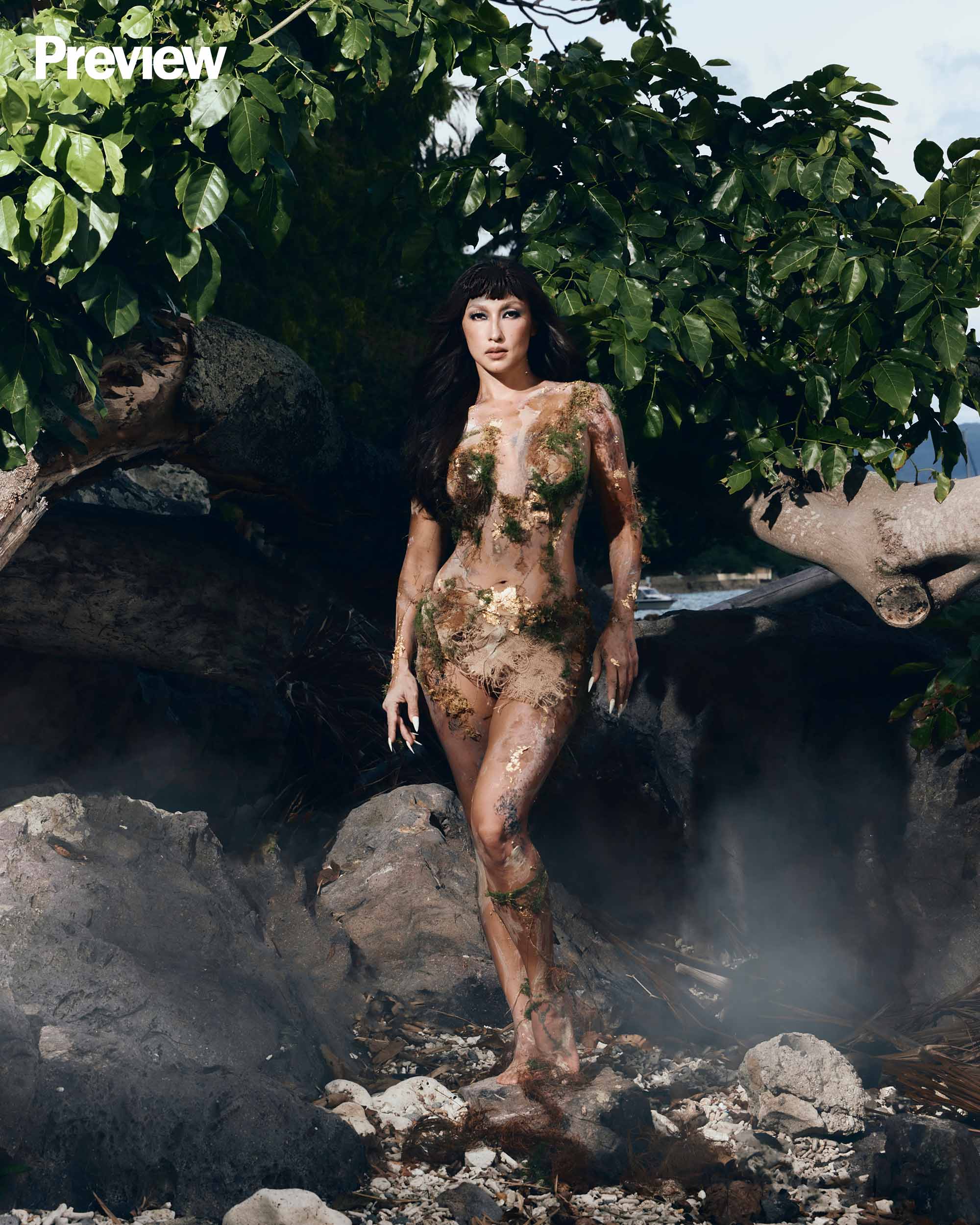
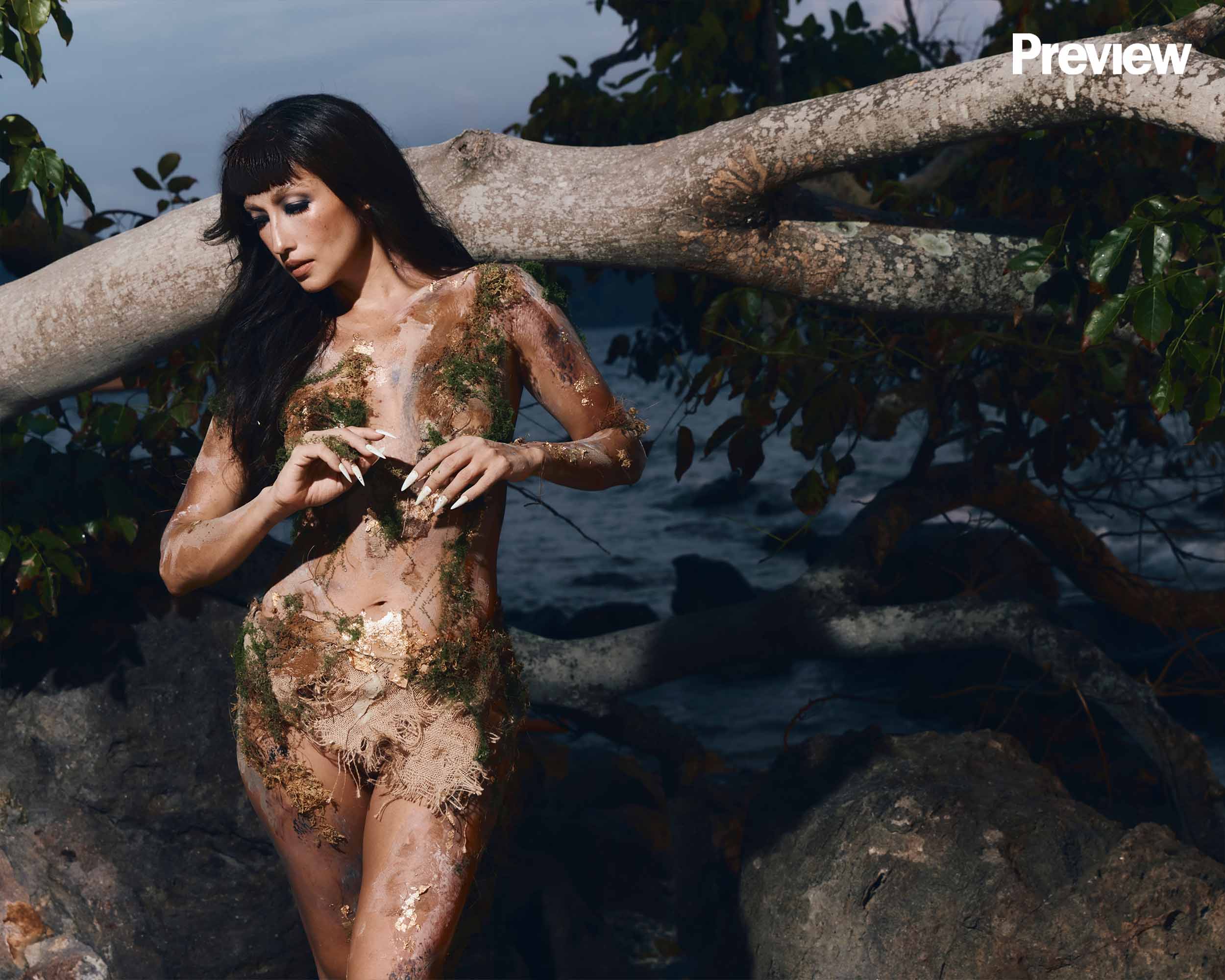
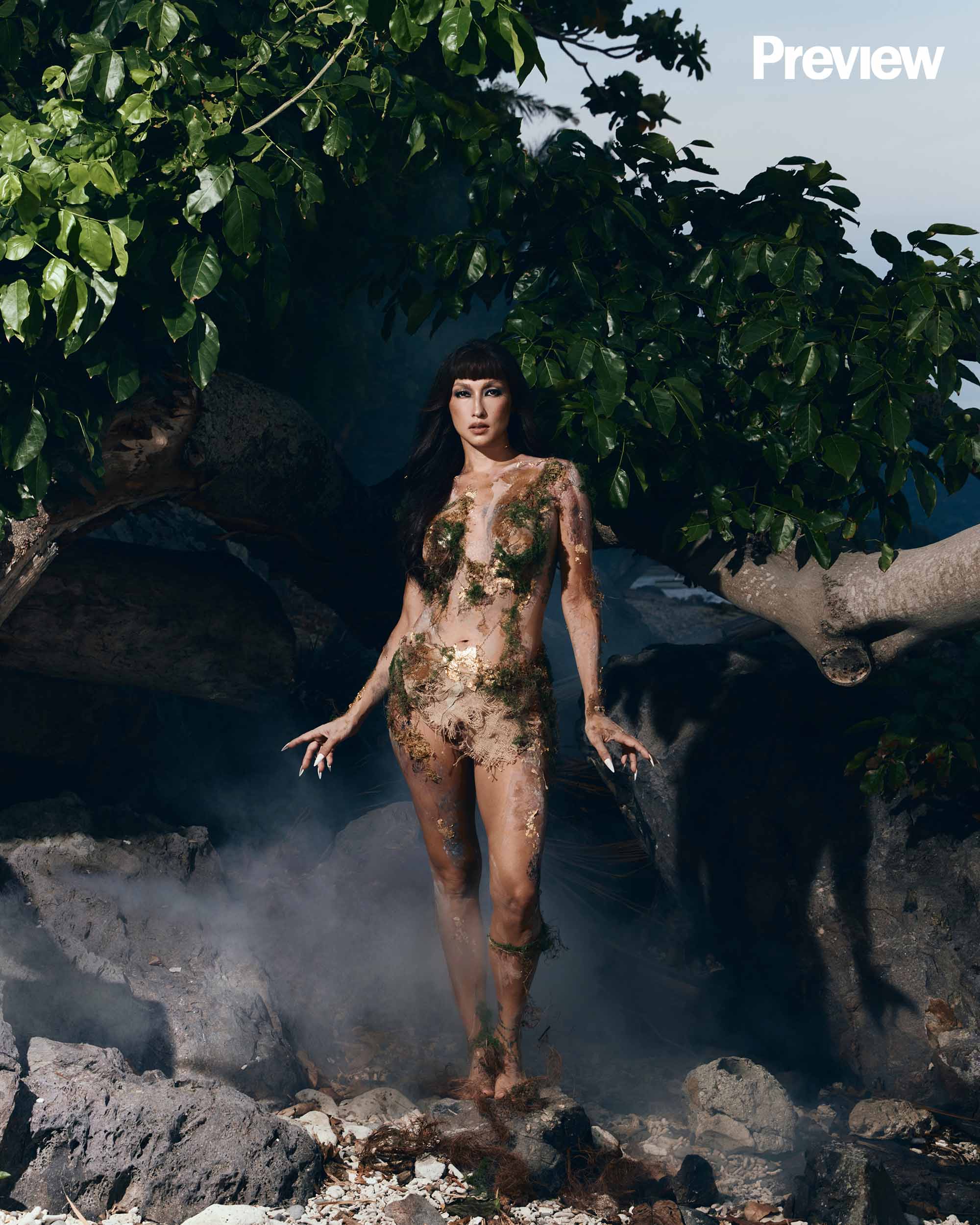
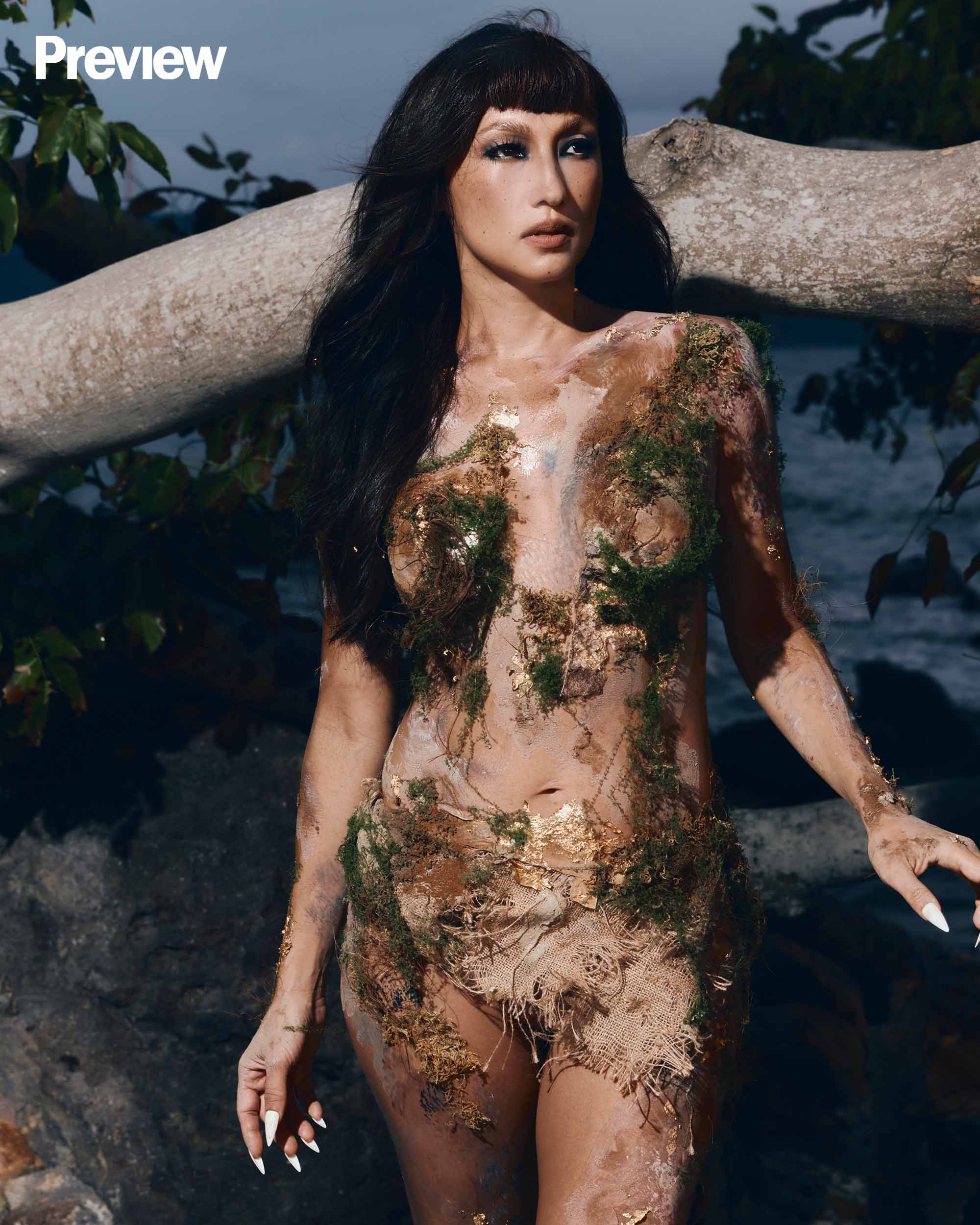
An artist of different mediums, Solenn Heussaff-Bolzico has plucked some ideas from Mother Nature herself—so much so that she has become a canvas, too. In Anilao, Batangas, where gray pebbles and rocks blanket the coast, she stands on boulders like a dais, her body coated in daubs of paint by makeup artist Slo Lopez. Like the setting sun and the sea it colors, as a painter, Solenn has tried to capture how nature—and people—change.
“I’m interested in the landscape within us,” she reflects later, on more even ground. “The parts of ourselves that are constantly growing, changing, blooming, and sometimes struggling beneath the surface.”
The 40-year-old all-rounder is in the midst of manifesting that thought into an exhibit titled Into the Unseen Garden, a collection of works that she planted from her experiences, now to be harvested by the art-going public however they choose to interpret them. With motifs of botanicals and foliage, which have also appeared in some of her previous exhibits, she connects different forms of life with those of humanity.
“In many ways, it’s about recognizing that the human experience and the natural world are not separate,” she says. “The cycles we witness in nature are the same cycles we experience in our own lives. Growth isn’t neat or predictable. It emerges from tension.”
.jpg?format=original)
A Living Canvas
A few hours' drive from that beach, her musings on nature and life are framed in the Provenance Art Gallery's panels. In The Unseen Garden, tactile strokes in color bloom amid the stark dark walls, but these works deal with color like they’re wrapped with underlying meanings, like how beauty comes from pressure and change–down to her very process.
Solenn points to a canvas with yellow blossoms on a muted background, textures thick as if they were almost mid-movement. She named it The Persistence of Bloom. “It started with lighter colors, and I wanted the viewer to get lost in a forest, portraying the feeling of uncertainty we face during the many phases of one’s life,” she explains. “As I kept working on it, it was getting darker and darker in terms of feeling. So I decided to turn the canvas upside down and started drawing a floral arrangement in a vase.”
She thinks about the meanings that could be attached to this—how it can be interpreted literally, how a painting that once leaned into darkness eventually found its way elsewhere, and how people, too, are rarely defined by a single moment. The work arrived at that realization almost by instinct, much like the rest of Into the Unseen Garden, which she says only found its identity after hours of experimentation.
“Every time I work on a new exhibit, it takes a while for me to gather my thoughts and to create a new look for my works,” she says. “It’s many hours of hit-and-miss and playing around until I finally find ‘the look,’ and from there I begin my new series.”
For this exhibit, that search for something new led her away from the brush. Wanting to bring more movement into the works, she painted with her hands, using her fingers to spread pigment across the canvas, while also experimenting with the sgraffito technique, scratching through the top layer of paint to expose the colors underneath. It became another way of thinking about the layers people carry with them, each one shaped by the experiences that came before.
The shift also marks another chapter in Solenn’s practice, one that draws from the ideas she had been exploring across her previous exhibitions. Kundiman turned its gaze toward people and the quiet humanity found in everyday lives, while VĪTA looked outward to nature, captivated by its beauty, complexity, and power. Into the Unseen Garden sits somewhere in between, where flowers and foliage are reflections of the inner landscape she has become increasingly interested in.
Painting has been the one constant through all of those shifts. Solenn recalls that she has been doing it since she was three years old, first drawn to colors and experimentation, and later to the freedom that only a blank canvas could offer.
“I have always loved colors and experimenting,” she says. “I love it the most, as it’s something I can enjoy doing alone, and I don’t have to explain to people why I like to paint certain things. On the canvas, it’s my rules, my way of doing things, and allowing myself to be me. There is no wrong and no right.”
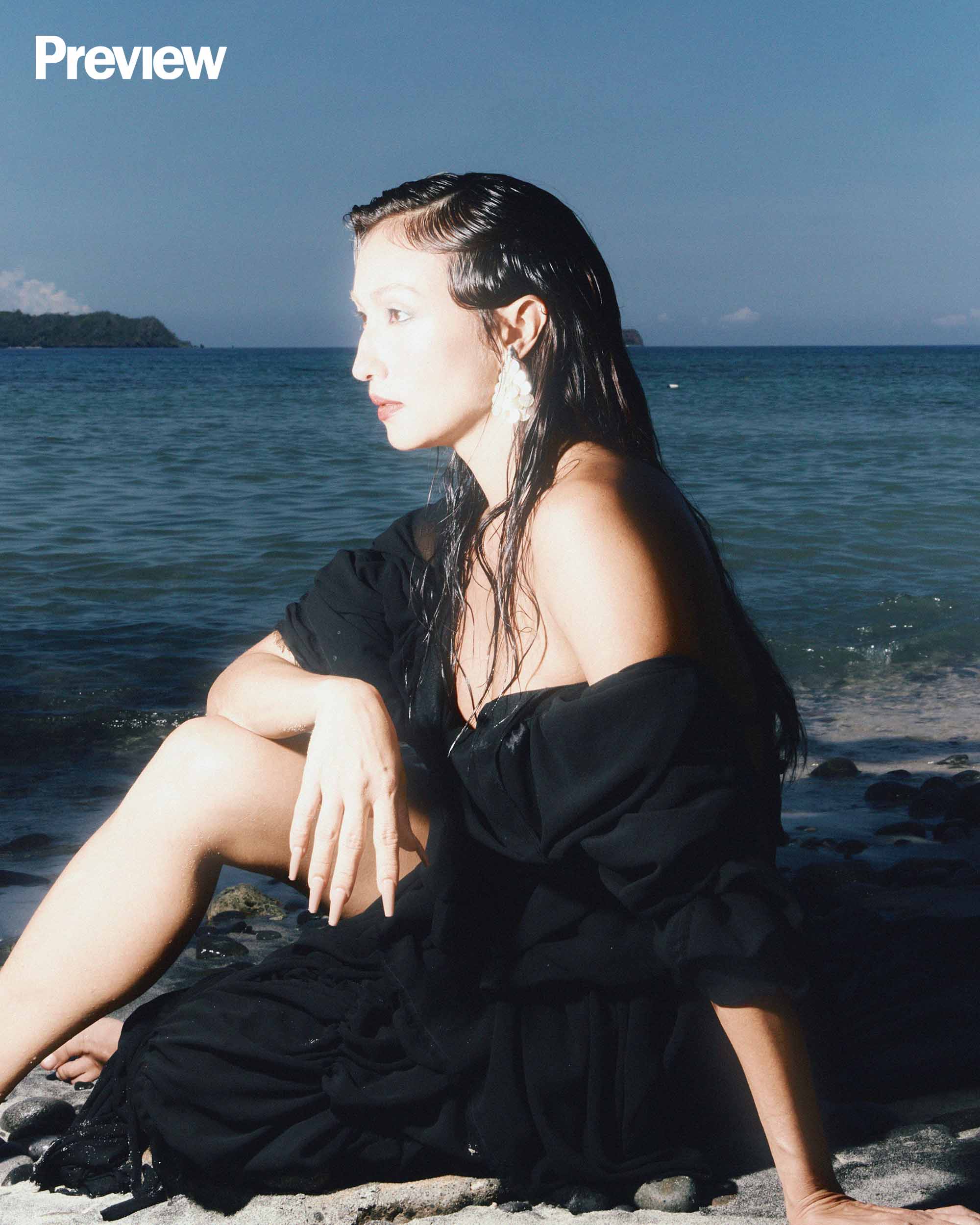
While the art form has long been a constant, it’s only one part of a life the public has followed for nearly two decades. Since first entering the spotlight through Survivor Philippines: Celebrity Showdown in 2010, Solenn has become a familiar face across television, film, and fashion, defining a generation of 2010s It Girls in the process. Last year marked another return to acting with Unmarry, a performance that earned her a Best Supporting Actress nomination at the 2025 Metro Manila Film Festival.
Yet, she has never looked at painting as something that needs to be measured against the rest of her career.
“I don’t think that’s ever crossed my mind,” she says when asked whether she has ever felt the need to prove herself as a painter despite first becoming known as a celebrity. “It’s not because I am trying to prove something to someone. If my work is able to spark a conversation between individuals, then that’s enough for me to keep sharing my work.”
The Nature of Change
This month, Solenn turns 41. Time has gradually become one of the subjects she returns to most, finding its way into the paintings that line the walls of a gallery as much as it does the life she’s built beyond them.
“In my 20s, I was really living life at its fullest as I do now, but today I am just more aware and more careful of consequences, and that life is finite. I have my own family and my two daughters now, so I want to be the best example and also want to be healthy so I can be around for as long as I can.”
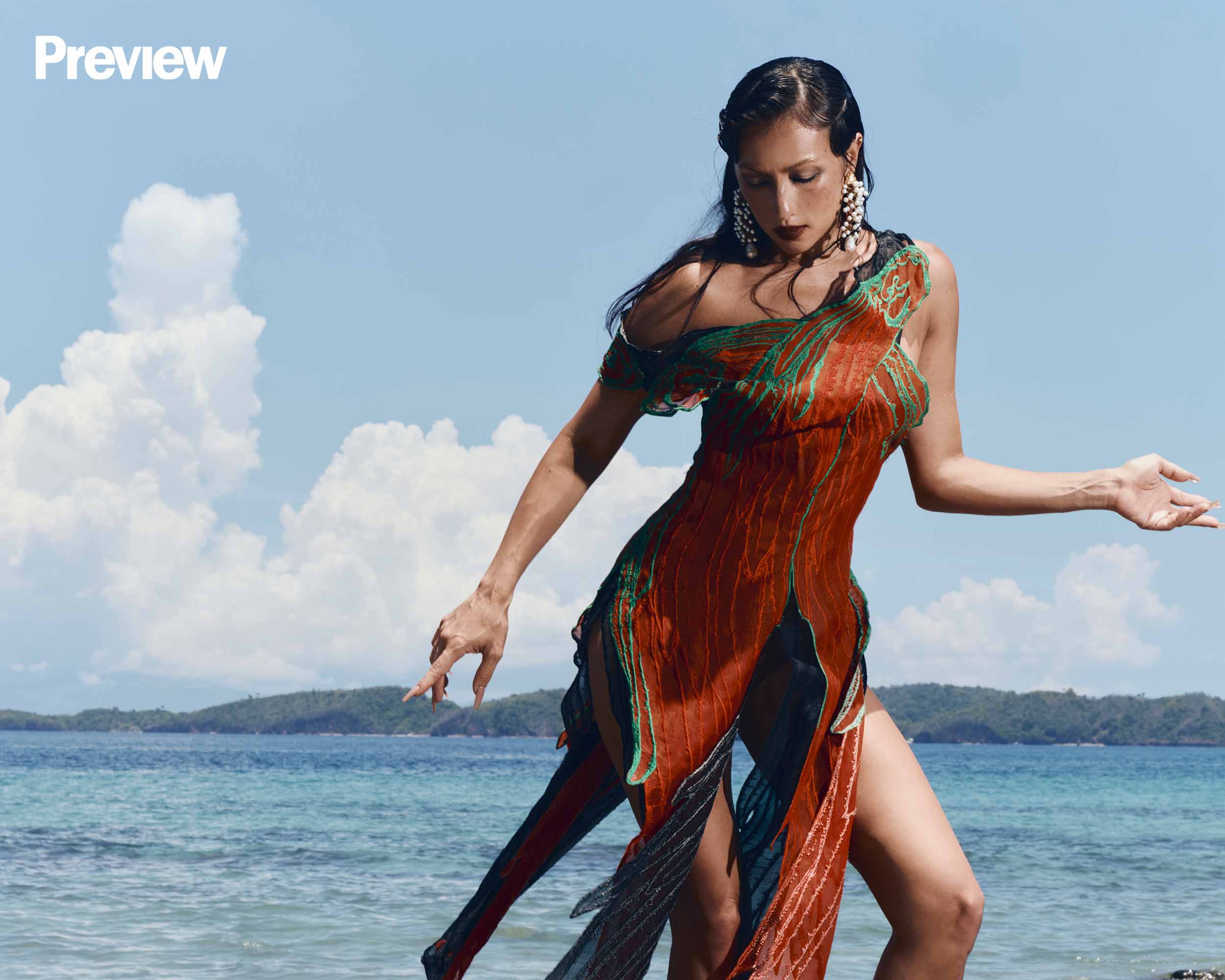
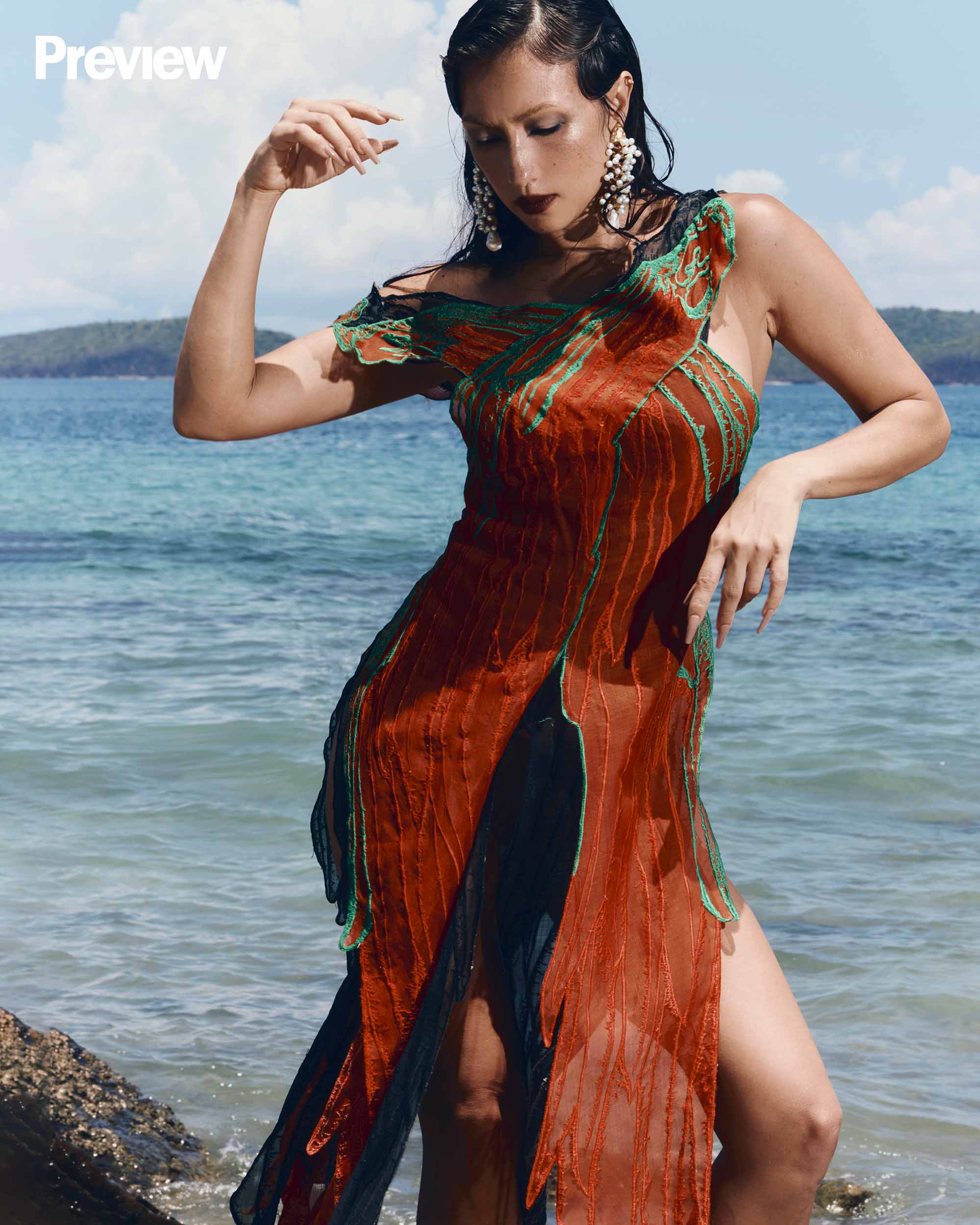
She speaks about getting older without much fanfare, the conversation naturally drifting toward the people who have shaped that perspective. Married to Argentine entrepreneur Nico Bolzico and raising daughters Thylane and Maëlys, the French-Filipina has become more deliberate about how she spends her time, both on and off the canvas.
“In my 40s, time is more precious than possibility; being authentic is more attractive than reinvention. In my 20s, I spent a lot of time wondering how my life would turn out, and now I just focus more time on deciding how I want to spend the life I already have.”
She sums it up more plainly a moment later. “The rule is simple: if I don't want to do it, I just don’t. If there is no beauty or meaning or positive connection to the things I love, then I let it pass.”
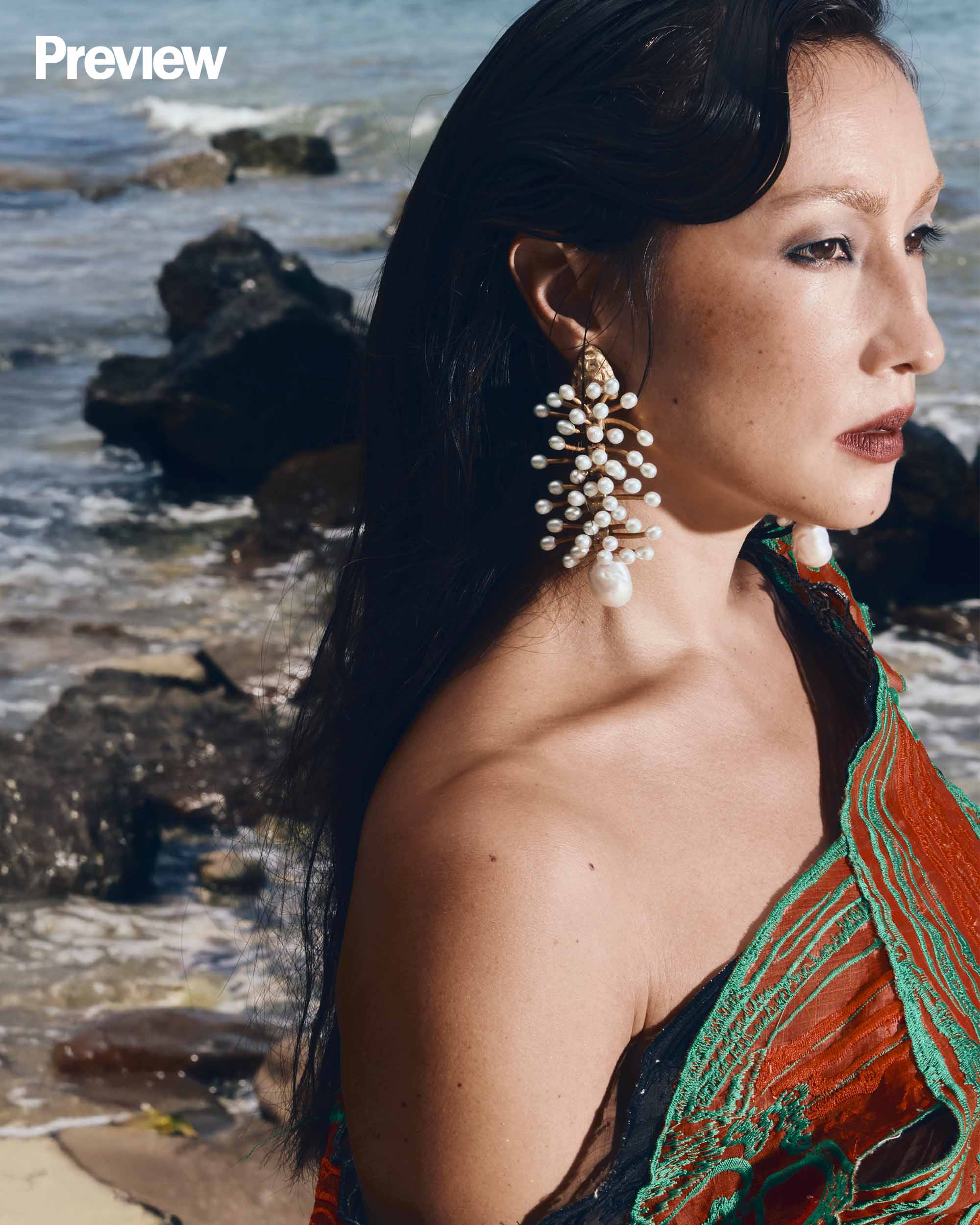
The conversation briefly wanders through the different versions of Solenn that audiences have come to know over the years. There was the “It Girl” era, a label she says the group never really stopped to define for themselves as they remained close while carving out their respective careers. These days, audiences also recognize her in the online world she shares with Nico, where “Wifezilla” and the “Bullied Husbands Club” have become recurring characters shaped by the familiar rhythms of married life.
“It’s 90% exaggerated for comedy, but all based on real-life things,” she says with a laugh, adding that the jokes usually end where the cameras do. “It’s something we laugh about at home more than fight about. I have a very healthy relationship with my husband, and being able to laugh at things at home is just kinda the day-ender we all need.”
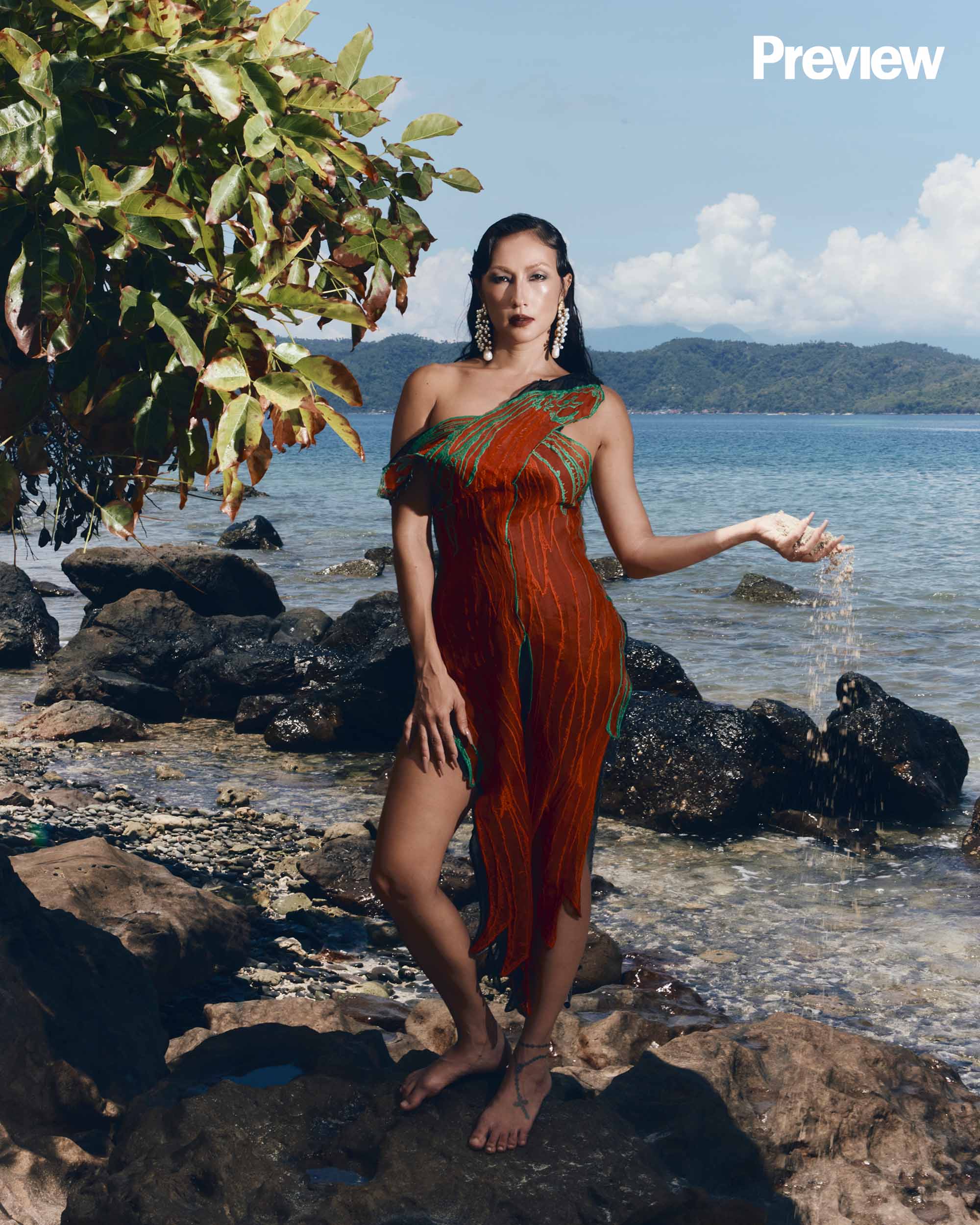
Motherhood, though, is a role she returns to often, describing it as the experience that has most changed her sense of self.
“What changes is your identity. It becomes more complex as you often have to wear several hats and have many people relying on you,” she says. “As a mother, the experience of time changes as you are aware that childhood is fleeting and that life moves quickly. It’s about learning how to enjoy all that, but having your heart partly outside of yourself.”
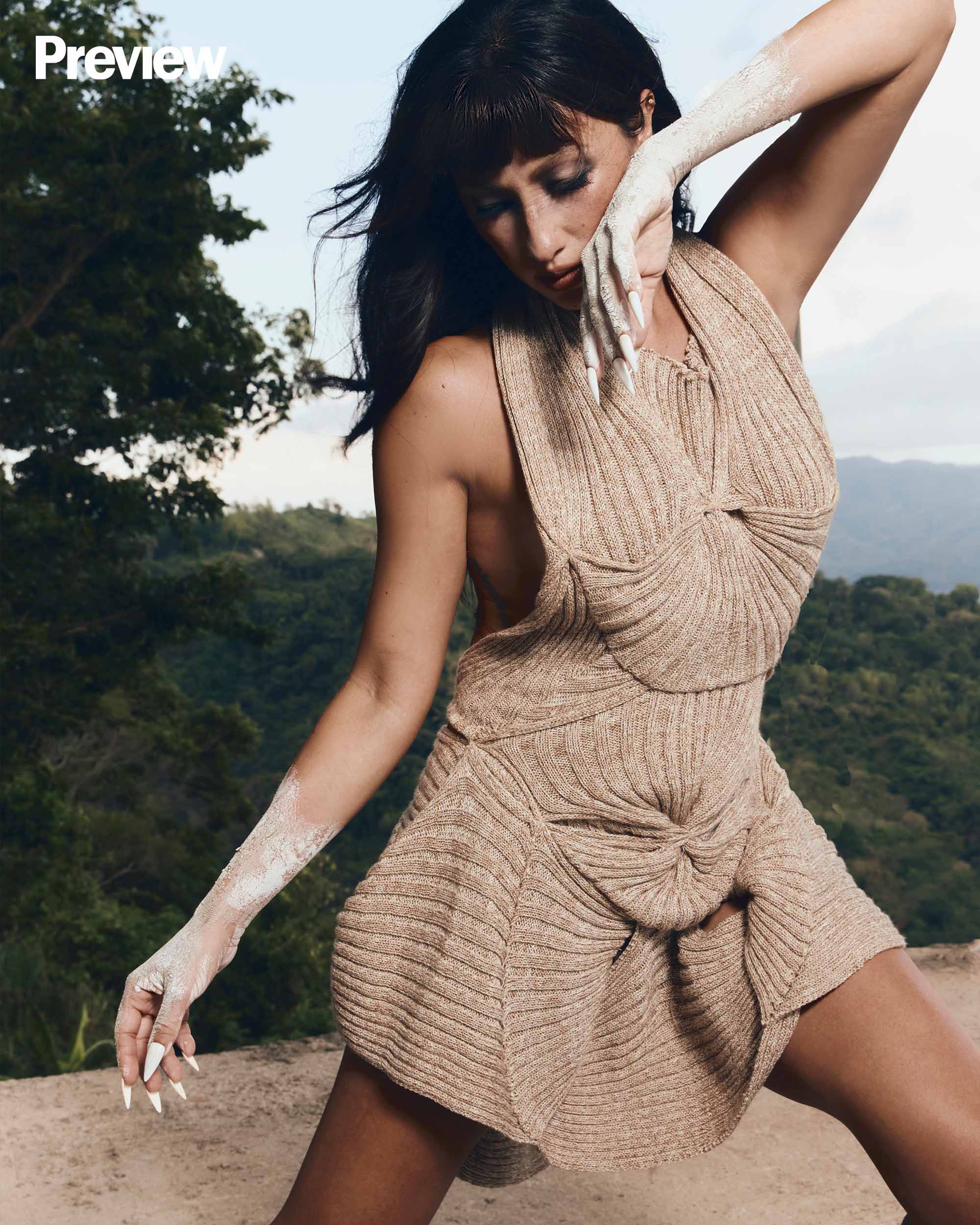
A few paintings later, she brings up another work from the exhibition. Where the Hortensias Sing takes its cue from her father Louis Paul Heussaff, whose Alzheimer’s diagnosis over the past decade has reshaped the way Solenn thinks about memory, identity, and change. The hortensias themselves were always his favorite flower, their softened forms slipping in and out of focus across the canvas.
“My dad’s diagnosis has changed the way I see life,” she says. “When you talk about dementia, people usually just focus on loss of memories, recognition. No one prepares you for the shift in personality, and [you] have to slowly deal with the death of a person.”
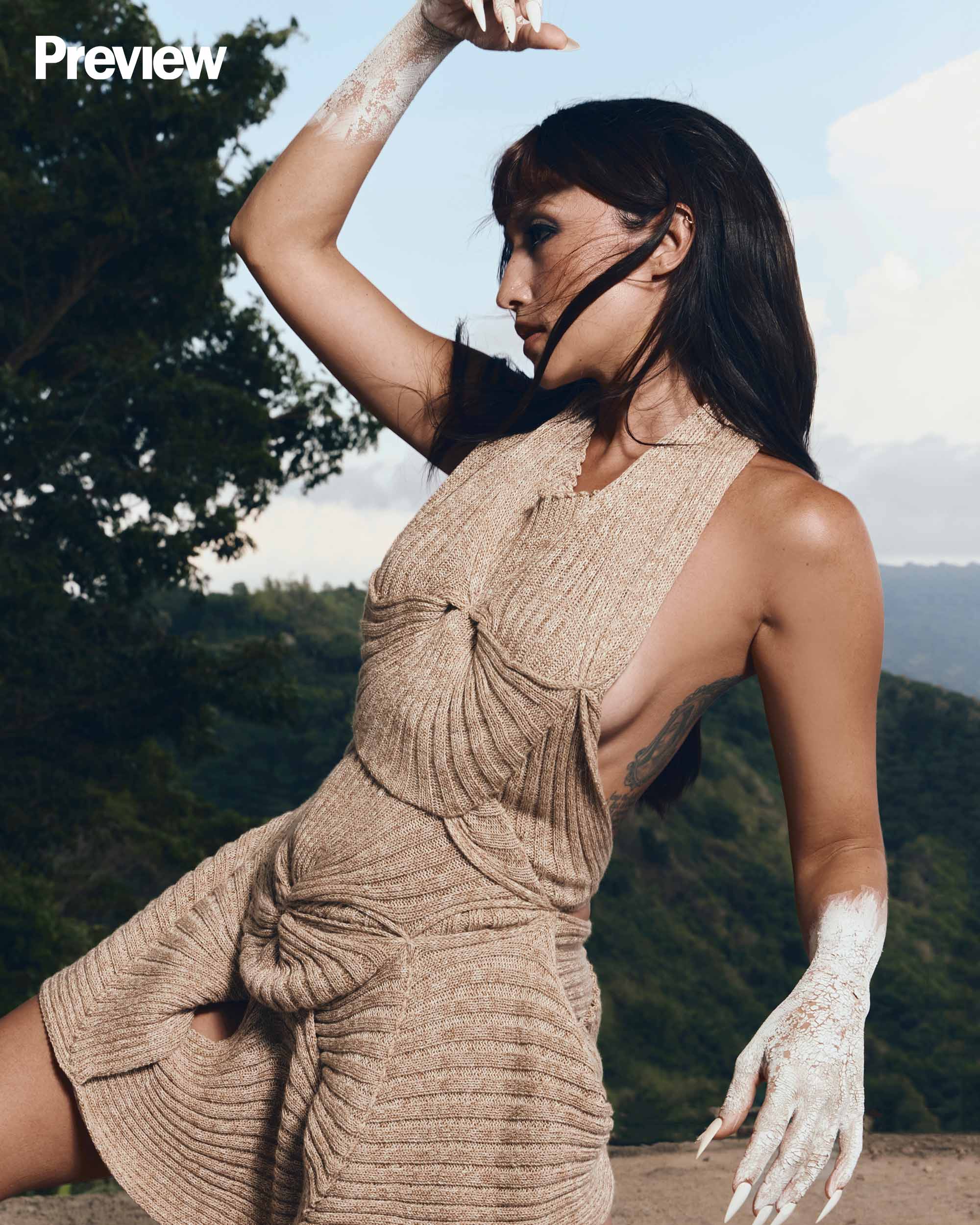
She has watched those shifts unfold over the years, gradually learning to separate the illness from the man she grew up knowing. It's why she has become more open about her family's experience, hoping it might help others make sense of the same difficult process.
“The sad part is that when you finally realize it was the sickness and not the person, it’s too late. So by being open about it, I hope people who have to live through this take a step back and separate their loved one from the illness.”
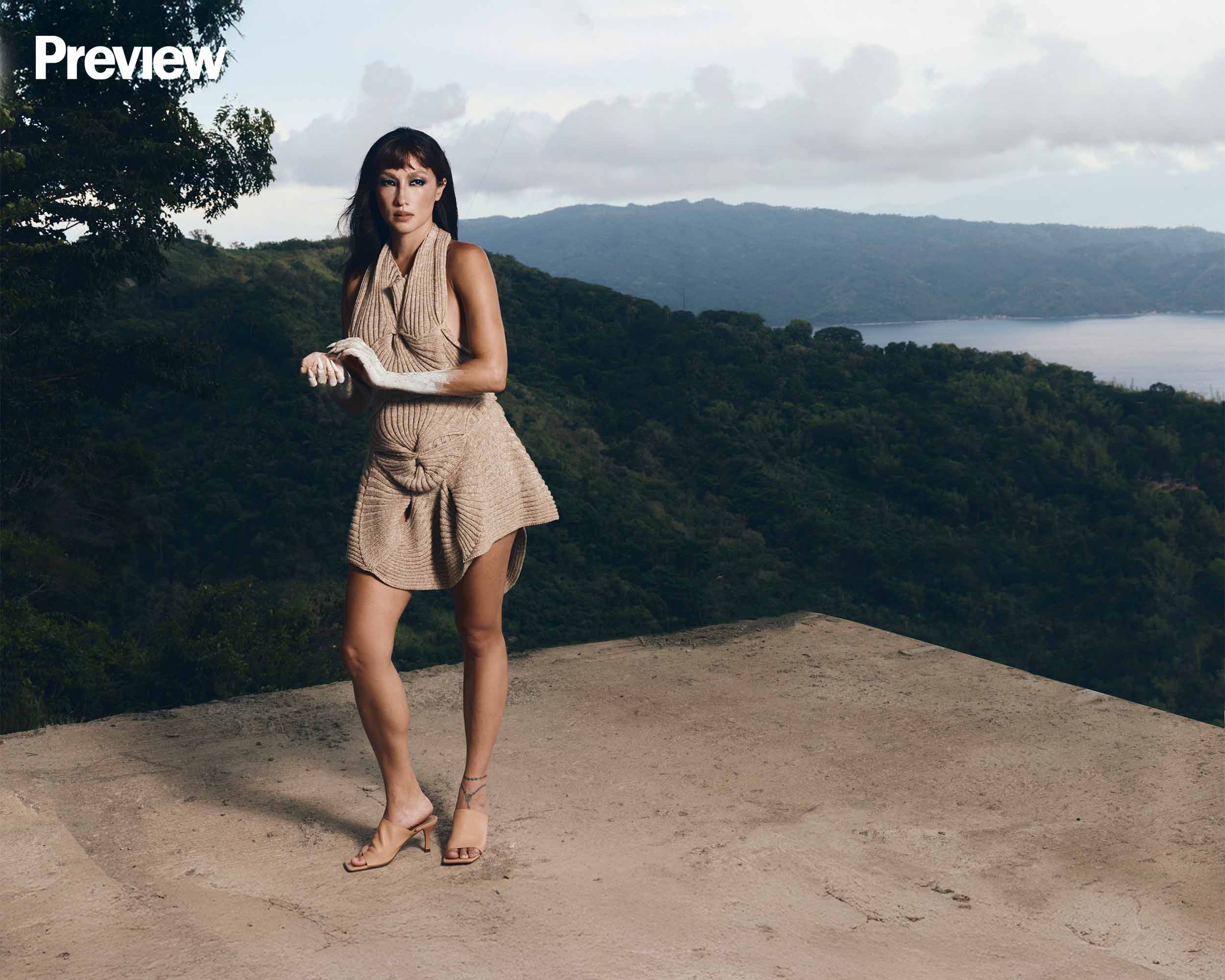
The experience inevitably found its way back to her paintings, though not always in ways she consciously set out to depict. “Like a lot of my art now, my works… are inspired by what my family and I have been through, with dances between clarity and abstraction, presence and absence, but also transformation.
“We spend so much of our lives resisting change when, in reality, change is the only constant.”
A Final Layer
By the time the conversation circles back to painting, it no longer feels separate from everything else she has talked about. The work bears traces of the years behind it, as does the artist herself.
“For me, true freedom is being able to choose what is meaningful and focus on that,” she says. “Freedom to me is not the absence of responsibility. Being free is really living in a way that feels true yet responsible.”
Perhaps that is also why she remains drawn to the process. That belief in the human side of creation has become even more relevant as technology continues to reshape how art is made. For Solenn, what gives a work its meaning is the story behind it. “Human experience, culture, and emotions—AI doesn’t have that,” she says. “When a human paints something, it becomes meaningful to the viewer because the art emerged from the artist’s lived experience.”
She returns to the imperfections that come with creating, the moments when an artist changes their mind or takes an unexpected turn. “Humans are inconsistent, and we make mistakes, and most of the time, beauty lies in imperfection,” she says. “I think humanity is the most valuable medium out there.”
When the gallery eventually falls quiet, the paintings remain, carrying fragments of landscapes and lives in motion. Solenn leaves them open to whoever stands before them next, knowing that each person will find something different within them—just as she continues to find new meanings in them herself.

.png)
Photo: Em Enriquez
.png)
Photo: Em Enriquez
.png)
Photo: Em Enriquez
.png)
Photo: Em Enriquez
.png)
Photo: Em Enriquez
.png)
Photo: Em Enriquez
.png)
Photo: Em Enriquez
.png)
Photo: Em Enriquez
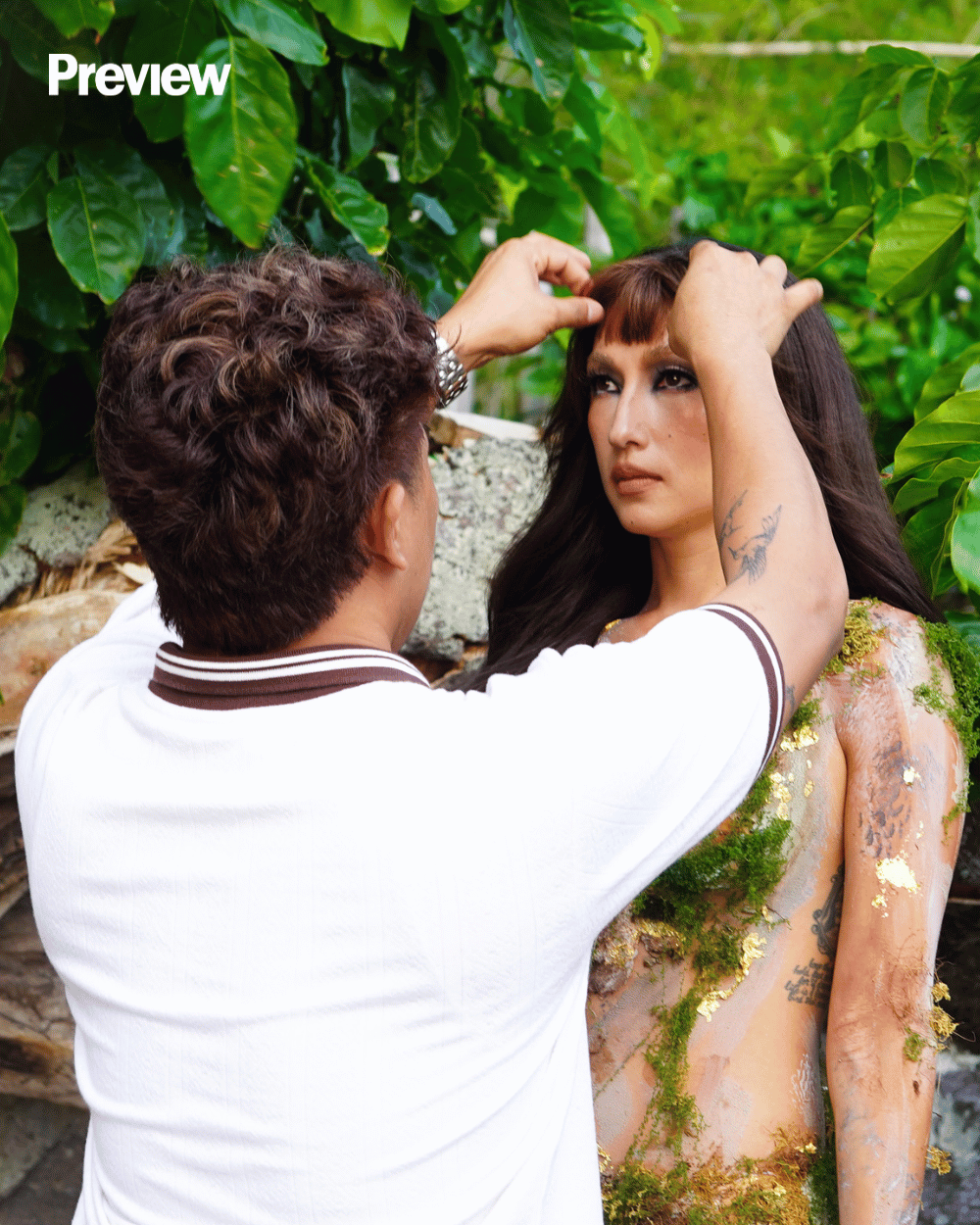
Photo: Em Enriquez
.png)
Photo: Em Enriquez
photos to expand
Produced and Styled by the Preview Team
Editor-in-Chief: Marj Ramos-Clemente
Managing Editor/Producer: Reg Rodriguez
Assoc. Creative Director: Jana Jodloman
Photographed by Borgy Angeles, assisted by Rojan Maguyon and Emelito Lansangan. Fashion direction and styling by Paulina Singh, assisted by Kyla Villena. Makeup by Zee Ghielmetti. Hairstyling by Nelly Tolentino. Bangs by Tokyo Posh. Nails by Slay Your Nails by Hazel. Body art by Slo Lopez and Celine Cabildo. Cover story by Katrina Maisie Cabral. Video direction by Bea Felice Panganiban, shot by Teddy Garcia Jr. Shoot assistants: Kevin Paguntalan, Almarc Rico, and George Tuliao. Shot on location at Vivere Azure in Anilao, Batangas. Special thanks to Cher Gioskos, Maureen Manuel, Jessica Santos, and Belle Tolentino.
Kat is Preview's Lifestyle Editor, explorer, and occasional rhymer. When not globe-trotting, she's over her computer, writing her next big novel.