Pride Is a Protest, Never Quiet: How Queer Filipinos Continue the Fight for Equality
Thirty years after the country’s first Pride marches, queer Filipinos are more visible than ever. Yet the fight for equality, recognition, and dignity remains far from over.
Published on Jun 16, 2026
To follow the trail of the first Pride march in the Philippines, scholars could find at least four paths. This was the early 1990s, when rallying cries continued to echo in the country's streets, vigor left over from the People Power Revolution.
In 1992, members of the Lesbian Collective climbed on top of a truck as their makeshift soapbox during International Women’s Day, finding themselves physically distanced from other women’s groups while the word “lesbian” reverberated from their mic. A year later, the University of the Philippines’ LGBTQIA+ organization, UP Babaylan, chanted “Out of the closets, into the streets!” during the university’s Lantern Parade, where they were met with a smattering of jeers and plenty of positivity.
Not long after, a group consisting of 60 people wound their way from EDSA on Quezon Boulevard to Quezon Memorial Circle in June 1994, as the Progressive Organization of Gays in the Philippines (PROGAY Philippines) and Metropolitan Community Church (MCC) staged what was widely considered the first gay Pride march in Asia.
“Coming from a popular uprising that toppled the Marcos dictatorship, there was a prevailing tolerance toward expressions of diversity and dissent,” said Jonas Bagas, then-secretary general of the Lesbian and Gay Legislative Advocacy Network (LAGABLAB), in a 2009 report. “This was not the case in many Asian countries then.”
It was in 1996, however, that the Metro Manila Pride March as we know it came to be. Archival footage from the Associated Press documented glimpses of Solidarity ’96, a march organized by HIV/AIDS advocacy group Reach Out Foundation (ROF). Five hundred people and 30 organizations took to the streets in the style of fiestas, all while standing side by side with members holding up banners seeking their basic rights.
Suffice it to say, the LGBTQIA+ community in the Philippines has come a long way from those yesteryears. But being queer in the Philippines has long been full of ironies, where omnipresence in pop culture was also coupled with an archaic lack of policies to protect its people. The Sexual Orientation, Gender Identity, Gender Expression, or Sex Characteristics (SOGIESC) Bill has languished in legislative limbo since its first iteration in 2000. In 2026, the chants ring louder. Pride remains necessary in a society that deprives them; therefore, protest is still called for.
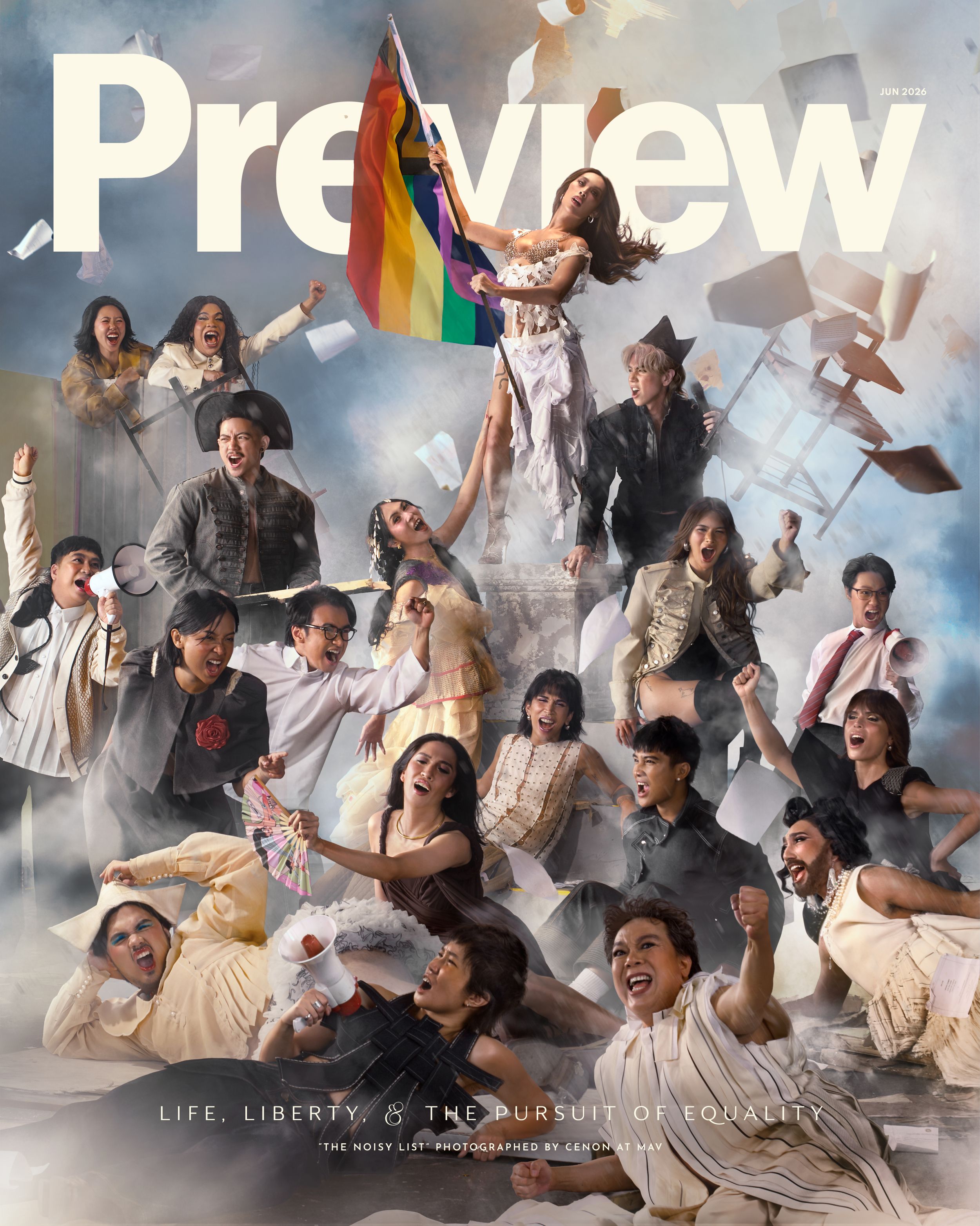
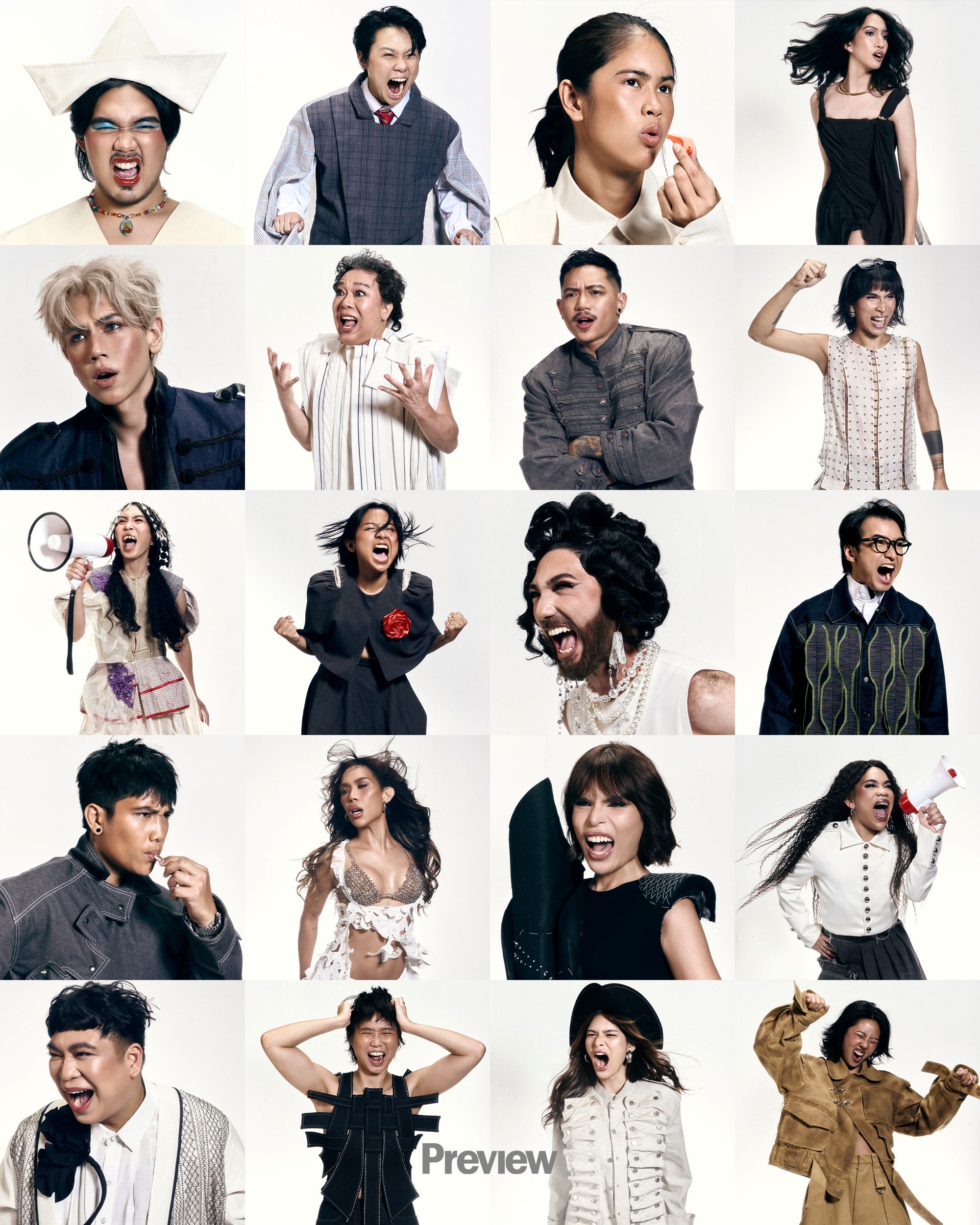
The Preview Pride cover for June 2026 featuring Ice Neo, Nic Chien, Deanna Wong, Xtina Superstar, BJ Pascual, John "Sweet" Lapus, Nick Escalderon, Rodina Singh, Sassa Gurl, Yani Villarosa, Pura Luka Vega, Sky Teotico, Hergie Bacyadan, Marina Summers, Janlee Dungca, Ate Dick, Dr. Vinn Pagtakhan, Samantha Lee, Sofia Trazona, and Trina Guytingco.
The community continues to soldier on in pursuit of its rights. 30 years later, its ranks have swelled, and its advocacy has reached farther than the streets that once held only a few dozen marchers. Armed with the internet, social media, and a myriad of other platforms, the movement has found new ways to organize, connect, and be heard. The question, then, is this: what does it mean to stay loud while the fight is still ongoing?
Before the Noise
Before there were marches, there was usually a quieter negotiation.
For some queer Filipinos, that negotiation began at home. Veteran comedian and director John “Sweet” Lapus remembers growing up in the late 1970s being teased with the word bakla. The ridicule stung because it echoed what he was hearing elsewhere. “I was brought up by my mother, in particular, with the idea that being gay is wrong, that being gay is bad,” he said. “Dapat hindi ako bakla.”
For a time, the teasing made him cry. Eventually, he stopped shrinking from it. “Hindi na ako nagagalit, hindi na ako umiiyak. In fact, lumalaban na.”
A few decades later, content creator and university student Ice Neo found themselves asking a question that would have seemed foreign to many queer Filipinos of Sweet’s generation.
“Naiisip ko bakit kailangan kong i-reveal sa parents ko na bakla ako, na queer ako?” they say. “'Yung kuya ko naman, hindi naman siya nag-come out sa magulang ko na, 'Hello Ma, straight ako.'”
Between Sweet and Neo lies more than a generational divide. Their stories reflect the shifting ways queer Filipinos have come to understand themselves, from identities that once demanded concealment to younger generations for whom visibility can sometimes feel assumed.
That visibility, however, remains uneven.
Volleyball player Deanna Wong spent years avoiding labels publicly despite recognizing her feelings at a young age. Photographer BJ Pascual, meanwhile, recalls becoming increasingly self-conscious about his feminine voice as his profile grew, which he later came to own. Both describe coming out less as a singular event than an ongoing process, shaped by the expectations of an audience.
For drag artist Sofia Trazona, who recently came out as a trans woman, the surprise came not from criticism but from support. Given the public attention surrounding her family, she expected encouragement from fellow members of the LGBTQIA+ community. Instead, the messages that stayed with her came from parents. “Ang pinaka-surprise for me were the moms. Mas marami ’yung mga nanay na nag-reach out, or even mga tatay,” she says. “’Yun ’yung sobrang nakalambot ng puso kasi I've never thought na maririnig ko ’yun from them.”
The stories grow more layered when gender enters the conversation.
Earlier this year, Drag Race Philippines alumna Marina Summers publicly came out as a trans woman after years of questioning. As one of the country’s most recognizable drag artists, she had long expressed femininity through performance, but eventually found that performance could no longer answer the questions she was asking herself. “When I’m taking off my drag, I don't feel complete. May kulang,” she says.
For theater actor Nic Chien and advocate Janlee Dungca, understanding their identities required a vocabulary they did not always have. Nic had already come out as bisexual to his mother, Lea Salonga, before questioning his gender identity. Janlee describes having come out three times throughout her life: first as a gay boy, later as a trans woman, and eventually as bisexual.
Their experiences point to a distinction that often becomes blurred in local conversations, where bakla and tomboy have long functioned as catch-all terms for experiences that contemporary LGBTQIA+ discourse would separate more precisely.
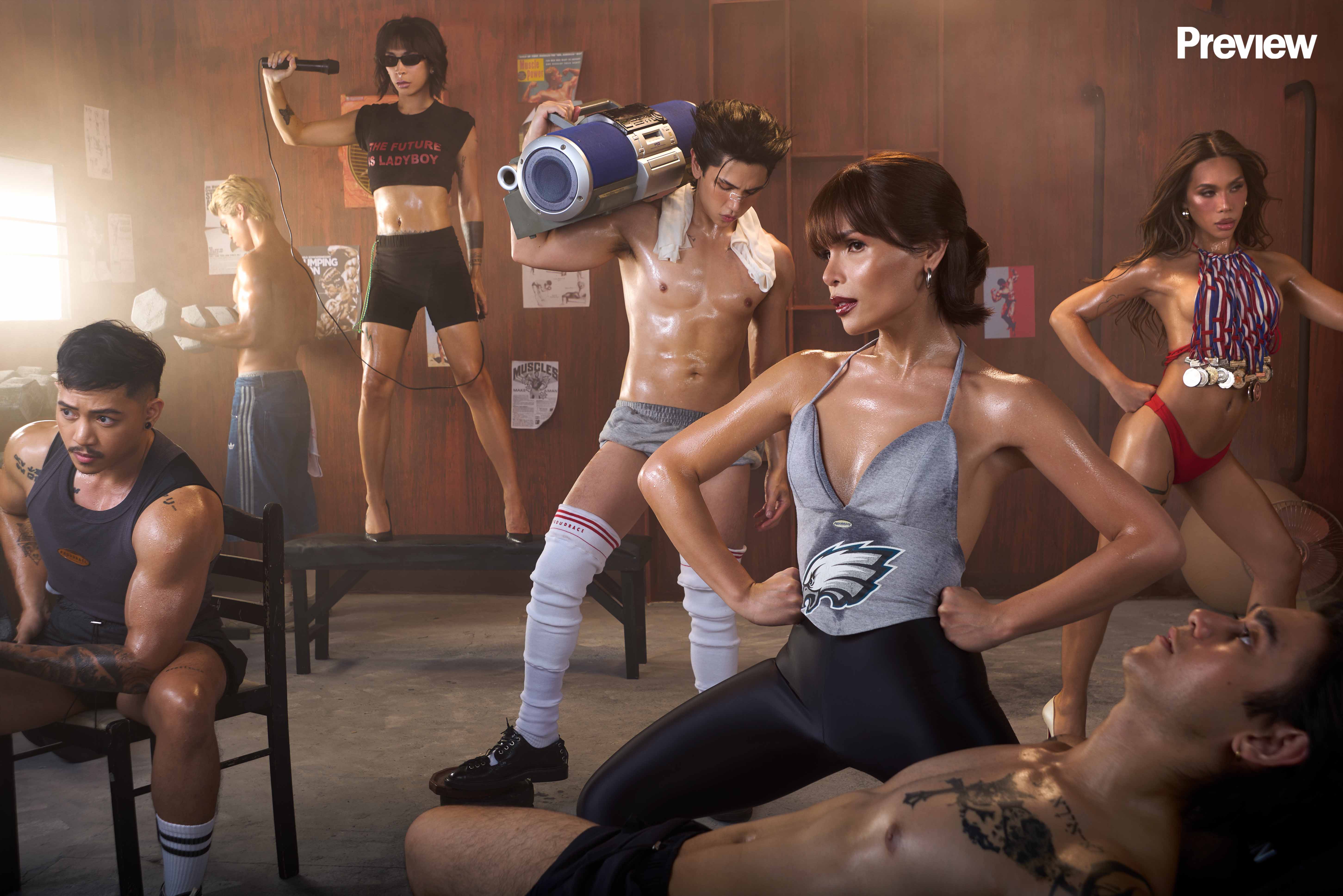
In his essays, professor and cultural critic J. Neil Garcia traces some of that complexity further back. Long before Spanish colonization, many Indigenous communities recognized gender-crossing individuals who occupied positions of authority as babaylan. Centuries later, colonial rule would introduce more rigid ideas about gender and sexuality without fully erasing what came before.
The contradiction lingers in the present.
Olympian Hergie Bacyadan remembers returning to his community in Kalinga and being unexpectedly affirmed through a gesture that required no grand declaration. Although elders had known him as the child assigned female at birth, they dressed him in the bahag, the traditional garment worn by men. “Parang sarap sa feeling na tanggap nila ako kung sino ako,” he recalls.
The routes differ. Some begin with resistance, others with acceptance. Some unfold quietly within families; others play out in public view. But before queer Filipinos become visible to a broader audience, there is often a period of negotiation between identity and the language available to describe it. And once that negotiation leaves the private sphere, it enters something larger: culture itself.
Platform as Protest
For a long time, queer visibility in the Philippines arrived wrapped in entertainment.
The bakla of popular culture was often expected to be funny before anything else, as acceptance, seemingly, came with conditions. John “Sweet” Lapus remembers inheriting a version of that tradition, though not quite as earlier generations had. By the time he entered show business, the familiar figure of the queer punchline was beginning to shift.
“Naging baklang bully instead of baklang inaapi,” he says. “Hindi siya ini-o-okray. Hindi siya inaapi. Siya ’yung baklang matapang.”
The persona grew out of survival. Sweet had learned early that humor could redirect attention, turning ridicule into something he controlled. Later, that instinct became a career. For years, he built a reputation on sharp-tongued commentary and celebrity takedowns, becoming one of the most recognizable queer personalities on television.
.jpg?format=original)
The expectation itself never entirely disappeared. Before she became known as Ate Dick, comedian Inah Evans remembers being told that audiences were uncomfortable with queer people who appeared too political, too serious, too intelligent.
“‘Alam mo, ayaw ng mga tao ng matalinong bakla,’” she recalls being told. “‘Ang gusto nila, nakakatuwang bakla. So kailangan nakakatuwa ka muna, magustuhan ka na muna nila bago ka maging matalino.’”
The advice was revealing. Queer people could occupy public space, but often only after proving they could entertain the room. That bargain still exists, though many younger creators have learned to use it differently.
For content creators like Ice Neo and Sassa Gurl, humor functions less as an escape from politics than as a way into it. Neo points to viral videos about students’ danas at the Polytechnic University of the Philippines, which transformed familiar jokes and memes into conversations about underfunding and public education to the tune of Nora Aunor’s “Kahit Konting Awa.” Sassa, meanwhile, treats comedy as a vehicle for experiences that are otherwise easy to dismiss.
“Ang comedy, kaya siya nakakatawa, kasi may katotohanan siya,” Sassa says. “Nakakaranas ako ng discrimination. Nakakaranas ako ng transphobia. Nakakaranas ako ng unfair and unjust treatment. At ganoon ang komedya. Dapat matapang siya. Dapat kahit nakakatakot siyang sabihin, sasabihin mo siya.”
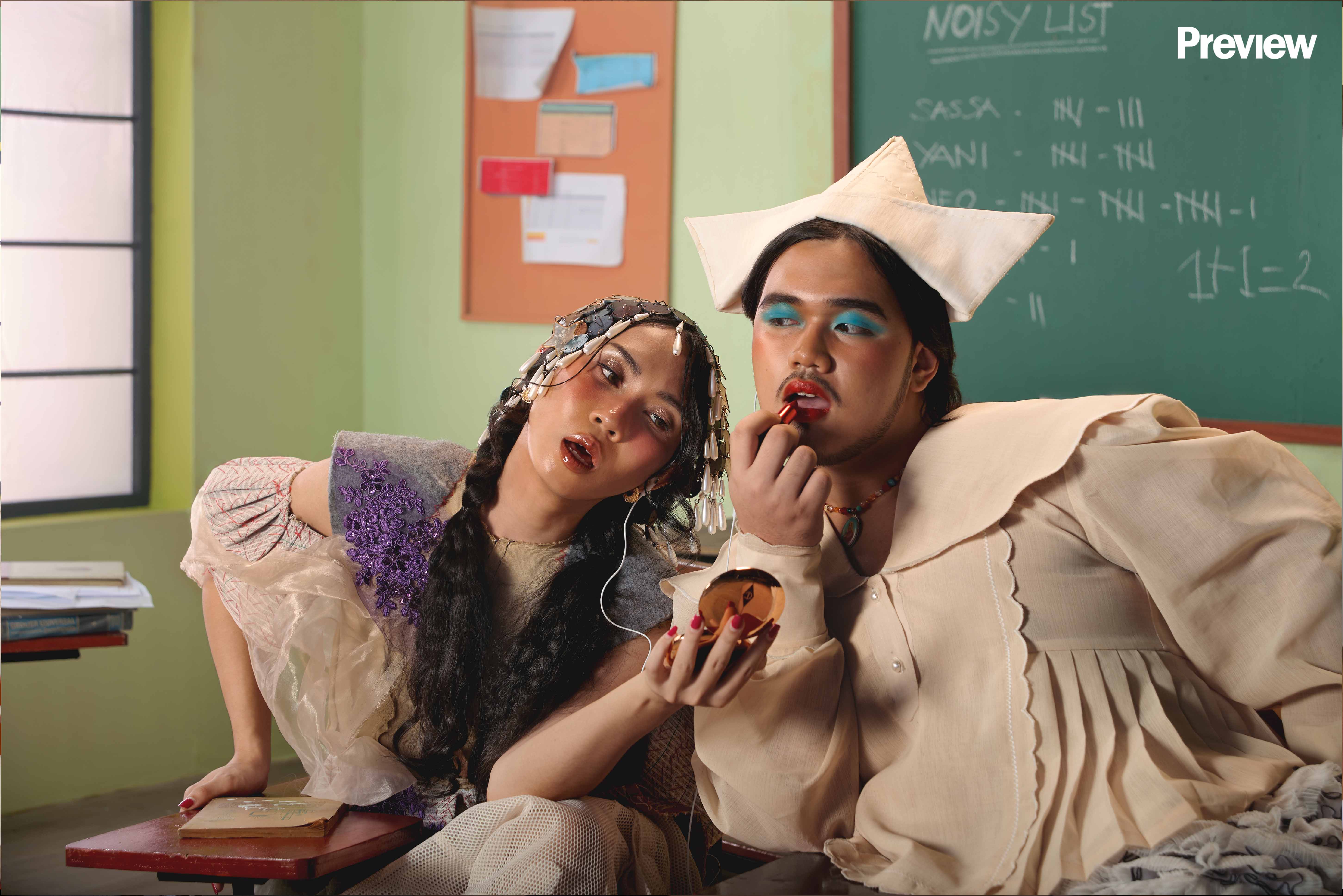
Similar questions about visibility emerge in film. Director Samantha Lee grew up watching queer characters reduced to caricatures and punchlines. The experience shaped her understanding of what media could do—not only to audiences, but to queer people themselves.
“Every gay person was the punchline to the joke. If media can force me into the closet for so long,” she says, “then maybe media, if I can course-correct it, can encourage people to come out sooner."
Yet even now, representation remains a negotiation. Samantha says producers still ask whether intimacy between women is truly necessary whenever she pitches projects involving sapphic characters. For filmmaker Rodina Singh, the stakes are personal. Some of her earliest ideas about transness came from the stories she saw onscreen growing up. Too often, those stories left little room for joy, family, or possibility. Her work attempts to create the kinds of narratives she once struggled to find herself.
On another side, drag has perhaps made the connection between visibility and advocacy the most explicit.
Long before drag became mainstream entertainment, it functioned as a form of resistance. That history remains central to drag artist Pura Luka Vega, whose performances placed them at the center of one of the country’s most public debates about artistic expression and queer visibility.
“I think it gave me an understanding of how people perceive certain things. And more importantly, it opens up conversations of what we are going through because I think the beauty about art is facing the truth,” they say, regarding the public scrutiny. “But it has never really convinced me not to continue doing it. When people ask me when I will stop doing drag, I don’t think I will. Maybe if we receive the same rights. If we achieve equality and inclusivity. If we actually have laws that protect queer people.”
Until then, the work continues.

This surfaces beyond entertainment. Basketball player Trina Guytingco recalls initially hesitating to talk openly about her sexuality, wary of becoming another stereotype attached to women’s sports. Hergie Bacyadan has faced scrutiny over his body and identity on the international stage.
In the nightlife scene, DJ Xtina Superstar began organizing parties after being denied entry to a club because of how she presented herself. If existing spaces would not make room for queer and trans people, she decided to build her own.
“The reason why I created my own party was because that was a sign of protest,” she says. “We do create a space for queer people. But technically, for me, there’s really no such thing as a safe space. All you can do is lessen it, have rules, make them feel comfortable, make them feel welcome. It’s not about safety as much as it is about making people feel like the dance floor is their home.”
Across comedy stages, film sets, drag bars, courts, and club nights, queer Filipinos continue to turn visibility into something larger than recognition. The venues differ, but the impulse is familiar: to carve out space where none existed before, and in doing so, transform presence into a form of protest.
Still Loud
For all the changes queer Filipinos have witnessed over the past three decades, many of the struggles that shaped the country's earliest Pride marches remain unresolved.
Queer Filipinos today can be seen across entertainment, sports, media, business, and public life. But visibility does not automatically translate to access—to healthcare, legal recognition, family-building, or protection from discrimination.
For physician and LoveYourself founder Dr. Vinn Pagtakhan, that reality became impossible to ignore when his partner had been hospitalized after falling ill. Outside the room hung a sign: “Do not touch. HIV patient.”
His partner eventually passed away. Months later, a close friend sought HIV testing after an HIV scare. Instead of receiving support, he was met with judgment. “Sabi ’nung doctor, ‘Malandi ka kasi, may HIV ka na kasi malandi ka,’” he recounts.
Those experiences would eventually lead to the creation of LoveYourself, which has grown into a nationwide network serving hundreds of thousands of Filipinos each year.
“I wanted to create a community center na parang clinic, yes, pero I don’t want it to feel like a clinic. I want people who go there to feel like it’s a safe space for them.”
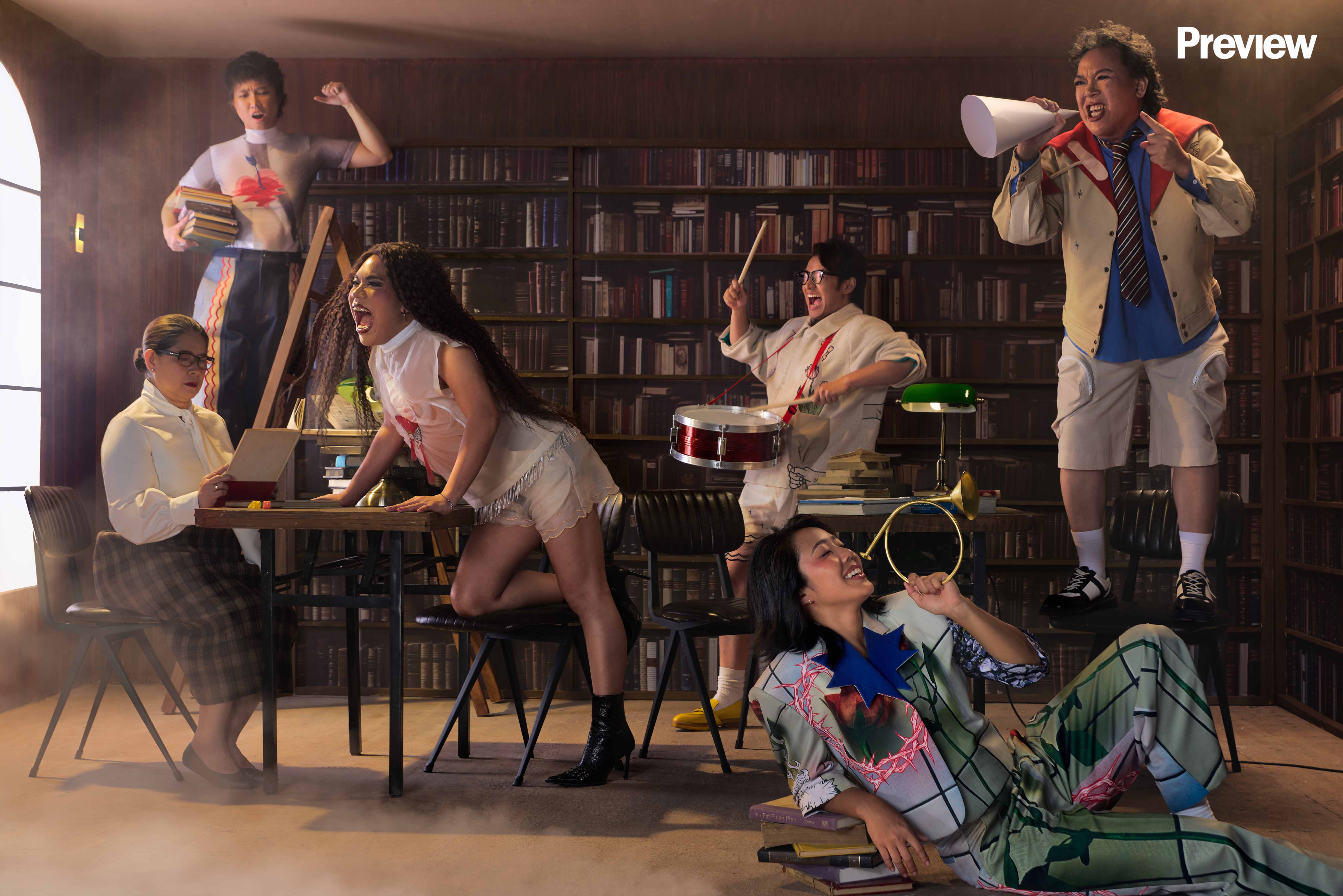
He believes attitudes toward HIV have improved considerably compared to a decade ago, but misconceptions remain. Many Filipinos still treat an HIV diagnosis as a death sentence, while others continue to associate the virus exclusively with LGBTQIA+ communities. “HIV affects everyone,” he says. “It does not affect only one segment of the population. So the awareness should be given to everyone.”
The same gaps become visible in trans healthcare.
For years, many trans Filipinos relied on self-medication because formal healthcare options were scarce, inaccessible, or unaffordable. Recognizing the need, LoveYourself eventually opened Transcend, one of the country's pioneering trans healthcare programs.
For actor and entrepreneur Sky Teotico, medical transition reshaped more than his appearance. “’Nung nag-start ako ng medical transition, doon ko nakita lahat ng effects na hindi lang siya physical," he says. “Pati ’yung pakikitungo sa’yo ng tao, na iba rin."
Bodybuilder Nick Escalderon remembers how transition changed his relationship with himself. “It was really important to me, kasi in my experience, I was already struggling even just staring at the mirror. I didn't really hate my body,” he says. “I just felt like it wasn’t mine.”
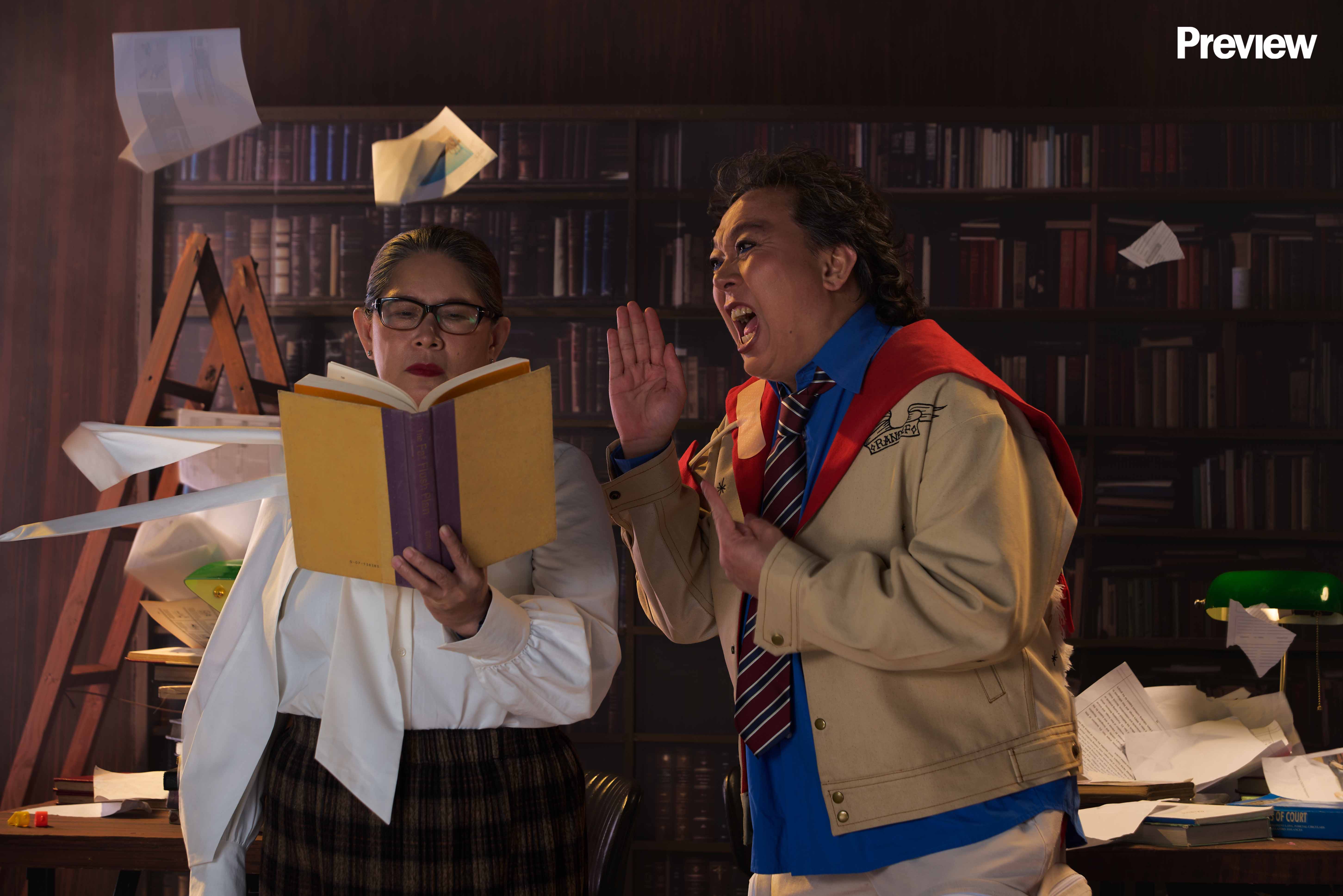
Meanwhile, Marina Summers points to another reality confronting many trans Filipinos: access. “Most of our trans sisters and brothers result into self-medication,” she says. “Kasi wala namang available. Walang accessibility to it na affordable or even free.”
The same questions emerge when queer Filipinos attempt to build families. Hergie recalls that when he and his wife Lady Denily first sought IVF services, the clinic accepted them but requested that they keep the process initially private. For Sky and his wife, Gia Teotico, barriers surfaced in more routine ways. During one fertility procedure, he was not allowed into certain areas because he was not legally recognized as a spouse.
For Janlee, that is precisely why legislative protections remain urgent. She points to three measures that have become longstanding priorities for many LGBTQIA+ advocates: the SOGIESC Equality Bill, the Legal Gender Recognition Bill, and the Marriage Equality Bill.
The SOGIESC Equality Bill, first introduced more than two decades ago, would prohibit discrimination based on sexual orientation, gender identity, gender expression, and sex characteristics.
“We’re not asking for special rights,” Janlee says. “Rights are not a pie. If a marginalized group gets equal rights, they're not taking away from others.”
The Legal Gender Recognition Bill would allow trans and non-binary Filipinos to update gender markers on official documents, an issue that affects everything from travel to employment and everyday transactions. The Marriage Equality Bill, meanwhile, would grant legal recognition to LGBTQIA+ couples and extend rights related to property, inheritance, adoption, and medical decision-making.
Some local governments have begun addressing those gaps. In 2023, under Mayor Joy Belmonte, Quezon City launched the Right to Care Card, which allows queer couples to designate one another as healthcare decision-makers through a Special Power of Attorney. The initiative was the first of its kind in the country and has since been adopted by other local government units, including San Juan. For many couples, it provides a measure of protection while broader national legislation remains pending.
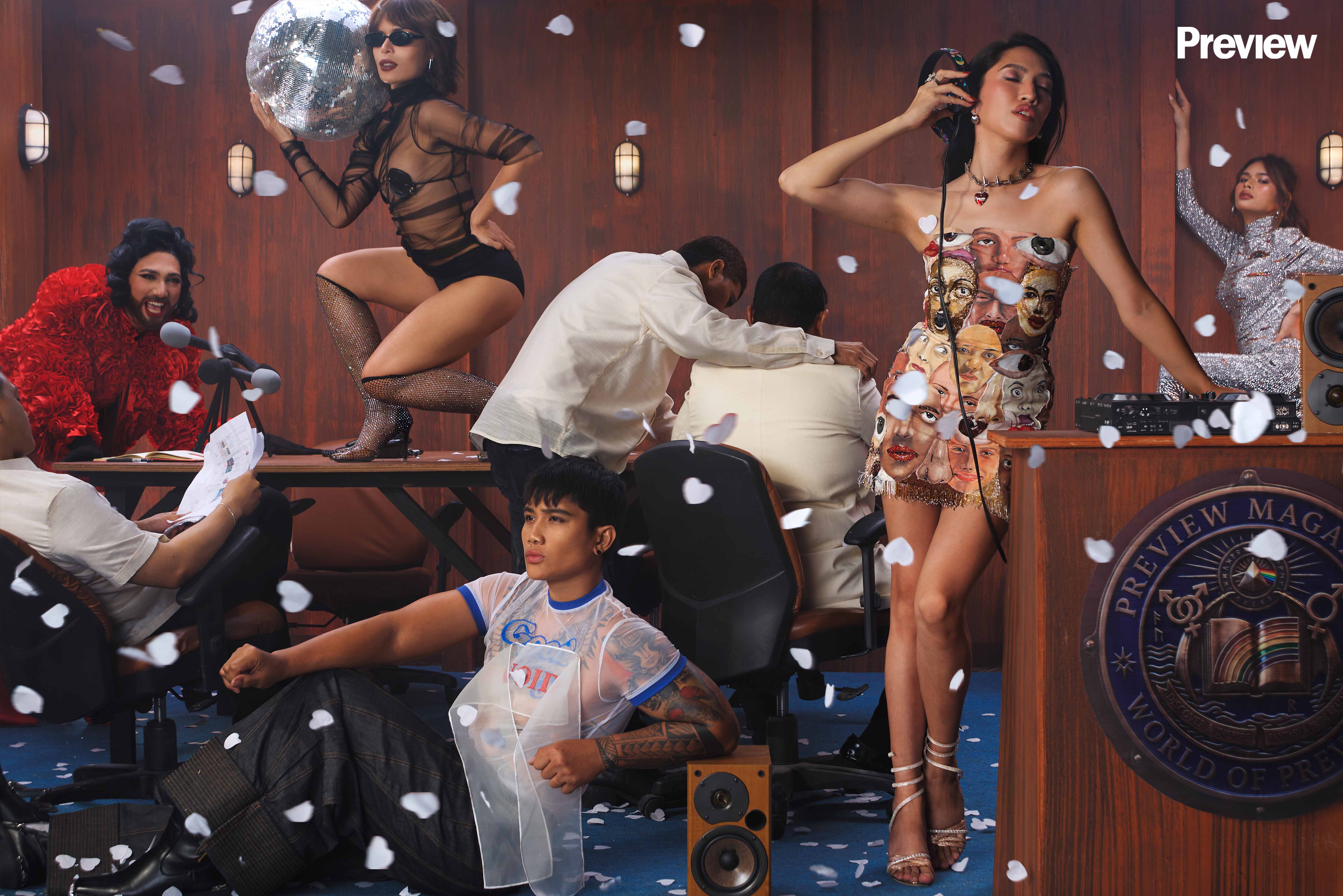
Those conversations have increasingly become part of Pride itself. As national convener of Pride PH, Rod Singh has witnessed that growth firsthand. Last year, the Love Laban Pride Festival drew more than 200,000 attendees, making it one of the largest Pride gatherings in Asia.
The crowd now includes students, workers, families, healthcare advocates, religious groups, businesses, and allies, now a reflection of how much broader the conversation around LGBTQIA+ rights has become.
For content creator Yani Villarosa, that expansion reflects something fundamental about queer politics. “Sa Pride, nagpoprotesta tayo para sa paglaya ng kasarian natin, gender equality, rights. Kasama rin sa laban natin bilang queer individuals ’yung iba’t ibang sektor ng lipunan, tulad ng mga magsasaka, mga manggagawa, mga nasa barber shop, mga nasa salon. Hindi lang siya gender,” she says. “Sobrang intersectional ng struggles natin as queer people."
Queer Filipinos, she points out, contend with many of the same issues affecting the rest of the country: rising costs of living, inadequate public services, labor concerns, and unequal access to opportunities. The fight for LGBTQIA+ rights cannot be separated from those broader realities.
The same belief informs how many advocates think about allyship. “Allies are crucial because we cannot win this fight alone,” Janlee says. “What they have will help us amplify what we are fighting for, our fight for equality. But allyship isn't just a label. It should be actionable.”
Allyship, she argues, extends beyond attending Pride events or posting rainbow-colored graphics every June. It includes challenging discriminatory remarks, supporting inclusive policies, amplifying queer voices, and holding elected officials accountable for their positions on LGBTQIA+ rights.
“Pride is every day because our existence is already a protest against the status quo,” Janlee says. “Living our truth is a daily protest because the world keeps telling us something is wrong with us.”
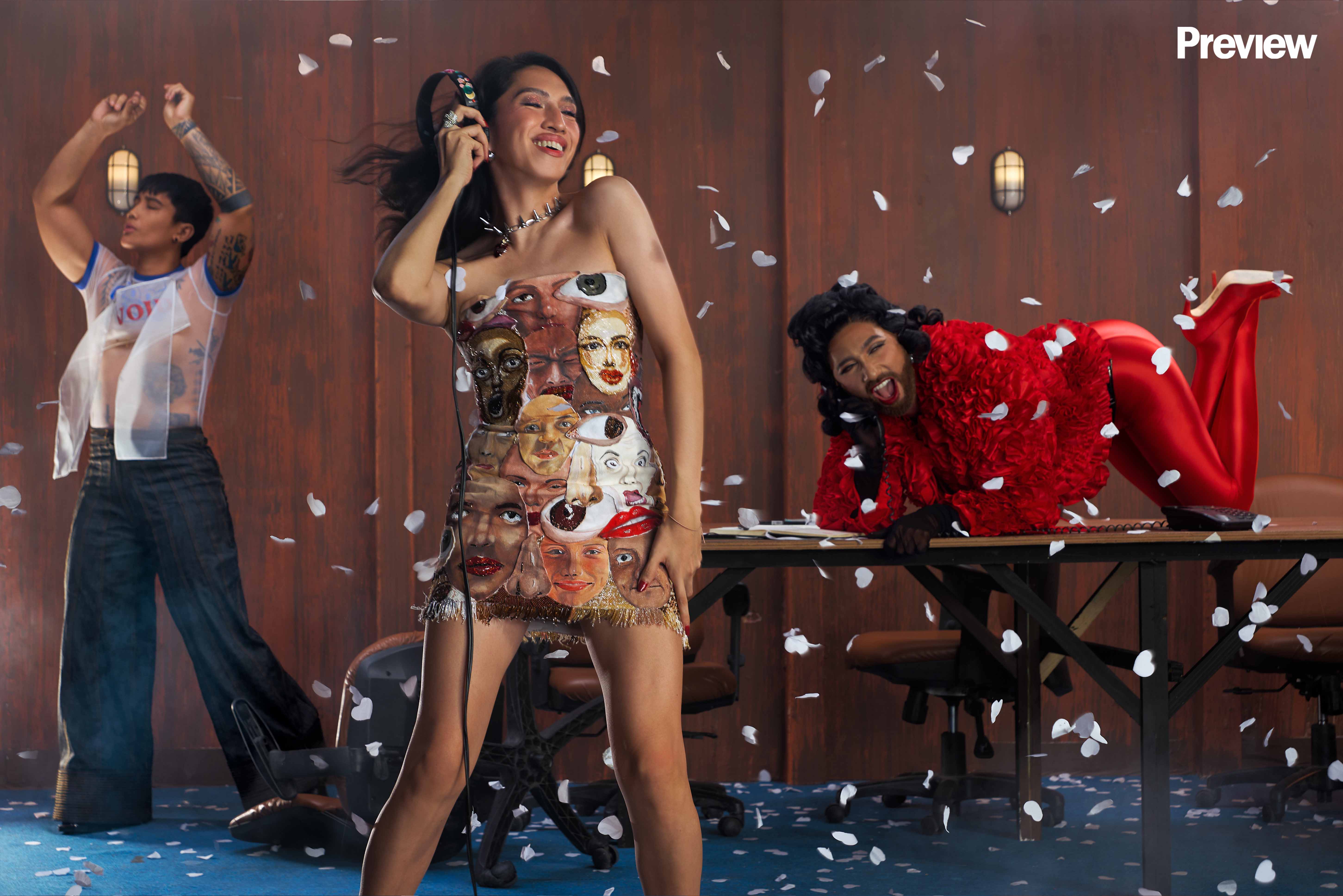
Rod sees the evolution of Pride through a similar lens. “Pride, in nature, is a protest. But Pride is able to reinvent itself from time to time,” she says. “Ang pag-celebrate ng iyong truth is your biggest act of protest.”
Others express the idea similarly. For Sky, living openly is a form of resistance. For Ice Neo, occupying public space as a visibly queer person carries its own message. For Pura Luka Vega, speaking out remains necessary.
“If the stakes are high and lives are at stake, you can’t just be quiet. You really have to be loud,” Pura says. “We have to ask questions. We have to ask for accountability. All of these things. You really have to speak out because if not, it might cost your life.”
Three decades after queer Filipinos first marched the streets, Pride has grown larger than its founders could have imagined. Yet the issues that bring people into the streets remain stubbornly familiar.
Pride has never been quiet. It was not quiet in 1996. It is not quiet now. And for many queer Filipinos looking into a hopeful future, it cannot afford to be.

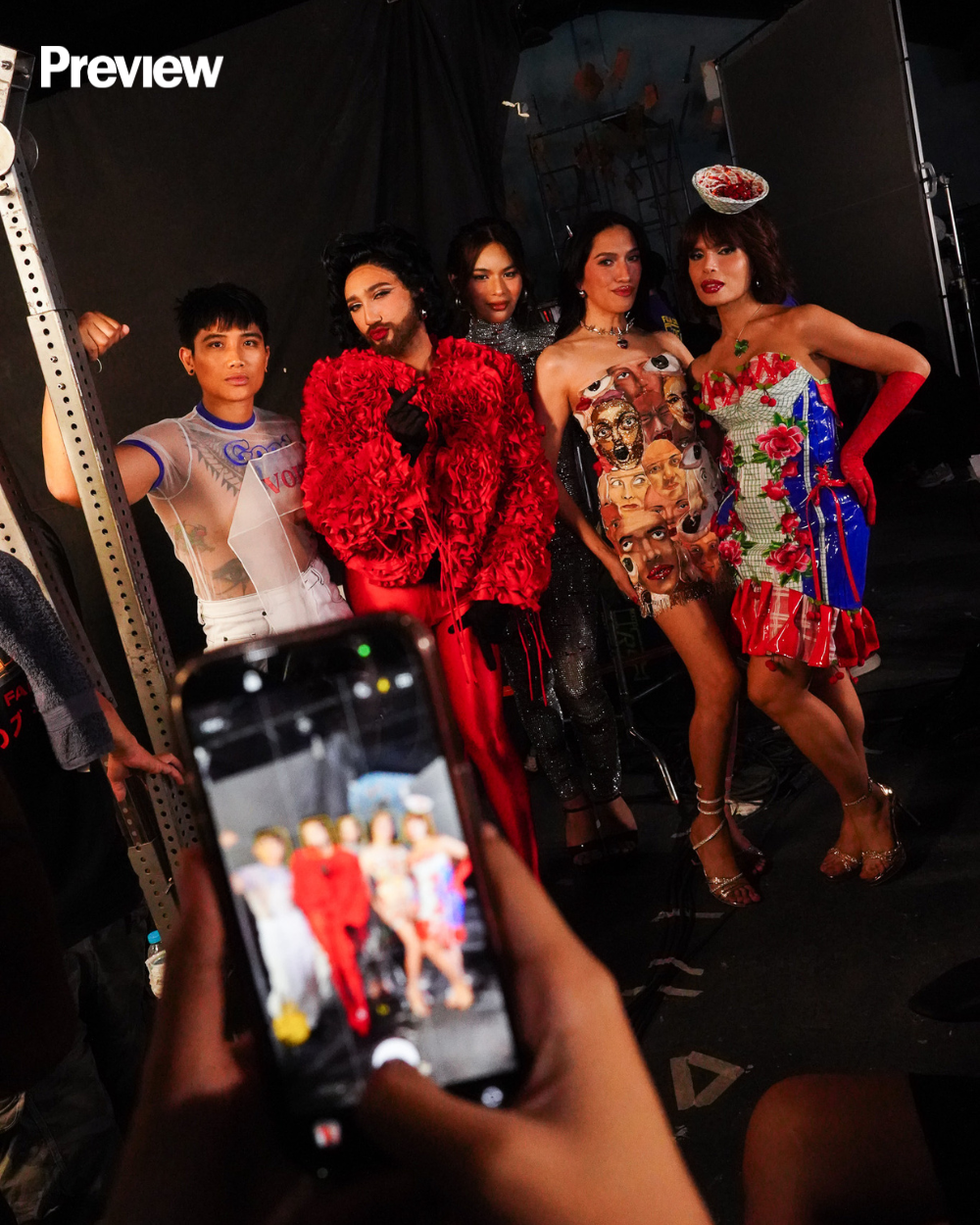
PHOTO: Bea Felice Panganiban
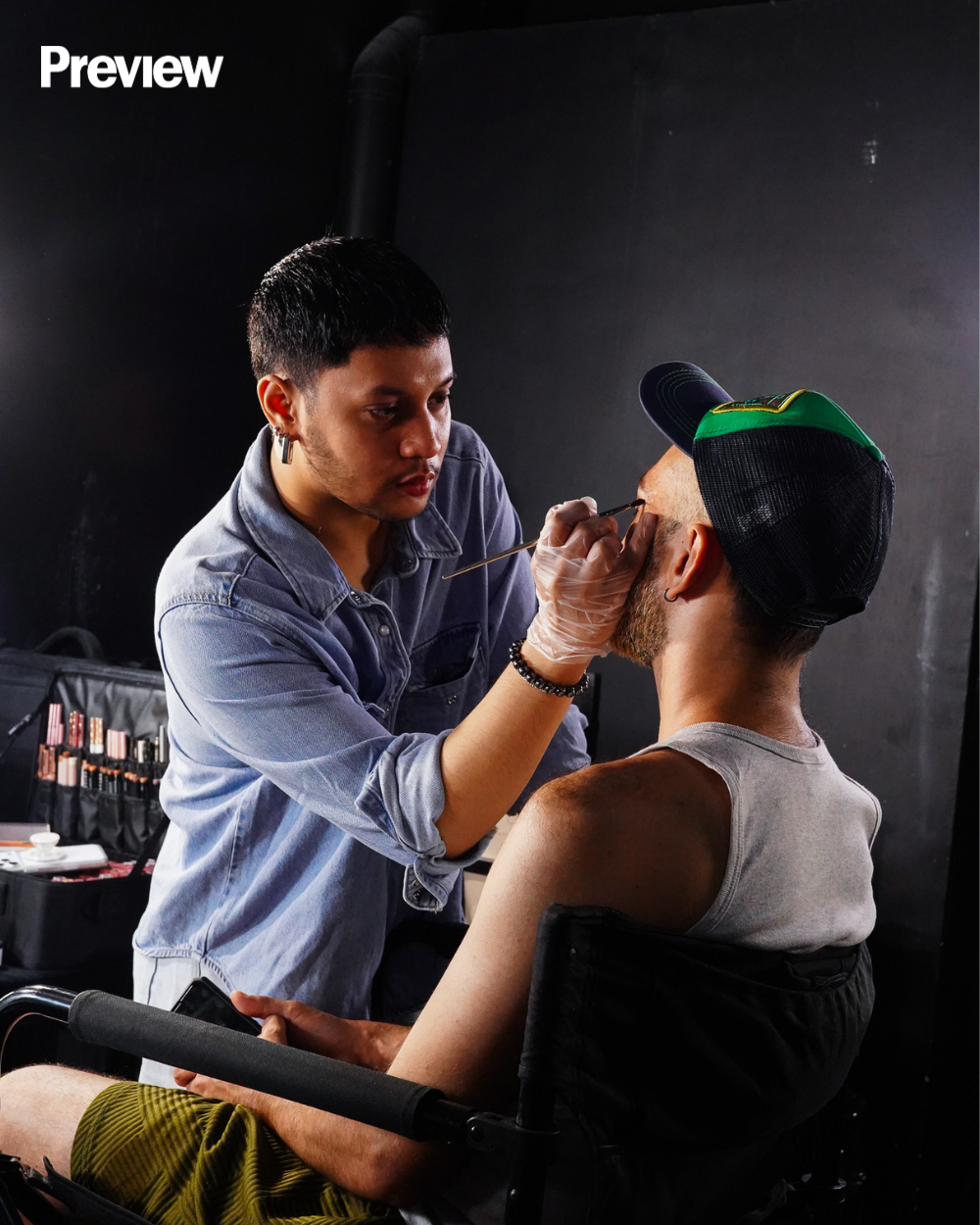
PHOTO: Bea Felice Panganiban
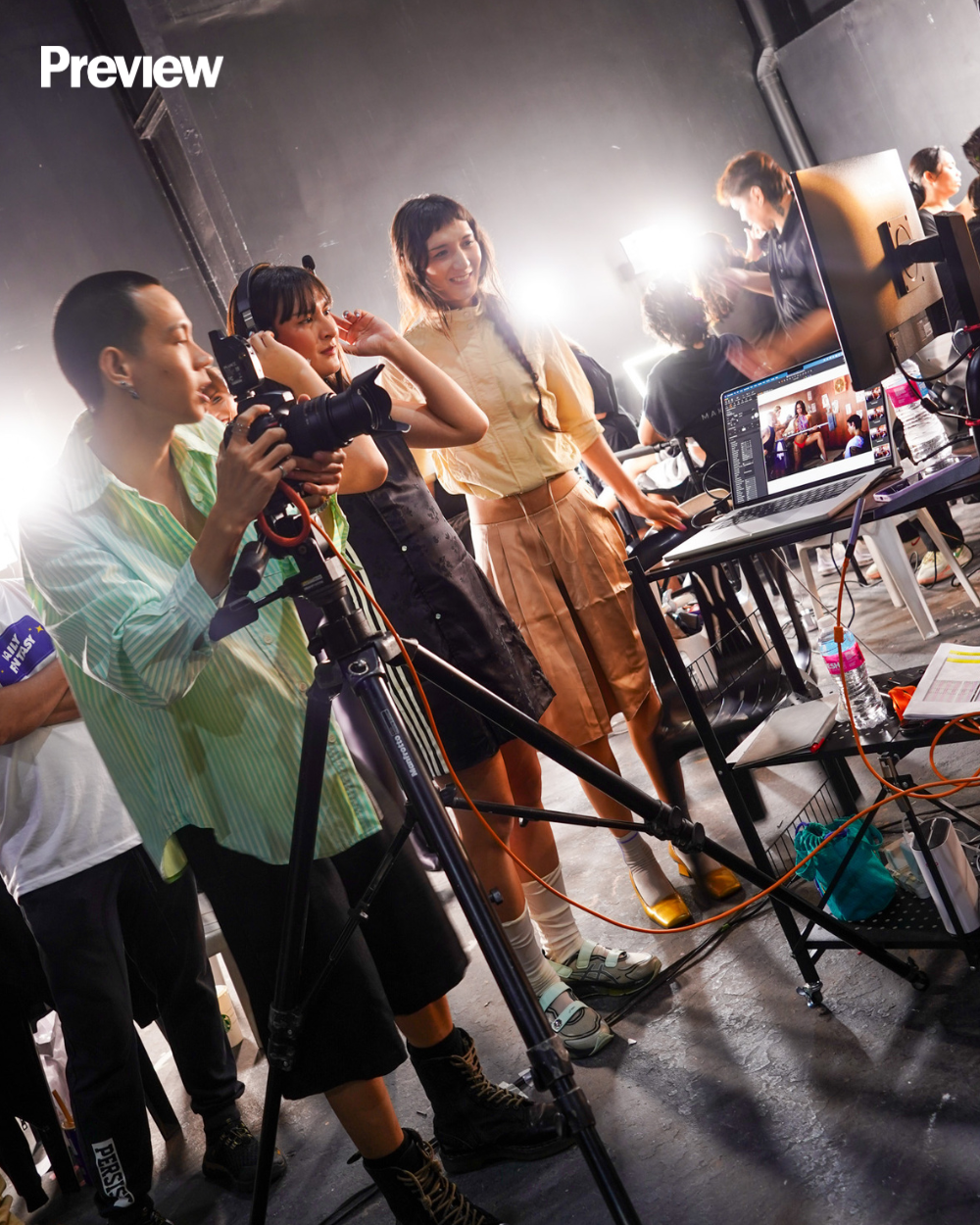
PHOTO: Bea Felice Panganiban
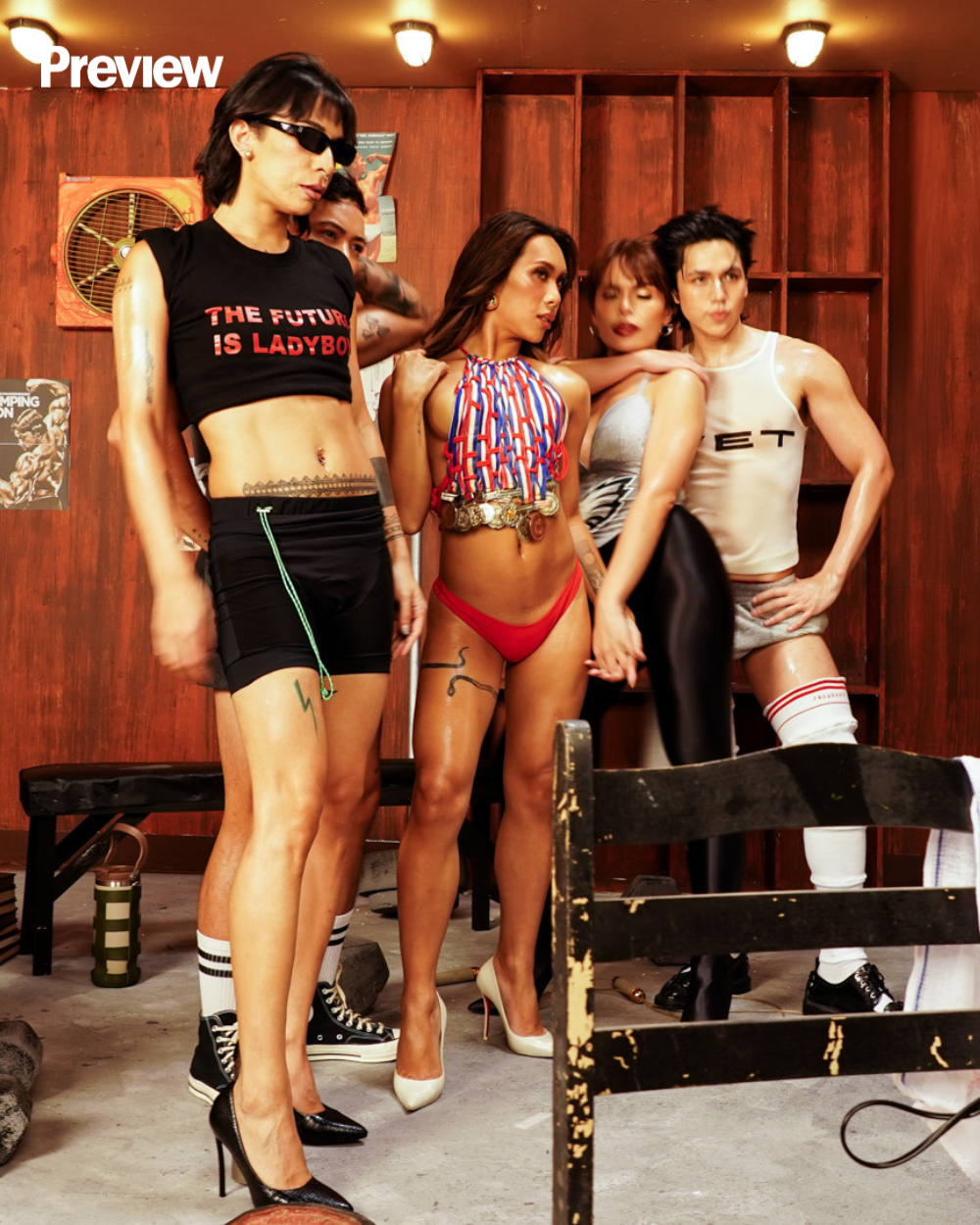
PHOTO: Bea Felice Panganiban
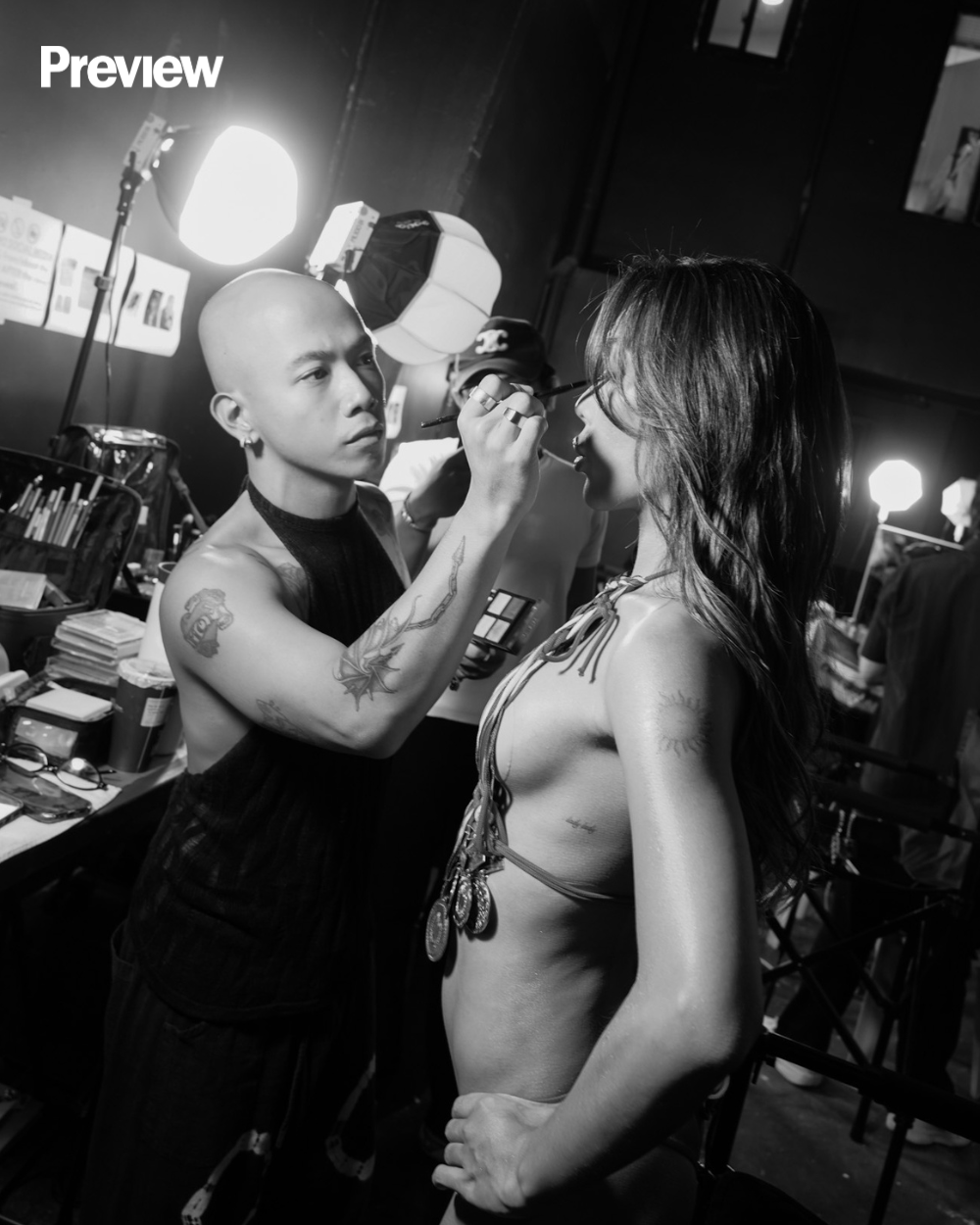
PHOTO: Bea Felice Panganiban
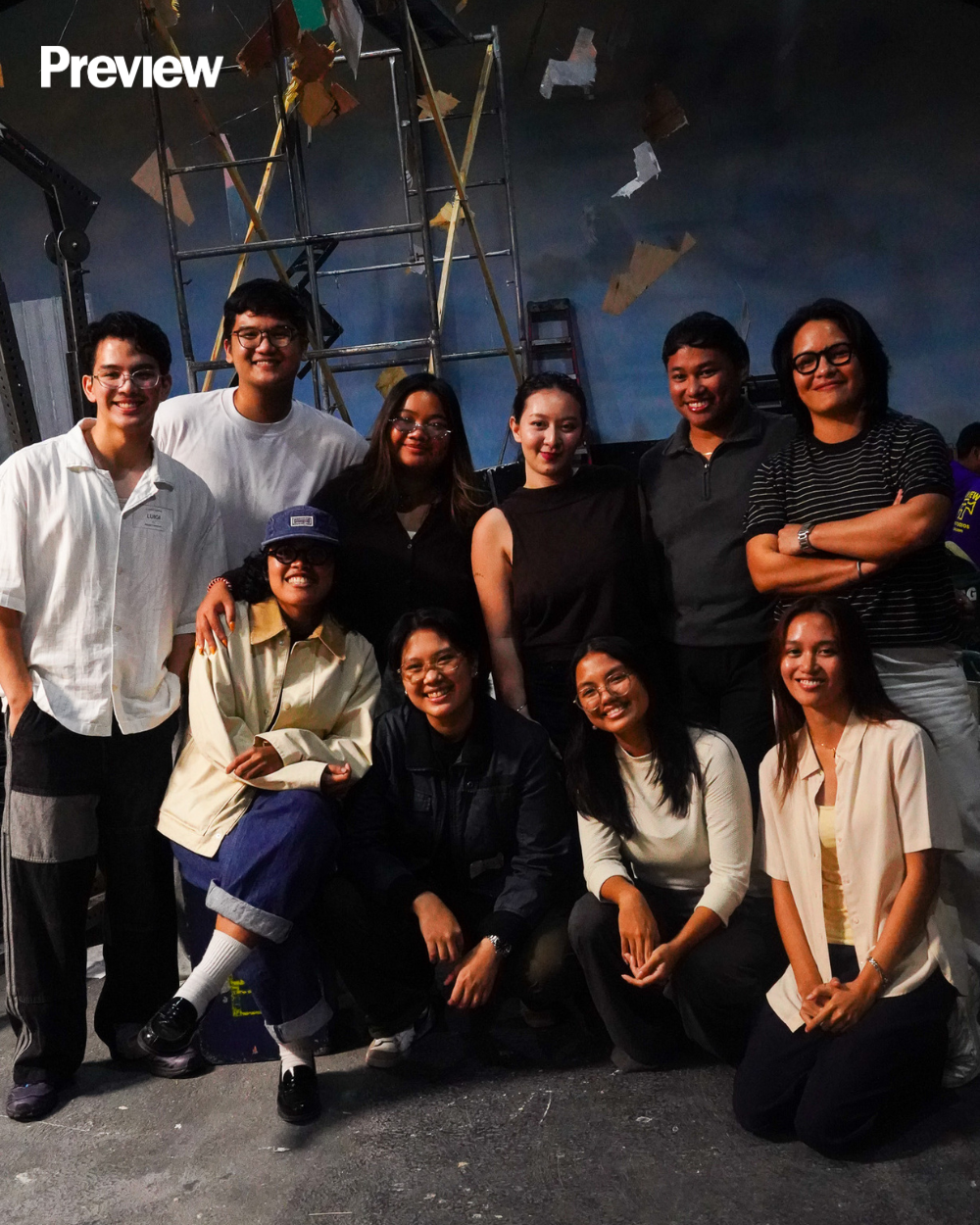
PHOTO: Bea Felice Panganiban
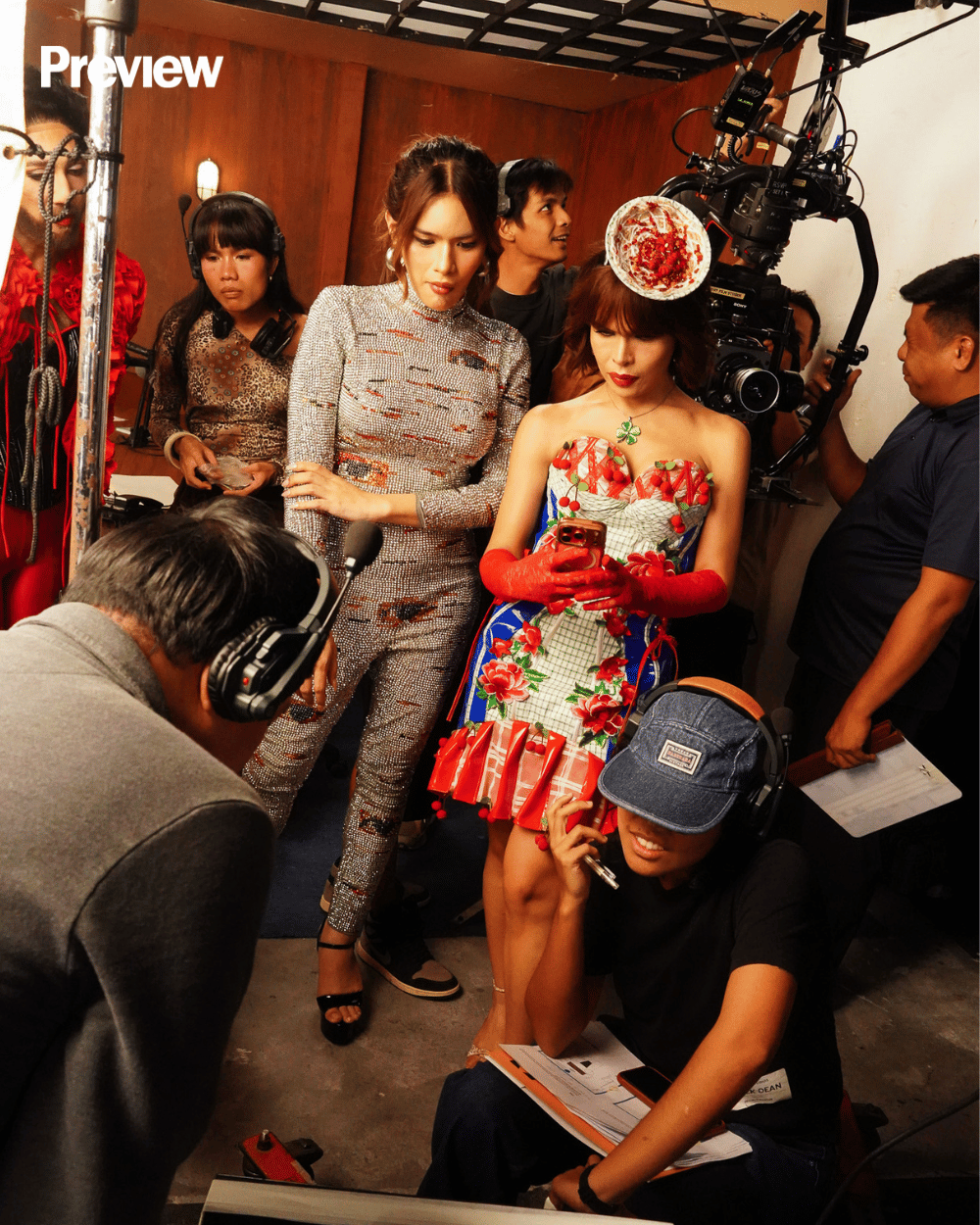
PHOTO: Bea Felice Panganiban
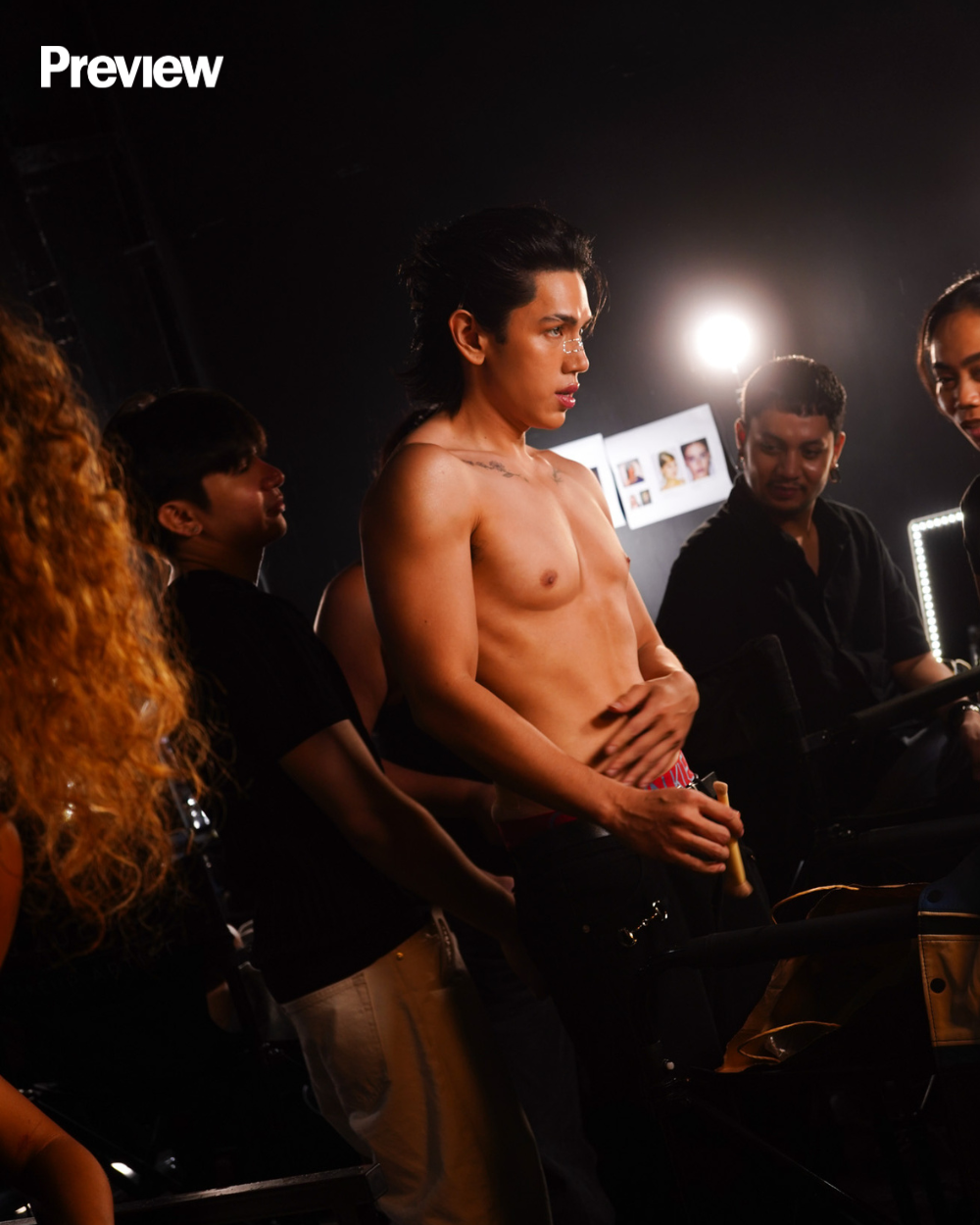
PHOTO: Bea Felice Panganiban
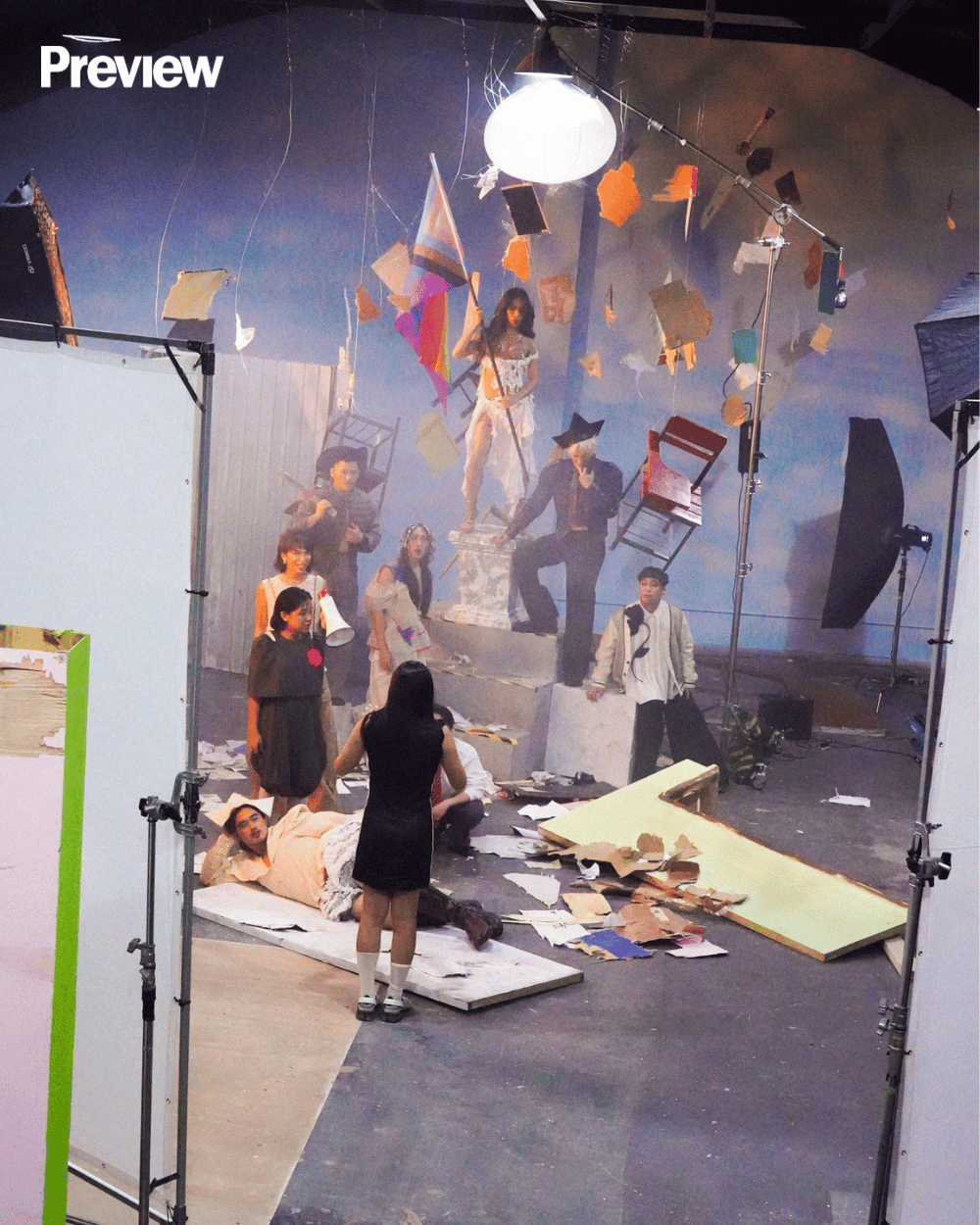
PHOTO: Bea Felice Panganiban
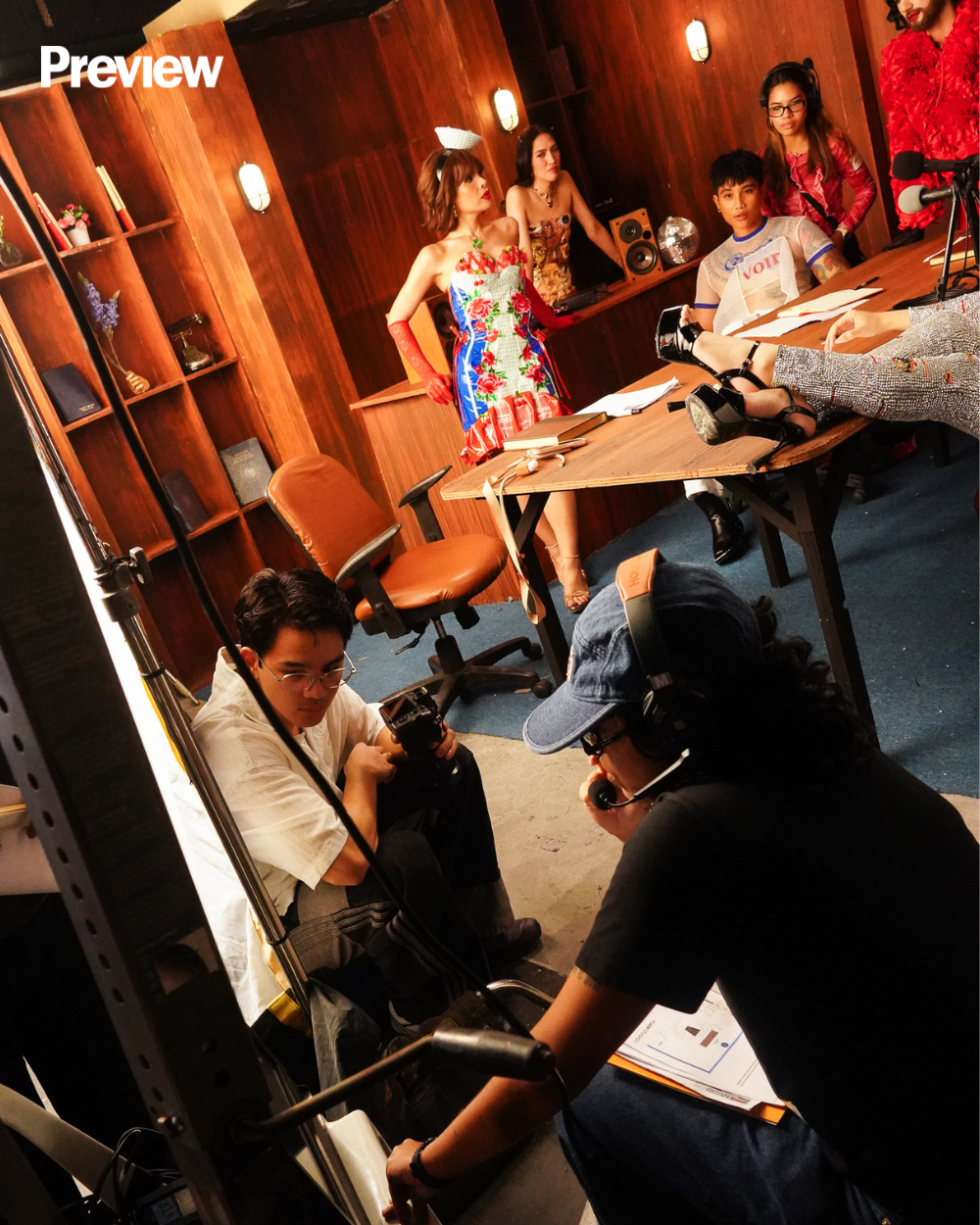
PHOTO: Bea Felice Panganiban
photos to expand
Produced and Styled by the Preview Team
Editor-in-Chief: Marj Ramos-Clemente
Creative Director: Bacs Arcebal
Assoc. Creative Director: Jana Jodloman
Managing Editor/Producer: Reg Rodriguez
Co-producer: Em Enriquez
Assoc. Multimedia Director: Bea Felice Panganiban
Cover images photographed by Cenon at Mav. Portraits photographed by Borgy Angeles. Fashion direction by Paulina Singh. Styling by Ryuji Shiomitsu. Fashion consultant: Jones Palteng. Associate stylist: Rye Martin, assisted by Dale Chan and Jerome Arguelles. Beauty direction by Kyla Villena. Makeup by Vince Leendon, Miz Raffy, Xeng Zulueta, Rouchelle Battad, Aira Castor, Winshayna Young-Rivera, Bie Revalde for L’Oréal Paris and YSL Beauty, Zidjian Paul (for Marina Summers), and Thazzia Falek, assisted by Viel Navarro (for BJ Pascual). Hair by Bhabez Serrano, Lourdes Francisco, Cherry Omblero, John Del Rio, Ritchie Pactor, Dollie Verniz, Peps Pacheco, Ruby Sayson for J/Monis Salon, and Dale Mallari (for BJ Pascual). Set design by Rocketsets. Cover story by Katrina Maisie Cabral. Models: Gavin Chebat, Nikko Nackaerts, Bhe Manaol, Teddy Garcia Jr., Whilma Lopez, Arzel Mariano, Floyd Cabagyo, and David Ong. Videos by CAD Studios, Teddy Garcia Jr., and Greeko Junio. BTS photos by Bea Felice Panganiban. Shoot assistants: CJ Gabaleo, Gerry Oribeda Jr., and Almarc Rico. Shot in Haus+ Studio. Special thanks to Raj Traballo, Jing Monis, and Christian April Duran.
Kat is Preview's Lifestyle Editor, explorer, and occasional rhymer. When not globe-trotting, she's over her computer, writing her next big novel.