Did You Know? A Filipino UP Alumnus Is the New Dean of NYU's Faculty of Arts and Science
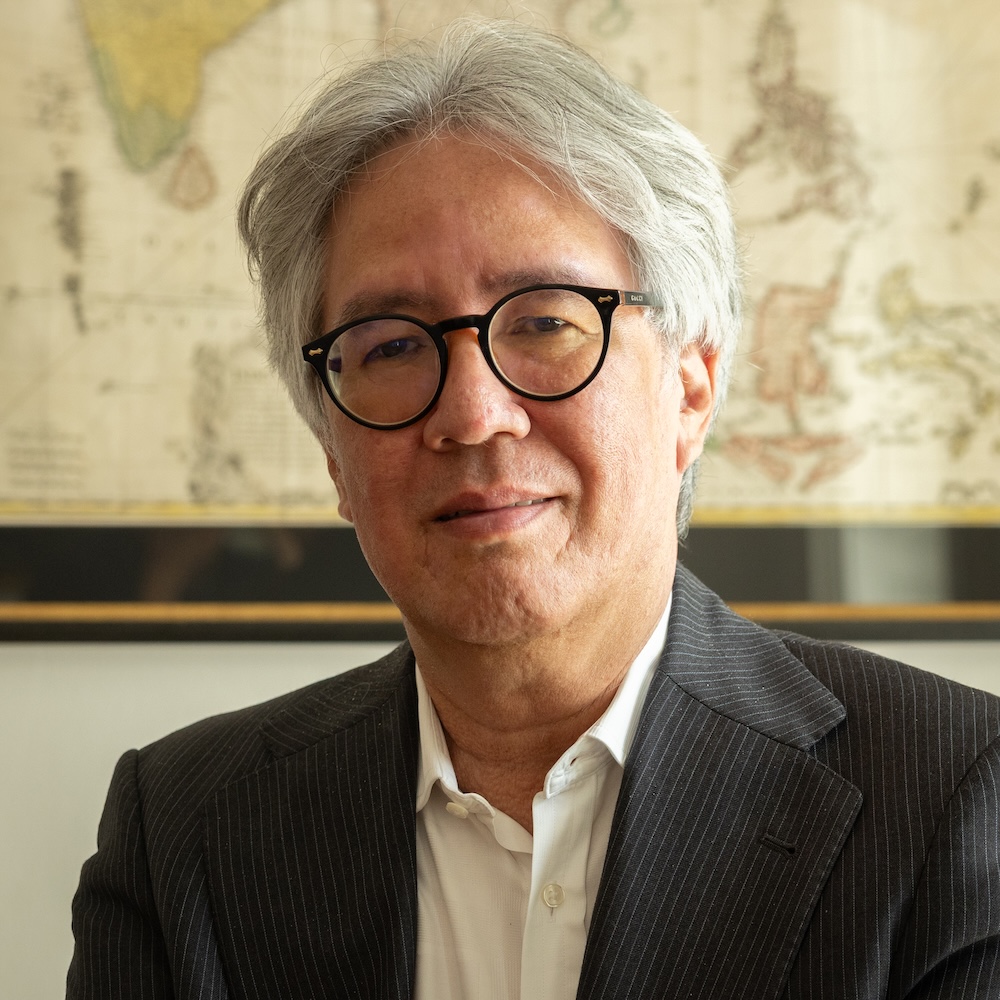
Dr. Michael Purugganan was recently appointed as New York University's next Anne and Joel Ehrenkranz Dean of Arts & Science.
by Christa De La Cruz for Esquire Philippines
Published on May 21, 2026
Editor's note: This article was originally published on Esquire Philippines on May 28, 2025, upon the appointment of Dr. Michael Purugganan as interim dean of New York University's Arts & Science. It has been edited following the announcement that he is the next Anne and Joel Ehrenkranz Dean of Arts & Science, effective June 1, 2026.
Dr. Michael Purugganan, a Filipino-American scientist, was recently appointed New York University's next of Anne and Joel Ehrenkranz Dean of Arts & Science. He served as the Dean for Science, under the Faculty of Arts and Science, at NYU from 2012 to 2019; then as interim dean from 2025 to 2026.
In a letter to the New York University Arts & Science community, President Linda G. Mills and Provost Gigi Dopico wrote: "With Michael at the helm, Arts & Science is poised to reach new heights, driven by a commitment to academic rigor and discovery. We have watched Michael succeed in strengthening this community during exceptionally challenging times, fostering an environment grounded in a shared scholarly mission and shared humanity. As we look to the future, we have every confidence he has the leadership, temperament, and values to inspire the collective trust of his colleagues and students."
During his year as interim dean, Dr. Purugganan championed innovation by establishing funds for interdisciplinary research in the social sciences and humanities as well as the new Faculty Focus Award, which offers support for mid-career faculty to complete scholarly projects. He also oversaw the launch of The Carl P. Feinberg Institute for Theoretical Physics; and convened five faculty learning communities charged with substantive exploration around the current state of AI literacy in teaching, learning, and research.
"In a challenging year for higher education," NYU's press statement noted, Purugganan welcomed 47 new faculty; appointed new leaders for Graduate School of Arts & Science and the science and research enterprise; oversaw $240M+ in research funding requests and an influx of over $25M in new fundraising; and delivered a balanced operating budget for fiscal year 2027.
Dr. Purugganan took over the seat of Italian-born American economist Antonio Merlo, who assumed the position of Anne and Joel Ehrenkranz Dean of Arts & Science in July 2019. It was announced on January 31, 2025, that Merlo had been selected as Drexel University's 16th president, effective July 1, 2025.
Who Is Dr. Michael Purugganan of New York University?
Dr. Purugganan attended the Manila Science High School (1980) before pursuing a Bachelor's degree in Chemistry, which he completed at the University of the Philippines in 1985. He also served as Features Editor of the Philippine Collegian (Kulê), the university's official student publication. He moonlighted as a journalist to put himself through college, "writing on politics and economics—not the safest thing to do," he said in a 2003 profile in nature journal.
"There were two areas I had an aptitude for in college–science and journalism. I was lucky to get experience in both during my college days," he said in a 2018 interview published on the American Society of Plant Biologists' Plantae.
According to a profile published on Growing Up in Science, his proudest moment in journalism would be his coverage of the "aftermath of the 1983 assassination of Sen. Benigno Aquino, which eventually led to the fall of the Marcos dictatorship in the Philippines." While still in college, he was offered a position as a full-time reporter for the Associated Press Manila Bureau, which he turned down after deciding that "it was science [he] really was most passionate about."
After graduation, Dr. Purugganan moved to the U.S., where he earned an M.A. in Chemistry at Columbia University in New York in 1988. He almost completed a Ph.D. in Chemistry at the same university ("all but dissertation"), but he realized later on that he wanted to study something else. This led him to move to the University of Georgia to pursue plant genetics and molecular biology in the laboratory of Sue Wessler. He finished his Ph.D in Botany with a minor in Global Policy in 1993, having written his dissertation on the evolution of transposable elements.
After completing his doctorate degree, he was awarded a two-year Alfred Sloan Postdoctoral Fellowship in Molecular Evolution at the University of California - San Diego. He joined North Carolina State University's Department of Genetics in 1995, then eventually earned tenure in 2001, and was named William Neal Reynolds Distinguished Professor in Genetics in 2005. The latter is recognized as the highest honor open to faculty members in the College of Agriculture and Life Sciences.
In 2006, Dr. Purugganan moved to the New York University Center for Genomics and Systems Biology (CGSB) as the Dorothy Schiff Professor of Genomics. From 2010 to 2012, he was director of CGSB, where he inaugurated the new CGSB facility at 12 Waverly Place and helped raise funds for the construction of the Irene Rose Sohn Zegar Memorial Greenhouse for plant biology research. After his stint at NYU CGSB in 2012, he became the founding co-director of the NYU Abu Dhabi Center for Genomics and Systems Biology, where he established the first genome research center in the United Arab Emirates after securing $25 million in funding. In the same year, he also started his position as the Dean of Science at NYU, where he led five science departments and 14 research centers. His tenure also saw the establishment of several new programs, including the Center for Quantum Phenomena, the Laboratory of Molecular Nanoscience, the joint NYU-Max Planck Center for Language, Music and Emotion, and the NYU Chemical Biology Initiative. This was a position he held until 2019.
At present, Dr. Purugganan's academic positions include: Silver Professor of Biology (since 2016 at NYU), Affiliate Faculty at the Institute for the Study of the Ancient World (since 2019 at NYU), affiliate Faculty (since 2009 at NYU Abu Dhabi), Scientist-in-Residence at the Asian Institute of Management in Manila (since 2021), and academic director of 19 Washington Square North or the NYU Abu Dhabi Center in New York (since 2022).
He is a corresponding member of the Philippines' National Academy of Science and Technology, having been elected in 2019. He was particularly recognized for his scientific research about the evolution of rice varieties and their implications in agriculture, food supply, and nutrition.
Dr. Michael Purugganan's Research and Expertise
Dr. Purugganan's area of interest is in plant evolutionary genomics, having published research in evolutionary and ecological genomics of plant adaptations as well as the evolution of multicellularity and social behavior. He also specializes in the genetics of plant domestication, where plant species—particularly crops—are studied in their cultural context, that is to provide food and other products for human society.
When asked why he was particularly interested in the study of rice domestication, he was quoted as saying: "I grew up in the Philippines, where rice is deeply embedded in our food and culture. I was always interested in working in an area that maybe, directly or indirectly, could help benefit developing countries, and working on rice seemed ideal. And domestication—it really allows me to engage in a topic from a multidisciplinary angle. Studying domestication involves plant biology at its core, but also evolutionary biology, genetics, and even archaeology, anthropology, and history."
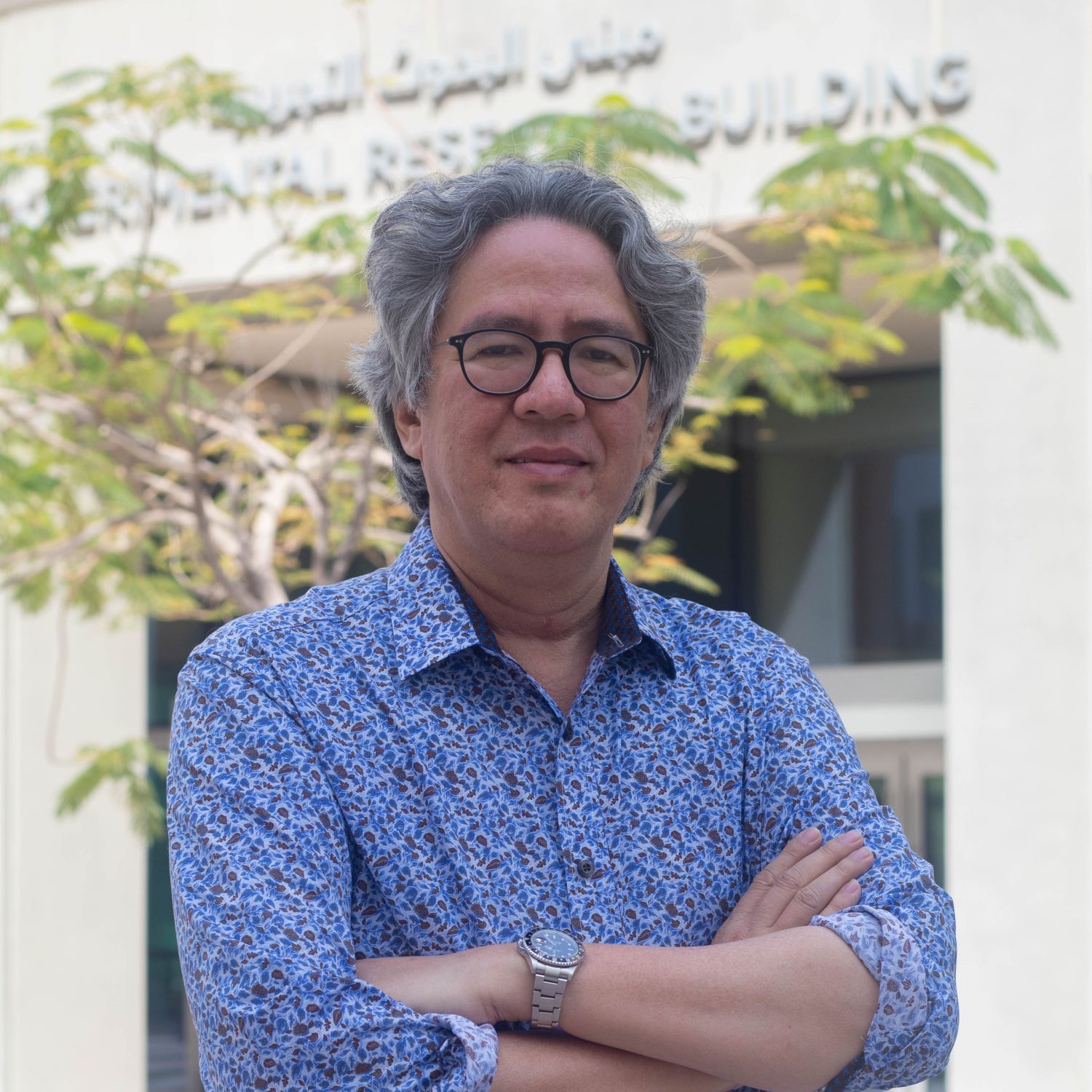
During a brief visit to the Philippines in 2015, Dr. Purugganan talked to students at the UP Diliman - Institute of Biology about his research. "What we’re trying to do is to study rice adaptation in different ecological areas. What we want to do is try to understand that. In trying to understand the genes, then we’ll understand how to make rice to adapt in different environments," he said when asked about the relation of his studies to developing climate-resistant rice varieties. He cited heirloom rice varieties (such as the tinawon and pinidwa) in Banaue, which he has included in genome mapping projects.
He has published more than 170 peer-reviewed journal papers on topics ranging from evolutionary biology, plant biology, genomics, systems biology, genetics, archaeology, and chemistry in major scientific journals.
* This story originally appeared on Esquiremag.ph. Minor edits have been made by the Preview.ph editors.

Read more stories about
syn-00398 ,michael purugganan ,college ,new york university ,pinoy pride ,did you know