The Human Interest of Kara David
As journalism enters an era shaped by social media and creators, Kara David remains grounded in the work that has guided her: telling the truth and serving the public.

Published on Aug 26, 2026
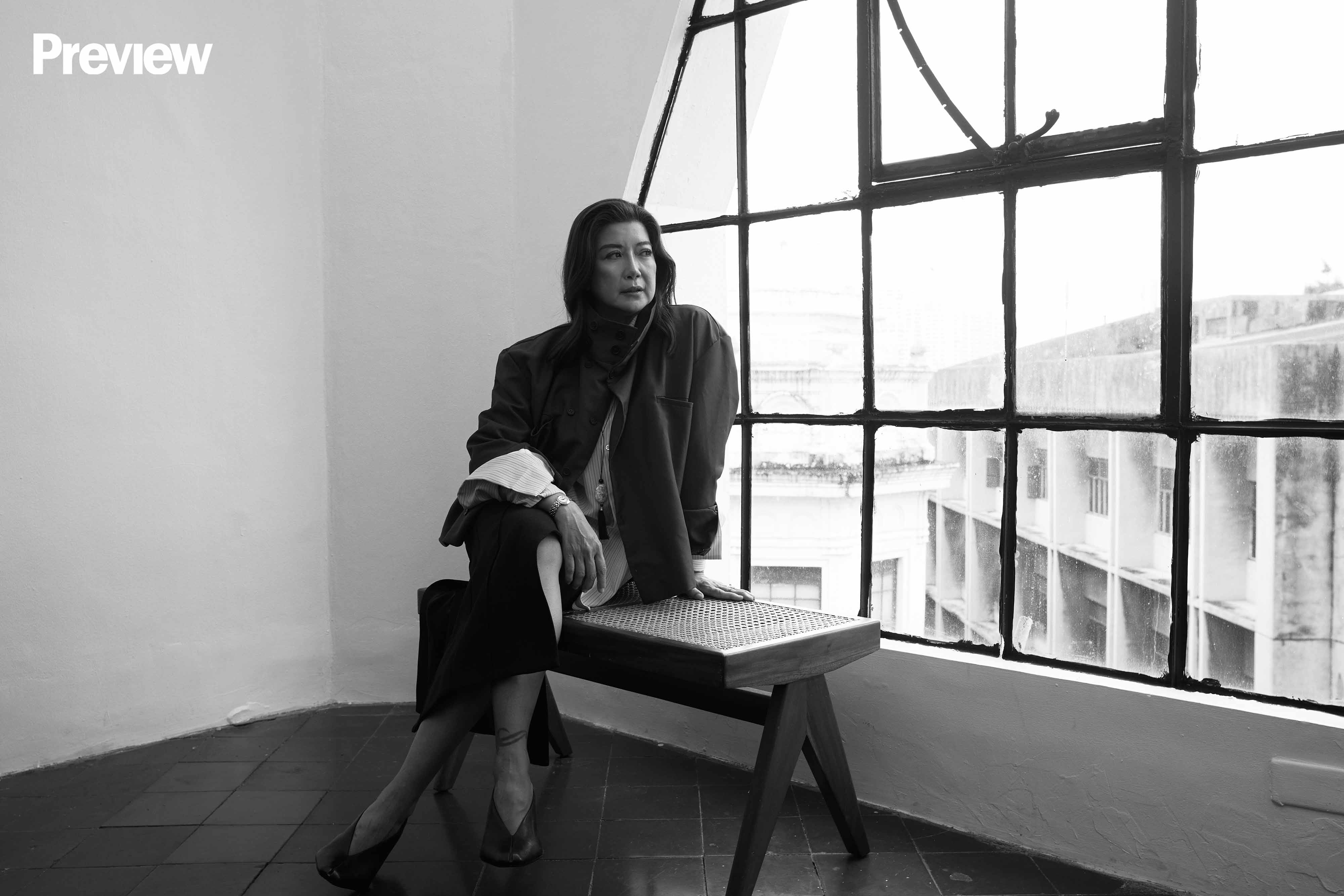
The southwest monsoon prodded a downpour over the metro, muting the skies of the historic Escolta Street to a dull gray. In Manila, where phones blared with rainfall warnings, many people were left in a state of limbo about whether their day’s schedules would push through.
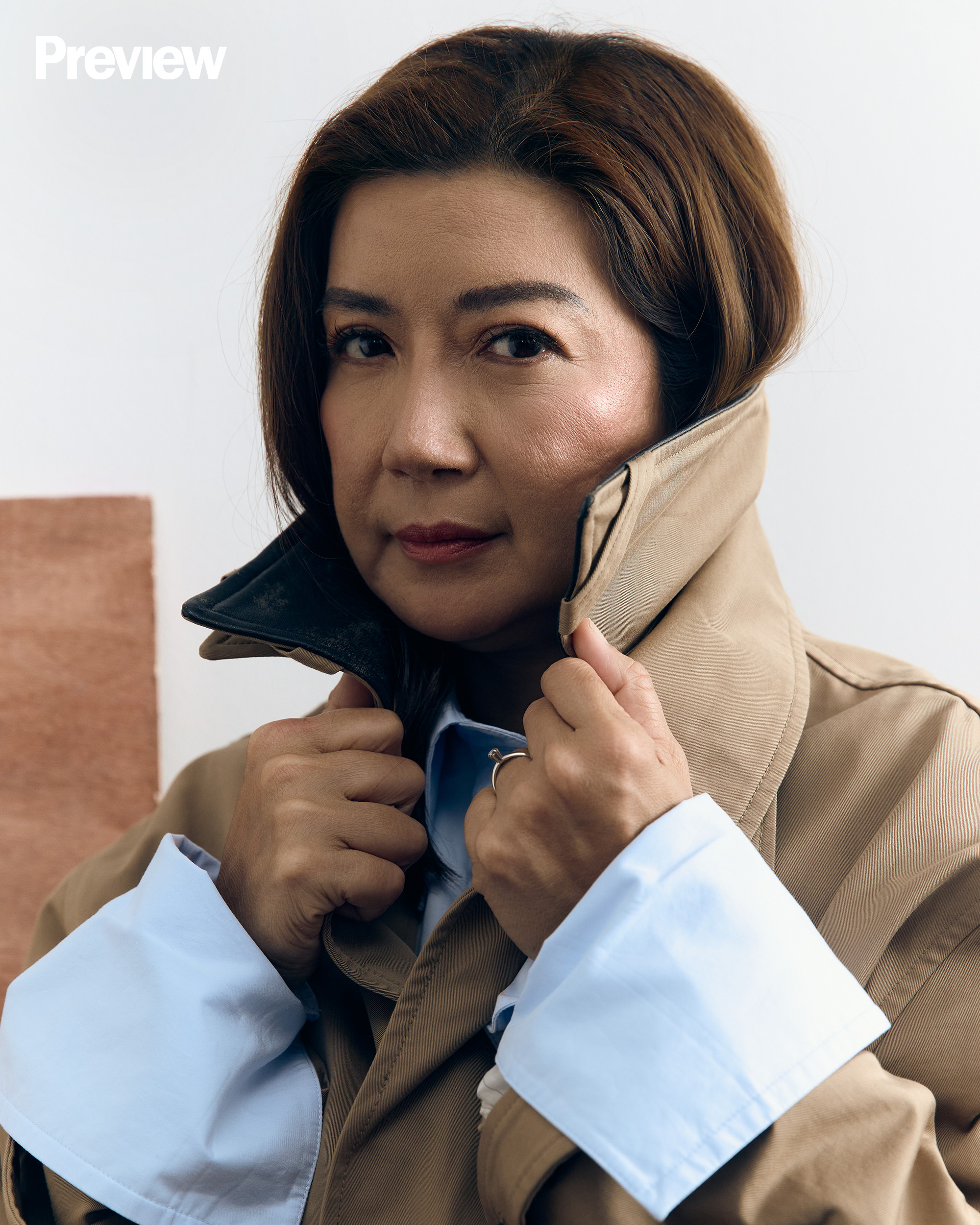
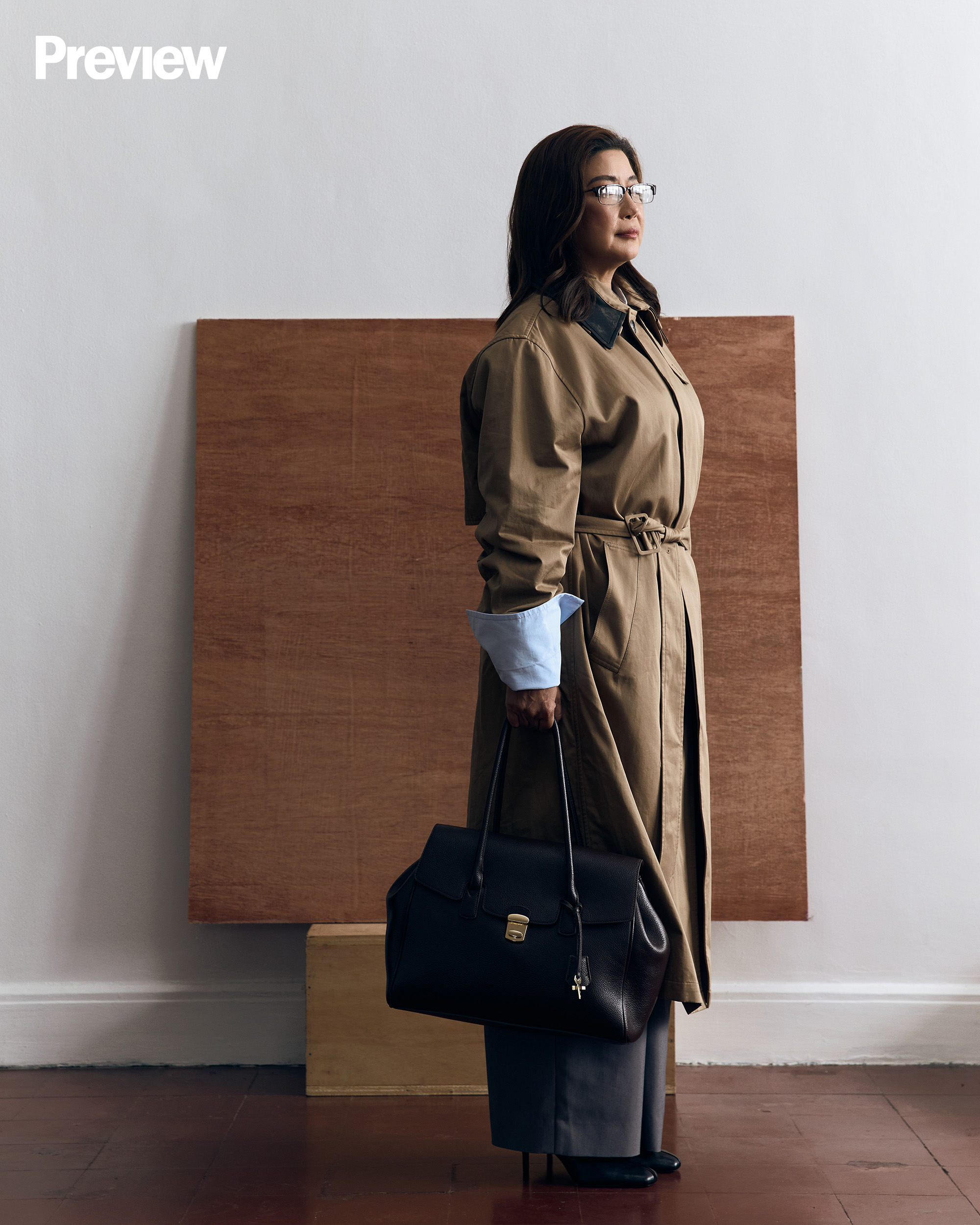
Unsurprisingly, Kara David was business as usual. At nine in the morning, the veteran journalist arrived at the fifth floor of the First United Building for our photo shoot, just as the call sheet dictated. The next day, she was off to Mindoro with a 3 a.m. call time, where she was to film an i-Witness documentary for the remainder of the week—rain or shine.
“Sasakay kami ng van, tapos didiretso kami ng barko, ’tas aakyat na ng bundok,” she said, picturing her schedule ahead. “For the whole three days, bugbog ’yun. Usually, hindi kami nagho-hotel para sa i-Witness. We usually sleep in the community. Makikitulog kami doon sa bahay ng mga katutubo.”
Shooting i-Witness, the acclaimed GMA documentary series she had been with since 2001, took up a considerable chunk of her time, but there were also the rest of her projects that had become hefty items on her professional (and hypothetical) balance scale. There’s Pinas Sarap, her more gastronomy-leaning “infotainment” series, and i-Listen with Kara David, her award-winning podcast that, she said, was “less demanding” of her time, but still took half a day to record.
Lest anyone forget, those were in between her classes as a journalism professor at the University of the Philippines (UP) Diliman. A lesser, or perhaps more inexperienced, professional would probably have balked at her perpetually busy calendar—but this is Kara David, and she is built different, it seemed.
“I super enjoy my job,” she replied when asked if she ever felt burnt out. “Shooting is always fun because there’s always a challenge—you’re moving a lot. Challenging at nakakapagod siya, pero alam mong may patutunguhan ’yung ginagawa mo.”
If she handled her own balancing act of projects, the rest of us have dreamed of keeping the scales of work and life poised in equilibrium, which is perfectly justifiable. But for Kara, it’s a different case when work has become your life’s purpose. While journalists are often tasked with maintaining an objective distance from their subjects, Kara’s brand of journalism, ironically, has thrived on empathy for others.
“I enjoy my job kasi parang lumalaki ’yung pamilya ko,” she said. “Dumarami ’yung anak ko. Dumarami ’yung mga lola ko, dumarami ’yung mga kaibigan ko. Dumarami rin ’yung natututuhan ko sa buhay.”
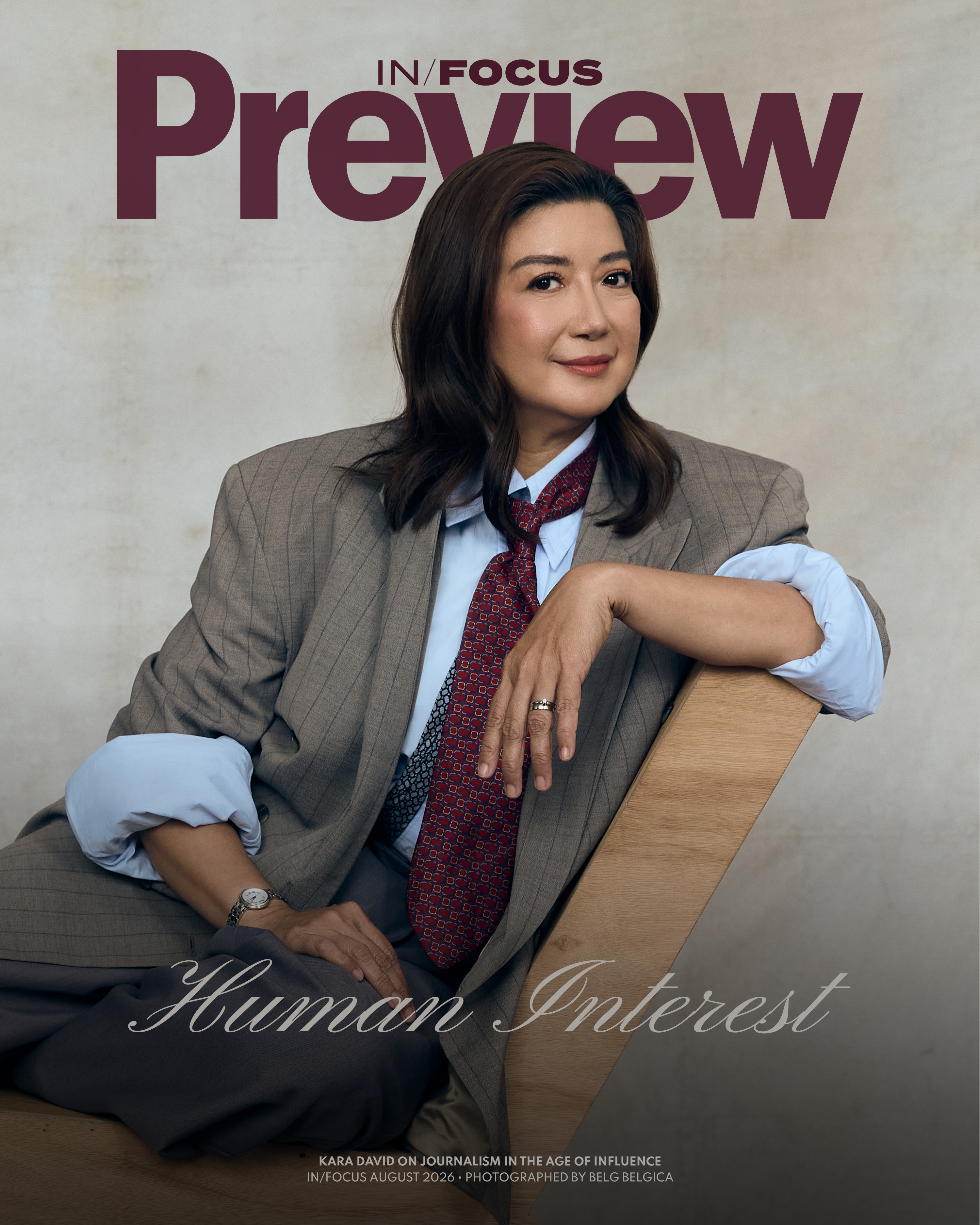
The Journalist Who Can’t Look Away
For all the places Kara has been and all the stories she has followed, the part of journalism that she finds most exhausting happens before the first shot is even taken.
“I feel burnt out kapag nag-iisip ng topic,” she said. “Nakaka-burn out ’yung you have to think of the next story to do. ’Yun ’yung nakakaubos ng utak.”
The pressure gets heavier when a documentary does particularly well. An award or strong response can make the next assignment feel like a difficult act to follow, but the bigger frustration comes from returning to problems Kara has spent years documenting. “Napapagod ka na, parang ito na naman ang problema ng bansa,” she said. “’Pag documentary kasi, palagi na lang nakakalungkot ’yung istorya. Palagi na lang depressing.”
After three decades in the field, Kara is conscious of how repetition could bring about a certain jadedness to these stories. “’Yun ’yung ayaw kong mangyari sa’kin. ’Yung umabot ako sa point na istorya na lang sila. Hindi na sila tao.”
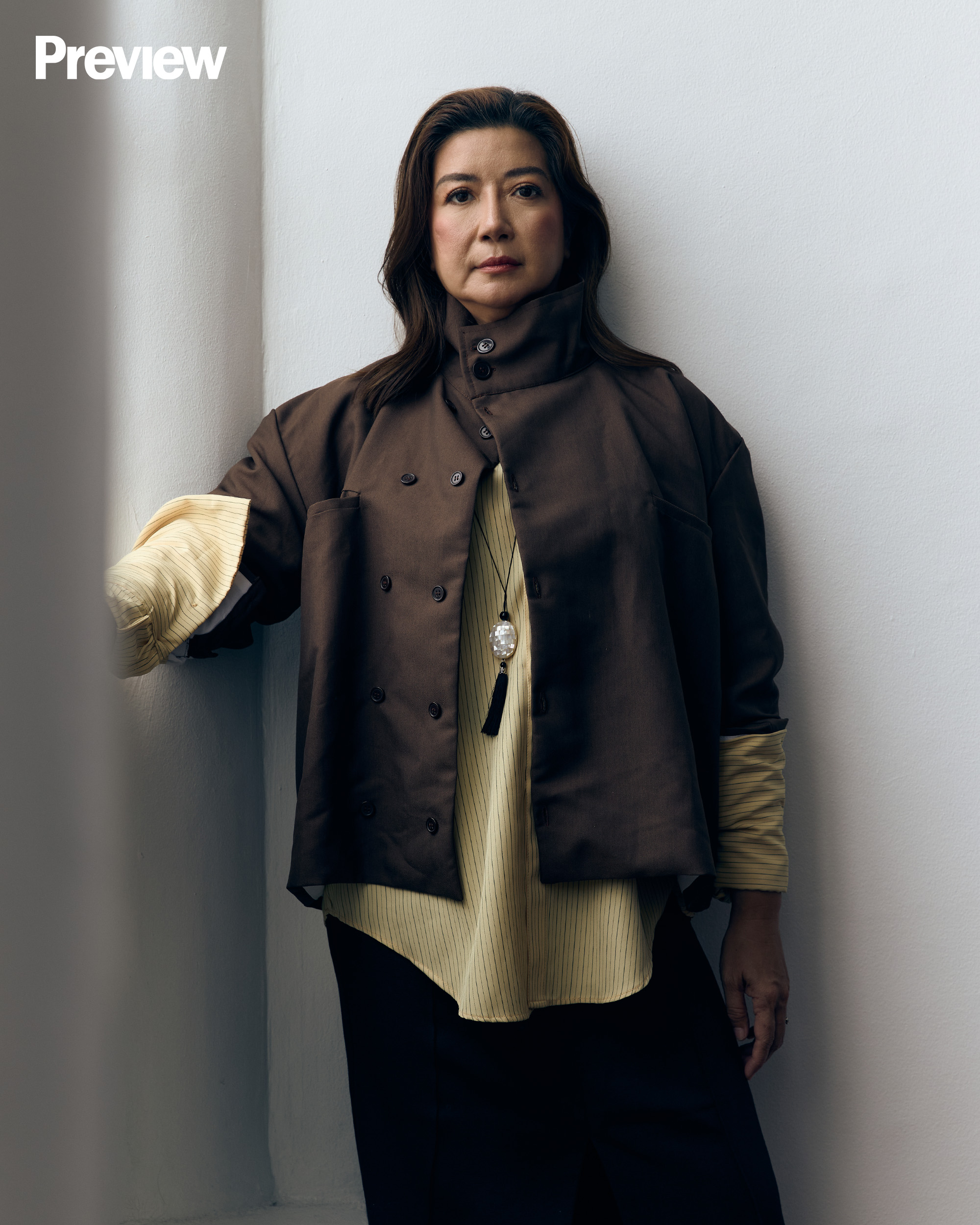
Her relationship with that feeling of helplessness goes back to Buto’t Balat, the 2005 documentary that followed three malnourished children, Angela, Jeremy, and Julie Ann. She approached the story with an idealism she can now describe more candidly. “I was really super idealistic noon na feeling ko talaga my stories can change the world.” The report did move people. Donations came in after it aired, and Kara thought she could finally get Angela, the most severely malnourished of the three, treated. When she called the family to tell them there was money for her medical care, Angela’s mother told her that the child had died just hours earlier.
Kara redirected her efforts toward Jeremy, then returned from Singapore after Buto’t Balat won Best Social Awareness Programme at the Asian Television Awards with another plan: she would save what she could from the trip and give it to him. By the time she got home, Jeremy had died, too. The loss left her questioning what her awards and reporting meant if she could not help the people at the center of her stories.
She eventually joined GMA’s Extra Challenge with fellow reporter Jiggy Manicad, drawn by its P2 million grand prize and the possibility of using it for Julie Ann’s treatment. She ate insects, jumped off a bridge, and even got a tattoo as part of the challenges, which is still visible on her ankle today. She won her share of a million pesos, only to learn before she could claim the victory that Julie Ann had also died.
The experience nearly pulled Kara out of journalism altogether. She considered selling her house, studying nutrition, and becoming a health worker. Instead, she used the prize money for a feeding program and began thinking about the limits of what one person could realistically do. “Hindi naman ako superwoman,” she said. “I cannot save the world. I cannot change the world, but I can change one child. I can change one mind. I can change one community. That’s enough.”
Project Malasakit, the scholarship project she founded in 2002, gave that idea a more lasting form. It has since supported children through their education, as well as through feeding and community outreach efforts. Kara’s attachment to the people she meets while reporting has also followed her into other stories, including years of returning to elderly women she met in the Women’s Correctional and to Indigenous communities with which she has long had a personal and academic connection.
Journalism asks for a certain distance from the people at the center of a story, which Kara understands.
“Dapat i-distansya mo ’yung sarili mo para wala kang biases,” she said. “Pero talagang sumasakit ang kalooban ko. Hindi ko kayang i-distansya ’yung sarili ko. So, ang ginagawa namin is sobrang diligent effort to get the other side.”
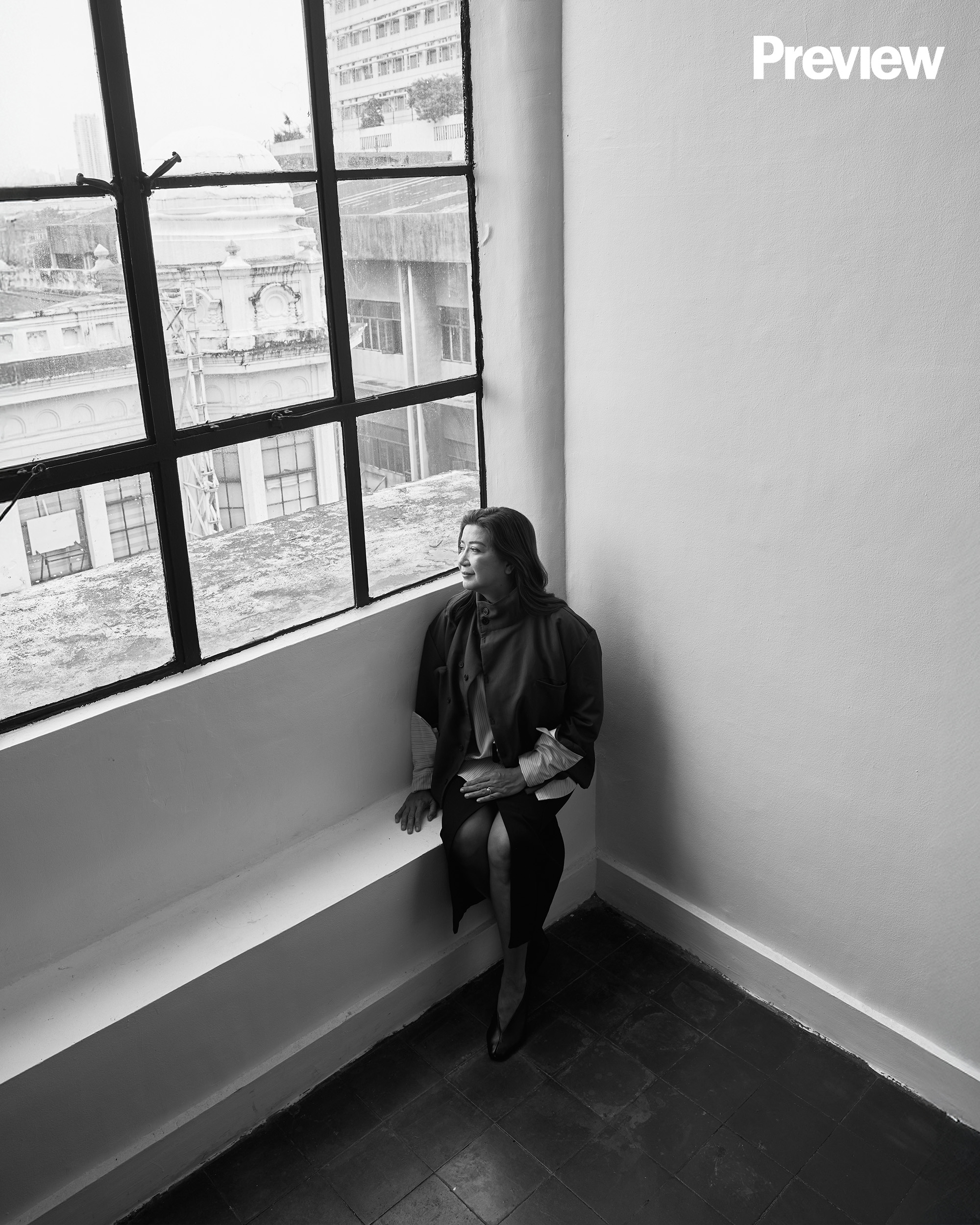
The reporting still has to hold its ground. For Kara, helping beyond the story comes from a more personal place. “Ang trabaho ng journalist talaga ay ilabas ’yung katotohanan. I-amplify ’yung boses ng mga hindi naririnig, kasi may boses naman ang lahat, hindi lang pinakikinggan,” she said.
“But I'm not only a journalist; I’m also a human being,” Kara added. “Para sa akin, hindi enough na naikuwento ko ’yung kwento nila.”
Journalism in the Age of Influence
Kara found herself at the center of a conversation about who gets to call themselves a public-service broadcaster after the recent FAMAS Broadcast Arts Awards. She tied with content creator and actress Ivana Alawi for Best Host for Public Service, while also taking home Best Public Affairs Talk Show for I-Listen and Best Documentary for i-Witness’ Embalsamador de Motor. The tie quickly prompted debate online, particularly around whether journalists and content creators should be recognized in separate categories.
Kara, however, seems less interested in drawing that line.
“Magkaiba lang kami ng platform. Magkaiba rin kami ng paraan ng pagtulong,” she said of Ivana. “Pero ’yun naman ’yung kagandahan ng mundo eh, 'di ba? I think you can do public service in any platform.”
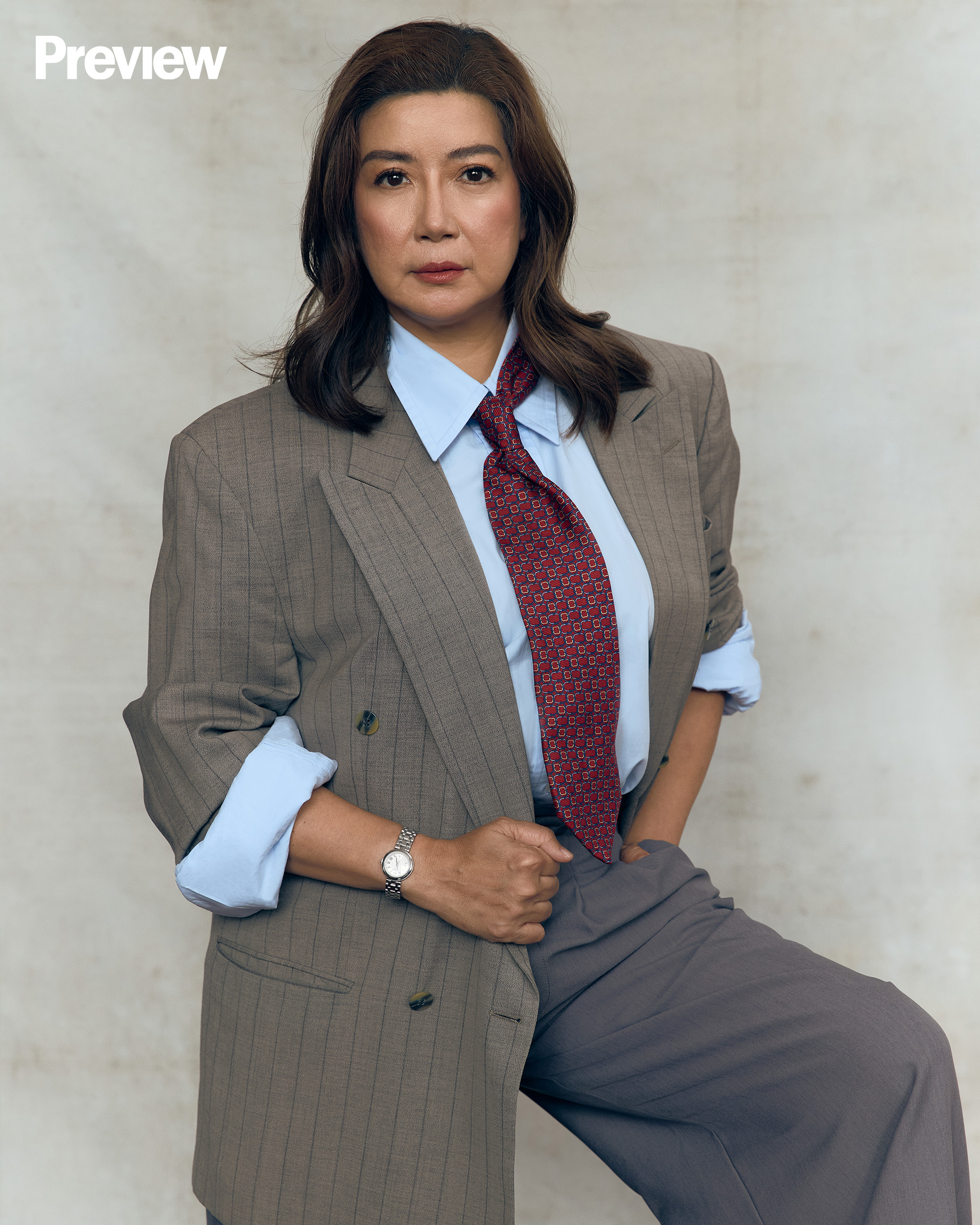
It is a fairly straightforward answer to a question that has become increasingly complicated as more people build audiences outside traditional media. A television journalist, a podcast host, and a content creator can all reach millions of people now.
For Kara, the more important question is how that influence is being used.
“When we talk about public service–whether in the media or in government or ano mang industriya pa ’yan–sana talagang para sa publiko at hindi para sa sarili,” she said. “Kasi ’yun ’yung totoong public service. When it becomes for you, hindi ’yun public service.”
She applies the same standard to herself. Kara admits that metrics matter in a newsroom. She wants people to watch her shows, she pays attention to ratings, and, naturally, an award feels good. Content creators are looking at views, followers, and monetization for much the same reason.
The numbers, she believes, simply cannot become the reason for the work.
“Sana hindi ’yun ’yung number one reason why we’re doing stories. Sana the reason why we're doing stories is that we really wanna serve the public and we really want to be the voice of the people.”
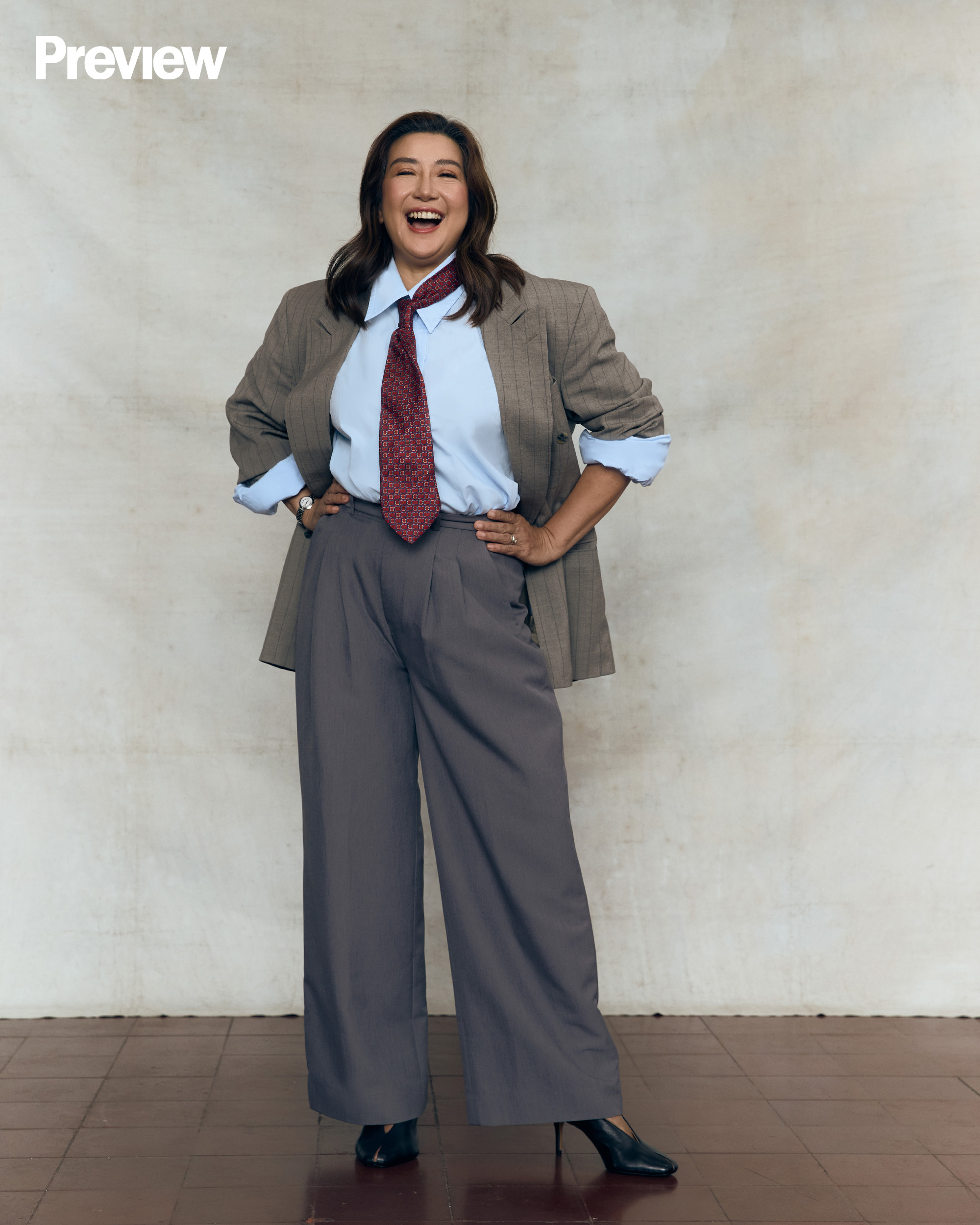
It is also why Kara does not see content creators as an entirely separate world from journalism. She calls herself a “heavy user” of social media and follows plenty of creators herself, partly because the platforms give her something that a newsroom cannot quite provide: a direct look at what people are talking about. She wants to know what interests them, what language they use, and which issues are catching their attention. Social media, for all its noise, gives her a sense of the pulse she is reporting to.
“Natututo ako sa prevailing culture ngayon,” she said. “Ano ba ’yung interest ng mga tao ngayon? Paano ba magsalita ’yung mga tao? Ano ba ’yung mga issues na importante sa mga tao? Nakukuha ko ’yun from social media.”
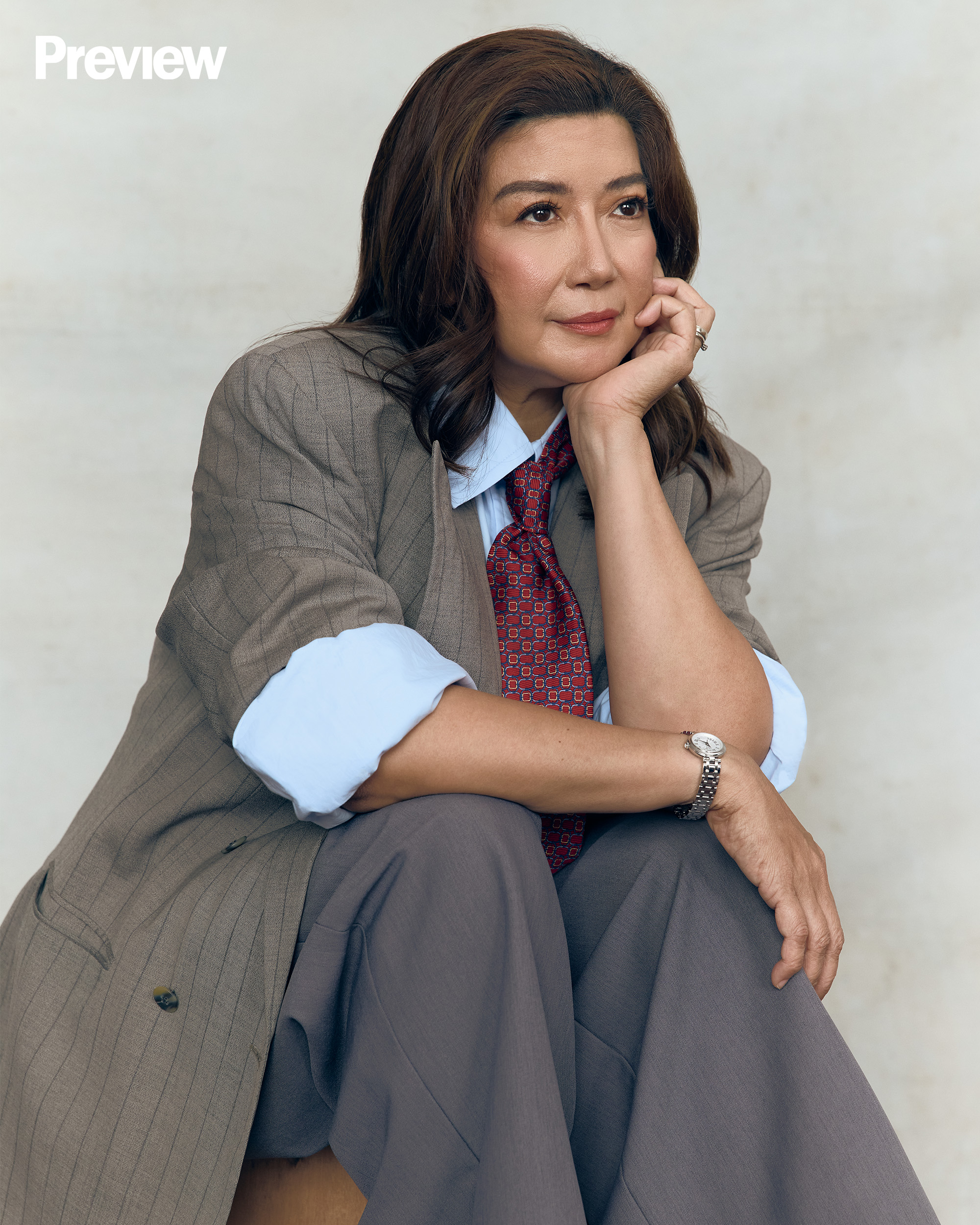
That puts content creators in a somewhat unexpected position in Kara’s journalism practice. She learns from them, then hopes they can pick up a few things from journalists, too—particularly when it comes to research, verification, and the discipline of checking whether something is actually true.
“I learn from them. And I think naman ’yung mga content creators can also learn from journalists. ’Yung ethics namin of verifying the truth, diligently researching, to make sure that your story is correct at naaayon sa katotohanan,” she said. “Importante silang partner in our search for truth.”
The relationship, in her view, has little reason to be adversarial. Both groups are capable of reaching audiences at a scale that can move conversations, shape opinions, and, when used carelessly, spread false information just as quickly.
“Hindi dapat magkaaway ang mga content creators and journalists,” Kara said. “Partners tayo para i-combat ang false information, disinformation, kasi ’yun ang tunay na kalaban.”
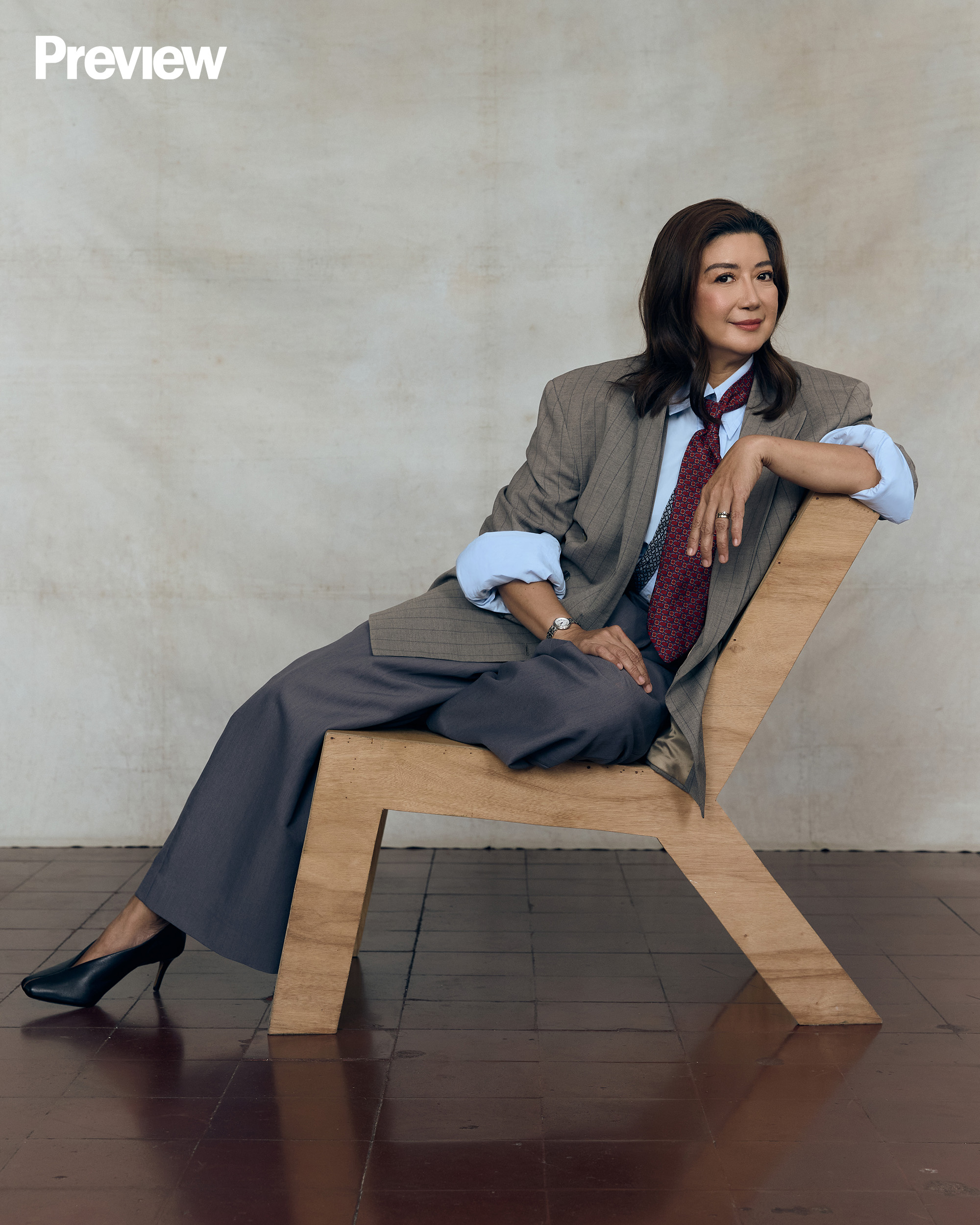
Kara has had to learn how to exist in that landscape herself. Television gave her a fairly fixed version of who she was supposed to be on screen, with a persona that’s more serious and composed. Social media has given her considerably more room to loosen up.
She seems to enjoy the split. On television, she is still the journalist doing the interview or standing in the middle of a documentary. Online, she can be a little sillier, a little messier, and noticeably more herself.
“’Yung social media gave me freedom,” she said. “Dati kailangan prim and proper. Pero ngayon, meron na akong platform where I can be just my usual makulit self–my quirky, loka-loka side.”
It is perhaps the most personal example of what this newer media landscape has changed for Kara. The journalist remains the journalist, but the audience gets to see more of the person behind the report. Her platforms may have multiplied, but the responsibility she attaches to getting people to listen has remained remarkably consistent.
The Work Still Has to Be Done
Kara David is no stranger to having her work scrutinized. The more recent episode came after I-Witness aired Ibinasurang Paraiso, her documentary on an open dumpsite in an Aeta ancestral domain in Subic, Zambales. A week later, content creator Boss Toyo visited the site and shared observations that differed from what Kara’s team had documented, including his account that he did not notice the foul smell residents described. The exchange prompted discussion online, and he later apologized for his “narrative.” I-Witness stood by the documentary, citing government records and the team’s reporting.
Kara’s own account of the documentary centers on the reporting that brought the team to the story and determined what made it to the screen.
“May evidence kami na nakuha, na nakita na naman namin na may basura. May interviews na kami ng mga katutubo, everything.”
The reporting could have stopped there, but her team kept going. They spoke to another Indigenous community farther into the area, went to the municipality, and tried to get the government’s side. They wanted to interview the mayor and, when he did not grant them an interview, spoke instead with three employees of the local government unit.
“But because I know that the rule in my team is to exert all efforts to get all sides of the story, so hindi kami nag-stop with interviewing just one set of Indigenous peoples.”
The work behind a documentary can be invisible once it is condensed into an hour-long program. Kara has spent enough time in television to know that the final product is only as sturdy as what happens before it airs.
“Importante pa rin ’yung structure ng newsroom na may gatekeepers para you come up with a better product,” she said.
Her students at UP Diliman are entering journalism with an entirely different set of tools. They are more comfortable moving between platforms, stronger with visual storytelling, and familiar with a media environment where a person can report, publish, edit, and distribute a story from the same phone.
Kara welcomes that fluency. She just wants the technology to serve the journalism, rather than the other way around.
“Nandiyan ’yung technology, gamitin natin ’yan,” she said. “But don’t use the technology para ma-shortcut mo ’yung trabaho mo.”
It comes down to the parts of the job that technology cannot do for you. Research still has to happen. Someone still has to go to the field. Someone still has to ask the uncomfortable follow-up question, call the other side, notice what does not add up, and decide whether a story is ready to be told.
Kara sees that responsibility from both sides of the classroom now. She teaches young journalists to take research and writing seriously, while watching them adapt to a media landscape that barely resembles the one she entered.
“’Yung substance, ’yun ’yung kailangan nating i-hone talaga,” she said. “Ang galing-galing ng mga young journalists ngayon with form.”
She has faith in them, partly because she has faith in the people they will eventually report to. Kara remains convinced that audiences can tell when someone has done the work, and when someone has merely found a quicker way to produce something that looks like it.
There is a reason she has kept going for three decades, even with the frustrations that come with the work. Journalism has changed around her, but the stories she wants to tell still remain familiar. After 30 years, she hopes to reach the point when she runs out of them.
“I hope umabot ako sa point na wala na akong mahahanap na child laborer,” she said. “I hope umabot ako sa point na wala na akong mahahanap na communities na walang access to healthcare. Sana dumating ’yung panahon na wala nang mga nagsisiksikang bata sa mga classroom. Sana dumating ’yung panahon na lahat ng mga politiko hindi epal at hindi na nagnanakaw.”

“Sana good news naman ’yung i-document ko,” she continued.
It would be, by her own admission, a very good problem to have. Until then, there will be another story waiting somewhere, and another reason to go looking for it.
“I will be very, very happy ’pag wala na akong mahahanap na ganoong klaseng mga problema,” she said. “But until meron pang mga batang napagkakaitan ng karapatan nila, well, hindi ako titigil.”

Produced and Styled by the Preview Team
Editor-in-Chief: Marj Ramos-Clemente
Managing Editor: Reg Rodriguez
Assoc. Creative Director: Jana Jodloman
Assoc. Multimedia Director: Bea Felice Panganiban
Producers: Katrina Maisie Cabral and Em Enriquez
Photography: Belg Belgica, assisted by Hallvard Cano and Yobhel Valenzuela. Art and video direction: Bea Felice Panganiban. Styling: Em Enriquez. Hair and makeup: Team Muriel Vega Perez. Story: Katrina Maisie Cabral. Videography: Teddy Garcia Jr. Shoot assistant: Alfred Locsin. Shot on location at Espacio Creativo Escolta.
Kat is Preview's Lifestyle Editor, explorer, and occasional rhymer. When not globe-trotting, she's over her computer, writing her next big novel.