Elijah Canlas Is Acting for Good
Having quit show business once, the 25-year-old now sees the bigger picture, wielding his craft and platform as forces for good.

by Em Enriquez
Published on Dec 22, 2025
Elijah Canlas is a Leo. But he strongly insists that there aren’t many Leo traits that apply to him.
While his Zodiac sign suggests an affinity for the spotlight, he confesses to actually being more reserved. In fact, there was a time he preferred not seeing himself through a camera’s lens. “I didn’t like taking pictures of myself,” he explains. “I didn’t like watching myself at all.” Ironic for an actor, he admits.
“People think I’m a Scorpio, actually,” the 25-year-old offers. To those who aren’t close to him, he can come across as mysterious or stoic—an impression shaped by the roles he’s become known for: serious people leading serious lives, embattled by serious issues. “But, you know, I’m a jolly guy,” he clarifies. “I’m easy to talk to. I tend to get talkative pa nga, e.”

There’s a stream of consciousness to the way Elijah speaks. One moment, he’s defending his astrology chart; the next, he’s recounting how he started, quit, and eventually returned to show business—all within the span of five years. Then he raves about being bald, insisting it’s the best haircut he’s ever had. You get the sense that he has grown comfortable with who he is and where he is in life. Woven into his words is someone who has found a sense of belonging—and, in turn, a sense of duty—in what he does.
“There’s a higher purpose with everything we do,” Elijah says, the 4:30 p.m. light bouncing off his freshly shaved scalp. “Especially with our craft… it means [something beyond] ourselves.” Despite his early aversion to the camera, the actor has come to understand that there is power within—and beyond—its four corners. People are watching on the other side, and he knows it.
Down from the Hill
An afternoon in early December found Elijah along the bustling avenue of Escolta. The shoot paused whenever jeepneys or pedicabs rattled between him and photographer Colin Dancel. At the time, he was in the middle of filming a new project titled Jaguar, in which he plays a security personnel. That explained both his playful traffic-enforcer act each time a vehicle passed by—and, more noticeably, his buzz cut.
“The director really wanted me to be unrecognizable,” he says, running his hand through his head for the nth time that day. Barbers call his fade the “uno,” which is one shear away from a complete skinhead. Elijah shaved his own hair, which was the first step to getting into character. “It was fun,” he recounts. “First time ko’ng gawin 'to and I love it. I love being bald. It’s the best.”
For many actors, a new look is all part of a day’s work. There are additional rigors involved in the craft, and as someone who spent his childhood between ballet lessons and musical theater rehearsals, Elijah knows it well. The Philippine High School for the Arts alumni would be the first to tell you that getting into acting isn’t a pleasant experience, especially for an adolescent. “It was terrible. It wasn’t glamorous at all,” he adds with heft.
Out of hundreds of auditions, a younger Elijah would only get called back for a handful. He landed a few jobs here and there, but never quite broke through the way he hoped. The odds felt so discouraging that he considered quitting—and at 15, he actually did.
“It was just so hard,” Elijah recalls. “It felt like the industry was all about nepotism and connections, and I didn’t have those.”
Even if he was born to perform, Elijah still struggled to find his footing in an absurdly competitive industry. On top of that, the business’s notorious preference for Eurocentric looks—standards he admits he doesn’t meet—was constantly rubbed in his face. The sense of inadequacy only deepened as his peers began to find success, while he remained on the sidelines.
“Ah, wala akong pag-asa rito,” he recalls thinking. “Maybe it's just really not for me.”
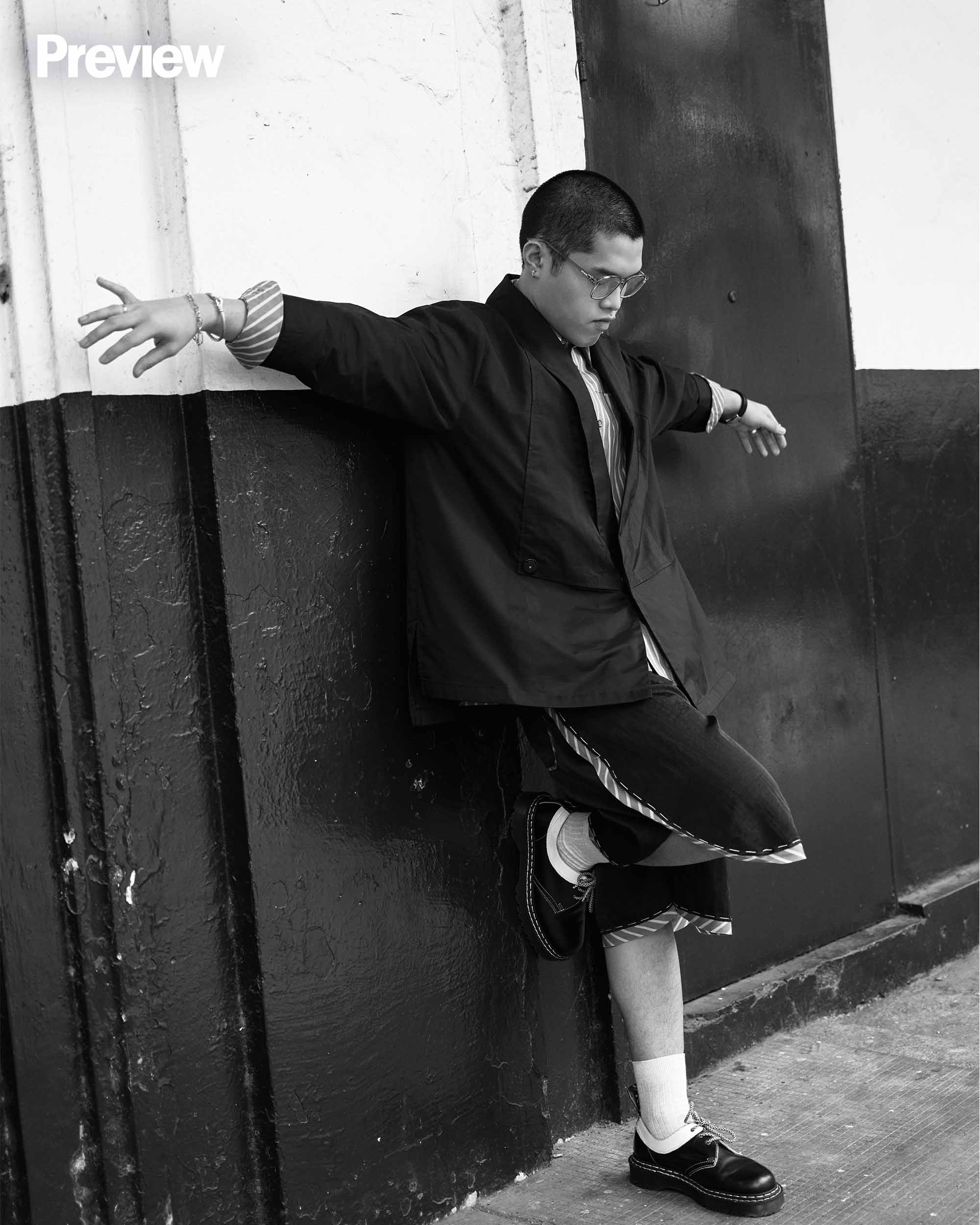
In retrospect, acting wasn’t what Elijah envisioned for himself anyway. He once dreamed of becoming an astronaut, but the space he was meant to inhabit turned out to be much closer to home. Raised by parents who encouraged him and his brothers to immerse themselves in the arts, Elijah aspired to become a director. “I always hoped to direct films that were personal to me, that meant a lot to me,” he shares.
As fate would have it, Elijah was beckoned back to acting by an otherworldly love story. In 2018, he watched Gusto Kita with All My Hypothalamus, a surrealist romance directed by Dwein Baltazar that compelled him to quite literally pick up his craft again. “Damn, ang sarap umarte,” he remembers exclaiming after seeing the film.

Determined not to ignore the pull, he reached out to different agencies—“nagpakapal na ako ng mukha,” as he puts it—to get his foot back in the door. After facing a few rejections, he was eventually signed under director Jun Robles Lana and The IdeaFirst Company.
From that point on, Elijah became increasingly active across both the small and big screens. In 2019, he topbilled his first film, Kalel, 15, a stirring depiction of the HIV crisis affecting Filipino youth. The following year, he starred in Gameboys, one of the country’s most prolific Boys’ Love series. Finally, the ball started rolling for him.

Turning Tides
With his hypothalamus fired up, Elijah returned to the set with renewed gusto. Scripts kept coming—some written with him already in mind—and audiences began to see him as more than just a familiar face. Over the years, he became a film festival favorite, often fronting independently made projects that took on grittier, more challenging stories. At the same time, he maintained a steady presence in the mainstream, lending his charm to teleseryes and variety shows. It was—and still is—all happening for him.
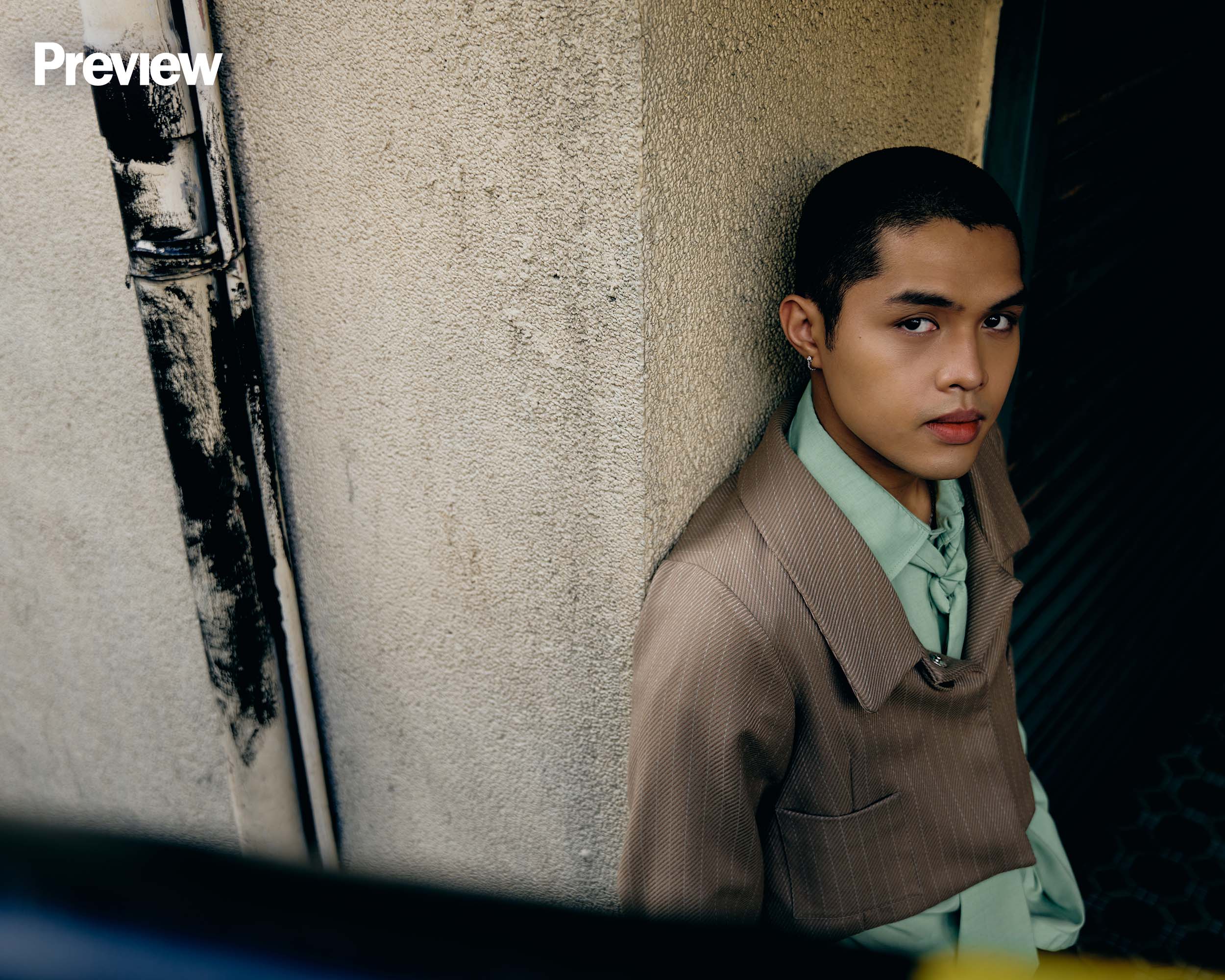
One role really shifted something within Elijah, and it arrived pretty early on. Upon making his comeback, he was cast in the 2019 family drama Unconditional as Arthur, a teenager grappling with depression and anxiety. It hit too close to home for Elijah. “Because I experienced [what Arthur] experienced when I was his age,” he opens up.
“It wasn’t just a job portraying that role. It was something bigger than me. I was representing who I was when I was 16 or 17,” he goes on. “And then I figured that there were lots of people who were going through that as well. So [I thought,] it's probably going to mean a lot to them when they [see me as Arthur.]” It was through this self-introspection that it all clicked for Elijah. He wasn’t just acting for acting’s sake anymore.
“This was really bigger than me…” he pauses, nods, and repeats himself. “It was really bigger than myself.”
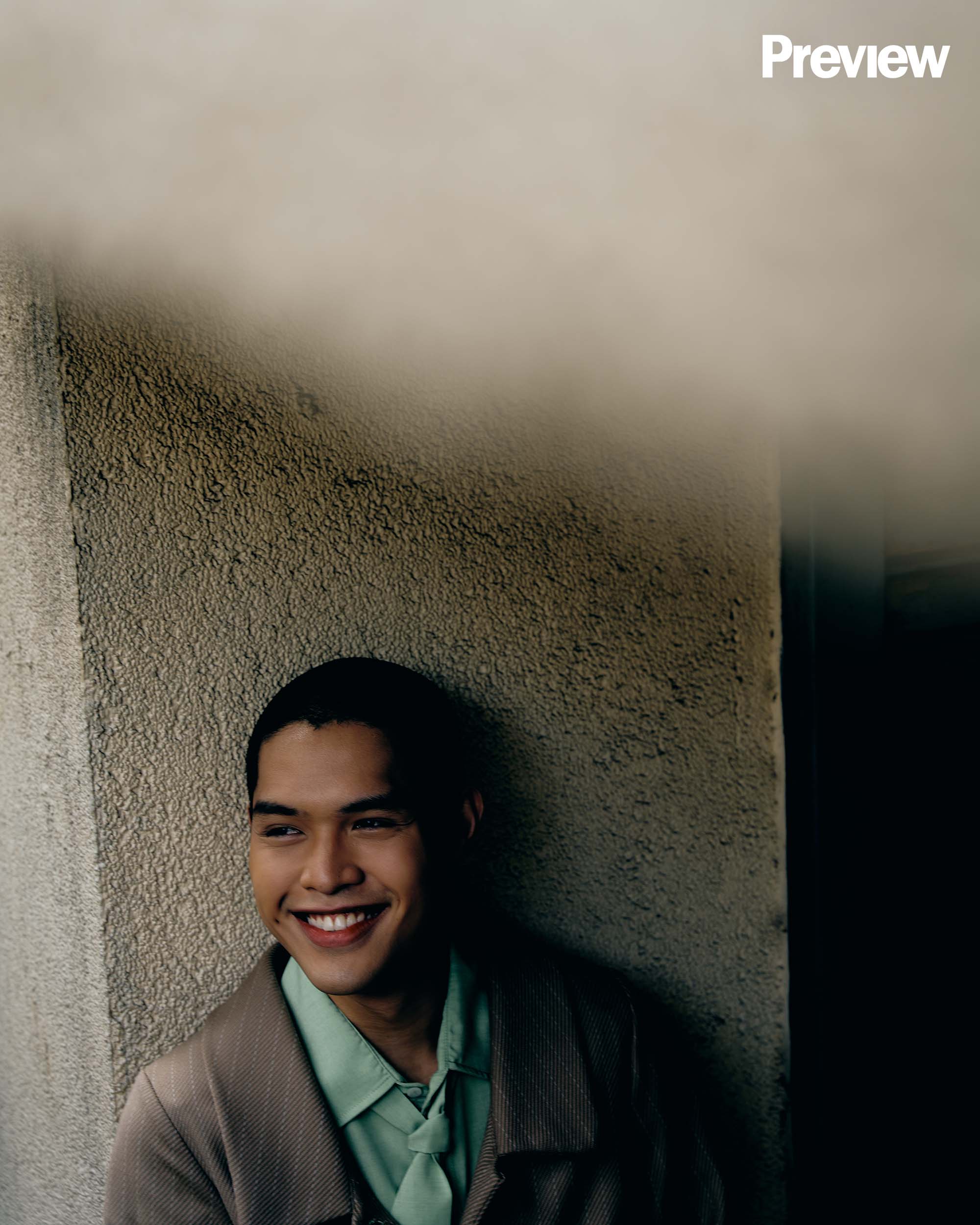
The change in perspective also informed how Elijah treated his craft. While there are certainly practicalities involved, acting isn’t just another paycheck for him. “Hindi siya nine-to-five for me,” he puts it. When he was away from the scene, he learned to hustle and picked up other tricks of the trade. Along the way, the actor realized that he didn’t have to be so “thirsty” for every opportunity. A little restraint goes a long way.
“I don't have to say yes to every project unless it's something that I really believe in,” he says. “I follow a lot of actors, [and the ones who] succeed are the ones who really give attention to their craft and the projects that they do.”
Elijah offers some perspective: If he said yes to every single project pitched to him, he’d be “hella rich.” And if he’s being honest, he admits that he’s sometimes tempted to go down that route. Who wouldn’t be? But he keeps circling back to the reason he returned to an industry that had already chewed him up once.

“It’s really because I want to tell meaningful stories,” he says. “And I enjoy filmmaking. I enjoy collaborating with people. And I enjoy helping them tell their stories. And hopefully, I get to tell stories of my own.”
The Gen Z star even once gave himself an ultimatum. “By 25, I’m going to quit acting,” he recalls proclaiming before this year. He hit that quarter-life mark last August, and while he still wants to direct, he doesn’t see himself abandoning his characters just yet.
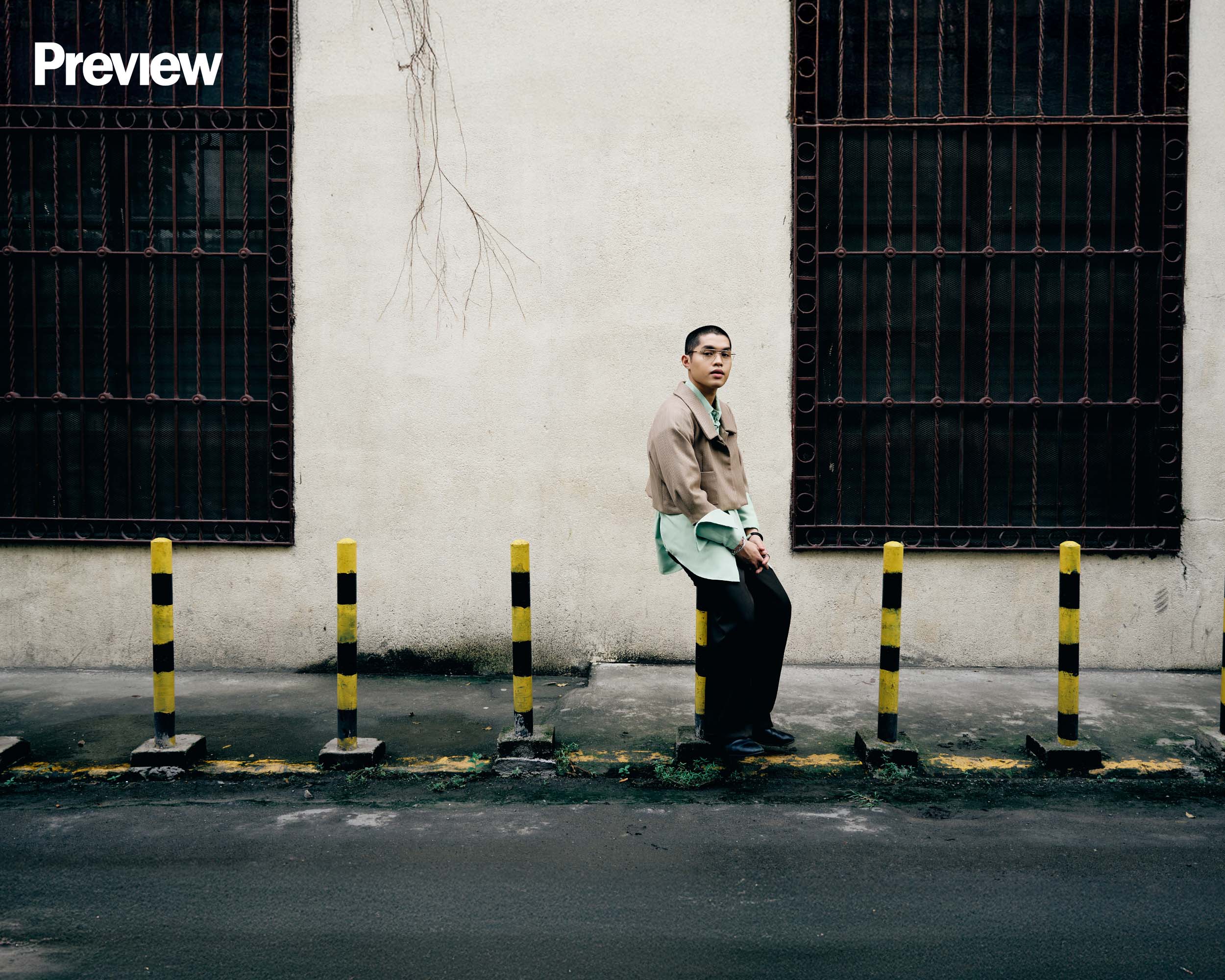
“I’m 25 now, and I don’t see myself stopping anytime soon,” the FAMAS and Gawad Urian winner says. “I enjoy it much more now than I did in the past couple of years. I get to love it more and more each year, with every project.”
Poetic Justice
Each year, Elijah continues to showcase his range through an ever-expanding roster of characters. We’ve seen him play delinquent high schoolers who don’t know any better, as well as stoic revolutionaries fighting for freedom. Last November, he even had an unintentional double-feature premiere on the same day: the horror anthology KMJS’ Gabi Ng Lagim: The Movie and the crime thriller Salvageland.
There’s an abundance of Elijah Canlas on our screens—and the actor, who once walked away from the industry, is more than happy to be here. “I’ve always dreamed of being in this position, and I never thought it would happen,” he says. “When I was younger, I had really, really big dreams, and ilang beses nang na-crush yung mga dreams na ’yon. So now that I’m here, and I have the opportunity to tell meaningful stories, I might as well push for them.”

This sense of responsibility was instilled early on in Elijah and his brothers, whose parents never sugarcoated the harsh realities of the world. At some point, rallies even became a form of family bonding. When he eventually settled into his career, Elijah made a conscious effort to bring the issues that mattered to him to both the big and small screens. “No shade to the industry, pero bihira yung mga gano’ng kuwento rito,” he says.
“The market is crowded with rom-coms and family dramas, which are not bad at all. I mean, I still want to do films like those… But films that could really inspire change are hard to come by in the Philippines,” he continues. In his perspective, political themes and messages are often diluted—disregarded, even—in favor of “what sells.” And Elijah doesn’t speak with any moral ascendancy. He knows the business, which is why he doesn’t pass on the opportunity to tell the stories that matter when they come.
Like he said, the craft is bigger than himself. "And art is really essential," he emphasizes.


It’s a responsibility he knows doesn’t rest on his shoulders alone. He hopes his peers respond to it, too. “Bilang mga artista [na may power to] influence, I hope we use it to help other people,” he says. “To shed light on important issues. To give a voice to the voiceless. We have to use it for the better.”
Easier said than done, Elijah admits. There’s fear in being politically vocal—especially in a time when censorship threatens the right to speak freely. But with his upbringing and awareness of what exists beyond his bubble, the instinct feels natural. “It’s always been part of my family’s DNA,” he says, “to care about things beyond us. Because we’re all citizens of this country. We’re all Filipinos. And we should all care about these things.”
“The fear comes, but if no one's going to talk, then who will? If no one's going to stand up, who will?”
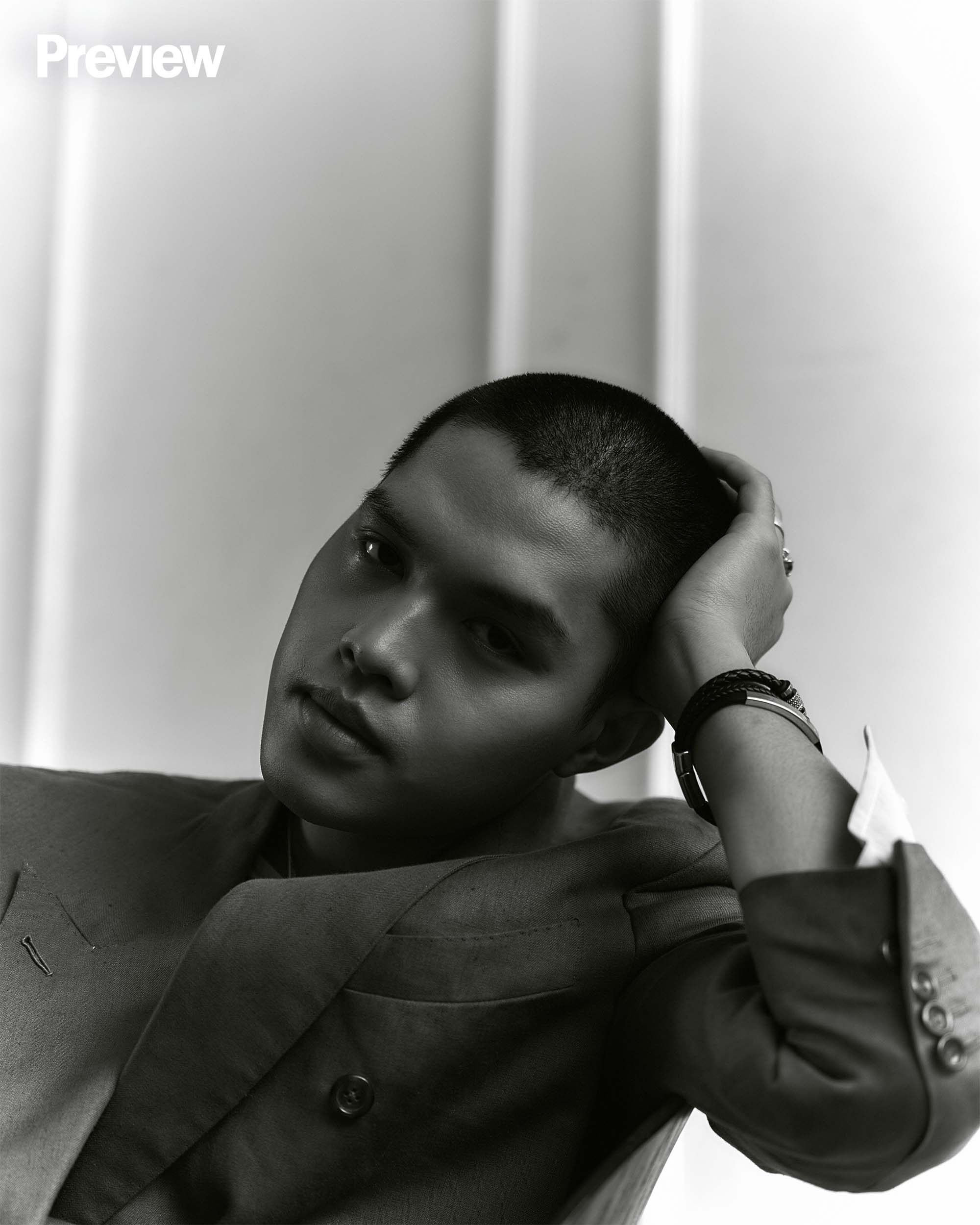

Diffused sunlight seeps through the windows of the Escolta studio as the day winds down. Elijah has since slipped back into his oversized band tee and sweatpants after an afternoon of playing dress-up. He considers the shoot a literal pause between long hours on set and sudden, work-adjacent flights—a rare pocket of time where he doesn’t have to do anything but be himself. For someone who makes a living portraying other people, it’s a much-appreciated breather.
But getting back to work is “therapy” in itself for Elijah. He finds it soothing, almost, when he doesn’t have to be himself. “It’s ironic as a Leo, but I’m really not confident with myself,” he says. “I’m my own harshest critic.”
“When I act, it’s therapeutic because I become a different person. It’s not me, you know?” he explains, underscoring how the profession has become a form of escape. There are lofty ideals attached to his line of work, and while he mustn’t lose sight of the bigger picture, the craft also offers him solace.

“My empathy for the world deepens,” Elijah shares, “because I get to learn more about the people I portray. So I feel like I’m becoming kinder in the process. I’m becoming more open.”
For someone so young yet already so assured, the world is his for the taking. There are many more versions of Elijah Canlas still to come—and he’s just as eager to meet them. The plan, according to him, is simple: “I want to be honest about what’s in my head, what’s in my heart, what I want to do next, and what I want to share with other people.”
“Because we’re only here for a short time—not for a long time—so we might as well make something good,” he adds with a smirk. If his track record is any indication, anything he does will only be done for goodness' sake.

Produced and Styled by the Preview Team
Editor-in-Chief: Marj Ramos-Clemente
Managing Editor: Reg Rodriguez
Assoc. Creative Director: Jana Jodloman
Producers: Katrina Maisie Cabral and Em Enriquez
Photographer: Colin Dancel. Art director: Jana Jodloman. Video director and videographer: Miggy Dimaiwat. Fashion stylist: Em Enriquez. Makeup artist: Sharmaine De Castro. Writer: Em Enriquez. Photographer’s assistant: Mak Advincula. Special thanks to Gian Carlos and Sherina Agoncillo of Cornerstone Entertainment, and Belg Belgica of Espacio Creativo Escolta. Shot on location at Escolta Street, Manila.
Em is queer and probably daydreaming somewhere. They're Preview's associate entertainment editor who's often spotted in cowboy boots and lemon-tinted sunnies.