Boy Abunda When the Lights Are Off
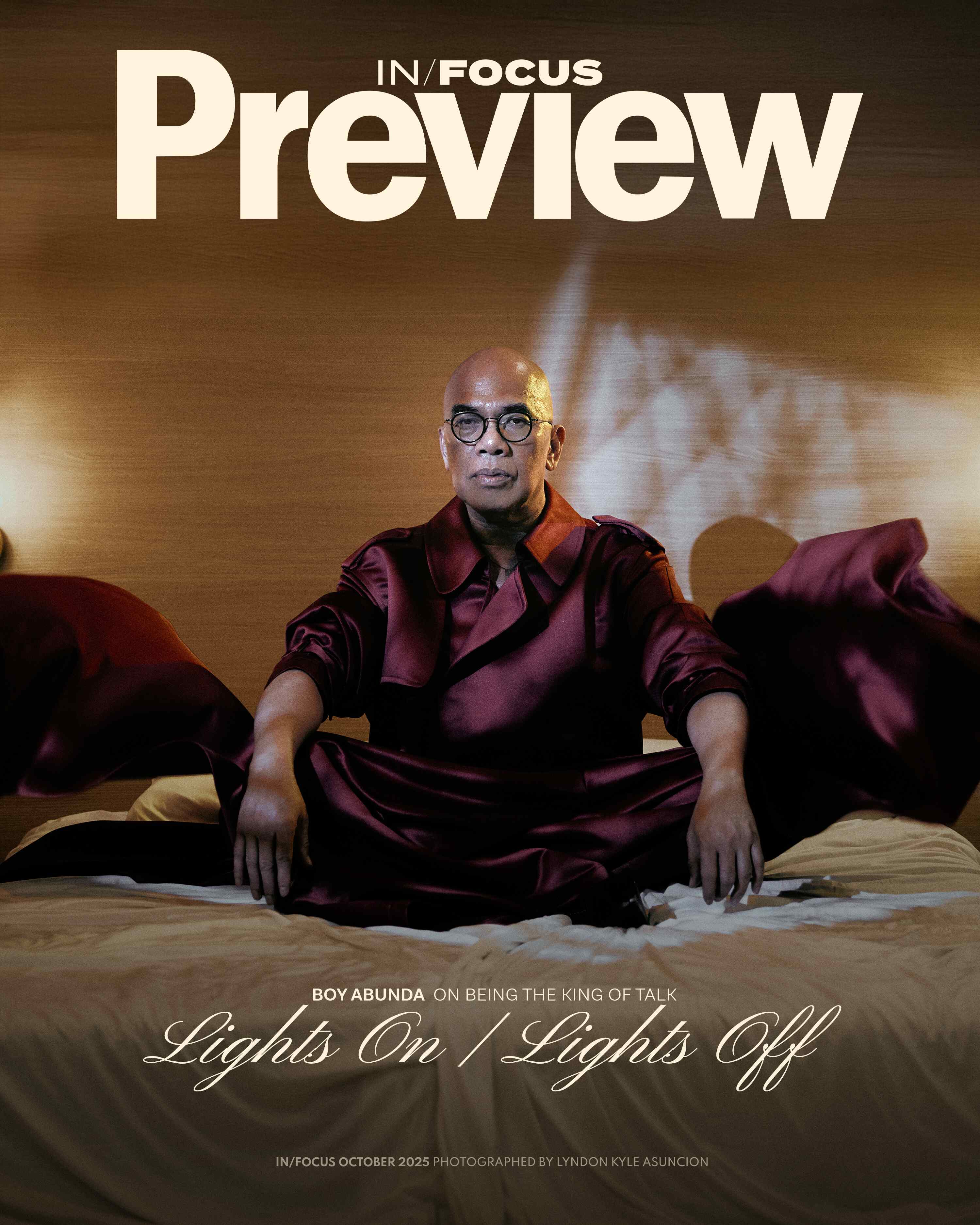
After decades of dialogue, the King of Talk has learned to sit comfortably in the calm.

Published on Oct 9, 2025
The King of Talk is quiet most days.
A pocket in his schedule, in between tapings of his interview talk show Fast Talk, finds him in a shoot with Preview that starts off in the evening—a time that many of his viewers have grown accustomed to seeing him.
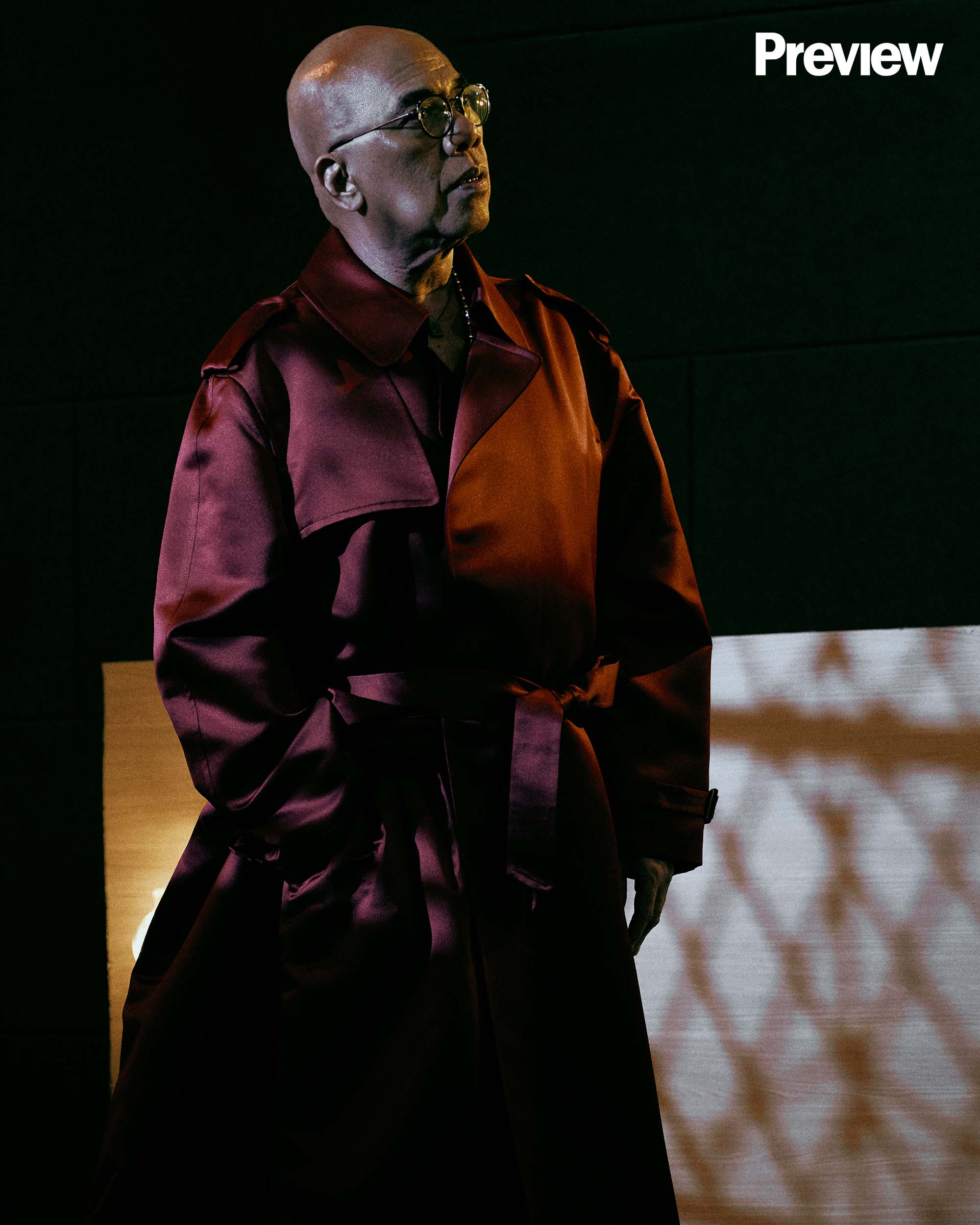
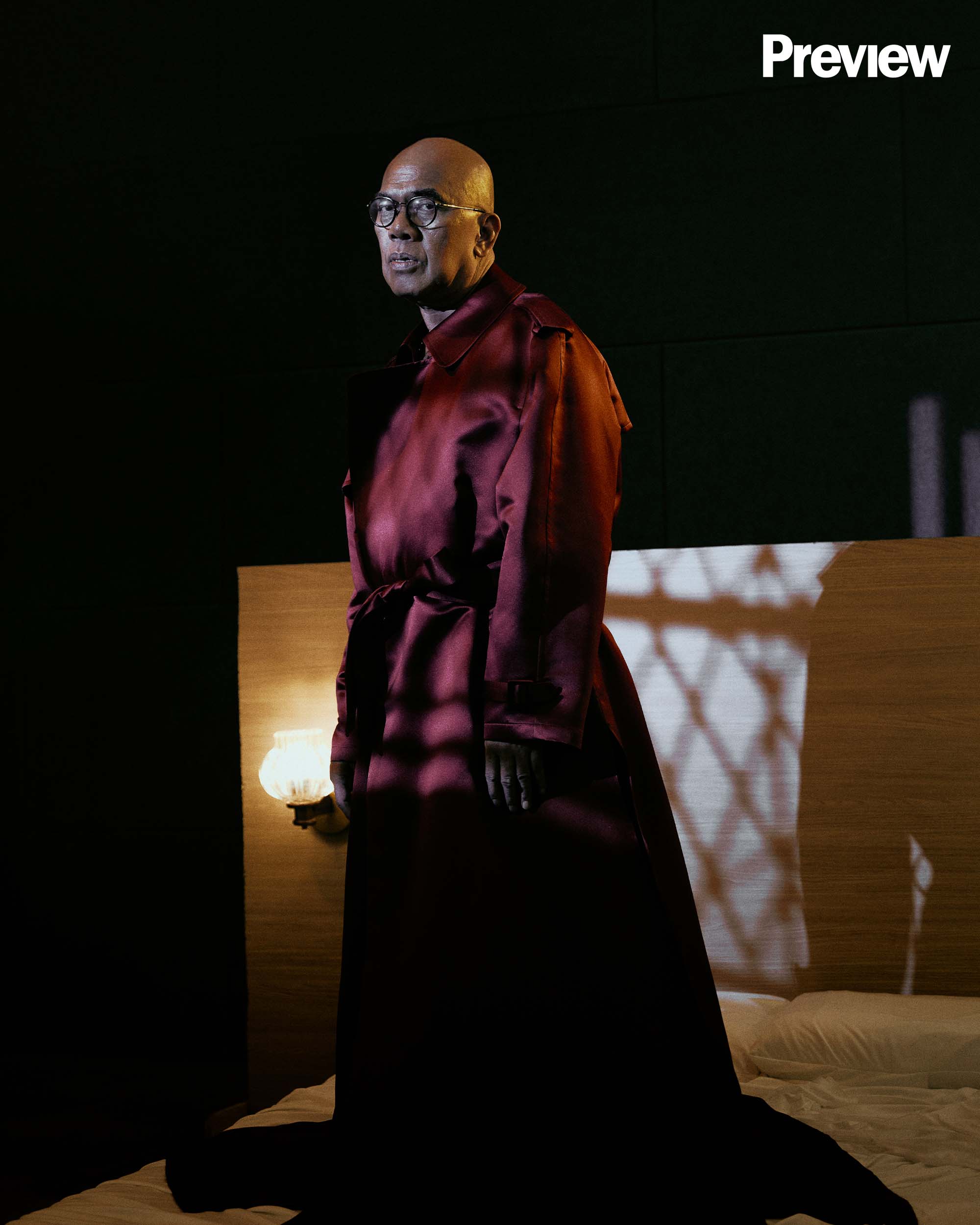
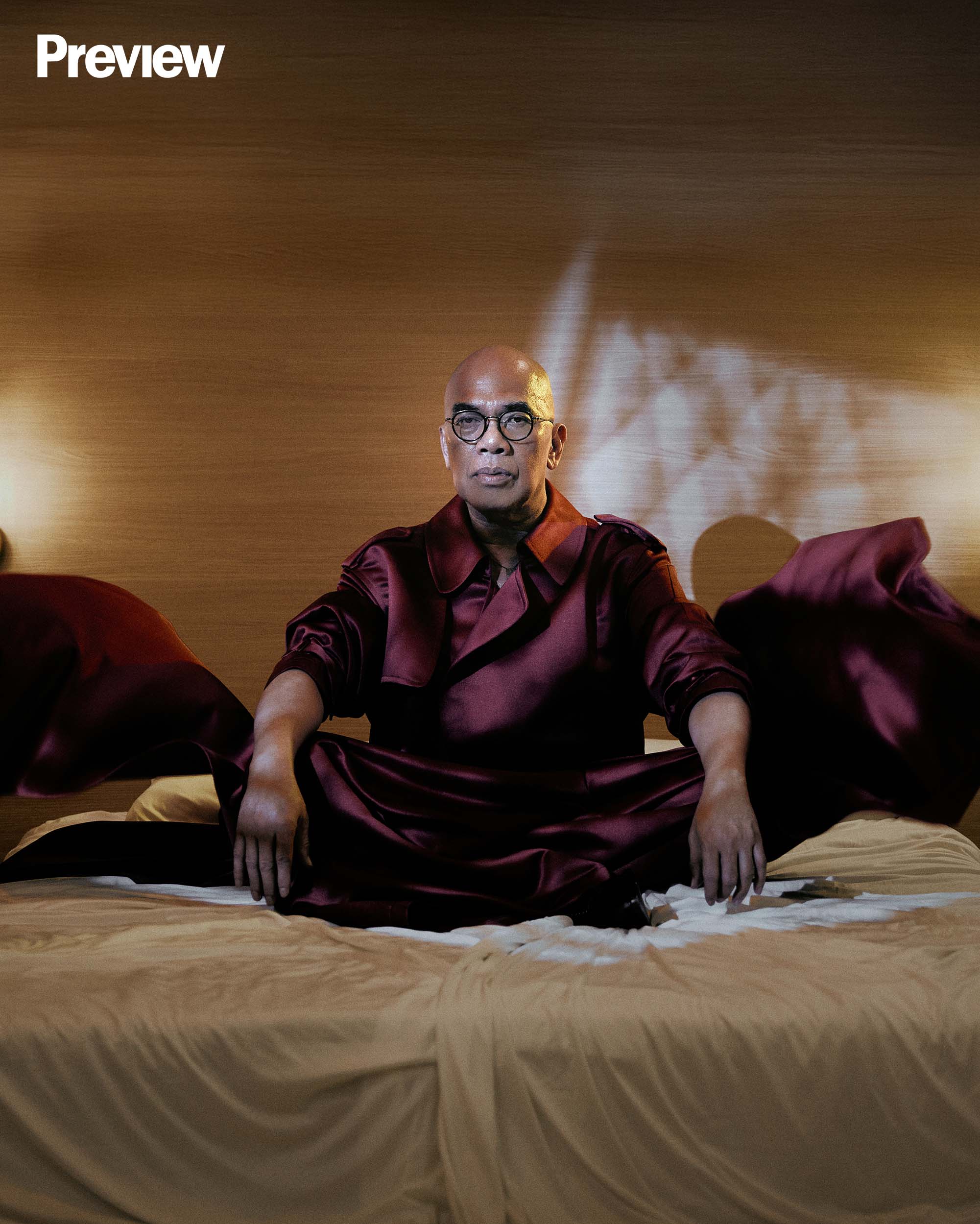
Ironically enough, however, the Boy Abunda that day is silent in his demeanor, one that may be jarring to some. But that’s not to say that the figure seen on screen is a figment of superficial TV magic. On set of this photo shoot, there was an air of reverence from the surrounding production team—mostly of the younger generation—but the veteran host was quick to respond to warm greetings of “Tito Boy” with a smile, like an actual familiar and omnipresent older uncle, one that we will inevitably bump into at family reunions. He is, in some sense.
Behind closed doors for the interview, he admits that the silence was par for the course for him, albeit unexpected to the unfamiliar. “I like being alone. I enjoy actually not talking,” the King of Talk says. “I can be in a noisy place, I can be in the middle of traffic, and I can be still. I can be super quiet.”
The decades past have seen Tito Boy navigate the tricky entertainment industry, a painstaking climb from the bottom, which he steered with his bare hands. Surprisingly, there’s still unfamiliar territory left for him to discover. An instance, he says, was this shoot, where he stood in the role mostly reserved for the people he interviews.
So to enter unfamiliar territory, he wields his favorite tricks of the trade: silence and observation. “Ang umpisa niyan, you’re assessing the moment where you are,” he explains. “You feel your way through. I realized that they knew what they were doing. I realized that they wanted to achieve certain things. I’m not used to being asked to do things,” Tito Boy admits, as a man at the helm of shows and talents for many years, “but you can only thrive in spaces of the unknown if you’re quiet.”
Show business is loud, and it thrives on the cacophony. But that pocket of silence is what has made him stay as its constant. “We have to deal with the noise. And you cannot attack the noise with noise. You have to appreciate what’s happening in front of you,” he says. “Makikinig ka, pakikinggan mo, makikiramdam ka.”
Tito Boy’s foray into the entertainment industry was marked by silence and necessity, which grew louder the more he was pulled into its colorful world. Having grown up with a humble background in Borongan, Eastern Samar—his nanay was a teacher and his tatay a small-town barangay captain—the young Boy had yet to even see a TV set in the flesh. To him, the idea of becoming a television personality was inconceivable. “I was hungry. It evolved into 'What did I really want?' Because I didn’t dream of being a talk show host. I wanted to provide my nanay the best life.”
Soon, he came to Manila, where he was making ends meet in the capital. His father had passed, which led him to halt his studies at the Ateneo de Manila University. Boy tried his luck as a theater actor at The Metropolitan Theater, and there, he stumbled upon the magnetic woman who would become his mentor—the “Grand Dame” of Philippine society and the theater’s administrator, Conchita Sunico.
Boy worked as an assistant stage manager, in charge of keeping inventory of the costumes and making sure bamboos for tinikling and pamaypays were where they should be. She soon took notice of him. “One day, somebody told Tita Conching that there was this boy who made friends easily backstage. Ipinatawag niya ako,” he recalls.
The young Boy Abunda entered her office. Conching’s back was to him, preoccupied with another task, while she gave him a proposition. “She said, ‘I heard some good things about you, that you’re very diligent, that you’re hardworking. Would you like to work for me?’”
“And I answered, ‘Oh, yes, ma’am.’ I started to move back and exit. Pero nakalimutan ko [tanungin] anong trabaho,” Tito Boy narrates. “So I went back and I said, ‘Uh, ma’am. I’m sorry. What is my job?’ And those formidable, impervious eyes said, ‘PR.’”
The younger Boy replied with just two words: “What’s PR?” He smiles at the memory as he recounts Conching’s response. “And those famous lines, at least in my story, ‘I will teach you.’”
The rest was history. The young man had been pulled into one of his first unfamiliar territories, roped into the glitzy world of the upper echelon by way of the larger-than-life socialite. “I was fascinated by the people she was talking to. I would carry her bags, I would answer the phones.”
“She was very famous for all the sosyal parties,” he recalls. “Knowing that I will never be there, knowing that I will never get into that circle—I started that joke that I will always be a social climber. Ang feeling ko, nanonood ako ng sine. I was really a spectator of that spectacle.”
That sense of wonder would dictate his life as a talent manager and TV host, whose interviews have become a hallmark of local stardom. In the land of Philippine showbiz, an interview with Boy Abunda means you’ve made it to the big leagues. But beneath that, Boy himself was a fan—a person who was merely curious about the lives of these seemingly shining individuals. “You’re interested, you’re rabid. And then my background as someone who needed to survive, as someone who needed to eat, I had that diligence.”
Now, inside the showbiz system, he learned how to assimilate by standing out, down to the very clothes he wears. Tito Boy, along with his lexicon of fashion knowledge and a penchant for local designers like Rajo Laurel and Jaggy Glarino, had made style his armor. “I’m a fashionista more as a statement of rebellion up to this very day. The biggest sin in the business, and even in life, is to be common,” he says. “You’re not going to be a star if you blend.”
“’Yung clothes, it’s an expression of being unafraid. I’m not afraid to laugh at myself, to make a fool of myself.” True to his word, Boy adds: “‘Pag hindi kayo pinanganak ng kagandahan, kailangan hanapin mo kung saan ang maganda sa ‘yo.”
The skill of observation and learning the ropes has seeped into how he maneuvered this new world, as well as how he handles each interview. Whether it’s an actor on the fringes of fame or a figure as revered as Deepak Chopra, he handles them with a high level of commitment and research.
“Wala akong masyadong tiwala doon sa ‘I’m gonna roll with the punches,’” he says. “I come prepared. But at the same time, just knowing enough for me to be able to probe. That has defined my relationship with a lot of celebrities. Alam nila na pag umupo ako sa harap nila, handa ako.”
There was a time, after all, when Boy Abunda was juggling multiple shows in a week, be it the showbiz-centric The Buzz or the hard-news-angled current affairs program The Bottomline with Boy Abunda. The veteran muses about this “era when television was all talk shows,” which now feels like a bygone time—when artists could not yet narrate their own stories, bypassing the talk show stage.
Tito Boy admits that the rise of social media was “terrifying” at first. “[I thought,] this is it. This is the best way to be pushed into obsolescence.” But Fast Talk with Boy Abunda has found its own space and charm, he says. And in a sense, there remains something ritualistic about the talk show interview—an intrinsic part of celebrityhood. Artistas may have the capability to tell their own stories now, but some still choose to end them with the King of Talk.
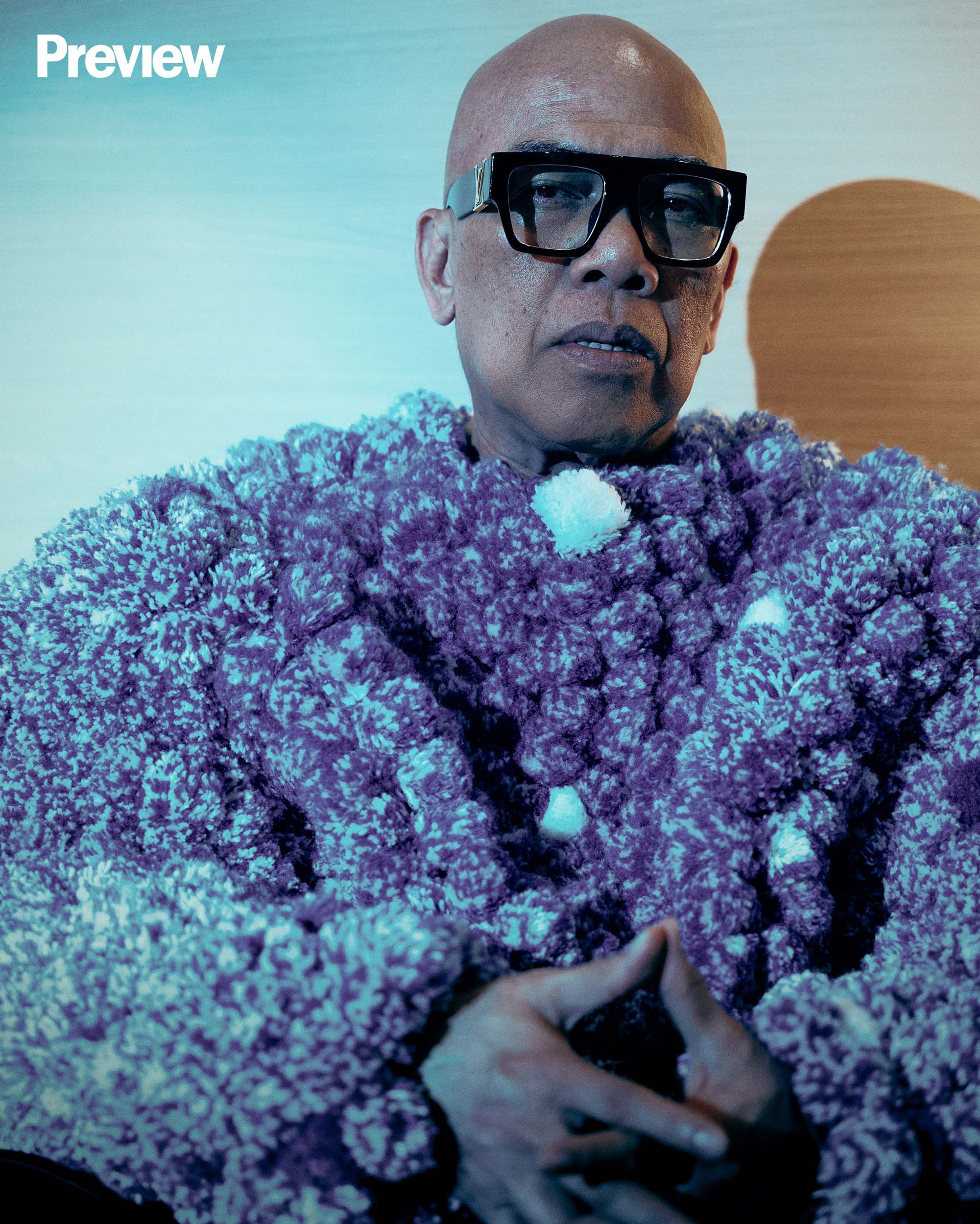
“[Some movie stars would say,] I will post something, but I wanna conclude my story with an interview with you,” Tito Boy recalls.
A good interviewer, after all, can unravel sides that were buried. “Some things have to be done with someone. How are you able to do that if you were alone, and just facing your own camera?”
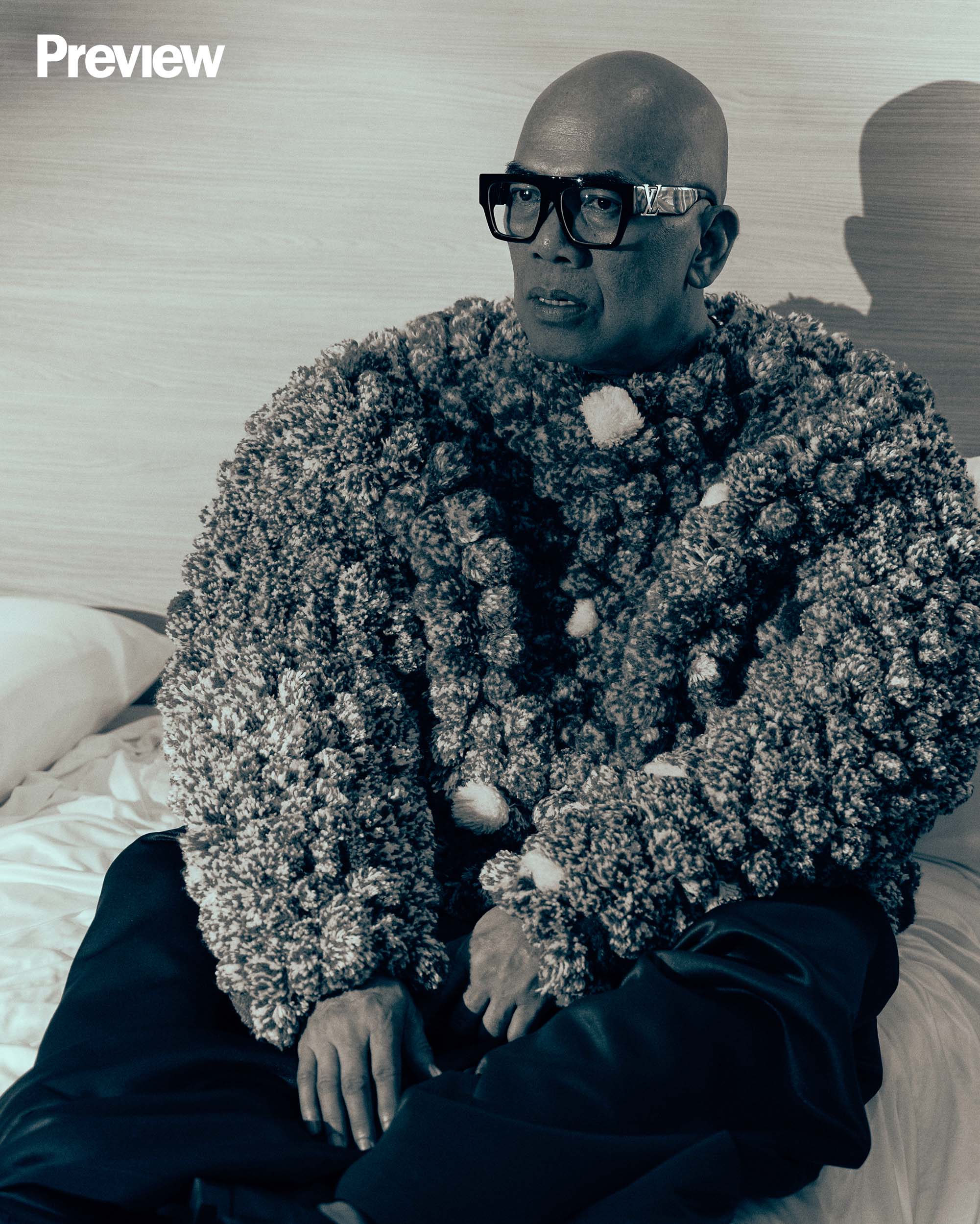
For Tito Boy, the matter of relevance has also evolved. “Relevance is not tantamount to being on top, to being in the middle of the action,” he shares. “Relevance is embracing that you will not always be on top. It’s knowing that you are comfortable wherever you are, whether you are conscious about it or not.”
Like the industry, the way he conducts an interview has also changed. For one, he has nothing left to prove. “I have become more sensitive, as opposed to when I was starting,” he says. “When I watch my earlier interviews, I would cringe. 'Nung naguumpisa pa lang ako, akala ko hindi pwede, lahat suntok ng puso. Your old bravado—you’re trying to prove your galing.”
“You can do an interview with a lot of edge, a lot of grit, and be respectful,” he ruminates.
And then we’re back to that silence—a comfortable one for Tito Boy. From his grueling climb up the ladder to the years of proving himself with tough questions, here he is now, a version mellowed by experience.
These days, his free time is spent basking in the quiet after decades of noise. Outside of the studio, Tito Boy is deep in prayer, or with his nose buried in multiple books at once. He has become even more introspective about his roots and home after the passing of his nanay, Lesing Abunda, in 2019.
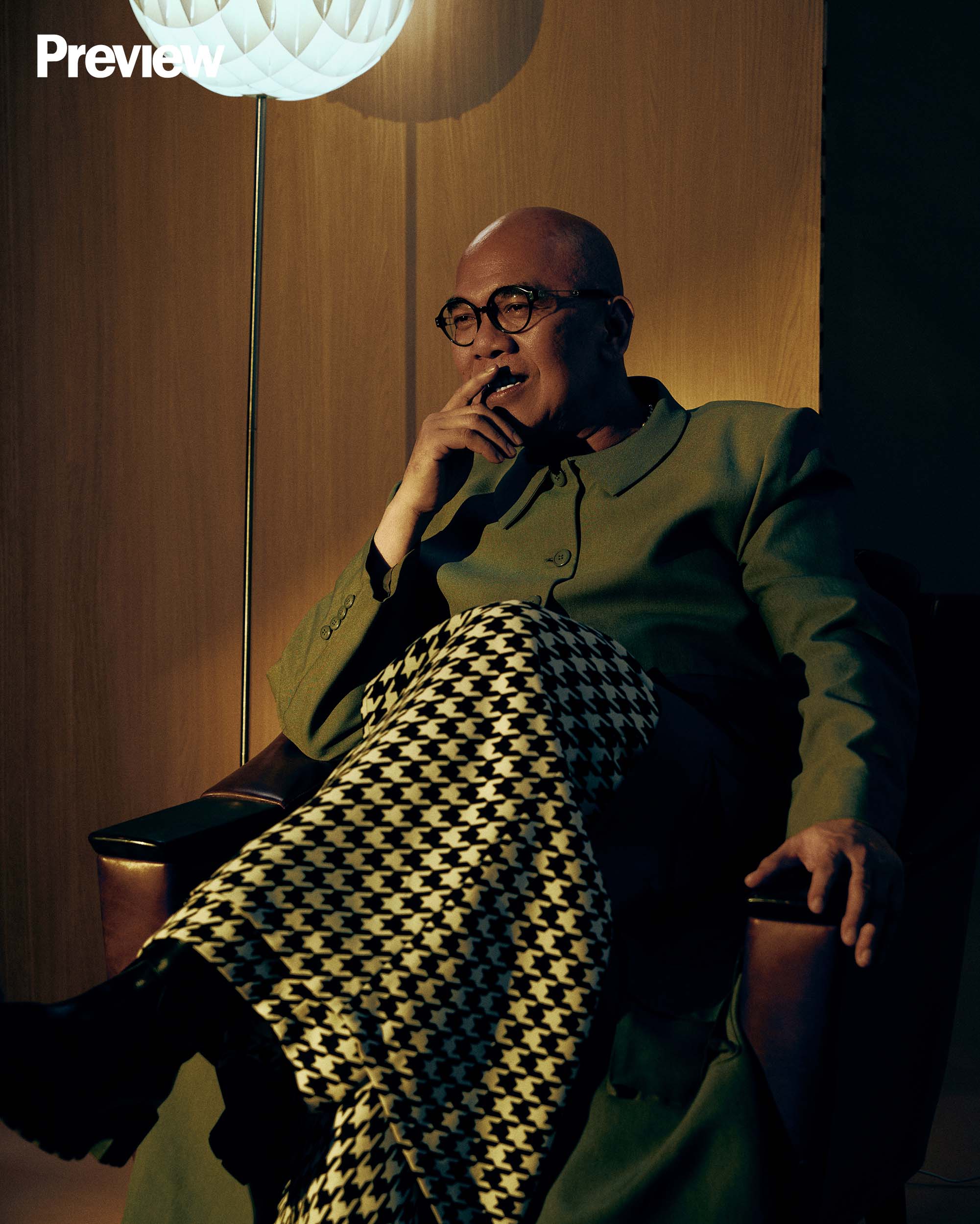
“I will always be a probinsyano,” he states. “To me, that’s home. Our old house and Nanay waiting for me there. Then, home became my house in Manila, where she stayed for the rest of her life. Wherever she was, that was home.”
“When Nanay passed on, it was so hard. It was so difficult. If you ask me now to articulate exactly what grief is all about, I don’t know. It’s worse than death, because death is something that somebody alive doesn’t experience,” he says. “I knew some words—loneliness, malady. Nothing can capture that feeling in the middle of the shower, when you just suddenly cry because you miss your mother.”
“It really humbled me,” Tito Boy shares. “It taught me that totoo nga, nothing is forever. Hindi lang sa tula, hindi lang sa Greek tragedy, hindi lang sa pelikula. Even the best has to go.”
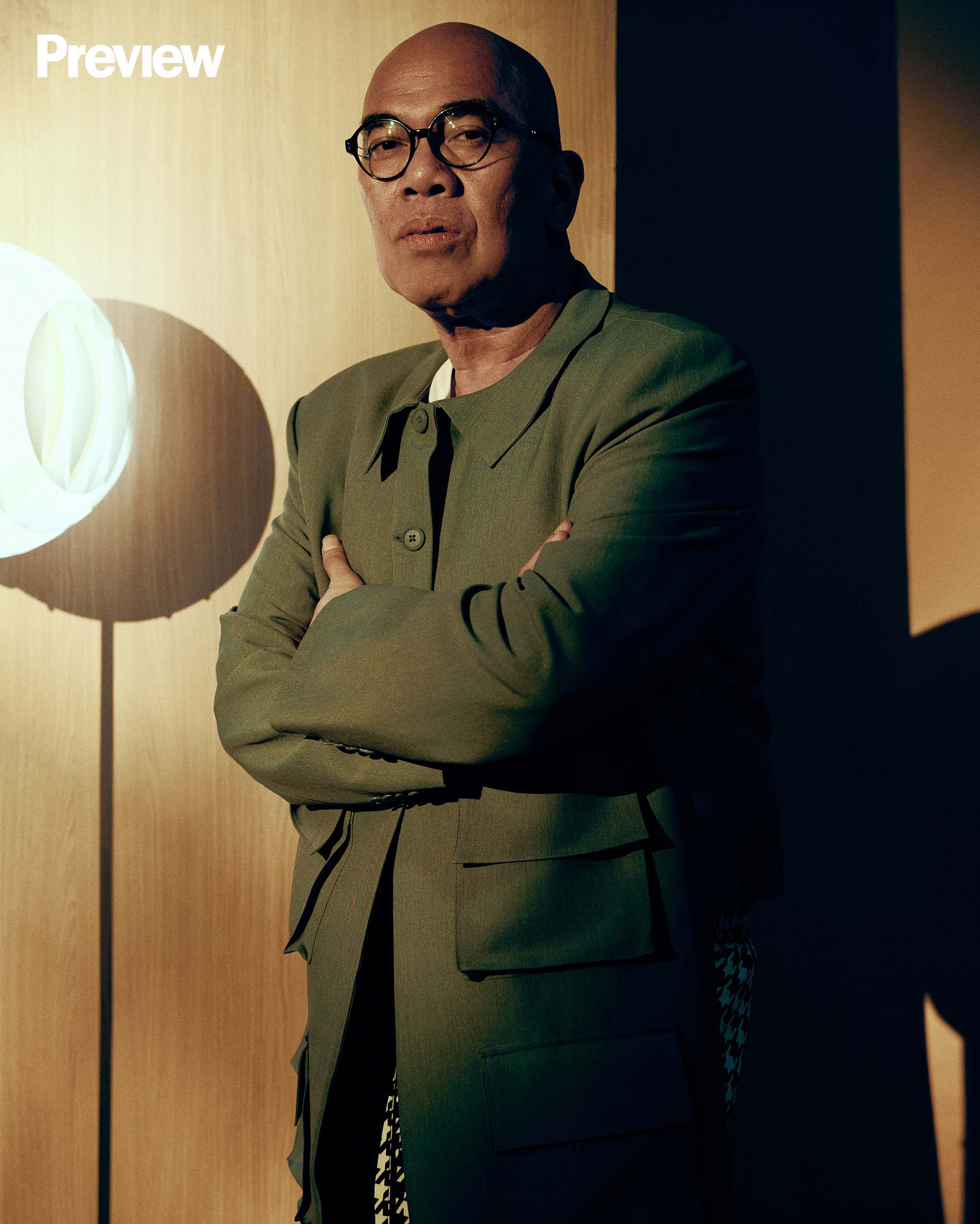
These are the quiet moments of reflection that Boy Abunda tucks himself into as solace. He remembers the days when he was at the bottom rung of the ladder, far from home, trying to fit into different molds. “You get into areas where you’re trying to prove your worth,” he says. “You wanna be heard, you wanna be felt, you wanna be seen.”
“Sometimes you speak loudly, you scream. The seasons of my life taught me that the best thing to do is spend some quiet moments and assess things.”
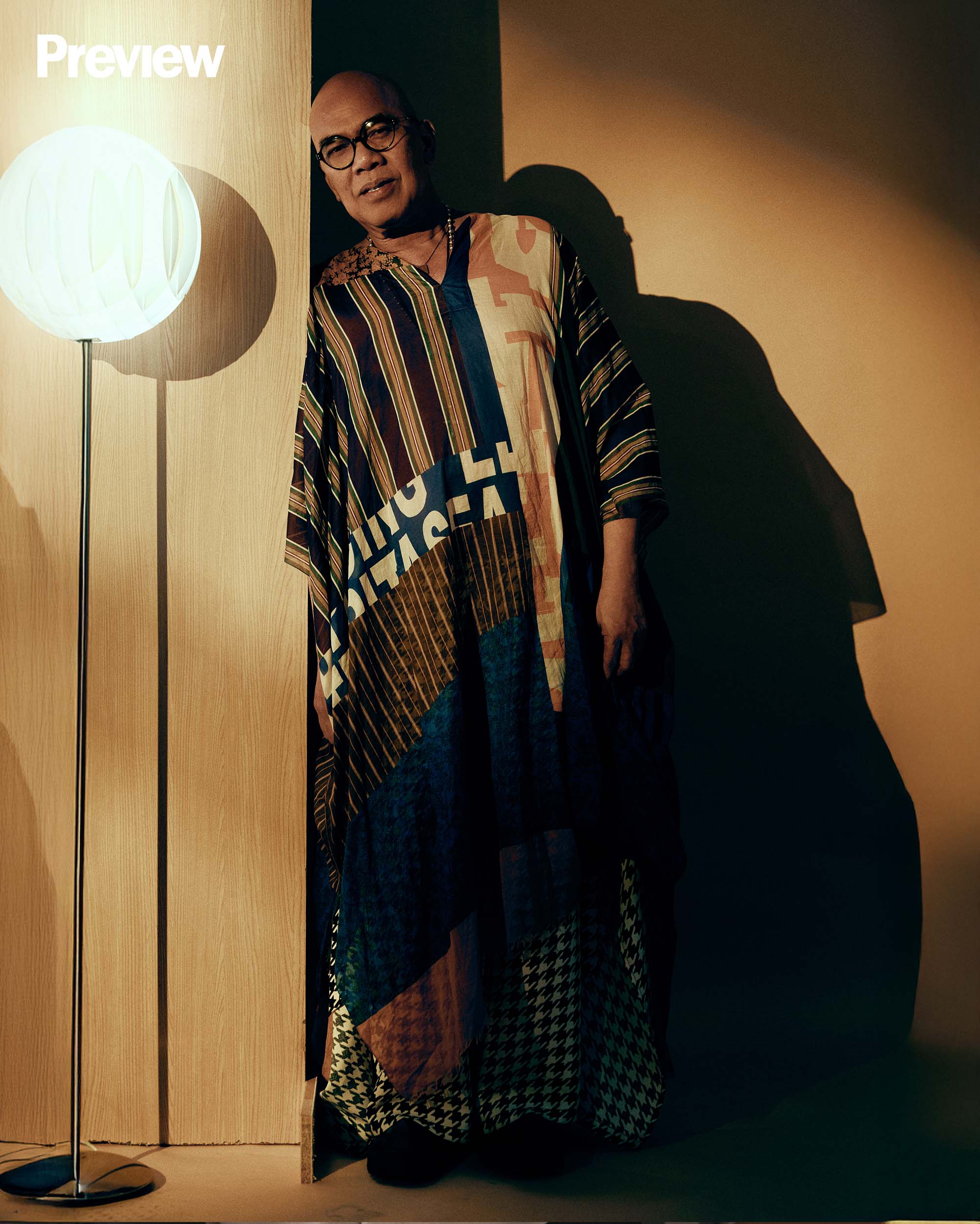
Is he still climbing? He pauses. “I think I’m more settled,” he says.
And for a man who’s spent his life asking questions, perhaps arriving at peace is the best answer of all.

Produced and Styled by the Preview Team
Editor-in-Chief: Marj Ramos-Clemente
Creative Director: Bacs Arcebal
Managing Editor: Reg Rodriguez
Assoc. Creative Director: Jana Jodloman
Producers: Em Enriquez and Katrina Maisie Cabral
Photographed by Lyndon Kyle Asuncion. Art and video direction by Jana Jodloman. Styled by Em Enriquez. Story by Katrina Maisie Cabral. Set and production design by Tangerine Projects.
Kat is Preview's Lifestyle Editor, explorer, and occasional rhymer. When not globe-trotting, she's over her computer, writing her next big novel.